
Educator Spotlight: Jenn Horak-Hult

Educator Spotlight

[vc_row][vc_column][vc_column_text]Jenn Horak-Hult found something special when she discovered Kindermusik in 2003 and then went on to start her own business, Pied Piper Studios in Des Moines, Iowa, in 2006.  She is a vibrant educator, talented musician, and brilliant business owner.  Jenn has served on the PKE (Partnership for Kindermusik Educators) board and has contributed in countless other ways to the Kindermusik educator community over the years.  She is the beloved “Miss Jenn” to her Kindermusik kids, and lovingly referred to as “Zen Jenn” by Kindermusik mamas who admire her calm ability not to get rattled.[/vc_column_text][vc_separator color=”green”][vc_column_text]TC: What makes Pied Piper Studios such a special place?

JHH: We believe active listening isn’t just part of the curriculum we teach. We listen with our hearts and we strive to respond in the way that helps every family thrive. Every person, big and little, that comes through our doors has a story to tell, and we are continually challenging ourselves to engineer an experience that meets families where they are and then comes alongside to celebrate their own unique journey.  

TC: What’s your favorite Kindermusik song to sing?

JHH: I have many favorites for lots of reasons. It’s difficult to choose just one. But perhaps the song that holds one of the most special places in my heart is Manx Lullaby. I was teaching Dream Pillow while pregnant with our oldest child over 10 years ago and that lullaby quickly became “his” lullaby. I sang it to him as I waited for his arrival and I painted the lyrics on his nursery walls. I’ve sung it hundreds and hundreds of times to him, and it still remains something special we share all these years later.

TC: What’s your favorite Kindermusik dance to lead?

JHH: Tants Tants Yidelekh! I’ve always loved this dance. Bouncing babies along with the tuba is a hit every time.[/vc_column_text][vc_column_text]Jenn Horak-Hult[/vc_column_text][/vc_column][/vc_row][vc_row][vc_column][vc_custom_heading text=”“I treasure most…the connection and community created in our classroom“” font_container=”tag:h2|text_align:left|color:%235fd60a”][vc_column_text]TC: What do you love most about teaching Kindermusik?

JHH: There are so many things to love, but one piece I treasure most is the connection and community created in our classroom. It is a tremendous gift to see families meet and form friendships that go on to last for years and years. Parenting is brave and beautiful work, and it is blessing that we are able to provide the time, space, and type of environment where families feel welcomed, nurtured, and loved. Seeing those relationships blossom into support systems that go beyond our walls is incredibly gratifying.

TC: What’s the funniest thing that’s ever happened to you as a Kindermusik teacher?

JHH: I once split the backside of my pants wide open while riding the pretend Elevator and Escalator up and down in an Imagine That! class. With no change of clothes available, I spent the rest of class (including Sharing Time) with a makeshift humongous scarf skirt draped around my waist.

TC: How about the most touching thing?

JHH: The most touching things I’ve experienced while teaching Kindermusik have been the first steps, first words, and other precious milestones reached with so many witnesses to celebrate together.[/vc_column_text][/vc_column][/vc_row][vc_row][vc_column][vc_custom_heading text=”Passionate People + a Shared Vision = Success” font_container=”tag:h2|text_align:left|color:%2359d600″][vc_column_text]TC: What do you feel has made your studio business a success?

JHH: I have an incredible team and I am very lucky to work with a group of women whom I adore and admire. They inspire me and I do my best to create an environment that feeds their passion, nurtures their skills, encourages their curiosity, and affirms their gifts. Their hearts share my vision, and our success as a studio is very much tied to our desire collectively and individually to make that vision a reality one day, one song, and one dance at a time.

TC: What are some of the goals you have for your business?

JHH: If you could share one tip with a new Kindermusik educator, what would it be? Surround yourself with people who inspire you. My Kindermusik buddies have taught me more than I could ever have hoped to learn on my own. They challenge me to be my best self and there is nothing more fun than being brave in our dreaming together.

TC: What’s something new and exciting that’s happening with your business?

JHH: We are celebrating our 10th anniversary this year so we have lots of surprises up our sleeves for our families![/vc_column_text][/vc_column][/vc_row][vc_row][vc_column][vc_column_text]Horak-Hult[/vc_column_text][vc_column_text]TC: What are some of your hobbies outside of teaching Kindermusik?

JHH: My children would say napping! And it’s a little bit true. I am a night owl and am at my creative working best in the wee hours. I’m typically up until 1:00 or 2:00 in the morning. So, when I have the opportunity, there is nothing more heavenly than the chance to crawl back under the covers for a little afternoon snooze…especially with the windows open on a warm day. I also love working in the kitchen and making yummy food for our family to enjoy together around the table. I’m a vegan and I particularly love figuring out how to vegan-ize the Midwestern comfort food I grew up eating. I make a mean vegan mac and cheese.

TC: Do you have a favorite inspirational quote?

JHH: I find that a deep breath is always my best medicine and the most effective catalyst for connection. So it doesn’t surprise me that many of my favorite quotes center on the idea of breath. One of my favorites is on an art print I keep near my desk: “The trick is to keep breathing.” Another painted on our studio wall is “Breathe it all in. Love it all out.”

TC: If you had to name just one secret to success in the Kindermusik classroom, what would it be?

JHH: Laughter. Joy is never far away and children are our best teachers. If we are present enough, they will always lead us there.[/vc_column_text][/vc_column][/vc_row]

Enjoying Spring with Music!

Spring

[vc_row][vc_column][vc_column_text]In some parts of the world, it’s spring. Flowers are blooming, the sun is shining, and mamas everywhere are happy that kids can be outside, playing and enjoying the warmer weather. Unlike other times of year when music and the season are synonymous, you may not make a connection between music (or musical activities) and spring, so we’ve come up with a few to brighten your day![/vc_column_text][vc_column_text]Featured blogger Theresa Case brings us some music and activities for spring. [/vc_column_text][vc_column_text]

Watch and Listen: Vivaldi’s “Spring” from the Four Seasons

[/vc_column_text][vc_video link=” https://www.youtube.com/watch?v=ycl2ADg5Mto “][vc_column_text]

Craft Idea: How to Make a Paper Plate Sun and Pipecleaner Windcatcher

[/vc_column_text][vc_video link=”https://kindermusik.wistia.com/medias/euzwum7d5v”][vc_column_text]

Get Outside: How to Make a Seed Grow

[/vc_column_text][vc_video link=”https://kindermusik.wistia.com/medias/1a47x80bgt”][vc_column_text]

Listen and Play: Bird Sounds Vocal Play

[/vc_column_text][vc_column_text]Watch the babies’ faces in this video. For very young children, “vocal play” isn’t about call-and-response or sound-and-echo; it’s about watching and listening, absorbing all that’s going on around them, and working hard to match up what they see with what they hear and feel. You can see the deep focus on some babies’ faces as they watch the mouths making the sounds. Remember: Patience, always beautiful patience with babies, as every sense receptor is “on,” and sifting through all that input takes time.[/vc_column_text][vc_separator color=”green”][vc_column_text]There’s nothing like a little music – and a little together time – to make every day a little brighter!

For more ideas and inspiration to make everyday parenting just a little bit easier and a whole lot more musical, discover Kindermusik, the world’s leading music and movement program for parents and children.[/vc_column_text][/vc_column][/vc_row]

Kindermusik and the Music City: Betsy Flanagan Speaks at the National Head Start Conference and Expo

Flanagan

[vc_row][vc_column][vc_column_text]Next week, Kindermusik International’s Director of Professional Development, Betsy Flanagan, will present two sessions at the 43rd Annual National Head Start Conference and Expo in Nashville, Tennessee – the Music City. Think about that nickname – it’s quite appropriate that she’ll be speaking about the benefits of music in learning and reducing stress in the classroom. In addition, Betsy will address music’s power in daily transitional moments, like leaving home for school. Click here to let us know you are coming![/vc_column_text][vc_separator color=”mulled_wine”][vc_column_text]For the better part of a year, Betsy Flanagan has headed professional development for Kindermusik, but for the past 14 years, she’s guided the direction of Musical Pathways Foundation as founder and director, a non-profit organization that offers Kindermusik curricula to families just north of Madison, Wisconsin. A seasoned speaker, she brings her considerable education, knowledge, and experience in the musical education of young children to the NHSA conference attendees.

Betsy Flanagan Speaking
Betsy Flanagan providing professional development for Kindermusik Educators

[/vc_column_text][vc_custom_heading text=”Music + Movement = Monumental Impact” font_container=”tag:h3|text_align:left|color:%238224e3″][vc_column_text]Betsy shares that different aspects of music and movement activities has a positive impact on all domains of learning – physical, social, adaptive, and cognitive. Beyond this, it reduces stress in just about all situations. But how? Betsy tells us, “Music helps children learn to keep their emotions in check: as music is filled with transitional movements from verse to refrain, Self-Regulation skills are practiced, and when young children are allowed to practice through play, learning soars.”

It seems to be that magic combination of group music making, coupled with physical movement, that builds a sense of safety. “Using music activities on a daily or weekly basis, helps children feel the security of a playfully structured environment,” says Betsy.

Music and movement – it’s a powerful combination.

“I have not found another teaching tool like music that
-captures a group of children’s brains for extended periods of time
-while also firing their brains on all cylinders,
-all domains,
-while being easily repeatable
-literally lowering the stress in the environment
-and simultaneously speaking to all learning styles at the same time.”

       – Betsy Flanagan[/vc_column_text][vc_column_text]Benefits of music activity[/vc_column_text][vc_custom_heading text=”The Magic of Music” font_container=”tag:h2|text_align:left|color:%238224e3″][vc_column_text]Because music allows children to increase skill acquisition speed, learning goals are reached faster. And as we have discussed in previous posts, when young children have moments with caring adults – parents, educators, caregivers – the lasting impact is increased.

Have you ever had a challenging time getting your little one to school or picking them up – maybe because he didn’t want to leave a given situation? Well…Betsy has just the prescription for that! Music Rituals, songs coupled with short activities, can ease these moments. “Hello Song is the easiest tool to incorporate for pick-up time at school and for when family members return home. Hello songs that include verses with touch, smiling, and hugging are most effective for refilling the child’s love tank after having missed the parent/family during the school day, or missing the parent who has been gone to work all day. Music is important in this function, as music not only fires the entire brain, but it is also inherently easily repeatable with built-in verses and refrains…and fun of course!”
[/vc_column_text][vc_column_text]As you might imagine, these rituals help build positive connections between parent/child and teacher/child. “The connectedness, the synchrony that children feel when engaging with others in music activities, is priceless for relationship development. Trust and a feeling of safety between two people is required to develop a relationship, and music activities supply those elements,” says Betsy. [/vc_column_text][vc_custom_heading text=” Conference Session Takeaway” font_container=”tag:h2|text_align:left|color:%238224e3″][vc_column_text]What does Betsy for hope those who attend her sessions as learning outcomes?

1. Attendees will learn to integrate impactful music & movement activities into their lesson plans and home visits to accelerate learning, increase joy, and reduce stress.

2. Attendees will receive all songs presented to allow for immediate application in their programs.

3. Attendees will understand each activity’s developmental benefits as related to the Head Start Five Domains.

[/vc_column_text][vc_column_text]So…if you are at the National Head Start Conference and Expo next week, join Betsy for these exciting sessions! Click here and we’ll save you a seat! If you are unable to attend the conference, contact us about how the Kindermusik curricula and our highly rated professional development can benefit you, your students, and your school.[/vc_column_text][vc_separator][/vc_column][/vc_row][vc_row][vc_column][vc_column_text]Betsy Flanagan obtained her Bachelor’s in Music Education (summa cum laude), Kindergarten thru 12th Master’s degree from Illinois State University in Choral Conducting and Vocal Performance, and has completed her Doctoral coursework in Choral Conducting from the University of Illinois in Champaign, Urbana where she was awarded a Fellowship on staff. Betsy has taught children of all ages and backgrounds in public grade schools, high schools, universities, summer camps and also privately in her home studio for over 30 years, providing her students high quality instruction together with passionate motivation.[/vc_column_text][/vc_column][/vc_row]

Music and Mothers: Songs that Celebrate that Special Someone

[vc_row][vc_column][vc_column_text]It’s coming! That special day when we celebrate our moms is right around the corner. How will you celebrate? The musical legacy of mothers is long and varied; you can find a song about mom in just about every genre. Many of us had moms who would sing a special song just to us. Let’s take a look at musical ways we pay tribute to moms – I promise – we’ll try and hit as many genres as possible…[/vc_column_text][vc_separator][vc_custom_heading text=”The Backstreet Boys” font_container=”tag:h2|text_align:left|color:%23dd3333″][vc_column_text]Ok. We start by going old school – at least for me. This term is pretty relative. But we’re talking 17 years ago when the boy band released Millennium. One of their songs is really a beautiful tribute to moms – The Perfect Fan. Just take a look at the lyrics (for those that might not remember them):[/vc_column_text][vc_column_text]You showed me
When I was young just how to grow
You showed me
Everything that I should know
You showed me
Just how to walk without your hands
‘Cause mom you always were
The perfect fan[/vc_column_text][vc_column_text]Come on, now. Admit it. That pulls at the heart strings and perhaps takes you back to 1999. Let’s take a listen to a “live” performance. We didn’t even care that they were lip-synching…just look at those suits![/vc_column_text][vc_video link=”https://www.youtube.com/watch?v=Od3e3x87y-U”][vc_custom_heading text=”M-O-T-H-E-R: A Word that Means a lot to Me” font_container=”tag:h2|text_align:left|color:%23dd3333″][vc_column_text]Now this is a serious throw back – back all the way to 1915. Howard Johnson (no, not the restaurant/ice-cream guy), was a lyricist, Navy vet, and a native of my home state, Connecticut. I like this guy. His classic, which has been around since dirt was invented, has been the go-to poem for little kids celebrating their moms – or perhaps the inspiration behind their own acrostic poetry. You know…

M is for the million things she gave me,
O means only that she’s growing old.

We get how this works. Each letter stands for a word that represents mom perfectly. Sure, it’s a little outdated, but still, charming with a sweet candy shell of nostalgia. Let’s listen to a recording from 1916…[/vc_column_text][vc_column_text]

[/vc_column_text][vc_custom_heading text=”Somebody’s Hero – Jamie O’Neal” font_container=”tag:h2|text_align:left|color:%23dd3333″][vc_column_text]So far, we’ve hit pop and early 19th century schmaltz. How about Country? This genre is full of sweet songs; it’s hard to pick just one. Jamie O’Neal’s 2005 hit, Somebody’s Hero, fits the bill quite beautifully. This song reminds us that just by being mom, doing all the important mom things like fixing skinned knees and serving up Cheerios, she’s a superhero to us.[/vc_column_text][vc_video link=”https://www.youtube.com/watch?v=1_uMQTw7v2g”][vc_custom_heading text=”The Story Goes on – Baby” font_container=”tag:h2|text_align:left|color:%23dd3333″][vc_column_text]Here’s a gem from a largely unknown 1983 musical, Baby (it was up against some heavy hitters that year – La Cage and Sondheim’s Sunday in the Park with George). While more about being pregnant, it certainly plays to our theme. Lizzie feels her baby kick for the first time, and she finally realizes what her mother had always told her about the beauty of motherhood and the endless connection of mother to child, in both directions in time.[/vc_column_text][vc_video link=”https://www.youtube.com/watch?v=rhi4xNxL-Pk”][vc_custom_heading text=”Lady Madonna – The Beatles” font_container=”tag:h2|text_align:left|color:%23dd3333″][vc_column_text]I think I’d be drummed out of the music world if I ignored The Beatles. A couple of my students would pretend they didn’t know me. Don’t let fancy professors fool you – one of the most important, most influential things to happen in any musical genre during the 60s was the work of the Fab Four. Lady Madonna poses the question – how on earth does she do it all? Jamie O’Neal was right…she’s a superhero, indeed.[/vc_column_text][vc_video link=”https://www.youtube.com/watch?v=r9LJp39-lDE”][/vc_column][/vc_row][vc_row][vc_column][vc_custom_heading text=”What about you?” font_container=”tag:h2|text_align:left|color:%23dd3333″][vc_column_text]What songs do you associate with mom? Did she sing a song to you as a child? Let us know in the comments section below. Share your stories – maybe you have a special song you sing to your kids. Heck…I’m 42 (shhhh…don’t tell anyone) and I can still hear my mom singing I’ve Got a Crush on You (thanks, Mom!). I suppose it helps that she still does it. Happy Mother’s Day everyone![/vc_column_text][/vc_column][/vc_row]

La música del Primero de Mayo!

May Day Music

[vc_row][vc_column][vc_column_text]Kindermusik has Educators across the globe. In recognition of our international presence, we present Monday’s post on the music of May Day in Spanish, translated by a member of our Marketing team, Mariana Dominguez de Bonilla. Muchas gracias, Mariana![/vc_column_text][vc_column_text]Feliz primavera, a los amantes Kindermusik! Ayer fue el primero de mayo, día en que se celebra el festival de primavera en muchos países con cantos, bailes, juegos y mucho más. En algún punto del siglo 19, el Primero de Mayo también se convirtió en una celebración del trabajador, muy similar al “Labor Day” pero a mitad de año. Vamos a explorar algunas de las tradiciones de este día, y la música asociada a ella. Alisten sus postes de mayo![/vc_column_text][vc_column_text]

Flora

Este festival de primavera tiene sus raíces en Floralia, una antigua celebración romana a Flora, la diosa de las flores. Su imagen se asociaba con la renovación y la fertilidad. Hacían juegos en su honor y los coloridos entretenedores incluían, según el poeta romano Ovidio, hasta un elefante que caminaba sobre la cuerda fina!

May Day
La Diosa Romana Flora, por el famoso pintor Botticelli – el mismo artista que pinto El Nacimiento de Venus.

[/vc_column_text][vc_column_text]

El “May Pole”

Una de las tradiciones mas antiguas del Primero de Mayo es el “May Pole” y sus bailes. Si usted está interesado en aprender a bailarlo puede ver este enlace. Aquí está la premisa básica: un poste grande, normalmente ubicado en el centro de la ciudad o parque, en torno al cual la gente baila y canta, y a menudo envuelven cintas de colores. La música asociada a esta tradición es folclórica y representa la cultura de la que surgió. En el Reino Unido, Come Lassies and Lads invita a todos al “Pole” a una danza enérgica que dura todo el día.

En este video pueden ver el baile en Glastonbury, England con todo y tambores y campanas.[/vc_column_text][vc_video link=”https://www.youtube.com/watch?v=FxcIqMmlVOs”][vc_column_text]

España y Los Mayos

Si bien el Día del Trabajador también se celebra el primero de mayo, España y muchos países hispanoamericanos celebran festivales de la primavera en este dia con música, bailes y desfiles. En España, los jóvenes suben a un poste para recuperar una bandera mientras que las niñas bailan abajo.

Diferentes “mayos” se cantan a diferentes personas, desde la Virgen María hasta las niñas de la ciudad o pueblo. La música es siempre festiva y acogedora del tiempo cálido de la primavera. Aquí, vemos los tradicionales Palos de Mayo, y las mujeres vestidas con traje tradicional bailando en las calles durante Los Mayos en Madrid, España.[/vc_column_text][vc_video link=”https://www.youtube.com/watch?v=52bD7UJRb6Y”][vc_column_text]

Hawai y “Lei Day”

En la primera parte del siglo 20, Hawai comenzó una tradición el primero de mayo llamada Lei Day. Cada isla tiene sus propias flores que representan la singularidad de cada una. Lei Day se ha convertido en una celebración de la cultura Hawaiana mezclada con elementos tradicionalmente americanos y europeos. Y como la cultura es tan a menudo definida por la música, la danza y la comida, el festival incluye el canto y el baile del hula, con flores por todas partes! Los romanos podrían llegar a pensar que es Floralia … Y no se olvide del Lei como tal, símbolo de acogida y afecto tácito de Hawai. Aquí está una grabación clásica de King Bennie Nawahi cantando la canción tradicional de este día, el Primero de Mayo es el Lei Day en Hawai.

[/vc_column_text][vc_column_text]Así que salga y huela las flores, cante una canción, y baile al rededor de un árbol! O mejor aun, busque una clase de Kindermusik y cante y baile con sus pequeñines. Celebre el día![/vc_column_text][/vc_column][/vc_row]

The Music of May Day!

May Day Music

[vc_row][vc_column][vc_column_text]To read this post in Spanish, click here![/vc_column_text][vc_column_text]Happy Spring, Kindermusik lovers! Yesterday was May 1st, which is historically celebrated as a springtime festival in many countries, with singing, dancing, games, and much more. Sometime in the 19th century, May Day also became a celebration of the worker, a sort of mid-year version of Labor Day. Today, we’ll explore some of the traditions of this day, and the music associated with it. Get your May Poles ready![/vc_column_text][vc_column_text]

Flora

The springtime festival finds its roots in Floralia, an ancient Roman celebration of Flora, the goddess of flowers. Her image was associated with renewal and fertility. Games occurred in her honor and the various and colorful entertainments even included, according to the Roman poet Ovid, a tightrope walking elephant!

May Day
The Roman goddess Flora, by the famed painter Botticelli – the same artist who painted the Birth of Venus

[/vc_column_text][vc_column_text]

The May Pole

One of the longest standing traditions of May Day is the May Pole and May Pole dancing. If you are interested in learning how to dance around the May Pole, check out this link. Here’s the basic premise: a large pole, usually located in the center of town or in a park, around which people dance and sing, often wrapping colorful ribbons around the pole. The music associated is pure folk and represents the culture from which it arose. In the UK, Come Lassies and Lads calls all to the May Pole for an energetic, day-long dance.[/vc_column_text][vc_column_text]

[/vc_column_text][vc_column_text]Here is a video from Glastonbury, England, showing the May Pole Dance, complete with drumming and jingling bells.[/vc_column_text][vc_video link=”https://www.youtube.com/watch?v=FxcIqMmlVOs”][vc_column_text]

Spain and Los Mayos

While Labor Day is also celebrated at the beginning of May, Spain, and many Hispanic America countries celebrate springtime festivals at this time as well, complete with music, dancing, and parades. In Spain, young boys would climb up the Maypole to retrieve a flag while girls would dance below.

Different “Mays” are sung to different people, from the Virgin Mary to girls of the town or village. The music is always celebratory and welcoming of warm springtime weather. Here, we see the traditional Maypole, and women, dressed in traditional attire, dancing in the streets during Los Mayos in Madrid, Spain.


[/vc_column_text][vc_video link=”https://www.youtube.com/watch?v=52bD7UJRb6Y”][/vc_column][/vc_row][vc_row][vc_column][vc_column_text]

Hawai’i and Lei Day

In the early part of the 20th century, Hawai’i began a tradition on the first of May called Lei Day. The islands have their own representative flowers, displaying the uniqueness of each. Lei Day has become a celebration of Hawa’ian culture mixed with traditionally American/European elements, and culture is so often defined by music, dance and food! The festival includes singing and hula dancing, with flowers everywhere! The Romans might think it was Floralia…

And don’t forget the lei itself, Hawai’i’s unspoken symbol of welcome and affection. Here is a classic recording of King Bennie Nawahi singing the traditional song of the day, May Day is Lei Day in Hawai’i.
[/vc_column_text][vc_column_text]

[/vc_column_text][/vc_column][/vc_row][vc_row][vc_column][vc_column_text]So get out today and smell the flowers, sing a song, and dance around a tree! Better yet, find a Kindermusik class and dance and sing with your young ones. Celebrate the day![/vc_column_text][/vc_column][/vc_row][vc_row][vc_column][class_finder_form css=”.vc_custom_1462192779194{padding-top: 20px !important;padding-right: 20px !important;padding-bottom: 20px !important;padding-left: 20px !important;}”][/vc_column][/vc_row]
Whisper, Talk, Sing: How the Voice Works

Brain

[vc_row][vc_column][vc_column_text]The Voice. Not the TV show – the aural presence of each of us. It’s an amazing instrument, able to produce an incredible range of vocalizations. Think about the variety: a baby’s cooing and crying; opera singing and hip hop rapping; the chants of a cheerleading squad and Buddhist monks.

But how does it work? How does the voice make all these different sounds? Let’s explore…[/vc_column_text][vc_column_text]

The Basic Anatomy

Just like any instrument you may be familiar with, like a violin or a , your voice is has two major parts: a source of vibration and a resonator. With a violin, the vibration comes from the bow causing the string to move in regular cycles. It, in turn, make the air around it vibrate. Your brain perceives these cycling sounds as one tone, a pitch. The body of the violin serves as the resonator and amplifies that sound.

So…with the voice, the source of vibration is the vocal folds (old school folks call them vocal chords, but all the cool kids say folds now) and the basic resonators – we have several – include the throat, the nose, and the mouth.

When you breath in and then exhale air, the movement of the air between the vocal folds, coupled with muscular action, draw the folds together. Nerve bundles allow messages from the brain to reach the vocal folds and associated muscles, which give the structure permission to start vibrating.

Here is a video of the vocal folds vibrating, narrated by Rebecca Risser, a Certified Speech Language Pathologist, located in the Indianapolis area.[/vc_column_text][vc_video link=”https://www.youtube.com/watch?v=mJedwz_r2Pc”][vc_column_text]

The Vocal Palette

Okay…anatomy. Got it. But how does the voice produce all those sounds? Well, its a combination of things.

1. Changing Pitch

To make high sounds, the muscles in the larynx tighten or stretch the folds. Think about a rubber band – if you stretch it and pluck it, you get a high pitch. If you make it looser, you get a lower pitch. The folds are just about exactly the same.

2. Changing Timbre

Timbre refers to the color of the sounds we produce – dark and heavy, bright and light. I often use the examples of Patrick Star and Spongebob Squarepants. Patrick is a dark vocal color and Spongebob is very nasal and bright. If you have kids, you get this reference. If not, go watch and episode. You can also think of this as placing the sound at the back of the throat (dark) or very high in the nose or forward toward the teeth (bright). Physiology plays a part here as well, which is why Prince sounds different than Barry White.

How we use the folds also impacts sound. A whisper doesn’t involve vibrating folds, but they can be pushed together with more tension when whispering, which is why voice professionals advise against whispering when dealing with vocal health issues.[/vc_column_text][vc_column_text]

3. The Articulators

The lips, the teeth and the tip of the tongue. Say that 10 times, fast! It’s actually an old exercise to warm up the voice, and more specifically, the articulators. The best part? It’s actually a partial list of active articulators. These are the true work horses of sound modification. Most of time, these active articulators get paired with a passive articulator. Let’s try some sounds out…

Say the initial sound of the letter “T”. Say it a few times – like you are mimicking a closed high hat cymbal. I’ll wait. Don’t worry…no one is watching.

What happened inside your mouth? Yep! The tongue (active articulator) hit the back of your teeth, right near the gum line (passive articulator).

Now…do this again while placing your hand on your neck, right where your voice box (larynx) is located. Do you feel vibration? You shouldn’t. The letter “T” is an unvoiced consonant – meaning you don’t use your folds.

Okay…now try the initial sound of the letter “D” – with your hand in the same place. You felt vibrations that time, didn’t you? And if you think about it, your tongue did the same thing – hit the back of your teeth. These two sounds are the same with the simple exception that one uses the vocal folds and one does not.

By combining the articulators in different ways, we are capable of an almost limitless collection of sounds. Check out Tom Thum, a world class beat boxer. The sounds he produces are possible because he combines, with amazing vocal dexterity, all of the things we have talked about here: changing color, changing resonance, and superhuman use of his articulators.[/vc_column_text][vc_video link=”https://www.youtube.com/watch?v=-gHgXmMXvAg”][vc_column_text]Singing is basically extended speech. The extension happens during vowel expression. Basically, during regular speech, the vowel to consonant ratio is about 5:1 – you spend about 5 times more of your speaking life on vowels than consonants. When you sing, the difference can be as wide is 200:1. Think about it – you can’t hold out the consonant sound “D” for more than the instance it takes for your tongue to hit your teeth. But you CAN hold out the vowel sound “ah”.

All of these variables allow us to whisper, talk, yell, sing, rap, beat box, and imitate others. Changing these aspects of vocal production is partially how impersonators bring other peoples’s voices to life.

How do you use your voice? Do you sing? Rap? Yodel? Do you make funny sounds to entertain your little one? We want to know! Share in the comments below…[/vc_column_text][/vc_column][/vc_row][vc_row][vc_column][class_finder_form css=”.vc_custom_1461817619144{padding-top: 20px !important;padding-right: 20px !important;padding-bottom: 20px !important;padding-left: 20px !important;}”][/vc_column][/vc_row]
Moving and the Mind

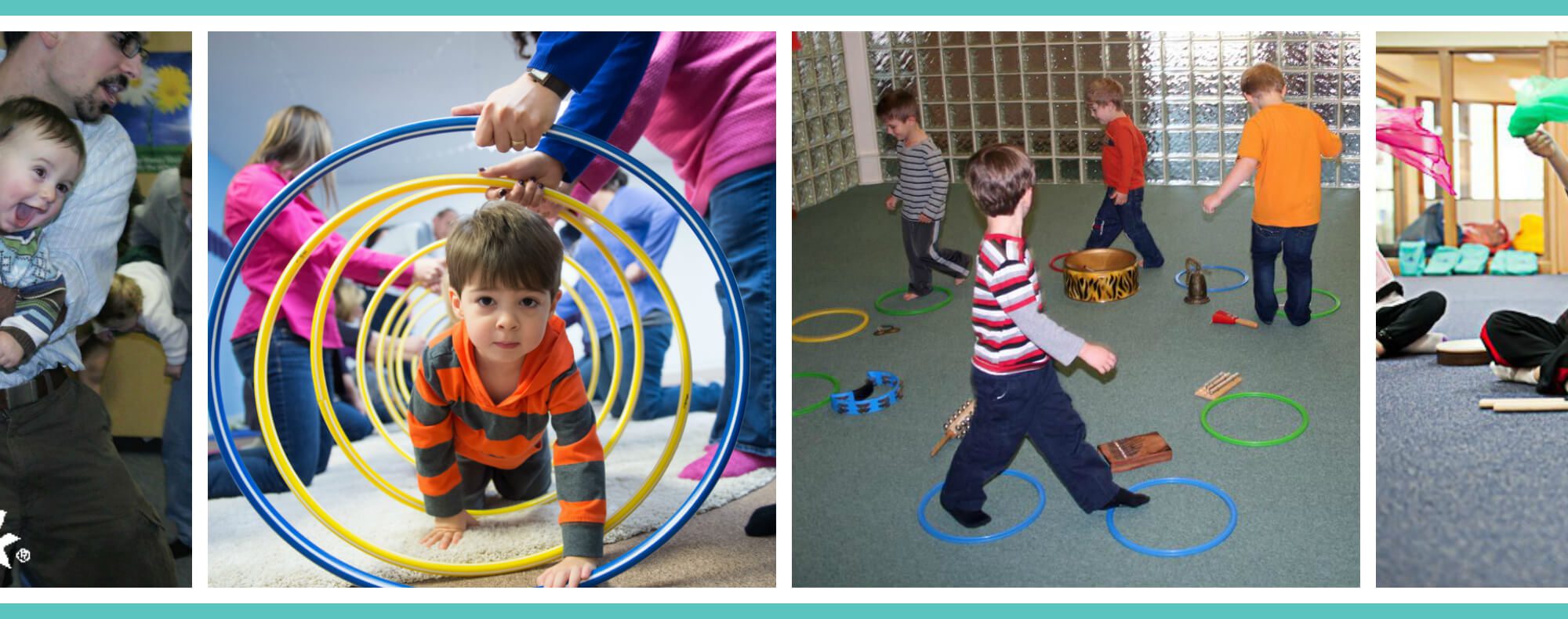
When does the most powerful and sustaining learning happen?  Look in the window of any Kindermusik classroom, and you’ll see the answer right away.  The best and most effective learning happens when both body and mind are engaged.  Simply put, movement wakes up the brain, enhances understanding, and increases retention.

Kindermusik movement and learning

Interestingly enough, researchers and professors are beginning to take the concept of “embodied cognition” and applying is the field of technology and learning that is explored and done on computers.  Two different independent studies demonstrated that college students ability to learn, understand, and apply increased significantly when they physically manipulated animation or who used a joystick to move gears.

It is helpful to point out that moving to learn (and learning to move!) become even more critical when the challenge of understanding is greater; for example, the younger the student, the more important it is to add an element of physicality to the learning process.

But why does involving the body in the learning process improve the learning and enrich the understanding?  Here is a brief summary of some of the key points in Annie Murphy Paul’s fascinating article, “Let’s Move! How Body Movements Drive Learning Through Technology”:

  • Hands-on, physical participation in the learning process makes the abstract more concrete.
  • When movement is connected to a concept, it provides the brain with pegs, or cues, for recalling that learning.
  • Acting on information more deeply ingrains the learning in the mind.
  • Moving as part of the learning process improves the cognitive process by making it less mentally taxing and frees the mind to understand at a deeper level.

It is becoming more and more evident that there is a compelling connection between movement and the mind.  This is precisely why joyous, early learning music and movement experiences like those experienced in a Kindermusik classroom are so potent and have such a lifelong benefit for children.

Shared by Theresa Case whose award-winning Kindermusik program is located at Piano Central Studios in the beautiful upstate of South Carolina.

Educator Spotlight: Katie Henderson at Music Connections Foundation

Educator Spotlight

Katie Henderson is the director of Music Connections Foundation in Bloomington, Illinois, where they have an award-winning Kindermusik program that is the highlight of their not-for-profit foundation. Music Connections became a Not for Profit Foundation in 2008 in order to broaden the impact of their Kindermusik program. To date, Music Connections has drastically increased their outreach to low-income families via individual Foundation Scholarships, as well as to families of children with special needs, adopted children, at-risk two year olds, autistic children, single parents, and to seniors. Partnerships with outside organizations have included Marc Center, SPICE, Heritage Manor, Westminster Village, Western Avenue Community Center, Evangelical Free Church, East White Oak Bible Church, Illinois State University’s Music Therapy Department, the Autism Society and CIDSO (Central Illinois Downs Syndrome Organization)The Basics

TC: You are one busy lady! What other hobbies do you have besides teaching Kindermusik and running the Foundation?
KH: I would say that my biggest hobby of late is keeping track of all my daughter, Grace, has going on, and enjoying all of her musical pursuits in this, her senior year of high school! Otherwise, I love to experience the beauty of nature in all forms – sunsets, mountains, oceans, flowers peaking through the ground – this brings me joy!

TC: What do your Kindermusik kids call you?
KH: Kindermusik kids call me “Mrs. Henderson”. I didn’t know other teachers, thus other options like using first names, when I began in 1994

Henderson Spotlight
Mrs. Henderson blows bubbles with some of her kids

Kindermusik and Katie


TC
: If I could interview your Kindermusik families, how do you think they would describe you?
KH: Hm……How would they describe me?   I guess I haven’t asked them lately! I hope they would say that I LOVE their child immeasurably – I do recall a parent once commenting that I treated every child like they were the most special one in the classroom – and that was a great compliment. I would also hope they would say that I am extremely passionate about what I do in my “job” as a Kindermusik educator.

TC: What do you love most about teaching Kindermusik?
KH:   It’s hard to identify one favorite part of teaching!   One aspect is definitely the chance to empower the grownups in their important jobs as parents, helping them to understand how they can easily impact their child’s optimal development and make parenting easier and joyful using music.   Another has to be the love I receive from the children every single time I step into the classroom.   Third, I would say that I love that this profession is forever challenging me to grow and change – and I love that ongoing journey!

Favorites

TC: What are some of your favorite Kindermusik songs, and why?
KH: My favorite Kindermusik songs are typically associated with a favorite classroom moment, and many are Quiet Time or Rocking songs, as I am so often overcome with emotion watching parents take the time just to “be” with their kids during these class. Just a couple are: “The Water is Wide,” when I can remember first watching a parent with two kiddos (one little and one quite big) straddle their lap and cuddle, some twenty years ago; “You are My Sunshine,” with a cacophony of 10-12 different names being inserted in place of the word ‘sunshine’ – “You are my Gracie,” “You are my Nathan,” etc.

TC: How about a favorite Kindermusik dance?
KH: Favorite Dance – a hard choice for sure, as there are some great new dances in the new monthly units, but my “old brain” recalls when the Kindermusik Village curriculum was brand new and we had a VIDEOTAPE to teach us all the dances in Do-Si-Do! It seemed a huge undertaking to learn all of those at the time, but was such an enrichment to “Village” – I loved the “Virginia Reel” and “Tango Cha Cha” in that unit.

Success, Smiles, and Special Moments

TC: You have had a hugely successful program here at Music Connections. What’s your secret?
KH: One secret to success is to learn to let go of the lesson plan, and of the idea that you have to follow the plan exactly and/or “get to” everything; to relax and be in the moment with the children AND with the parents – to get personal with them and to be in relationship with them.

TC: And if you could share one tip with a new Kindermusik business owner, what would it be?
KH: Don’t do it all yourself. Come to understand what you are best at, and do THAT, and find others to fill in the gaps! Also – don’t look to replicate yourself in others on your team! Building of team of like-minded, impassioned folks, with varying strengths and abilities, will reap immeasurable rewards in your business.

TC: Share with us some of the most touching moments you observe or experience in your Kindermusik classes.
KH: Some of the most touching moments are celebrating the milestones achieved in class – like a baby taking its first steps, or an extremely active kiddo finally laying down for Quiet Time are special, of course. But I have also been deeply touched – often blown away, really – when we have asked parents to tell us, outside of class, what they love about Kindermusik, and they provide these eloquent testimonials about how we have changed their lives! One parent recently told how she was experiencing extreme post-partum depression, to the point that she could barely leave the house, and someone invited her to visit a class; she described in great detail how welcomed she felt, and how she was drawn to come back the next week because we had been so genuine and kind to her. She detailed how we literally “saved her life” at that time, and I had NO idea about it! (She’s been in for nearly four years and now has a second kiddo enrolled)

TC: What has been one of your most impactful moments in your Kindermusik career?
KH: Though I’ve had many individual experiences, what stands out at this point in my career is the big picture of our business’s journey. We became a Not for Profit in 2008, our 15th year in business, to be able to provide services to larger groups of kids/people with special needs or those at risk. I have a staff who teaches most of these outside classes – for Hispanic families, at-risk two year olds, special needs kiddos, seniors with moms who couldn’t otherwise afford our services, etc.; when I get to the various sites and observe these families who overcome obstacles to make a commitment to get to class (many don’t drive or have cars), and watch them try to sing in English, or reach out to interact with seniors, or work with such patience with their special needs little one – it is then that I stand back and soak in the impact of what we do! It extends well beyond me, with the ripple effect from a team of dedicated ladies (both teachers and my administrator) who give of their hearts and souls as well. I am overwhelmed with gratitude for what I believe to be God’s gift to me, 22 years ago, in finding purposeful, rich “life’s work,” and serving thousands of kiddos and families along the way.

TC: What are some new and exciting things happening with the Music Connections Foundation?
KH: In connection with our 3rd annual yearly fundraiser, an evening entitled “Open Your Heart to Music,” we had a video made to highlight the work that we do as a Not for Profit. We will be cutting it down, eventually, into “snippets” we can use in advertising/marketing efforts, but I am excited that it tells an important story, and was successful, at this event, in helping us to raise nearly $19,000.00 to support the work we do!

The Future

TC: What’s next for you and for the Foundation?
KH:   Well, if you want my 10 year, long-range plan, I believe it is that our business will find a new, young leader (or leaders) who can embrace “cutting-edge” ways of doing business that will take us into the next 20 years of Kindermusik, presented by Music Connections Foundation, in our community! I will always stay involved, but would love the role of “Community Advocate,” where I have the time to “pound the doors” of businesses and the “powers that be” in our community, educating them on how music at a young age is crucial, and soliciting funding to support the expansion of our offerings. I also want to see Kindermusik@schools becoming a part of Head Start options in our area. For now, however, I am still on the floor with the kids… for as long as my knees will allow it!


Theresa Case is the director of Piano Central Studios in Greenville, SC, where her award-winning Kindermusik program is part of a vibrant, thriving, community music school. In addition to being a former member of both the KEA and PKE Boards, Theresa has also worked with Kindermusik International on such projects as piloting Village and Imagine That!, developing the original Fundamentals course, contributing to the Imagine That! teacher guides, serving as co-author for the first two units of Family Time, working on the early ABC teacher videos, and presenting various professional development webinars and conference break-out sessions. By far, though, Theresa’s favorite life work includes serving in her church and being a wife and a mother. She and her husband have three boys.

Online Toys for Music Joys: Google’s Chrome Music Lab

[vc_row][vc_column][vc_column_text]Greetings music fans! In celebration of the National Association for the Education of Young Children’s Week of the Young Child™, I thought we’d check out Google’s Chrome Music Lab. This is a collection of extremely fun, visually and aurally appealing applets that the geniuses over at Google created. These little apps are seriously entertaining and have the potential to bring some smiles to the faces of not just little ones, but adults as well. Let’s explore some of the musical experiments…[/vc_column_text][vc_custom_heading text=”The Chrome Music Lab” font_container=”tag:h2|text_align:left|color:%23dd3333″ link=”url:https%3A%2F%2Fmusiclab.chromeexperiments.com%2FExperiments||target:%20_blank”][/vc_column][/vc_row][vc_row][vc_column][vc_column_text]Chrome Music Banner[/vc_column_text][vc_column_text]What is it? For Music in Our Schools Month, the coders at Google got together with some musicians and created these interactive experiences using readily available features of the web. Accessible from any internet connected device, the current twelve musical experiments explore different aspects of music, from rhythm to melody and pitch to harmony. If accessing through a smart phone or tablet with a touch screen, you can physically interact with sound. It’s pretty addictive and loads of fun.[/vc_column_text][vc_separator color=”juicy_pink”][vc_custom_heading text=”The Rhythm Animals” font_container=”tag:h3|text_align:left|color:%23dd3333″][vc_column_text]

Chrome Music Lab - rhythm Chrome Music Lab - rhythm Chrome Music Lab - rhythm

[/vc_column_text][vc_column_text]The Rhythm Animals are a collection of beastly percussionists who play their instruments following your instructions. By selecting cells in the grid below the pair of adorable, furry musicians, you can create a loop of drumming delights.[/vc_column_text][vc_video link=”https://www.youtube.com/watch?v=FzLQCoZUlEQ” el_class=”560 x 315″][vc_custom_heading text=”Kandinsky” font_container=”tag:h2|text_align:left|color:%23dd3333″][vc_column_text]I think Kandinsky is my favorite. Named for artist Wassily Kandinsky, who often compared painting to making music, this little experiment does just that. As you draw, your squiggles and shapes come to life as sounds. Specific shapes make specific sounds – and where you place your drawing impacts the sound it makes. Doodles up high on the page produce higher pitches. Circles turn into cute little faces. Triangles become percussion instruments. You can also change your sound palette by clicking/tapping the bicolored circle next to the play button.

[/vc_column_text][vc_single_image image=”8681″ img_size=”full” alignment=”center” onclick=”custom_link” img_link_target=”_blank” link=”https://musiclab.chromeexperiments.com/kandinsky”][/vc_column][/vc_row][vc_row][vc_column][vc_custom_heading text=”Spectrogram” font_container=”tag:h2|text_align:left|color:%23dd3333″][vc_column_text]The Spectrogram is probably the coolest  and most science-y (a word I just made up. You’re welcome, Webster) toy. Remember my post on overtone singing? Well, the Spectrogram allows you to see the overtones! If you use the applet from an Android device or your computer, it can access your microphone and show you a visual representation of your voice – or any sound. It’s almost mystical. Here is a video of me paying a bit with the Spectrogram applet.[/vc_column_text][vc_video link=”https://youtu.be/4QRmLBEkARg”][vc_separator color=”juicy_pink”][vc_column_text]There are several other experiments you and your kids can play with. Try the Melody Maker or the applet that will play Chords for you. The Music Lab makes some complex aspects of music surprisingly accessible. Being able to see and hear and touch the music is incredibly powerful. The Chrome Music Lab can be found here and will work across devices (computers, smart phones, tablets) but the most fun and functionality to be had certainly is with Android touch-enabled devices. But don’t let that stop you if you are an i-device user. When you aren’t making live music with your child at a Kindermusik class and need that interactive fix, check out the Music Lab. Happy music making![/vc_column_text][/vc_column][/vc_row]