Why the Wiggles Aren’t Bad: Understanding the Vestibular System and Children’s Need for Movement

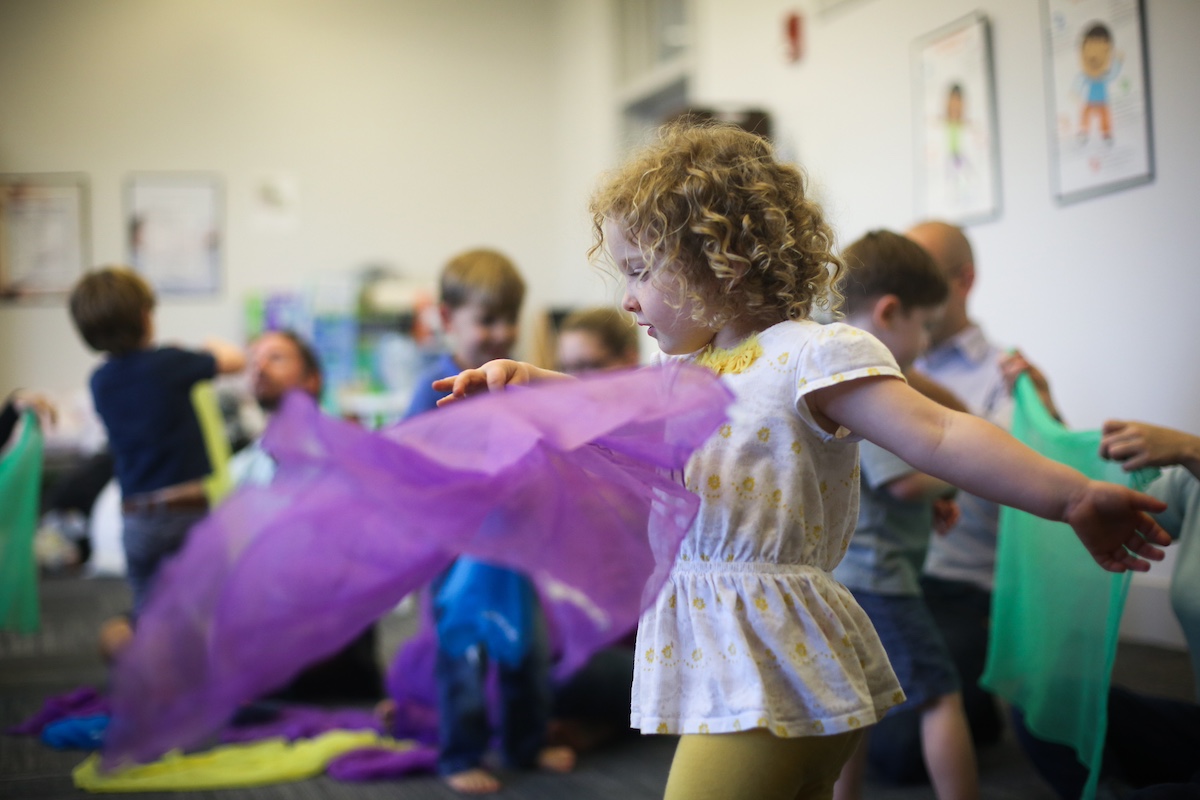
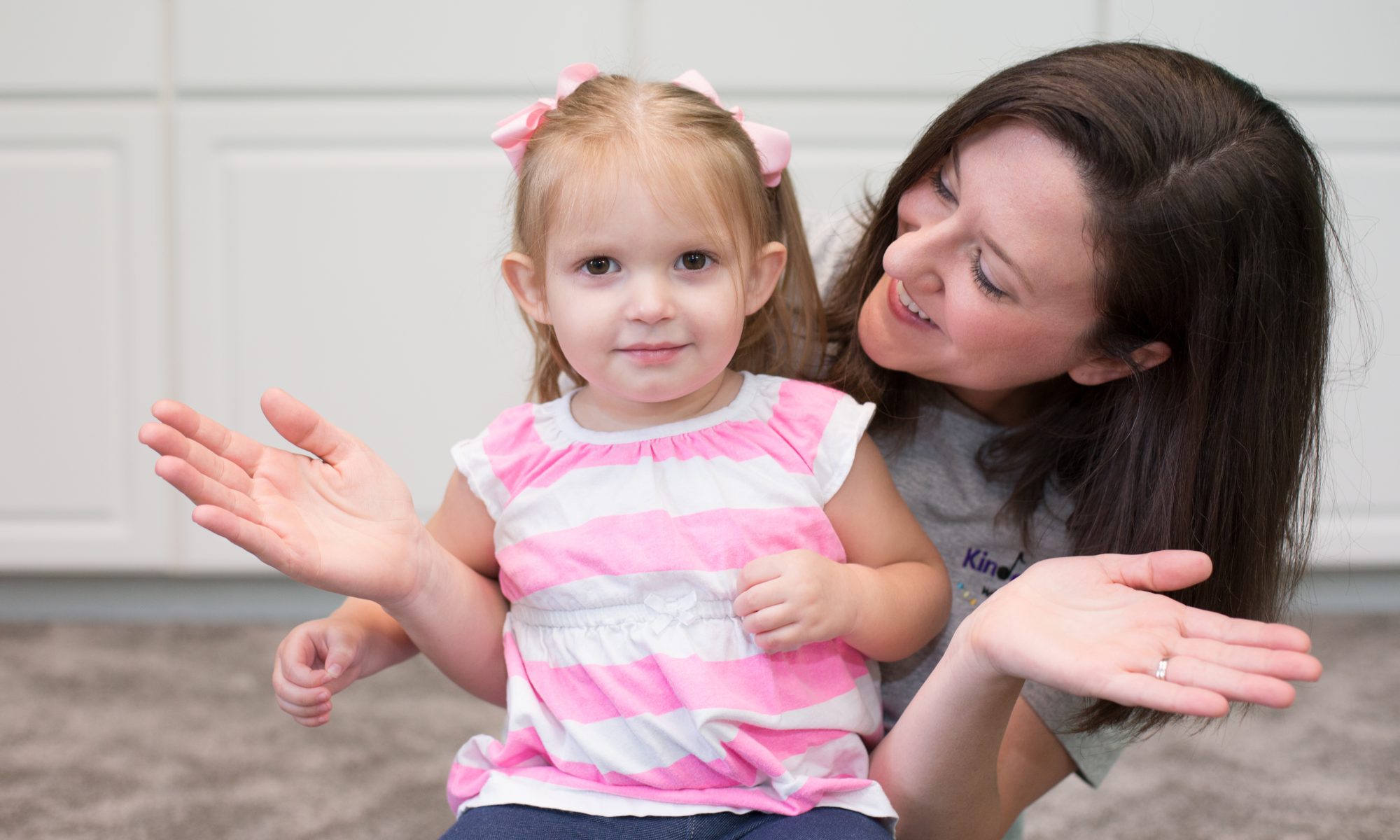
3-year-old girl twirls with scarf during a Kindermusik class to stimulate the vestibular system.

This post was authored by Accredited Kindermusik Educator and Early Education Specialist, Diana Cameron.

Is your child constantly jumping, spinning, or rolling around the floor? Or perhaps they seem the opposite — motion-sensitive, hesitant to swing, or quick to get carsick?

These behaviors aren’t just quirks. They often point to a vital and often overlooked part of your child’s brain development: the vestibular system.

What is the Vestibular System?

The vestibular system is located in the inner ear and is responsible for balance, movement, and spatial orientation. It works like the body’s internal GPS—helping us know where we are in space, whether we’re moving or still, and how to coordinate what we see and hear with how our body moves.

In children, a healthy vestibular system supports everything from emotional regulation to motor planning and even early literacy.

According to Dr. Christopher Zalewski, audiologist and National Institutes of Health research scientist, vestibular input plays a foundational role in developing posture, balance, and cognition. It also helps the brain prioritize sensory messages and stay organized. When functioning well, it frees the brain to focus, attend, and learn.

What Happens When It’s Out of Sync?

When the vestibular system is dysregulated, children may behave in ways that seem puzzling or disruptive, but are actually adaptive.

Some children seek movement. They might:

  • Jump on furniture
  • Spin in circles
  • Rock their bodies
  • Hang upside down

These are not acts of misbehavior. They’re strategies to get the sensory input their brain craves to feel grounded.

Other children may avoid movement. You might notice:

  • Fear of swings or playground equipment
  • Discomfort when their head is tilted
  • Motion sickness in cars
  • Reluctance to climb or spin

In both cases, children are communicating through action. When the vestibular system is out of sync, behavior becomes a form of self-regulation, not rebellion.

And here’s something many people don’t realize—right before children learn a major new movement skill, like jumping or climbing, their brain goes through a kind of “vestibular upgrade.”

You’ll start to see clues: more spinning, rolling, or swinging.

Here’s How You Can Help…

Movement is the answer. That’s why Kindermusik includes intentional, rhythmic movement that stimulates the vestibular system in a safe and supportive way within every level of our curricula.

Before major motor milestones like crawling, walking, or jumping, a child’s brain needs what I call a vestibular upgrade. This often shows up as a spike in spinning, rolling, or bouncing activity 6–8 weeks before the new skill is mastered.

Knowing this, parents and educators can respond with patience and purpose.

And music-based movement activities really pack a punch. A McMaster University study showed that vestibular activity is directly connected to musical rhythm processing—a powerful reason to combine music with movement.

Try these simple vestibular-supportive, music-based activities for each stage of early childhood.

Vestibular System Activities for Babies

Try 3-way rocking.

Gently rock your baby:

  • Side to side
  • Forward and back
  • In a circular motion

Pair this with humming or soft music for added calming effects.

One of our favorite songs for rocking is “Golden Slumbers.” Play it here or stream it (and many other options) from the Relaxation album in the free Kindermusik app

“Golden Slumbers” from the free Kindermusik app.

Vestibular System Activities for Toddlers

Encourage rolling on the floor, spinning games, or gentle swinging. 

These activities build vestibular pathways needed for jumping, running, and balance.

You can easily incorporate this stimulation through pretend play:

  • For walkers: Using tissues or lightweight scarves, pretend to be birds flying and spinning around the room. 
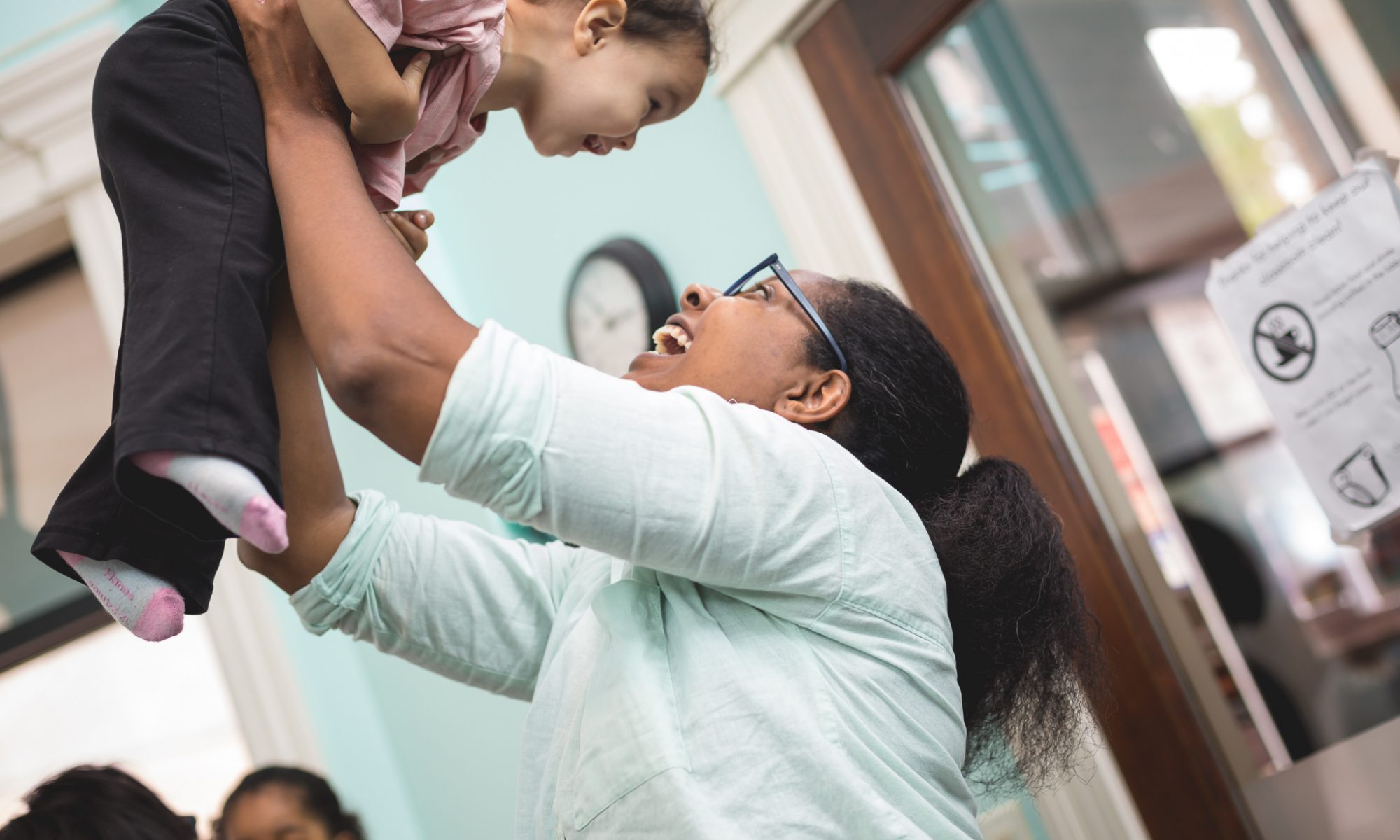
  • For non-walkers: Pick up the child and gently swing and fly them around the room. Please make sure to safely hold them—to swing them low to the ground, hold their torso under their arms with your hands clasped together across their chest. To swing them up high, place one arm from shoulder to opposite under arm and the other arm through their legs.
“Come Fly with Me” in the free Kindermusik app.

Vestibular System Activities for Preschoolers

Incorporate direction and rhythmic changes during musical play. 

For 3-5-year-olds, these activities integrate vestibular input with coordination and self-regulation.

Try “Waltz and Jig” from the free Kindermusik app (or play it below). This song goes from a gliding waltz to a bouncy jig within the same track. 

  • Encourage children to twirl and move gently in one direction around the room as the waltz plays. 
  • When the music changes to “Dance a jig…”, instruct them to bounce to the beat in the other direction. 
  • Continue these changes throughout the song.
“Waltz and Jig” from the free Kindermusik app.

Your child’s constant motion (or movement reluctance) isn’t random—it’s a message. And once you understand the role of the vestibular system, that message becomes clear.

Movement isn’t just fun. It’s foundational. It supports balance, focus, behavior, and learning from the inside out.

So the next time your child endlessly jumps, spins, or wiggles, take a breath and ask “What is their brain telling me?”

By supporting vestibular development through intentional and safe musical play, we’re helping answer a developmental need, and giving children the tools they need to thrive.

Diana F. Cameron (MEd) is an Accredited Kindermusik Educator, Kindermusik University coach, and early childhood development specialist in Queensland, Australia. She’s also the owner of Building Brain Connections—find more of her educational videos here.

For more vestibular system activities, find a Kindermusik class near you or check out our teaching solutions for ages 0-6. 

Why Clapping Is the Unsung Hero of Early Development + Activity Ideas

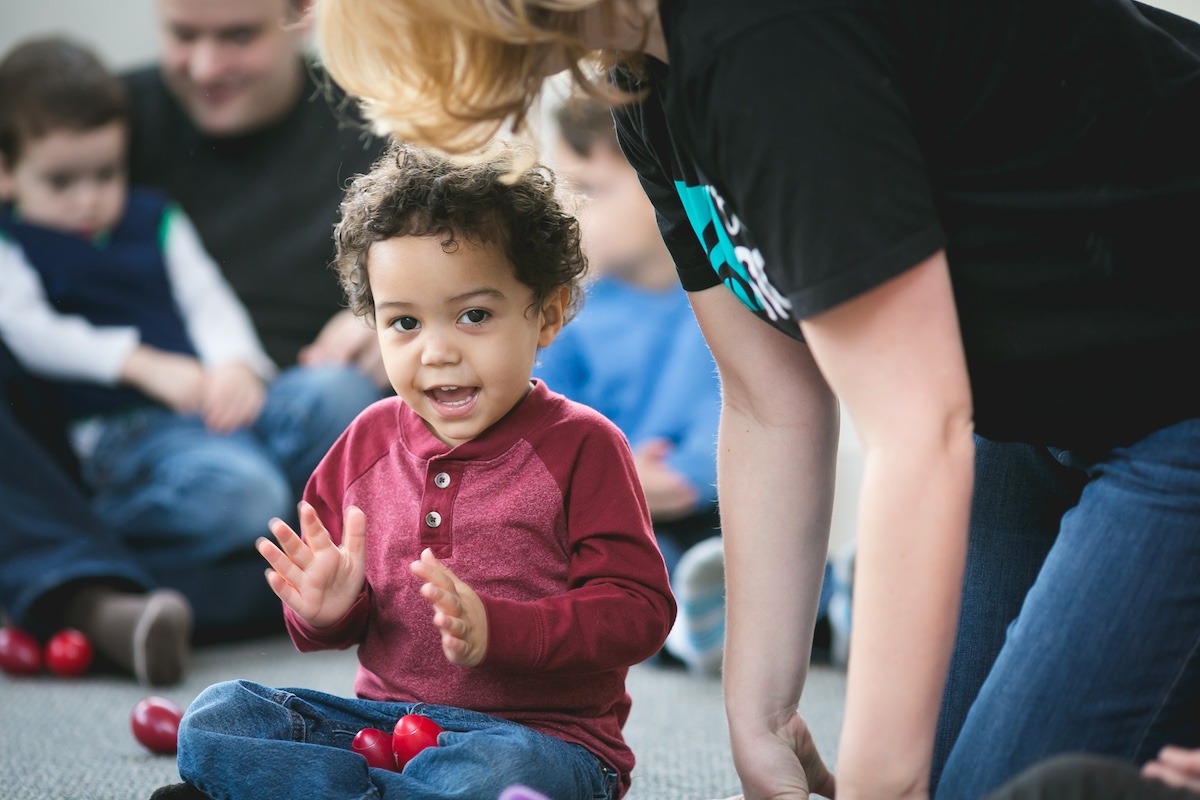
A 3-year-old boy claps to the beat during a Kindermusik class. Clapping is a foundational tool for early development.

Clapping is generally perceived as a tool for keeping time with the music or showing appreciation as applause. However, the biological and neurological effects of this simple motor activity reach far beyond songs and ovations, enhancing self-regulation, reading skills, handwriting proficiency, and speech processing.

Take a look at what’s happening in our brains and bodies when we clap, why it is so intrinsically connected to early childhood development, and initial steps you can take to help children harness the power of their hands.

Continue reading “Why Clapping Is the Unsung Hero of Early Development + Activity Ideas”

How Musical Play Boosts Youth Sports Performance

What does early musical play have to do with youth sports? If you’re thinking of signing your toddler or preschooler up for t-ball, soccer, gymnastics, etc., take a look at these links between athletic ability and intentional music and movement. You may be surprised at how much it can help little ones gain confidence early in their sports journeys, and how much longer it might help them stick with it.

Continue reading “How Musical Play Boosts Youth Sports Performance”

How Music Affects the Science of Reading

A mother taps out a beat to a song in Kindermusik class. Practicing steady beat is one way to support the science of reading.

The Science of Reading is kind of a buzzword these days in the early education and parenting worlds, but what does it really mean and what role does music play?

In a nutshell, the Science of Reading is a catch-all term for the massive amounts of research that look at how our brains learn to read through decoding, phonemic awareness, and more. It doesn’t just happen, it’s science, and educators around the world are tapping into its framework.

What might be missing from traditional classrooms and at-home efforts? Music!

Continue reading “How Music Affects the Science of Reading”

How Music + Emotion Bridging Helps Toddlers Navigate BIG Feelings Early On

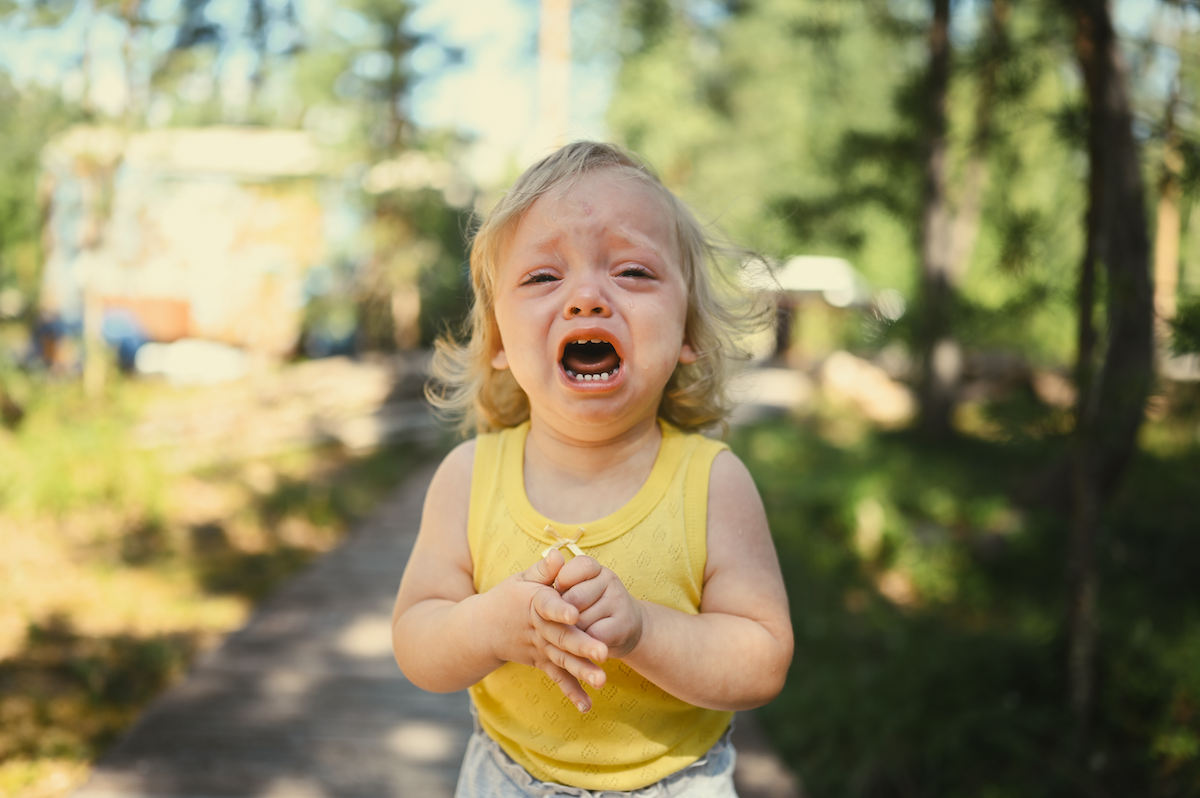
Toddler has tantrum at playground. How music plus emotional bridging can help pacify this situation.

Toddlers can be gloriously happy one minute and extremely upset the next.  Their little brains are undergoing so much growth in those early years, and they don’t yet have the vocabulary, context, or life experience to identify and process all of those emotions.

Helping toddlers understand and articulate their feelings can ease the chaos, but how?

Researchers at Michigan State University found that a simple strategy, called “emotion bridging,” can do just that, with the end result of fewer behavioral problems.

Emotion bridging is a straightforward, three-step process:

  1. Labeling the emotion: sad, happy, upset, mad, etc.
  2. Putting it into context: feeling this because of that
  3. Making a relevant connection: “Remember when you felt [emotion] because of [situation/experience]?”

One way to help the learning stick? The connective, transformative power of shared musical experiences.

Continue reading “How Music + Emotion Bridging Helps Toddlers Navigate BIG Feelings Early On”

3 Ways Music Enhances Auditory Processing

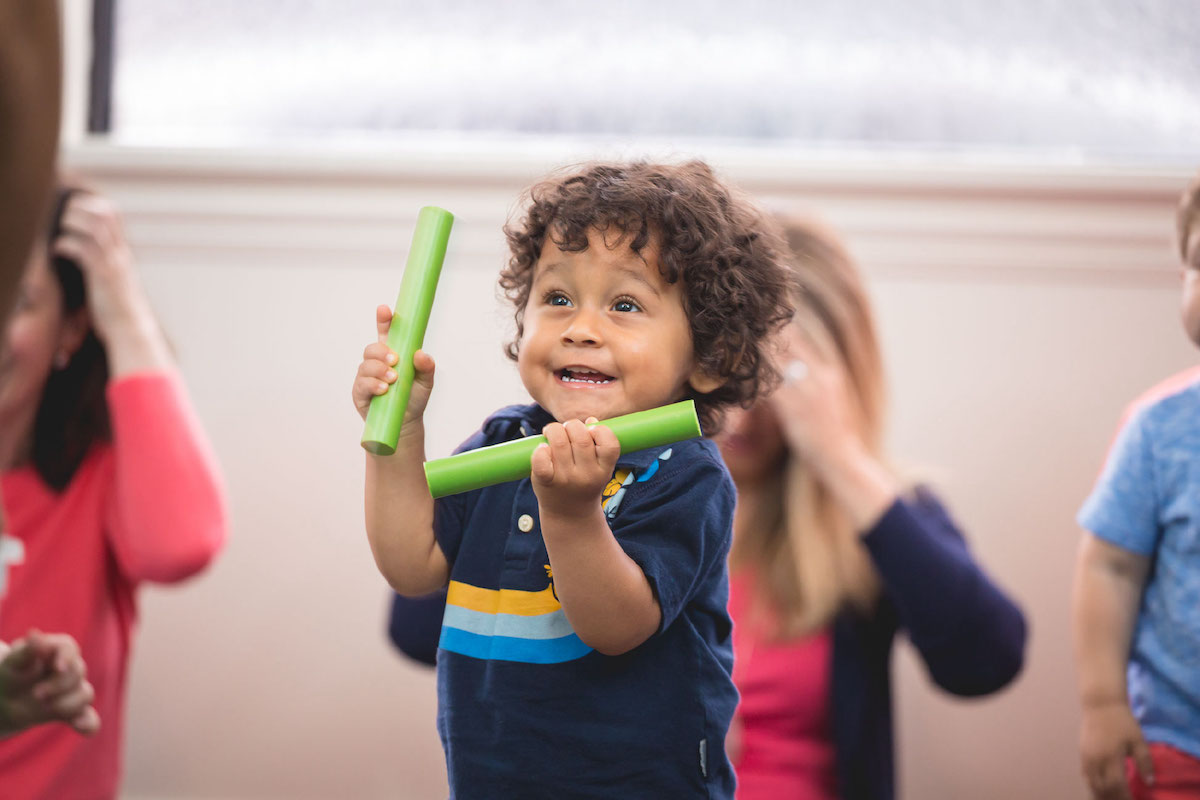
A 2-year-old boy prepares to play the fiddle sticks in a Kindermusik class.

The pressure to establish strong pre-readers can be overwhelming. Early literacy development (the foundations needed for reading and writing) depends greatly on auditory processing skills, which includes auditory identification, discrimination, and sequencing. It’s hard to imagine the time it would take to focus on all of those skill sets individually. But there’s a one-stop-shop. 

Continue reading “3 Ways Music Enhances Auditory Processing”

Why Spatial Awareness Is Critical to Whole-Child Development

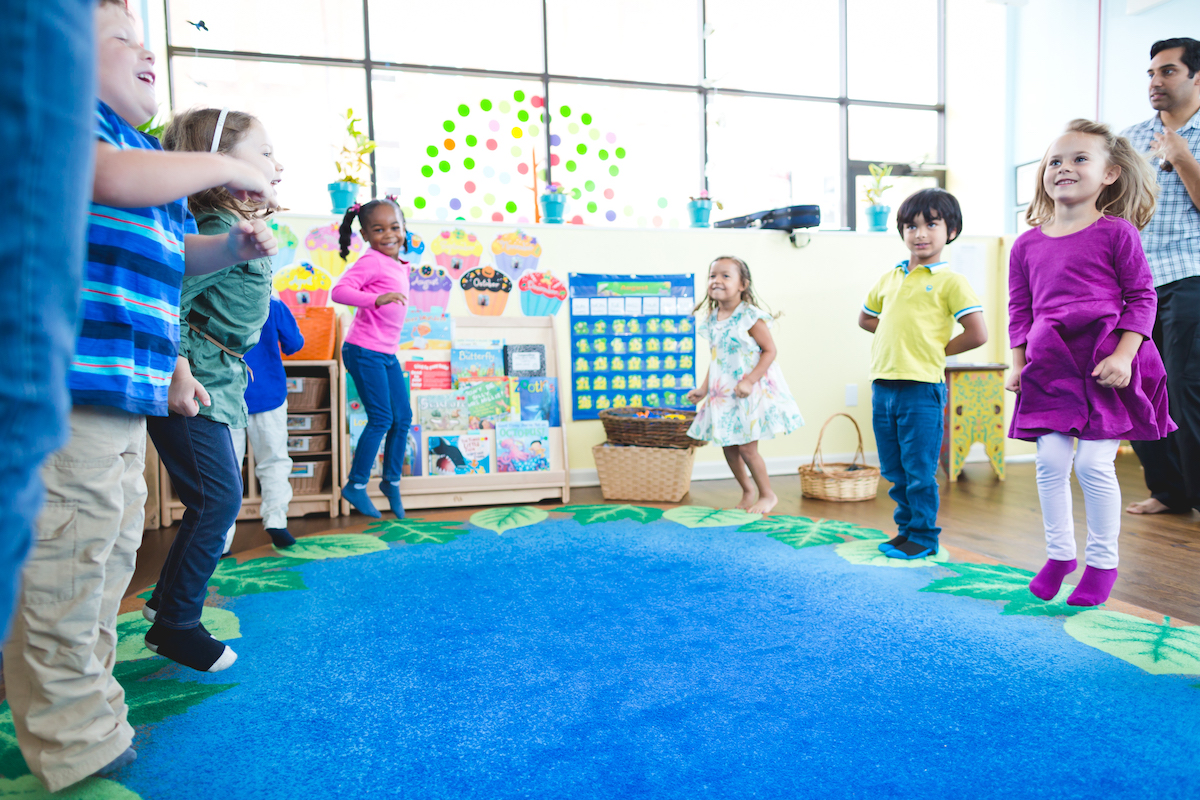
Preschool children jump in a defined space to build spatial awareness skills during class.

In a nutshell, spatial awareness is the understanding of objects (including your own body) in relationship to the surrounding space. For children, that starts with discovering hands and feet, grows to moving safely on a playground, and leads to judging distances while driving or solving math problems. It’s a huge skillset that affects so many critical aspects of positive whole-child development.

So how do you know if little ones are on or off-track with these skills?

Continue reading “Why Spatial Awareness Is Critical to Whole-Child Development”

Why Steady Beat Matters + How to Assess It

A teacher engages her preschool class in mimicking drum taps to test steady beat competency.

You know that thing that makes you want to rock, sway, clap, or tap to the music? That’s steady beat—the ongoing, repetitive pulse that occurs in songs, chants, and rhymes. 

But it’s more than just an ideal skill for dance or instrument lessons—steady beat is a critical aspect of early childhood development that affects everything from walking, to reading, to dribbling a basketball.

Continue reading “Why Steady Beat Matters + How to Assess It”

Preschool Music Best Practices Are Clear: Why Policy Needs to Catch Up

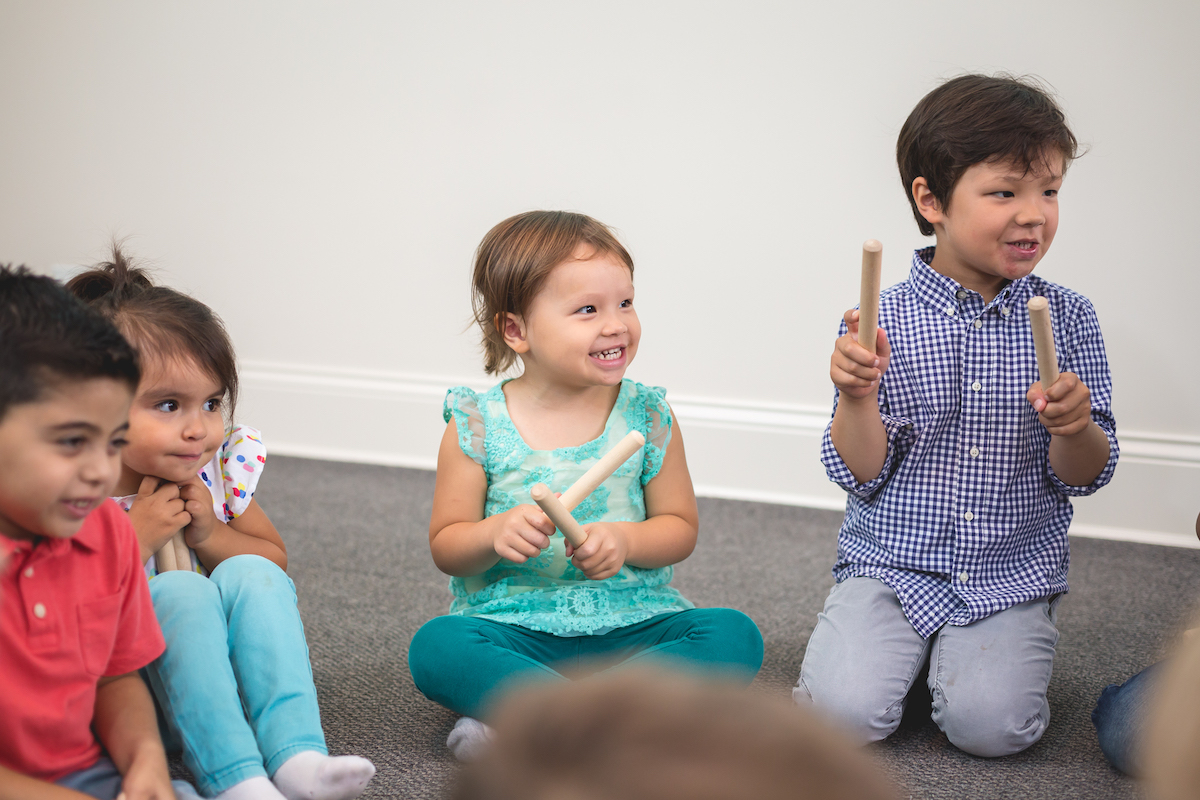
Preschoolers play wooden sticks during circle time to strengthen early handwriting skills.

An open letter from Kelly Green, President of Kindermusik International

If you ask preschool administrators what they’re doing to incorporate music into their classrooms, the answer usually looks something like a few songs during circle time, a clean-up song, some background music during play, and perhaps some instruments to investigate in a learning center.

What’s missing is intentional, child-participatory music-making during play and choice time—which is where so much learning actually happens.

In “Best Practices for Preschool Music Education: Supporting Music-Making Throughout the Day,”  Dr. Jentry Barrett of University of Nebraska-Lincoln goes beyond “music is good.” She and her colleagues spell out what high-quality music-making actually looks like in preschool and which curricula are doing it well.

Even more exciting (and humbling): when the researchers compared several commercially available preschool music programs, Kindermusik was the curriculum that aligned with the greatest number of best practices.

This paper gives us a powerful bridge between what the research says and what policy makers, standards writers, and program leaders can do next.

The Big Shift: From “Music Time” to Music All Day

According to years of research, not weaving in intentional, shared music-making into preschool curricula itself is a huge missed opportunity because music is a cross-domain accelerator. Planned, teacher-directed music instruction:

  • Improves language and literacy: Singing supports phonological awareness, rhyming, prosody, and vocabulary—the very pre-reading skills many states are racing to shore up.
  • Builds pro-social skills like cooperation and empathy: Shared music-making encourages cooperation, turn-taking, inhibitory control, and empathy.
  • Supports gross motor development and coordination: Movement and instrument play support gross and fine motor skills, coordination, and body awareness.
  • Enhances cognitive development and executive function: Music games that involve starting, stopping, patterning, and following multi-step directions exercise attention and working memory.

The paper also highlights serve-and-return interactions in musical contexts—those back-and-forth “my turn, your turn” exchanges between teacher and child using song, drums, shakers, or claps. These are not “nice-to-haves;” they are the same kind of reciprocal interactions that Harvard’s Center on the Developing Child identifies as foundational to healthy brain development and language growth.

In other words, when children are actively making music in a group—as opposed to passively listening—it’s not an extra. It’s a strategy that directly supports the very outcomes most early childhood systems are under pressure to improve.

Why Teachers Don’t Feel Ready to Incorporate Shared Music-Making 

(And why that’s a policy issue)

Barrett and her co-authors surface an important truth:

  • Most preschool music experiences are led by classroom teachers, not music specialists.
  • Those teachers often have little or no formal preparation in music or the creative arts.
  • They report needing more training, concrete lesson ideas, and access to instruments.

So, the gap isn’t a lack of goodwill. It’s a systems problem: policies and standards expect music, but they rarely fund the training, planning time, and vetted resources needed to do it well.

That’s exactly the space Kindermusik’s audio-led programming was built to inhabit—giving early childhood teachers who are not music specialists everything they need to confidently lead high-quality music-making (but we’ll come back to that).

What Does “Best Practice” in Preschool Music Actually Look Like?

The University of Nebraska-Lincoln researchers did something incredibly helpful: they pulled together state and national early learning standards, major curricula like Creative Curriculum and HighScope, music education texts, and early childhood organizations such as NAEYC and NAfME, and distilled them into nine best-practice standards for preschool music.

Across those nine best practices, three big buckets of music-making emerge, and here’s what they look for 3–5-year-olds:

1. Singing

  • Children sing often.
  • Songs are pitched in a child-appropriate range (roughly middle C to A above middle C) so they can sing in tune without strain.
  • Repetition is intentional—children may need to sing a song many times before they can reproduce words, rhythm, and pitch confidently.
  • Songs reflect cultural diversity and invite children to express preferences and feelings about what they hear.

2. Using Instruments

  • Children start with body percussion—clapping, patting, stomping—before transitioning to rhythm instruments like sticks, shakers, and drums.
  • Instrument play is not randomized; it’s connected to beat, patterns, and listening games.
  • As skills grow, children can use more complex percussion (like glockenspiels or xylophones) for melodic exploration.

3. Movement & Dance

  • Children move freely to music long before we expect perfectly synchronized marching or clapping.
  • Movement is used to explore tempo, dynamics, and mood—not just “wiggle time.”
  • As they get older, children can participate in simple circle or line dances, matching their bodies to the beat.

Across all three, one core principle is clear:

Music in early childhood should be participatory, playful, and integrated, not performance-based.

We’re not rehearsing for a show. We’re wiring the brain for learning and connection.

How You Can Help: Send a Direct Message to Policy Makers

So what do we do with all this? If you’re in a position to influence standards, funding, QRIS criteria, or curriculum adoption, here’s what this research (and decades of practice) suggest:

1. Name active music-making explicitly in standards.

Don’t stop at “exposure to music.” Call out daily, participatory singing, movement, and instrument play as core experiences for 3–5-year-olds.

2. Fund training, not just materials.

Remember, most preschool teachers are not music specialists and say they need more support and ideas.

  • Invest in professional learning that builds musical self-efficacy.
  • Prioritize programs (like Kindermusik) that go beyond a box of materials, and include strong professional development and training.

3. Screen curricula against research-based best practices.

Ask:

  • Does this program integrate singing, instruments, and movement—every week, all year long?
  • Is it participatory rather than performance-based?
  • Does it respect children’s vocal range and developmental sequence?
  • Does it intentionally connect music to language, social-emotional learning (SEL), and physical development goals?
  • And does it meet all nine of the best practices outlined in Barrett et al.?

5. Embed music-making into accountability frameworks—not as an afterthought.

Literacy, SEL, and school readiness matter. So, music-making shouldn’t live in the “extras” section of the standards manual. It should be one of the levers you expect programs to pull—and support them to pull well.

How Kindermusik Shows Up and What’s Next

One of the most validating parts of the paper, from my vantage point at Kindermusik, is the section where the authors independently review several preschool music curricula to see how well they align with these nine best practices.

“Notably, although these curricula included many best practices, Kindermusik incorporated the most.

In their appendix, they map Kindermusik’s program against each best practice and find that it aligns with all nine.

What does that look like in action?

  • Singing is woven through every lesson, with clear vocal models and repetition designed around how children actually learn songs.
  • Instrument play is purposeful and progressive: children explore shakers and drums, tap and rub rhythm sticks, and eventually move into more melodic percussion.
  • Movement is built into each unit—free dance, guided actions, circle games, and beat-matched movement.
  • Activities are participatory, not recital-driven; success is measured in engagement, not perfection.

Our teach-along curricula is explicitly designed so non-musician early childhood teachers can implement it with confidence, supported by Kindermusik University training and ongoing coaching.

For decades, preschools offering Kindermusik around the world have seen the fruits of what Barret and her colleagues describe—a clear, research-backed blueprint for what preschool music education should look like. 

The next step is not more evidence that music matters. We have that.

The next step is policy that treats music-making as essential infrastructure for early learning, and partners with programs that already know how to do it well.

With gratitude,

Kelly Green

Kelly Green is President of Kindermusik International, the global leader in early childhood music-and-movement. For more than 30 years she has championed what’s best for young children’s development. During her tenure at Kindermusik, one thing has become clear: practice and neuroscience show the power of active music-making, but policy still lags behind—a gap she is determined to help close.


Kindermusik Top Program: My Little Conservatory

Kindermusik Top Program 2025

Have you ever searched for a Kindermusik class and wondered what that circular “Top Program” icon really means? Each year, we award Kindermusik Top Program status to studios across the globe with the highest registrations and other factors that contribute to their offerings being the best early childhood music and movement programs around.

This year, the very TOP of the Top Programs is My Little Conservatory in San Jose, California. Owned by Accredited Kindermusik Educator, Amelia Vitarelli, My Little Conservatory’s recipe to an award-winning program is a mix of listening to families’ needs first, requiring the highest standards from teachers and team members, and ensuring that a heart for and belief in early childhood music education is at the center of every class.

Continue reading “Kindermusik Top Program: My Little Conservatory”

NEW Dad Album + Activity!

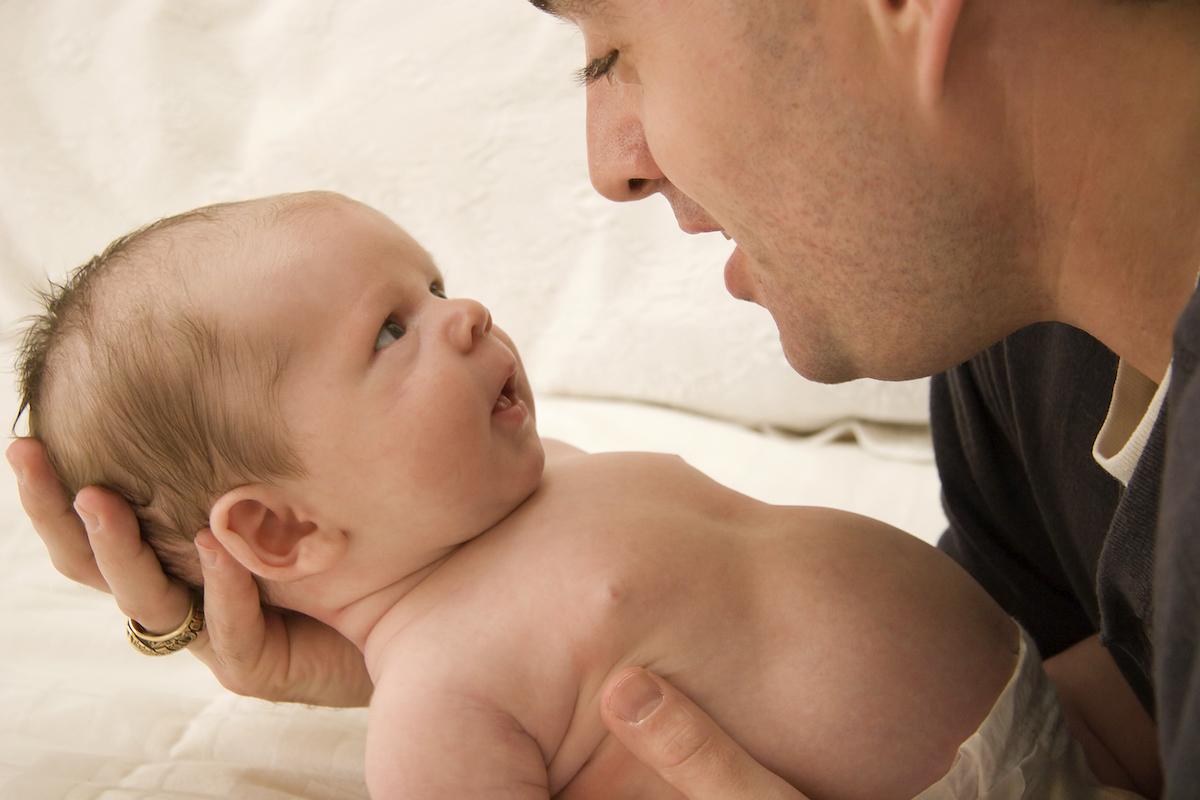
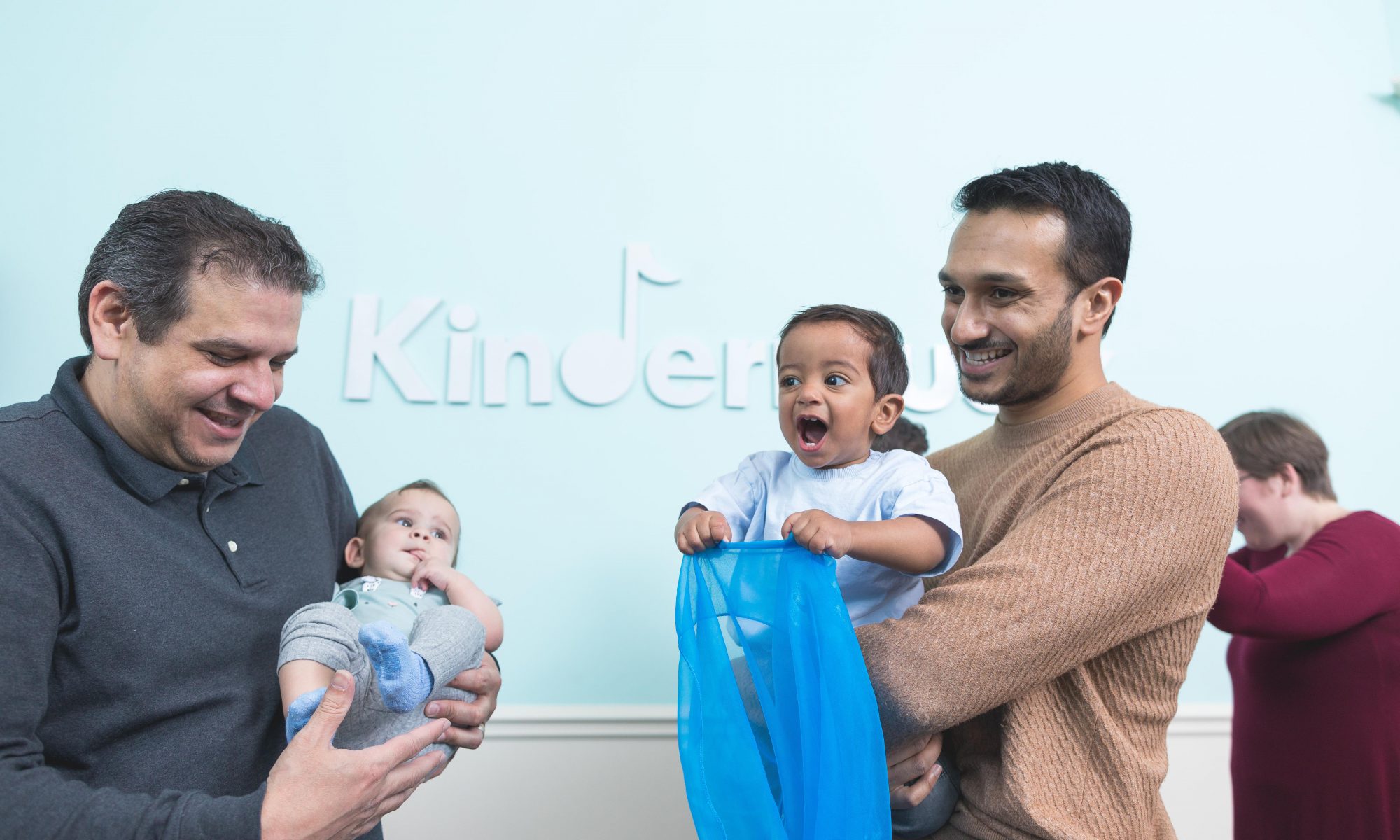
Dads hold their toddler and baby boys during a Kindermusik class and dance to the dad album

Dads, like-a-dads, uncles, grandfathers…the male caregiver role is hugely important to early nurturing and positive whole-child development.

To amplify their presence and put it to the tune of fun, we created Superdad Soundwaves, on the free Kindermusik app. And we’ve got an activity you can pair with it below!

Superdad Soundwaves is the new dad album from Kindermusik

What the research says…

Studies show that fatherhood involvement in the early years makes a big difference.

Researchers from Imperial College London, King’s College London and Oxford University found that “babies whose fathers were more engaged and active when playing with them in their initial months performed better in cognitive tests at two years of age.”

And a study conducted by the University of Leeds showed that fathers who regularly and intentionally engaged their three-year-olds by reading, drawing, singing, and playing “helped their children do better at school by age five.”

Empowering dads with the tools they need to keep that engagement going is where musical play can really help. It’s a multisensory activity that’s portable, screen-free, and fun!

Try our Dad Album activity…

  • Stream “Love Somebody” from the Superdad Soundwaves album in the free Kindermusik app or play it below.
  • Follow the movement directions—dancing high/low, bouncing, clapping, etc.
  • Each time you hear “you, you, you,” give your child a big hug or point to them. 

The benefits…

This activity is full of cognitive, social-emotional, and motor benefits, but we love that:

  • Matching movements to lyrics promotes understanding and language acquisition. 
  • Synchronizing movements synchronizes your heartbeats and bodies, promoting connection. 

Keep that family engagement going…

Intentional time is the best time. Make it part of your daily routines, and growth and connection will skyrocket.

Whether you’re looking for more no-cost resources like this one, a grownup-and-me class near you, or home visiting or teaching tools, we’ve got a solution for that.

How Pre- and Postnatal Singing Support Secure Attachment

Mom sings to baby in a Kindermusik class to promote secure attachment.

The bond between caregiver and infant is one of the most critical factors in positive whole-child development, and the keyword is secure attachment. 

Secure attachment doesn’t mean constant baby-wearing or helicopter parenting—it does mean a consistent series of positive and nurturing interactions between caregivers and infants that form the foundation for healthy social-emotional and cognitive growth. 

So, how do you know if you’re making these connections happen? Singing can help.

Continue reading “How Pre- and Postnatal Singing Support Secure Attachment”

3 Musical Ways to Support Neurodivergent Learners

Child dances to music with scarves. Interpretive dance is an ideal multisensory outlet for neurodivergent learners.

It may seem counterintuitive, but neurodivergent learners thrive with the right multi-sensory activities. Music—a multi-sensory activity that stimulates all parts of the brain at once—promotes everything from self-regulation to emotional expression.

And that turns tricky transitions and long days into beautiful learning moments (for children and their special grownups).

Continue reading “3 Musical Ways to Support Neurodivergent Learners”