

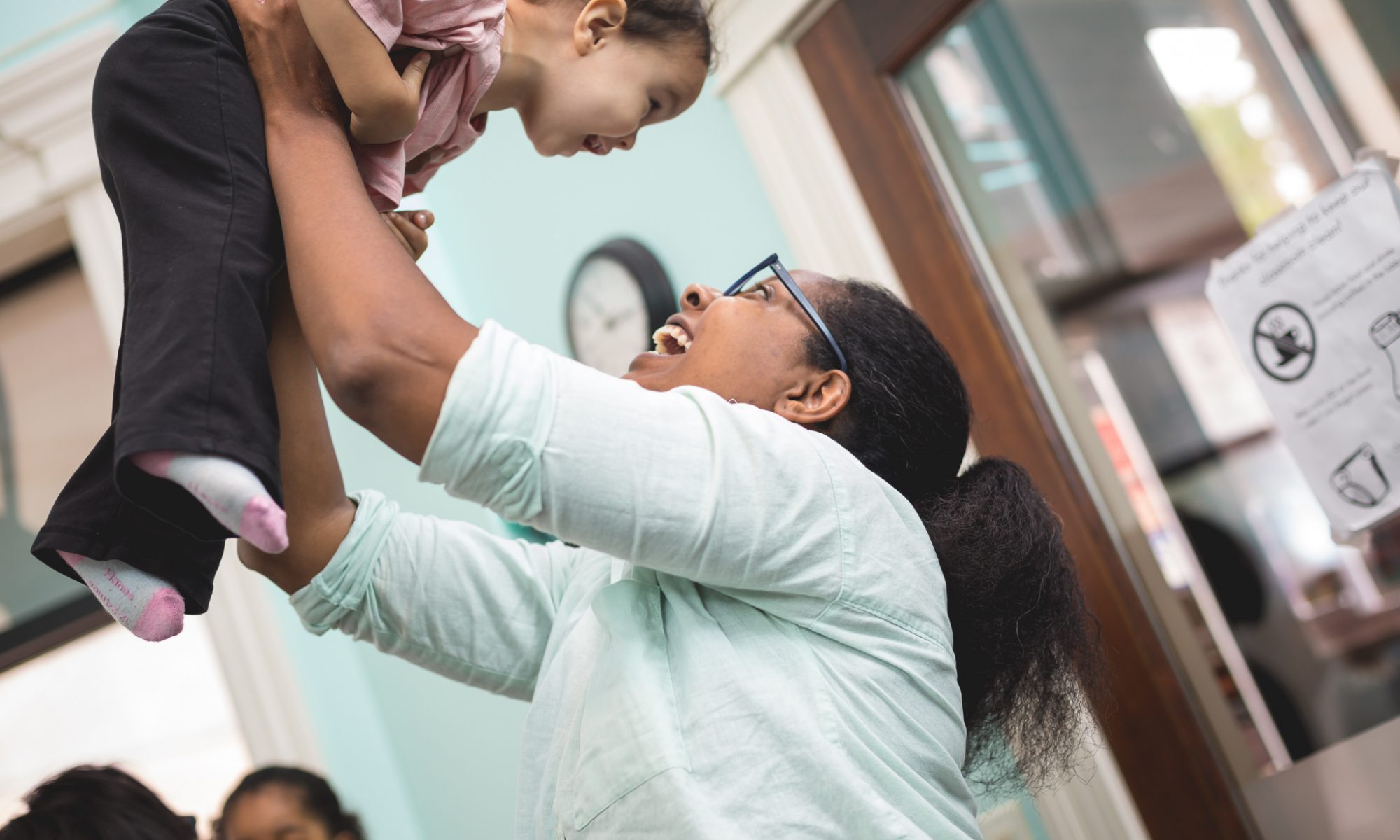
Before children read words on a page, they learn to read the world around them. It’s all part of early literacy.
They read faces. They read voices. They read patterns. They hear rhythm, tone, pitch, pauses, repetition, and emotion long before they understand letters or print.
That’s why music-making is not an “extra” in early childhood. It is one of the most natural, powerful, and joyful ways to build the brain systems children will later use for language and reading.
Music-making is different from “doing music.”
Playing music in the background or listening to songs together in the car do have benefits, but children need more.
They need consistent, live, shared music-making with someone who is delighting in them—like a parent or caregiver—to really absorb the power that comes from connection, co-regulation, and brain alignment.
They need to be sung to and sing back. They need to clap, bounce, move, echo, wait, anticipate, rhyme, listen, respond, and practice keeping a beat.
All of these little tiny moments build a big foundation for reading before children ever pick up a book.
So, how can families get started (and keep the learning going) at home?
Here are 5 simple strategies…
5 Musical Early Literacy Strategies
1. Sing to your child before they can talk.
Singing is one of the earliest and most powerful communicative experiences a baby can have.
When you sing, you naturally slow language down.
Try it—say “Do you know the muffin man?” Now sing “Do you know the muffin man?” You’re adding about 2-3 seconds of time just by singing the words. You’re also stretching sounds, exaggerating facial expressions, and adding rhythm, melody, and emotion.
All of those additions help babies tune in to the sounds of language.
Research tells us babies pay attention to a singing voice twice as a long as talking voice, and when you sing to them, babies aren’t just listening. They are watching your whole face and studying:
- How your mouth moves
- How your eyes connect
- How your voice rises and falls
- How language feels inside a loving relationship.
It’s the perfect toolkit to help them decode sounds, mimic speech patterns, and solidify all of that learning through connection.
And the best part is, you don’t need to be a singer. You just need to sing and be present (You can even start with “The Muffin Man” on the free kindermusik app!)
2. Help them feel the beat.
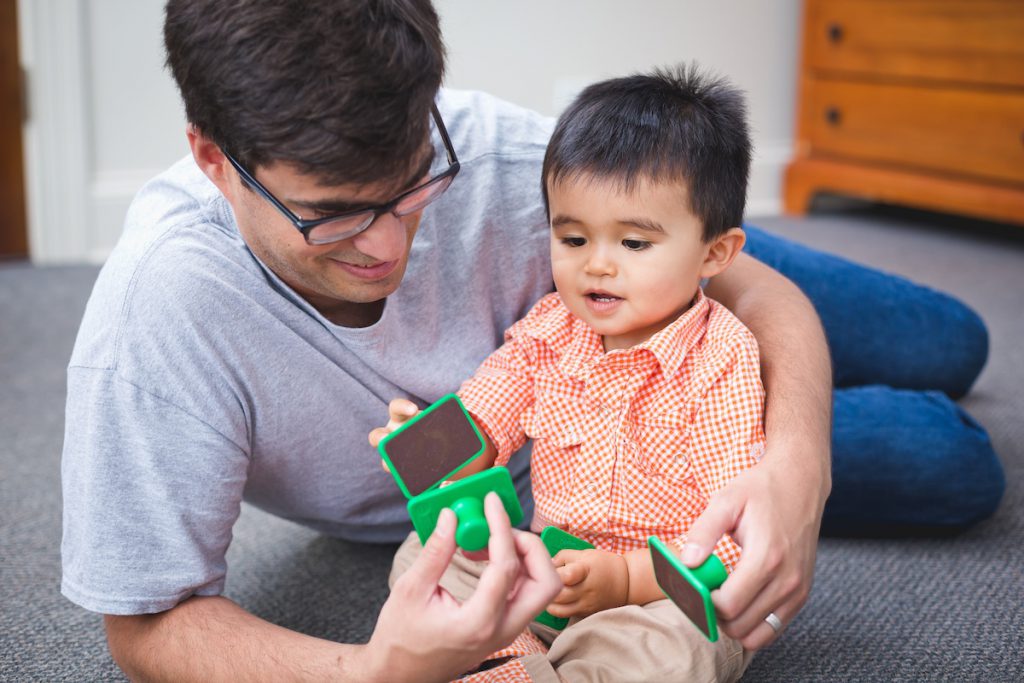
Steady beat—that underlying pulse you feel when you listen to music—is one of the most essential pre-reading skills because reading has rhythm.
Rhythm weaves through steady beat and sentences, syllables, conversations, and even the process of tracking words across a page all have it.
When children bounce, rock, tap, clap, march, or play along to a steady beat, they are building internal timing that helps them detect the patterns rhythm creates.
And feeling the beat doesn’t have to be complicated. Here’s a quick guide by age:
- For babies, bounce or rock them gently to a song.
- For young toddlers, tap their knees while chanting a rhyme (and see if they’ll do it themselves!).
- For older toddlers, play “Milk and Cookies” (play it below or stream from our free app) while you march around the kitchen or drum a pot with a wooden spoon.
As they consistently internalize steady beat over time, they’re acquiring the sequencing and coordination skills they need now for reading fluency later.
3. Repeat yourself.
We all learn through repetition, but it’s especially critical during early brain formation.
For babies
A University of Maryland and Harvard study showed “Parents who repeat words more to 7-month-olds have toddlers with stronger vocabularies.” That’s in line with when scientists believe babies start processing phonetic information.
But what about before that? That’s where sing-song repetition is key—babies can process that sound and reap the retention benefits ahead of time.
For toddlers
Once they hit that first year mark, most toddlers are fully processing phonetic information. According to Harvard neuroscientist, Dr. Charles Nelson, repetition is key to forming neural circuits (kind of like a specialization area) and much more likely to happen in the first few years when the brain plasticity is at its height.
So why repeat through shared music-making? The shared experience of internalizing steady beat and creating melodies aligns our brain waves and establishes co-regulation (remember, toddlers are in a season of big emotions!), so that they’re primed to absorb those repeated phrases much easier than through typical conversation.
4. Make music conversational.
One of the biggest gifts music gives children is the chance to practice back-and-forth communication.
Literacy depends on listening, attention, memory, prediction, comprehension, and meaning-making—all skills built through conversational turns.
It might look like:
- You sing a phrase, and your child echoes it.
- You sing the first part of the lyrics, pause, and let your child fill in the missing word.
- Your baby coos or makes a new sound, and you mimic them.
This back-and-forth musical play teaches children the rhythm of conversation, and thus, the rhythm of reading!
While you’re boosting pre-reading skills, you’re also giving them the confidence they need to succeed in any task. “Your voice matters. Your turn matters. Your ideas matter.”
5. Move to the music.
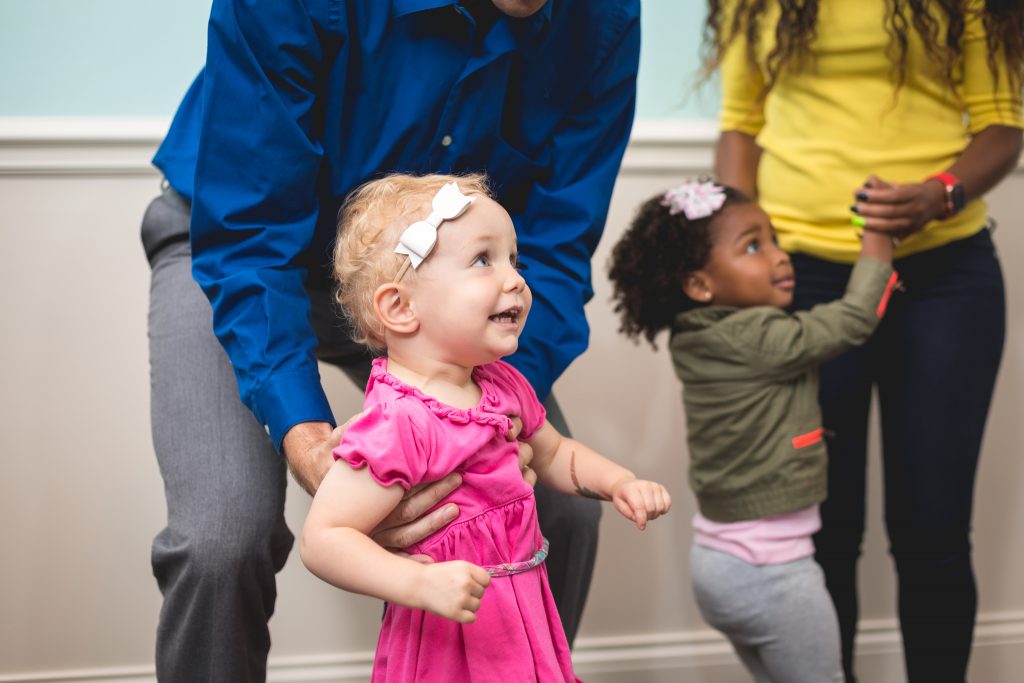
Children are not designed to learn only from the neck up. They learn through their whole bodies.
Sensory input helps us regulate our vestibular system—the body’s mechanism that controls our balance, establishes spatial awareness, and helps us coordinate movements related to reading and writing.
That is why movement is not a distraction from learning. It’s part of learning.
When rocking, jumping, swaying, or twirling to music, children:
- Practice attention and inhibitory control (think freeze dance)
- Develop coordination (think swinging their arms from left to right)
- Build vocabulary (think matching words with movement like “over” and “under”)
- Organize sensory information and boost overall cognition
They are not just getting the wiggles out. They are building the brain-body connections that support all the areas of literacy development they’ll need in school.
The big takeaway.
Reading begins earlier than you think, and it doesn’t begin with flashcards.
Simple, intentional, musical interactions between caregiver and child is the skill jumpstart our tiny learners need to develop into strong readers.
You do not need special equipment. You do not need a perfect voice. You do not need to turn your home into a classroom.
Sing. Feel the beat. Take turns. Dance. Repeat.
You’re giving them a solid foundation for literacy (and connection) skills they’ll carry for the rest of their lives.
Ready for more musical early literacy strategies? Find a class near you or check out our teaching solutions.