

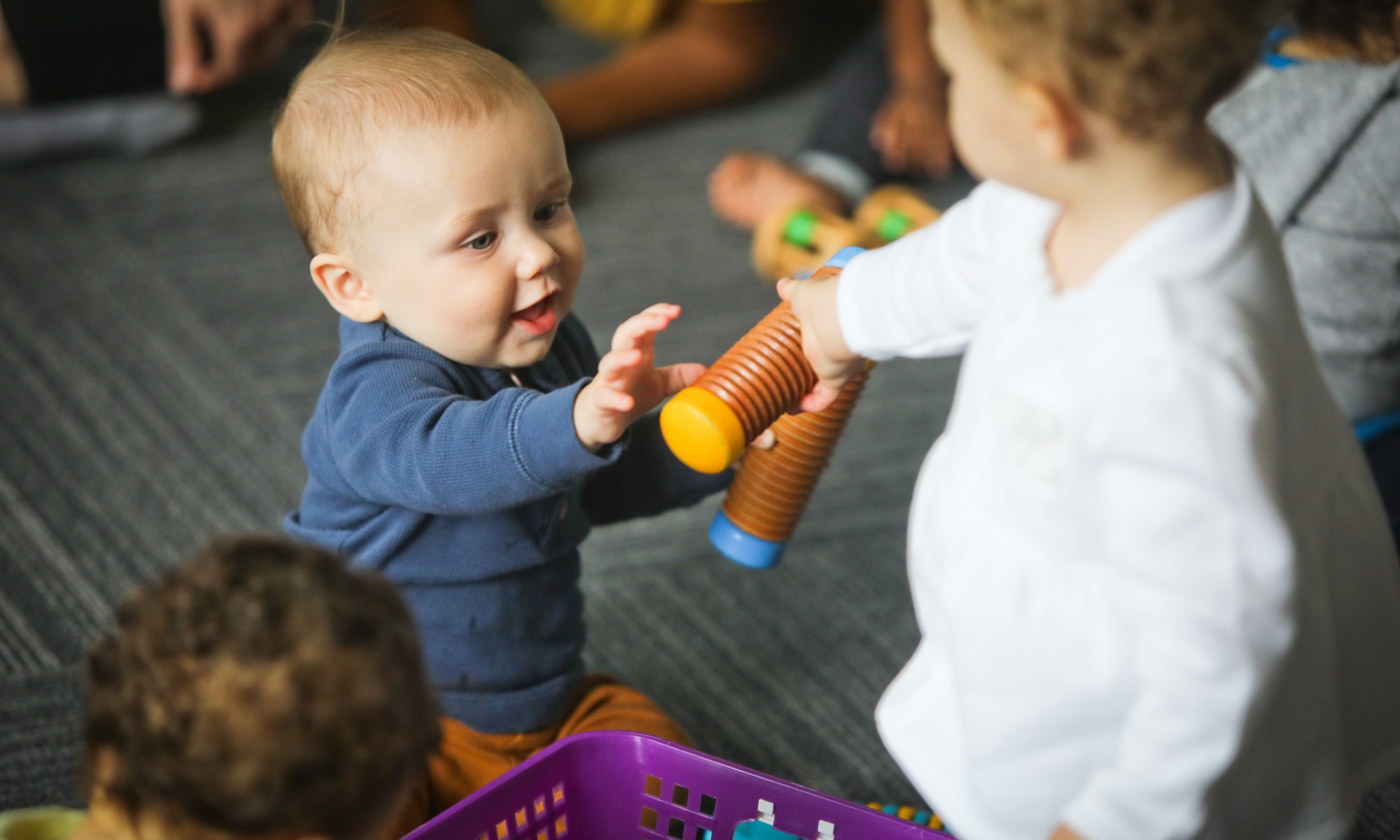
What is emotional intelligence?
Since the early 90s, early educators have been keenly interested in “emotional intelligence” (the awareness of our emotions, how to manage them, and use them) and its connection to wellness and success. What we know now is that a child’s brain is primed for nurturing emotional intelligence, and there are scientifically proven reasons why shared music-making is the best nurturing tool out there.
What research says about shared music-making
Music-making naturally fosters emotional intelligence by creating an inner balance—melodies and rhythm decrease cortisol (the stress hormone) and increase dopamine (one of the “feel-good” hormones).
Beyond regulation, we become invested in music’s meaning. According to researchers from the Max Planck Institute for Human Cognitive and Brain Research, humans don’t just process sound when listening to music. Our Theory of Mind Cortical network is activated (where social cognition happens), and we want to investigate the story behind the music.
When combined with a shared experience, that balance and investment primes little bodies to connect with their counterpart(s).
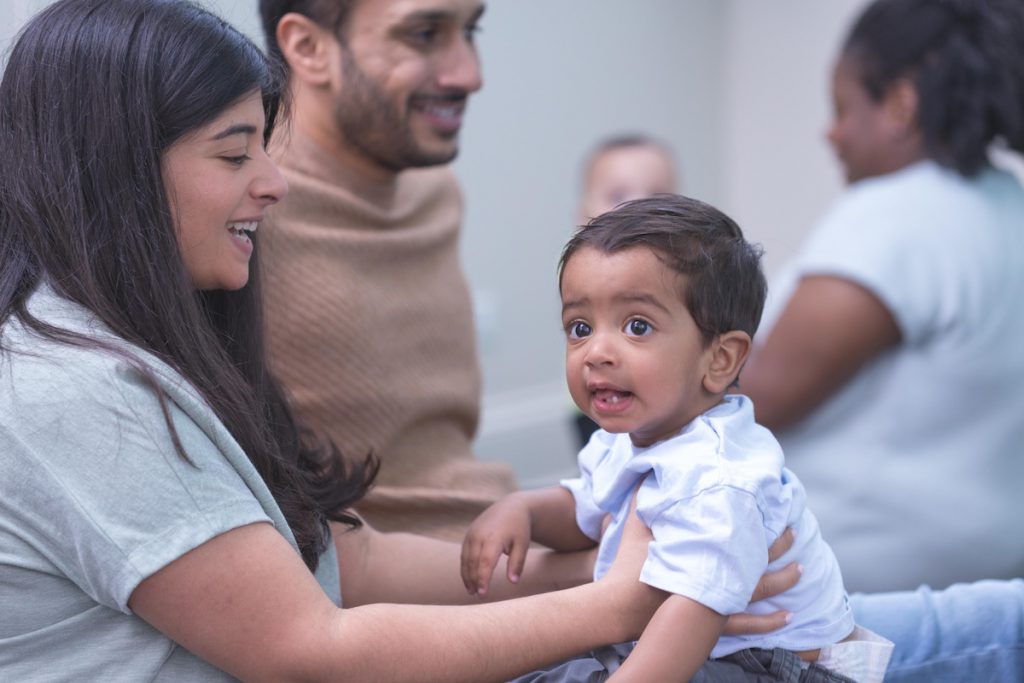
For example, a University of Toronto-led study found that 14-month olds bounced to music in synchrony with their grownups were more likely in pro-social, altruistic behaviors.
Another study led by the Max Planck Institute for Evolutionary Anthropology found that 4-year-olds who engaged in joint music-making were associated with higher levels of cooperation.
So, what could the use of shared music-making look like by age group?
Nurturing emotional intelligence in infants
In the early years, strong emotional ties are fostered as a parent or primary cargiver cuddles, sways, or bounces their little one while humming a lullaby, rocking to a favorite song, or dancing around the room.
Loving, intentional touch during massage time releases those “feel-good” hormones in the brain responsible for feelings of safety and security. And a Kindermusik-inspired lullaby ritual before naptime or bedtime becomes a cherished time that strengthens the loving bonds between parent and child.
We love the instrumental version of “Twinkle, Twinkle Little Star” because your voice is the one they focus on, supporting the secure attachment they need. Play it below (or stream from the free Kindermusik app) when it’s time to settle down for rest.
Nurturing emotional intelligence in toddlers
Later on, the time spent enjoying music together becomes a way to spend quality time, to enter into the child’s world through imagination and play, and to express through music sometimes what words cannot. It’s during these sometimes turbulent years of toddlerhood that children most need those special reassurances of their caregivers’ love and safety.
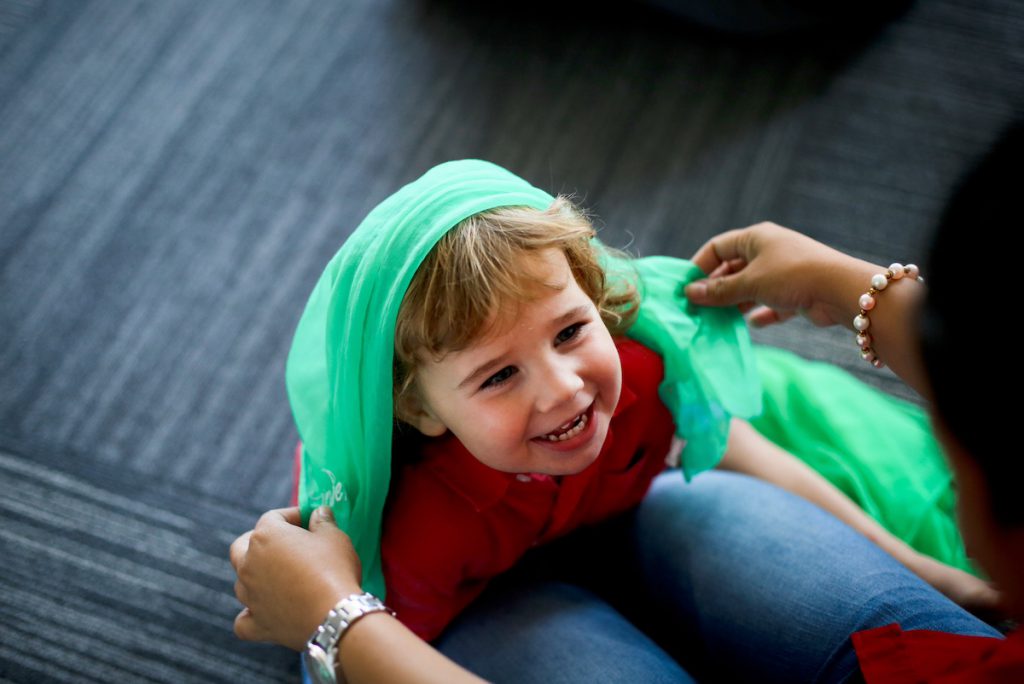
We like the versatility of the song, “Do As I’m Doing.” Play it below (or stream from the free Kindermusik app) while you encourage toddler(s) to follow your silliest movements or use it as a clean-up song. You pick up, they pick up. Either way, you’re establishing and reestablishing that connection they need to complete tasks as they grow (like putting on their coats), even when they’re not feeling it.
Nurturing emotional intelligence in preschoolers
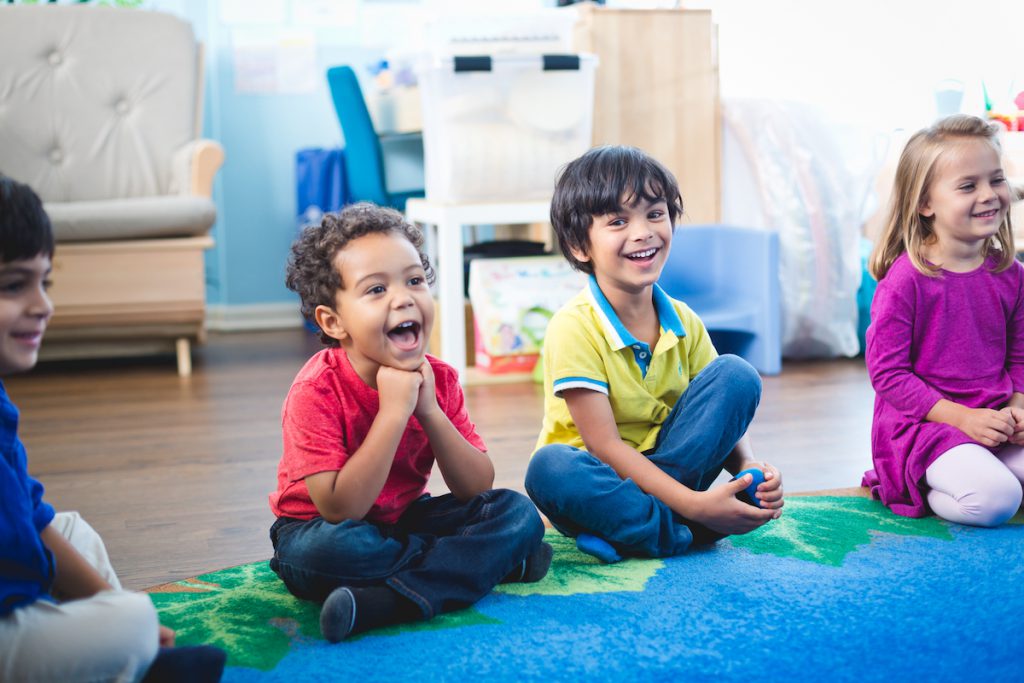
As a child moves into the preschool years, the security of the emotional bond with their caregivers paves the way for developing healthy relationships with peers and teachers. Children are ready and able to expand on the social skills that were developed early on, leading to confident, joyful interactions with others.
From group singing to clapping games, there are so many ways to enhance connection for preschoolers through music!
One of our favorite preschool musical activities is “Dr. Knickerbocker.” Gather a group of peers, play it below (or stream in the free Kindermusik app), and follow the prompts. Clap, stomp, and so on. As you do, watch preschoolers watch each other—they’ll look to peers for guidance, share a giggle, and exhibit other cooperative behaviors that strengthen social-emotional health.
How Kindermusik nurtures emotional intelligence
Whether it’s in a studio class for families or a school classroom, social-emotional development is strategically incorporated into every aspect of a Kindermusik lesson. It’s built into the dance that encourages teamwork. It’s woven into the instrument play activity that involves patience and turn-taking. It’s in the lyrics…and so much more.
Shared music-making is an accessible, proven, and lasting way to heighten the social skills children need for success at home, in school, and beyond.
For more emotional intelligence resources, find a studio class near you or check out our teaching solutions.