Decrease in Father Involvement in Children’s Reading

Source: Sean McCabe for The Wall Street Journal

It is no secret that parent involvement in early childhood education can be a pivotal factor in a child’s academic success, especially early literacy. In fact, research shows that children’s reading achievement, vocabulary, and comprehension skills improve when their parents read to them.

While the benefits of reading together and modeling the joys of reading may be common knowledge in early literacy circles, a new study published by the UK’s National Literacy Trust shows a widening gap between the reading habits of mothers versus fathers. The National Literacy Trust surveyed 21,000 8- to 16-year-olds from nearly 130 schools in England, Northern Ireland, Scotland, and Wales. One of the revealing trends indicates that fathers’ involvement in reading and literacy is significantly less than mothers and continues to decline.

Highlights of the National Literacy Trust survey Continue reading “Decrease in Father Involvement in Children’s Reading”

The signs of a new era in bilingual learning

Parking signs in Tewali. Photo by Andy McCarthy UK

Ofelia García spends a lot of time sitting near the floor. The professor in the Ph.D. programs of Urban Education and of Hispanic and Luso-Brazilian Literatures and Languages at the Graduate Center of the City University of New York is there observing children who, in her words, “are learning to adapt to the rigors of multi-language communication.”

Ofelia Garcia

“The idea that children are classified (as Limited English Proficient) makes no sense. It’s based on exams and assessments that are completely arbitrary,” García says in a 2009 keynote speech to the National Association of Language Development in the Curriculum (NALDIC).

“It’s a continuum, not a category, over the course of a lifetime. If you think of them as emergent learners, you will never leave behind their languages and their cultures.”

García wrote “Bilingual Education in the 21st Century: A Global Perspective”, a massive text on the topic, and is a globally-known speaker and advocate for promoting a translanguaging, an approach to emerging English learners, where speakers switch from one language to another. It’s a bottom/up understanding of the bilingual learning process, García says, instead of top/down.

Until recently, bilingual learners in the United States were studied from a monolingual perspective. In schools, educators approached bilingual education in one of the following ways: Continue reading “The signs of a new era in bilingual learning”

Music and the Senses

Kindermusik Classes - Learning Through Music & Our Senses

Happy New Year from Kindermusik International!

What better way to start the new year than to learn through music and our senses. Are you enrolled for classes in January?

Kindermusik Classes - Learning Through Music & Our Senses“Experiences and sensations are learning.  Sensations form the base understanding from which concepts and thinking develop.  Therefore, sensory enriched environments are imperative to learning.”
(Smart Moves by Carla Hannaford)

Multi-sensory learning is like glue for the brain.  According to Carla Hannaford’s work in Smart Moves, multi-sensory learning partnered with a positive emotional experience leads to learning, reasoning, thought.  That’s a Kindermusik class!

Kindermusik Classes use Music, Movement, and our Senses!

Each week in Kindermusik class we are using your child’s senses – eyes, ears, tongue, the skin, etc. – to build a foundation of knowledge.  It has been said that learning does not occur without movement, because the brain is not taking in information from the environment. As a result, your child is moving and learning and thinking and creating new ideas.

Sensory rich environments are also considered one of three major factors that lead to competency in adulthood.  What are the other two factors? Continue reading “Music and the Senses”

Lisa Jackson’s Outstanding Environmental Achievement

Last Thursday, Lisa P. Jackson announced her resignation as the administrator of the United States Environmental Protection Agency, staking a revolutionary role in environmental history. She also proved, regretfully, that the number one obstacle to successful environmental protection is opposition from an industry-backed, bipartisan government. Despite opposition from Republicans in Congress, and at times the Obama Administration, Lisa was an E.P.A. Administrator of many significant firsts, such as: Continue reading “Lisa Jackson’s Outstanding Environmental Achievement”

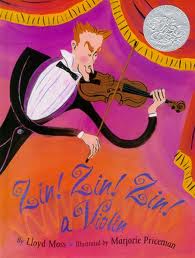
12 musical books for early literacy teachers and parents

We agree with Lloyd Moss: “It’s music that we all adore.” At Kindermusik International, we love music for music’s sake and for its ability to touch the hearts, souls, and minds of young children and families. Music can support early language development, increase phonemic awareness, and even profoundly impact children with special needs.

So make a resolution to gather your children together—whether at home or in the classroom—for musical story times that will support early literacy development and their love of music! Below you will find some of our favorite musical stories, including a Caldecott Winner, Reading Rainbow selections, audio story, and even a book written by a Kindermusik educator.

12 musical books to support early literacy and language development

Preschoolers count their way to math success

Preparing children to be successful in math during elementary school begins long before that first day of Kindergarten. New research shows that both reciting and counting (assigning numerical values to objects) should be emphasized in a preschool or daycare curriculum to lay the groundwork for understanding more challenging math concepts in elementary school. In fact, the study implies that being able to count objects up to 20 in chronological order predicts success in first grade.

Preschoolers’ counting abilities and first-grade math abilities

Louis Manfra, PhD reviewed the reciting and counting abilities of 3,000 at-risk students in preschool and then later in first grade. Manfra found that the students with the highest math scores in first grade could also recite and count to 20 while in preschool. Unfortunately, less than 10 percent of the at-risk students could count and recite to 20.

“Counting gives children stronger foundations when they start school,” Manfra said in a press release. “The skills children have when they start kindergarten affect their trajectories through early elementary school; therefore, it’s important that children start with as many skills as possible.” Continue reading “Preschoolers count their way to math success”

Our thoughts are with all the families affected by today’s tragedy

Look for the helpers

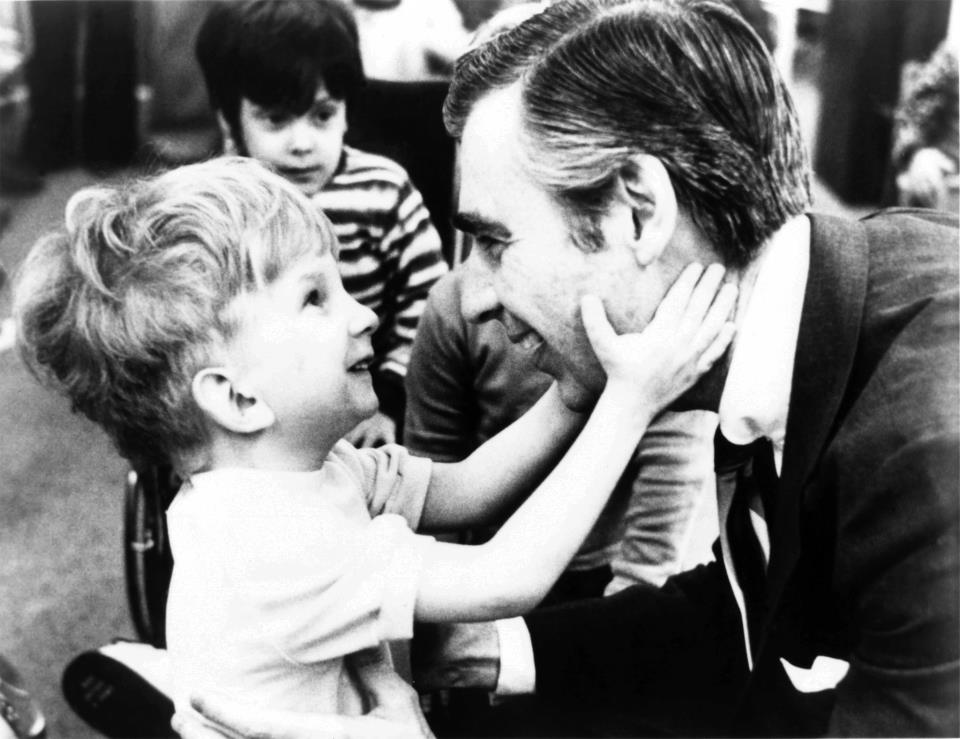
“When I was a boy and I would see scary things in the news, my mother would say to me, ‘Look for the helpers. You will always find people who are helping.’ To this day, especially in times of ‘disaster,’ I remember my mother’s words and I am always comforted by realizing that there are still so many helpers – so many caring people in this world.Mr. Rogers

How to help children grieve

“Let the children take some time to deal with their own internal questions, and their internal grief, and then they’re going to ask these questions, and ask the hard questions … and they need to. And the big one – Why? – you won’t have the answer. As much of an eloquent talker you are as a parent, it’s time to be an eloquent listener.” Bob Rider, Dean of the College of Education, Health and Human Sciences, University of Tennessee, and quoted by Gerald Witt, reporter at the Knoxville News Sentinel

The Sweet 16 for Early Literacy Development Fans

College basketball fans no longer can lay claim to the only Sweet 16. Thanks to Harvard University’s Lead for Literacy Initiative, early literacy development teachers and administrators can access 16 one-page memos written specifically for leaders committed to children’s literacy development. This “Sweet 16” for early literacy and language development includes:

The Prevention Plan

  • Program Design for Impact
  • Early Identification and Intervention Practices

Literacy and Leadership

  • What Leaders Need to Know and Do
  • Literacy Unpacked: What Do We Mean by Literacy Rates?

Literacy Assessment

  • The Importance of Early Literacy Assessment
  • Comprehensive Assessment: Towards a More Complete Picture of Literacy
  • Comprehensive Assessment: Making Sense of Test Type and Purpose

Professional Development

  • Designing Professional Development for Instructional Change
  • Implementing Professional Development for Instructional Change

Family Partnerships

  • Designing Family Partnerships That Make a Difference
  • Implementing Family Partnerships That Make a Difference

Volunteer Programs

  • Designing a Volunteer Program Focused on Literacy
  • Implementing a Volunteer Program Focused on Literacy

Literacy Curricula

  • The Importance of Using a Literacy Curriculum
  • Selecting a Comprehensive Literacy Curriculum
  • Implementing a Comprehensive Literacy Curriculum

Each memo includes common pitfalls that early literacy educators and administrators encounter along with key research-based strategies to address these challenges. You can read the Lead for Literacy memos here. The last three memos are scheduled for release this Friday.

Early literacy development and music

At ABC Music & Me, we continue to implement the latest research on how to best engage young children and families in early literacy development.  Our research-based early literacy curriculum uses music to help children build early literacy and language skills. Music can help children hear speech sounds and naturally divide words into sounds. Plus, early language development research indicates that music skills correlate significantly with both phonemic awareness and reading development.

For more information about using ABC Music & Me to boost early literacy and language development, email us at info@abcmusicandme.com.

Congratulations Kindermusik Green Competition Winners!

Kindermusik Star Steward

Kindermusik Star Steward

We are so proud to announce our first ever Kindermusik Green Competition winners for this year’s most outstanding sustainability efforts in the Kindermusik Community! Reaching a decision was ESPECIALLY hard with all of your inspiring entries, so we decided to award 1st, 2nd, and 3rd place winners. We’ve deemed the following three entries as demonstrating the most direct, creative, and enthusiastic responses. We believe each of these entries echoes Kindermusik’s core values and dedication to making the world a better place for children. Congratulations to all!

1st Place = Dana Van Pattern McKinney:

(Kindermusik Studio, Jonesboro Arkansas) Kindermusik Green Award - 1st Place

From Dana:

GOING GREEN AT KINDERMUSIK OF JONESBORO, [ARKANSAS] IS WHAT WE LIKE TO DO! EVEN THE SMALLEST EFFORTS MAKE A HUGE DIFFERENCE IN KEEPING OUR WORLD CLEANER, HEALTHIER AND MORE LOVELY FOR EVERYONE TO ENJOY!
HERE’S WHAT WE DO!

*RECYCLE ALL CARDBOARD INSERTS FROM KM HOME MATERIAL
*USE DIGITAL HOME MATERIALS FOR 5 OUT OF 24 CLASSES WHICH CUTS DOWN ON SHIPPING, PACKING MATERIALS AND BOXES.

*RECYCLE ALL #1 & #2 PLASTICS FROM STUDIO CLEANING, HAND SANITIZER, AND BLEACH WIPES CONTAINERS.
*RECYCLE ALL ALUMINUM CANS AND CONTAINERS
*RECYCLE NEWSPAPERS AND PLASTIC SHOPPING BAGS
*RECYCLE WORN OUT INSTRUMENTS LIKE SANDBLOCKS BY RESURFACING THEM INSTEAD OF THROWING THEM AWAY
*USE POTTERY COFFEE CUPS INSTEAD OF THROW AWAY COFFEE CUPS

GOING GREEN TAKES VERY LITTLE EFFORT BUT MAKES A WORLD OF DIFFERENCE!

Not only does Dana “capitalize” on her Kindermusik class’s efforts (pun intended!), we love how Dana integrates sustainability into the KI curriculum. We like her attention to  shifting “5 out of 24” classes to our Kindermusik@Home digital materials, which shows goal-setting initiative and bias towards action. By being specific, action-based, and a true environmental educator, we are proud to award Dana Van Pattern McKinney our first place award of $200 dollars towards her charity of choice, and 100 free Kindermusik songs!


2nd Place = Merridee Birkbeck-Mckay

(Kindermusik Parent & Family)

From Merridee:

Kindermusik Green Award - 2nd Place

We installed solar power and always turn off every light, fan etc before leaving the house (our 2 year old even reminds Daddy if he forgets to “save power”). We catch rain water in buckets to use to water the flowers over the next few days, made herb, vegetable and flower gardens out of old recycled tires  Compost and We also recycle and use lots of recycling for art activities (like our egg carton butterflies and music mobile of old tin cans).

Again, the direct action is awesome! Merridee’s family takes sustainability to the next level by installing solar panels and rain water retention systems. Merridee also proves that composting, recycling, and other eco activities create family togetherness that is already showing a lasting impact on their child. Congratulations and thank you, Merridee! You’re the winner of $100 towards your charity of choice and 50 free Kindermusik songs!


3rd Place = Denise Sheridan

(Kindermusik Studio, Ireland)

From Denise:Kindermusik Green Award - 3rd Place

Hi I am a Kindermusik Educator in Ireland and work with 2 other km teachers in my km business. We run km standalone classes and have integrated km ABC into our preschool curriculum. We have been awarded the Early Childhood Irelands 2012 Innovation Award for Environmental Awareness and also An Taisce (Irelands Governing green body) Green Flag for Recycling and Waste Management.

I can email on our winning project submission detailing all of the green work we do with the children and it would be great to have the school children recognised as KM Green Star Stewards as they do so much work in the garden; recycling etc and with great support from all our parents Ulla Beag pre-school and Afterschool have won the award for Innovation in Environmental Awareness for introducing a green programme in their setting. Staff, parents and children all collaborated in recycling a wide variety of materials, some of which benefited their gardening and art activities. This was combined with composting and waste management programmes to reduce their total annual waste by 6,240 litres. Berries, vegetable and herbs, which the children planted and nurtured in the out-door space and by free-range eggs from their own hens, not only enhanced their diet but also promoted environmentally friendly skills for life.

Wow, Denise’s efforts are noteworthy indeed! Already recognized with the Early Childhood Ireland Innovation Award for Environmental Awareness and an award for outstanding waste management practices, she and the students clearly deserves recognition among our community. We will follow up to detail her efforts soon! Awesome work, Denise! You’re our third place winner with $50 to charity and 25 free songs.

Thank you all again for your many entries. We look forward to continuing this contest’s tradition in years to come!