

Public Schools, Elementary Curriculum – Making a Difference with ABC Music & Me

ABC Music & Me Special Education Curriculum - Sycamore Creek Elementary

Teachers at Sycamore Creek Elementary in the Wake County Schools, North Carolina share their experience with ABC Music & Me, and the difference this elementary school curriculum from Kindermusik International has made with their students.

ABC Music & Me Special Education Curriculum - Sycamore Creek Elementary“I began using ABC Music & Me with my developmentally delayed preschool classroom in the fall of 2011 when it was brought into our school system. The program was ready to use out of the box with a few simple modifications for my students with visual impairments. From the first day of use my students fell in love with the songs, instruments and activities from the unit called Laugh & Learn. I really like the way the program has a wide mix of listening, movement, and instrument activities scattered throughout the lessons. This setup keeps the students actively engaged and prevents their attention from wondering.

In late 2011 I was moved into a classroom for kindergarten to second grade students with Autism at the same school. The school PTA was looking at purchasing a different music program for the class with the previous teacher. After hearing this I instantly contacted Ms. Kerri, my trainer, from ABC Music & Me and began discussing with her what would be the most appropriate level for my new students. Ms. Kerri and I gathered the needed information and I took the proposal for the unit called Move & Groove back to the PTA. After seeing the proposal and hearing my success with the preschool students the PTA agreed to purchase Move & Groove for our Autism programs. We began using our Move & Groove program in August of this year.
ABC Music & Me Elementary School Curriculum - Sycamore Creek ElementarySchoolThe transition of programs has been a little bit of adjustment for me as I need to become familiar with the content change. I do make some modifications to meet my students’ developmental needs such as shortening the lessons and taking out areas that may be frustrating for them. Overall we have all enjoyed our new program. Through the use of ABC Music & Me all of my students have started to sing, hum or make vocalizations to the music even my students who are non-verbal. We have also discovered that many of our friends have great rhythm. I am so glad that I was introduced to ABC Music & Me and was able to bring the program to my students.”

Trisha Dillon, NBCT ’04
Autism 1 Special Education Teacher
Sycamore Creek Elementary
Wake County Schools, North Carolina

ABC Music & Me Elementary Curriculum - Sycamore Creek Elementary
“Being a new teacher it has been wonderful using ABC Music & Me. The children look forward to it and it is a great outlet for some of our kids who love dance and music.  We have a best practice curriculum in our classroom, so it is always nice to have a program to follow for a certain subject area. The program is easy to use and to follow and that is nice as a new teacher because there are so many other things that I need to take care of. It is nice to have a program that is so easy to use and the kids love so much.”

Cindy Winter
Developmentally Delayed Preschool Classroom Teacher
Sycamore Creek Elementary
Wake County Schools, North Carolina

For more information, email us at: info@kindermusik.com

5 Reasons to Choose Kindermusik for Your Children

Early childhood is a wonderful window of opportunity for music learning. Music activities are not just fun – they are also a perfect way to help children learn and grow. But a program like Kindermusik offers much more than just a music class.

Backed by more than 30 years of experience, Kindermusik is a carefully planned curriculum that celebrates the importance of music and movement to the development of young children.

5 Reasons to Choose Kindermusik

  1. Music stimulates learning, lowers stress, and advances memory, attention, and brain development.
  2. Combining music with movement creates new learning pathways in the brain while enhancing motor skills and muscle development.
  3. Kindermusik combines structure with flexibility to enable children of all temperaments to flourish. A quiet child is allowed to observe and absorb, while a highly active child’s energy can be funneled into a creative and positive experience.
  4. Kindermusik includes a storytime in every class, encouraging early literacy development and skills such as listening, sequencing, empathy, and anticipation.
  5. Gathering in a group to sing and play is a positive way to lower inhibitions, build self-esteem, and foster a sense of inclusion and belonging. Group learning also helps children develop social skills such as turn-taking and cooperation.

One of the basic premises of Kindermusik has always been that the parent is the first and best teacher, and that what happens throughout the week at home is just as important as what happens in the once-a-week class. Kindermusik promises to give you the time and the tools that help make parenting just a little bit easier. There’s never been a better time to be a Kindermusik parent than now when Kindermusik@Home puts educational activities for kids and resources for parents right at your fingertips, with you wherever you go.

A window of opportunity for your child – a world of opportunity for you both.

With your licensed educator in class and your online learning resources at home or on-the-go, Kindermusik is the best head start you can possibly give your child. The benefits of music for children are immense. And no matter when you begin your Kindermusik journey, you will find that Kindermusik will give you special moments and delightful memories that you’ll carry with you for the rest of your lives.

Try a free class on us today!

Compiled by Theresa Case, whose Kindermusik program at Piano Central Studios in Greenville, SC, is proudly among the top 1% of Kindermusik programs worldwide.

5 ways to support young English Language Learners

Each year the number of English Language Learners enrolled in preschool continues to climb. In the United States, nearly one third of preschoolers under the age of 5 enrolled in Head Start or Early Head Start programs live in homes where a language other than English is spoken. A new report, Dual Language Learners: Research Informing Policy, published by the Frank Porter Graham Child Development Institute analyzes more than 200 studies to understand how ELL students learn best. The report includes insights, such as the five ways below, that can help early childhood educators, principals, policy makers, and other decision makers effectively reach and teach the growing ELL population.

5 ways to support the early literacy and language development of young ELL students

  1. Using the home language of young children, as well as English, can be pivotal for English Language Learners. The research shows that a young ELL’s home-language skills can decline if early childhood programs focus exclusively on English language and literacy development.
  2. Researchers found no negative social, linguistic, or cognitive consequences for young children who learn two languages simultaneously, but in fact, found the opposite to be true. So, when possible, incorporate both languages into the learning.
  3. Dual language learning happens within a social context at home and in the classroom. Early childhood teachers are uniquely suited to support linguistic, social, cognitive, and cultural growth, especially when the dual language learning happens within the daily routines and rituals of the school day.
  4. Parent involvement in early childhood education is key to connecting the classroom learning to the home environment.
  5. Recognize that young ELL students will take longer to reach proficiency in both languages than their monolingual peers.

“Young children really benefit when they are exposed to two languages, there is a good research base for that conclusion,” said Linda M. Espinosa in an interview about the report. “But children need to also be exposed to English in those early years.”

Use music to involve ELLs in early literacy and language development

ABC Music & Me uses music to teach early literacy and language development to English Language Learners and increase parent involvement in early childhood education. In addition to our “English Language Learners Strategies Guide” that provides unit-by-unit, lesson-by-lesson tips, ABC Music & Me includes materials in English and Spanish to support the common language spoken in the home and the way dual language learners best acquire early literacy and language development. Each child receives a monthly Student Kit with music from class and a Family Magazine (available in English and Spanish) filled with literacy activities.

For more information about ABC Music & Me, email us at info@abcmusicandme.com.

From a former Kindermusik kid

Kindermusik Kid

The below paper was written by a junior high school student who has attended Kindermusik class at Kindermusik by Music Connections Foundation in Bloomington, IL. Thank you to Jonah for his thoughtful & insightful work, showcasing the benefits of the Kindermusik program and to Katie Henderson, Founder/Director of the Kindermusik by Music Connections Foundation for sharing this with us.

Kindermusik KidBy: Jonah K., former Kindermusik Kid

If you went into this place, you would hear children laughing. If you looked inside, you would see happy parents, playing kids, a kind, happy atmosphere, and catchy, cool music playing. When it’s time to leave, all the kids have had SO much fun, and they can’t wait to come back again! Is this an amusement park? Guess again! This is just one of the many music classes presented by the amazing charity of Music Connections Foundation right here in Bloomington-Normal.

You may think, “Music? Ha! Music isn’t important! It has no effect on life!” But that’s very far from the truth. As experts like Jim Powell, Ed.D, say, “good music (is) invaluable as a teaching tool.” Music education helps cognitive (memory,) social, physical, emotional, language (lingual,) and (of course) musical development in young children. It also can help kids’ self-esteem. Studies show that music enhances the learning process in young minds. Not only does MCF help with learning through music, MCF can help get a child ready for life ahead, and give them a head start in school!

Kindermusik, the program MCF offers, was brought into the U.S.A. in 1978. Kindermusik’s mission is to instill a lifelong love of music and a foundation for learning in children. Kindermusik has been well researched, developed, and proven by many experts, to make sure children can have the best learning experience! It has expanded to 72 countries, from Argentina to Vietnam. In 2002, employees bought the company from investors. This means there is no one in the way to help get music into children. From 2008 to the present time, Kindermusik has been getting greener and greener from going digital to

using less paper.

MCF includes many ways to get kids immersed in music and dancing. After all, experts like Anne Green Gilbert tell, “Movement is the key to learning.” When MCF includes music with running and bouncing and jumping, it’s fun for all! Here are the programs that MCF provides: “Village”, ages from 0-1 ½, “Our Time”, ages 1 ½ to 3 ½, “Imagine That!”, from 3 ½ to 5, and “Young Child”, ages 5-7, or Kindergarten to 2nd grade. They also have a family-oriented class called “Wiggle and Grow- Family Style”, which ranges in age from 6 months to 6 years. They also have summer camps, ages Birth-10, from piano to music with cooking. To reach out to the community, MCF also does a Village with Seniors class, allowing mother, child, and “grandmother/father” to bond and care for each other, “Ninos y Musica”, a bilingual version of Kindermusik, and classes for special needs children and their families.

Though many of these classes have a price to be able to be in them, much of this money is put towards materials, extra donations (scholarships,) and to pay the kind teachers who work hard and long to even get the ability to teach the children (not to mention the classes they come up with!) Even if you can’t make that price up, that doesn’t mean you can’t have Kindermusik! There are scholarships for people with low income and people with disabilities.

Grants and donations will help MCF’s efforts to make sure children can come to learn and experience music. MCF has many plans and ideas to help get children into music and learning, but the financial part of these plans may be just out of reach. If you help and donate to MCF, they can help spread music to children in the county, in the state, and, through Kindermusik, all around the world. Imagine what life would be like if everyone could be immersed in learning. If you help MCF, this could come true. So many lives we could all change with the wonderful power of music. Wouldn’t that be a wonderful thing to see?

Happy (almost) International Day for Biological Diversity!

Photo Credit: World Wildlife Fund

Tomorrow, May 22, is the International Day for Biological Diversity. You may be thinking – okay, now there’s officially a holiday for everything! True – this holiday is little known. But with such an overarching, unanimously critical concept like biodiversity, it’s important we give it mention. And celebrate!
In 1992, in Nairobi, Kenya, the United Nations adopted the text for the international Convention on Biological Diversity. Since then, non-governmental organizations, national goverments, and the U.N. Environmental Program have dedicated themselves to communicating the important of bio diversity to the global community by translating and distributing educational texts into local languages, offering public seminars, rallying around endangered species or habitats, planting trees and other plants that help prevent erosion, and more.
So – what is biodiversity? Biodiversity is the variety of life. It can be studied on small and large scales; it can be the study of species across the earth or an analysis of the microbial life in your cup of tea. Today, scientists have identified 1.7 million species, but researchers have estimated that there are between 3 – 30 million species on Earth, with a few studies predicting that there may be over 100 million species.
Why is biodiversity important? Complexity serves us well in many ways. It provides ecological services that make earth livable (the minerals in our soil that produce healthy food, water, our oxygen supply), it allows us to recover quicker from natural disturbances like fires, floods, and hurricanes, and it prevents disease and allows for greater medical discoveries.
How can we protect biodiversity? To answer this question, we’ll heed the advice of Edward O. Wilson, renowned biologist, theorist, and author. When asked that question in an interview with Discover magazine in 2001, Wilson replied:

More and larger reserves are the answer, carefully selected by location and biological content and maintained thereafter in such a way as to attract subsidies and other non-invasive sources of income. These include eco-tourism, non-invasive harvesting of medicinals and other wild products, and carefully selective and minimally invasive logging. Above all, we need to ensure that the local governments and people affected would benefit more by conservation than by destructive exploitation.

Celebrate this International Day for Biological Diversity by taking action on a local level. Attend a seminar, visit a national park, write a conservation petition to your local government or read a relevant book (we recommend Wilson’s book, “The Creation: An Appeal to Save Life on Earth”). Tell us how you’re taking action below!

FOL Fridays: How Repetition Strengthens the Brain

“Repetition continues to be important in the development of language and movement, as it is repeated experiences that reinforce the pathways of the brain. By two years of age, a toddler’s cerebral cortex contains well over a hundred trillion synapses, which is actually some fifty percent more synapses than she will keep as an adult. While new synapses form rapidly during this time frame, a ‘pruning’ process is also taking place. This process strengthens frequently used pathways, while deleting those that are not used. As pruning continues, it will allow your child to process thoughts and actions more quickly and efficiently” (zerotothree.org. 1998-2001)

Tips for parents:

You can incorporate more repetition in your child’s life in some fairly simple ways. One way is to set aside time each day for reading his or her favorite books together. You’ll probably read his favorites repeatedly! Another way to foster more repetition is to make full use of your Kindermusik home materials, enjoying the music and activities together regularly.

Try a few Kindermusik@Home activities for free today!

– Contributed by Theresa Case, whose Greenville, SC program, Kindermusik at Piano Central Studios, is proudly among the top 1% of Kindermusik programs worldwide.

Spatial Skills Linked to Math Learning from Education Week

Repetition for child development

Repetition for child development
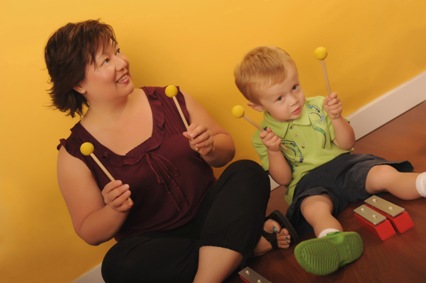
Learning how to hold a mallet!

This morning, Education Week published an article affirming spatial skills as a key to math learning. Movement and “task” activities (cutting paper shapes, building blocks, coloring in lines, clapping, stomping, singing) not only improve a child’s discipline ability to write neatly, they improve his or her capacity for abstract reasoning. The article quotes Claire E. Cameron, research scientist at the University of Virginia’s Center for Advanced Study of Teaching and Learning, on this point:

“We think of early-childhood classrooms as being really high in executive-function demands, but what children are being asked to exercise [executive function] on end up being visual-motor and fine-motor tasks.”

Here’s how it works. As you listen to music or make music, certain neuronsin the cortex of your brain start firing. The pathways created are the same pathwaysthat are used when you complete complex spatial reasoning tasks. The more of these pathways that are forged and the more they are in use, the stronger the connections become. Strong connections lead to easier access, which translatesinto better skills.
Although listening to music does give the neural network a workout, the gains in spatial
reasoning skills have been shown to be very short-term—15 minutes or less. This “Mozart
effect” is much longer-lasting when you engage in making music, however. Studies are showing that the attendant spatial reasoning gains can extend over months or even years (Rauscher et al, 1997; Gardiner, 2000; Hetland, 2000b). Studies focused on music for young children are also suggesting that math gains increase according to the number of years that students engage in active music learning (Gardiner, 2000), with some indication that the younger children are when they begin music instruction, the greater the gains will be.
Read more from Kindermusik about the benefits of music and math here, and comment below with questions or feedback!

Oh Mother!

Photo Credit: latinohealthzone.com

As an early tribute to Mothers Day, we’d like to share some thoughts on the indefatigable job of – you guessed it – being a mom.

Mothers live an interesting paradox: they are either recognized as saints or servants. A child is a mother’s most important responsibility, and consequently, motherhood is celebrated culturally around the world. Mothers are emblems of caring, giving, patience, and love.
Of course – there’s more to a mother’s saintliness than meets the eye. Is there a biological reason for a mother’s celebrated traits? In this article, Bill Muehlenberg comments on a mother’s dual role in guiding her child both spiritually and practically. He reminds us of Ann Crittenden’s poignant description of this double responsibility. On one hand, Crittenden points to the Jewish adage, which says, “God could not be everywhere, and therefore He made mothers.” On the other hand, there’s the Arab adage, which says, “the mother is a school; if she is well reared, you are sure to build a nation”.
The Arab adage resonates with Kindermusik’s key principle that the parent is the child’s best teacher. In biology, the body is considered to stop physically optimizing once a mother has passed her child-bearing years – evolution is a hard-hearted process of competition, survival of the fittest, and passing genes from one generation to the next. But after a woman has finished having children, another fascinating evolutionary trait sets in: caretaking.
A fascinating Radiolab podcast, “The Good Show,” illuminates this paradox. If altruism (motherhood!) is the opposite of survival of the fittest, how do we explain (as Radiolab puts it) “why one creature might stick its neck out for another?” Why do mothers spend a lifetime “sacrificing” themselves for their children?
The answer, according to “The Good Show,” is still genetic (hence not “purely altruistic”) – a mother is protecting her genes by protecting her child. Even if the show decides that pure altruism doesn’t exist, a mother’s lifelong task of raising her child (to protect her genes) is the most influential force in a child’s development. Maybe we can all agree that being a mother can feel like a selfless plight of altruism, but in the end, the giving, caring, music classes and teaching! – really, really, pays off. What do you think? Comment below!

Happy Mothers Day!

In Venezuela, Classical Music Fights Poverty

Photo Credit: La Prisma (theprisma.co.uk)

Is music literally capable of saving lives? According to Dr. José Antonio Abreu, it definitely is. His story is a reason to celebrate this Monday morning, and a powerful reminder of the power of music for children.

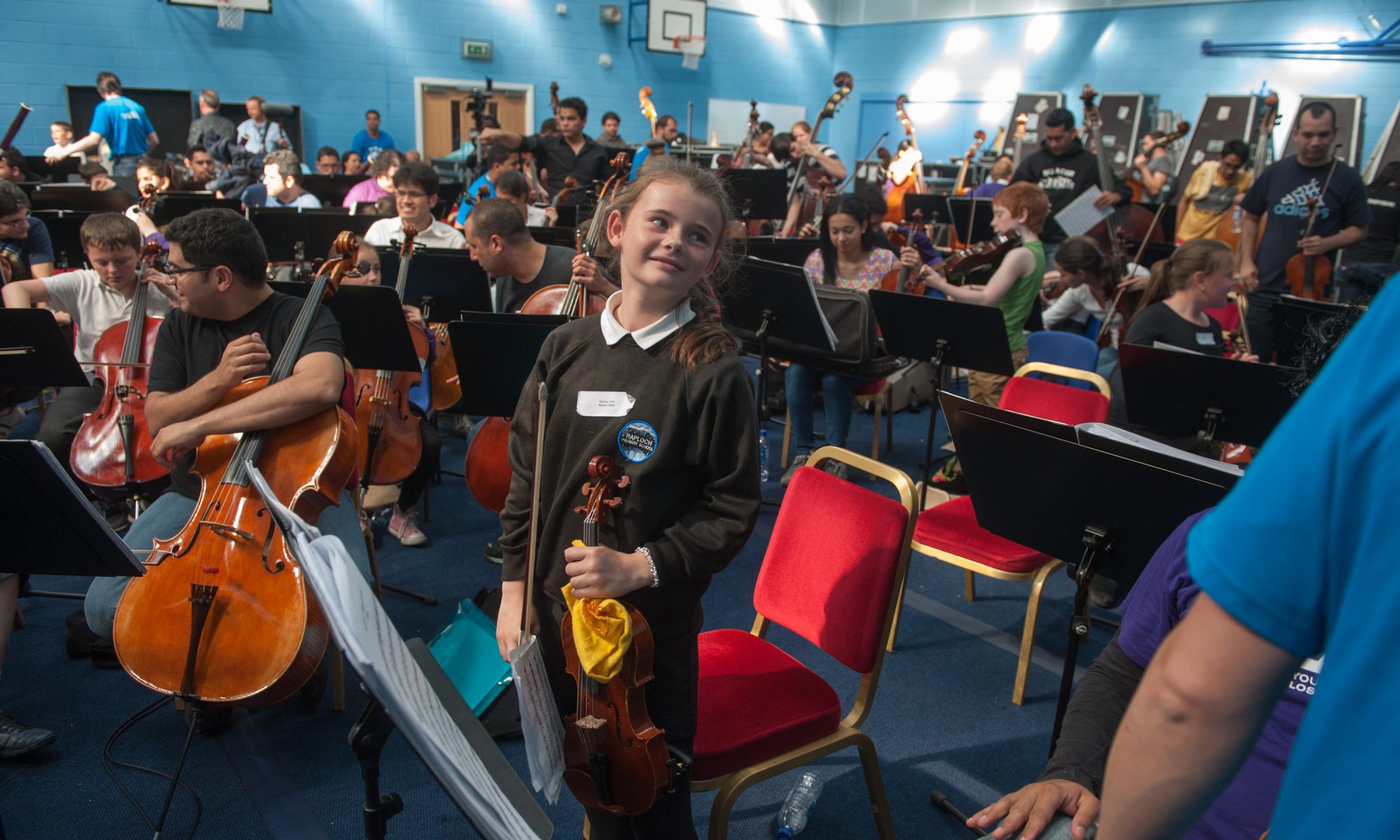
In 1975, Dr. Abreu, a Venezuelan economist and musician, founded El Sistema, “The System,” a classical music youth training program for children in some of the poorest Venezuelan communities. Now publicly funded with branches in the United States, United Kingdom, and Portugal, El Sistema helps Venezuela’s 125th youth orchestras with training, funding, and the ability to travel worldwide to perform some of the highest level youth classical music in the world.
Why use music as the mechanism for social change? When asked about his vision for El Sistema, Dr. Abreu said:

Music has to be recognized as an agent of social development, in the highest sense because it transmits the highest values – solidarity, harmony, mutual compassion. And it has the ability to unite an entire community, and to express sublime feelings.”

Seventy to ninety percent of the children who participate in the program come from the poorest neighborhoods in Venezuela– like Sevilla, a slum in Caracas. Abreu’s success in navigating the program through thirty-eight years of political turmoil is testament to his determination and conviction about the power of music for children. Watch the 60 seconds video here, or watch the clip below!

FOL Fridays: Becoming a Good Listener

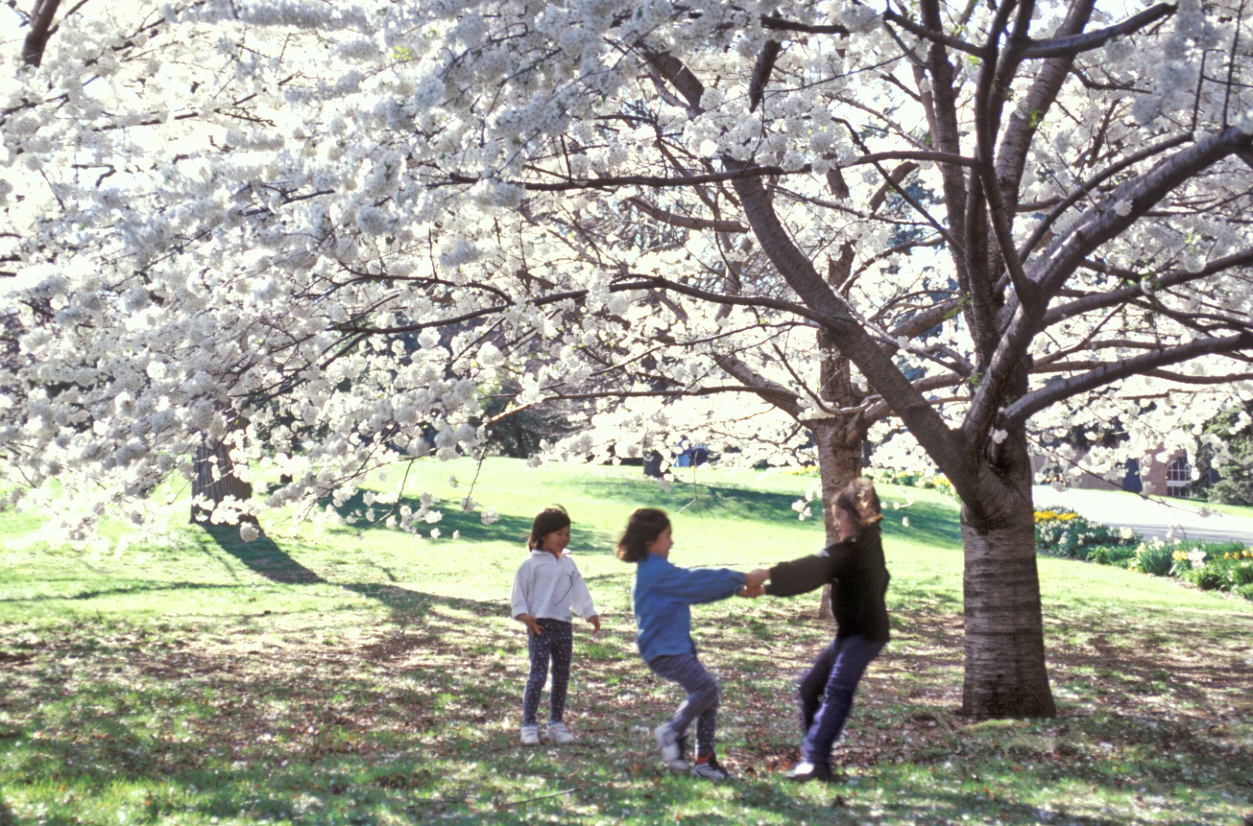
Focusing on one sense at a time helps children strengthen their perception.  Focusing on sound, for example, sharpens listening skills.  Experts say that about two-thirds of everything learned is learned through listening.  When children are given an opportunity to practice their listening skills, they also enhance their abilities to focus and pay attention, allowing them to understand and interpret more of what they hear.
Ideas for parents:

As you take a walk outdoors with your child, encourage your child to listen, identify, imitate, and discuss the different sounds you hear.  Listen for the sound of birds, neighbors chatting, lawn mowers, vehicles, and more.  You’ll have a lot of fun playing the “Listening Game,” and your child’s listening skills will be sharpened too!

Try a Free Kindermusik Class!

We engage kids in fun activities every week in Kindermusik music classes for kids – and focus on developing listening skills, cognitive skills, musical skills and more. Learning through music and movement is fun and effective, come check it out.

– Contributed by Theresa Case, whose Greenville, SC program, Kindermusik at Piano Central Studios, is proudly among the top 1% of Kindermusik programs worldwide.