Too Small to Fail, indeed

Too Small To Fail - Early Childhood Initiative

Every day in our music classes for toddlers, babies, big kids, and families, we see (or hear about!) how early childhood education positively impacts a child’s future. We know our early childhood curriculum makes a difference.

Too Small To Fail - Early Childhood Initiative
Source: TheNextGeneration.org

However, we also know that too many children start school without an early learning foundation that leads to school and life success.
A new early childhood initiative, Too Small to Fail, focuses on improving the lives of young children. This joint initiative of the Clinton Foundation and Next Generation caught our attention because of their commitment to improving the lives of young children in ways that aligns with our philosophy (and the latest early childhood research!) including:

  1. Parents are a child’s first and best teacher.

  2. During the first five years of a child’s life, early childhood education can make a significant difference in the development of the brain.

  3. Early childhood curriculum that teaches a young child to love learning continues to positively impact the way a child perceives school, including math and science.

See for yourself:


We look forward to watching this new early childhood initiative develop and discovering how we might be a part. You can join in the Too Small to Fail conversation on Facebook – or comment below – to share your ideas or stories of your own experiences with the power and importance of early childhood education.

5 ways eBooks support early literacy and the environment for kids

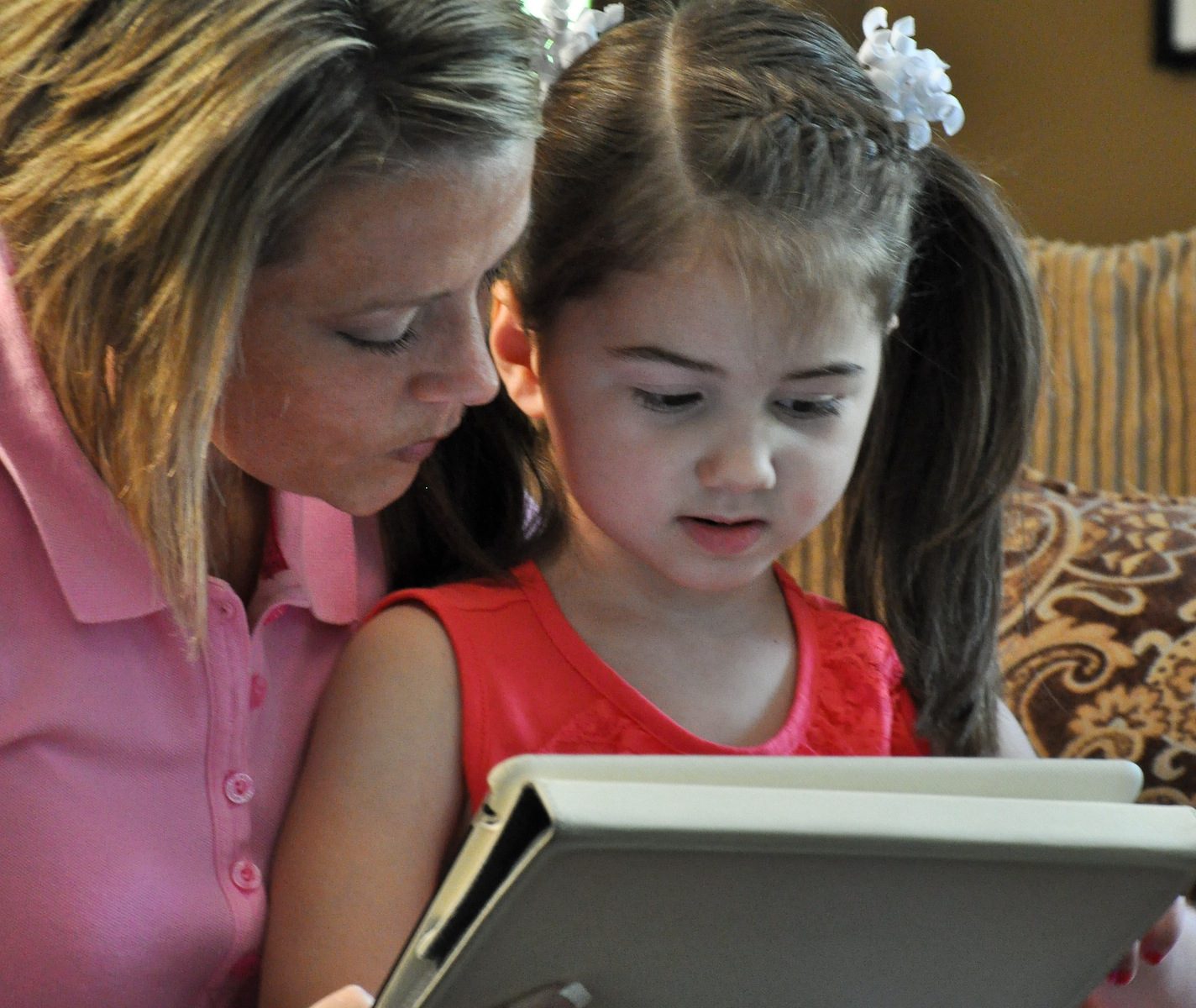
Using eBooks with children

Using eBooks with childrenAt Kindermusik, we like to say that we are doing our life’s best work by creating and teaching early childhood curricula that instills a lifelong love of music and learning in children. Our life’s best work, however, also includes being mindful of our impact on the environment for kids. We strive to balance educationally sound curricula with business practices that support sustainability. Providing eBooks to families as part of enrollment in Kindermusik is one of the latest ways we can do both. eBooks support early literacy and the environment for kids. Here’s how:

5 ways eBooks support the environment and early literacy

  1. eBooks encourage even reluctant readers to read more. Some children naturally gravitate towards reading and books, where other children need a little more encouragement. Research shows that eBooks can turn even reluctant readers into more eager readers.
  2. eBooks are better for the environment for kids. Printed books result in the emission of almost four times the amount of greenhouse gases than e-readers.
  3. With eBooks, reading together can happen wherever you and your child are—waiting at the doctor’s office, sitting on the beach, or snuggling on the couch. We know most parents—even librarians!—rarely carry a bag full of children’s books ready to pull out at a moment’s notice. However, most parents never leave home without their phone. Parents can access eBooks for kids at the touch of a button.
  4. Printed books emit larger quantities of ozone-depleting substances and chemicals associated through their life cycles.
  5. eBooks with rich visualizations, sounds and music appear to help early language and literacy skills, especially for young at-risk students.

Parents are a child’s first and most important teacher. Kindermusik gives parents the tools (and eBooks) needed to support that role. Our music classes for toddlers, babies, big kids, and families now include access to Kindermusik@Home. With Kindermusik@Home, parents can access favorite Kindermusik songs and activities, learning games for kids—and eBooks!—and more in a green-friendly digital format any time from any smart phone, iPad, tablet, laptop, or computer.

To learn more about enrolling in Kindermusik classes and receiving access to Kindermusik@Home, contact a local Kindermusik educator via our Class Locator.

Schools, preschools, and childcare centers can also benefit from Kindermusik@Home. To learn more about bringing our digital early learning curriculum into your classroom, email us at info@abcmusicandme.com.

Music & Reading: 2 of our favorite things

Yes, it’s true. As creators of music education programs and early literacy curriculum, we love both music and reading. Study after study continues to show how music can support a young child’s early literacy and language development. As Julie Andrews would sing, music and reading are like “raindrops and roses.” It’s no wonder that music and reading are two of our favorite things. After all, research shows music supports a child’s early literacy development in many ways, including music’s impact on phonological awareness, vocabulary learning, listening skills, and verbal memory.

Musical training supports early literacy development

One of the newest studies, “The effects of musical training on the decoding skills of German-speaking primary school children”, published in The Journal of Research in Reading, strengthens the understanding of how music supports early literacy development. Led by Iris Rautenberg, the team investigated the connections between musical skills (perception and differentiation of the rhythmical and tonal/melodic patterns) and decoding skills, and the effects of musical training on word-level reading abilities.
The researchers recruited 159 German first graders. One-third of the children received musical training for nine months. One-third of the children received visual arts training and the remaining group did not participate in any special training. The music training specifically focused on rhythmic skills, tonal/melodic skills, and auditory discrimination of timbre and sound intensity. Rautenberg’s study found two ways that musical training supports early literacy development.

2 ways musical training boosts early literacy development

  1. Rhythmical abilities showed a strong positive correlation with decoding skills, both in reading accuracy and reading prosody.
  2. Children participating in the music classes performed significantly better on reading accuracy in word reading when compared with the other two groups.

Early literacy curriculum uses music as vehicle for learning

ABC Music & Me uses music and movement to teach young children early literacy and early language development. During class, children receive music instruction including active music making and kinesthetic movements to emphasize steady beat, rhythm and pitch, as well as the association of sounds with developmentally appropriate symbols.

For more information about using ABC Music & Me to teach early language and early literacy, email us at info@abcmusicandme.com.

One of the Best Ways to Get Your Baby to Sleep

Music to help baby sleep

Music to help baby sleep
Photo Credit: all-free-download.com

To re-phrase an old saying, “When baby ain’t sleepin’, ain’t nobody sleepin’!” Desperate parents will go to any and all lengths to get their baby to sleep. We’d like to suggest that one of the best ways to get your baby to sleep is to sing – a lullaby, that is. And no, your voice doesn’t have to be stage-perfect, because to your baby, your voice is the most beautiful sound there is. Besides that, who else is going to hear you singing softly at 2 a.m.?!

Lullabies for Babies

As your baby learns to fall asleep on his own, you might choose to let him fall asleep to some gentle lullaby recordings. Here are a few of our favorite suggestions:

You Are My Sunshine by Kindermusik International – available at Amazon or play.Kindermusik.com
Violin Lullabies, a new release by violinist Rachel Barton Pine
Flying Dreams, a harp and flute recording by Emily Mitchell and James Galway

Create a Playlist

If you’re a Kindermusik family, you know that your Kindermusik music always includes some gentle listening music as well as lullabies. You might choose to create a playlist of all of your favorite Kindermusik lullabies and rocking songs so that it’s ready at the touch of a button – in the car, before a nap… or when you’re too tired to remember the words in the middle of the night!
Shared by Theresa Case, whose Kindermusik program at Piano Central Studios in Greenville, SC, is proudly among the top 1% of Kindermusik programs worldwide.

The Value of Music for Babies

Music Classes For Babies - Kindermusik Cuddle & Bounce

Music Classes For Babies - Kindermusik Cuddle & BounceSome people are surprised to find out that Kindermusik is for children as young as newborns. In fact, a new curriculum called “Cuddle and Bounce” created just for newborns and 1 year olds along with their parents will be available soon. But really, what can such a small child gain from starting Kindermusik before they can even crawl or walk?
The following statement, jointly issued by The National Association for Music Education (MENC), the National Association for the Education of Young Children (NAEYC), and the US Department of Education, helps explain just how important music education for even the youngest musicians can be….

The Value of Music for the Very Young

The idea that very early education provides great long-term benefits has been rendered incontestable by studies in cognition and early learning. Research in developmental psychology and commonsense observation underscore both the importance and the wisdom of making music an integral and overt part of the earliest education of young children:

(1) We know that music is among the first and most important modes of communication experienced by infants.

The youngest children lack the gift of speech, but they are deeply responsive to the emotional ethos created by music. The lullabies sung by parents help children to accomplish the fundamental developmental task of learning-to trust their environment as a secure one. Songs communicate adult love and the experiences of joy and delight; they teach children that the world is a pleasurable and exciting place to be. Music is essential to the depth and strength of this early foundation for learning and for connecting to life itself.

(2) As young children grow and develop, music continues as a basic medium not only of communication, but of self-expression as well.

Through music, children expand their cognitive universe as they first experience-and later learn to produce-sounds organized to carry musical meaning within their culture. Music expands memory and assists in developing crucial language skills. Music exerts a multiplier effect on reasoning skills, especially on spatial reasoning-an effect that has been demonstrated experimentally. Music also reinforces such logical and perceptual ideas as beginning and ending, cause and effect, sequence and balance, harmony and dissonance, as well as arithmetic concepts such as number, enumeration, and timing.
Kindermusik Baby Music Class - Self Expression Through Music
In addition, as centuries of tradition and modern vehicles such as Sesame Street have taught us all, music in the lives of young children is a highly effective means of delivering vital information about the world itself, as when it is used to teach such basic content as counting, colors, relationships among ideas, social skills, and the wonders of the natural world. Music is also a powerful tool for communicating the full spectrum of human emotion in ways appropriate to children’s experience. Children who may not be able to express verbally their happiness, anger, or sadness can find in music the right outlet and mode for what they cannot yet identify or express clearly using the tools of language.

(3) As preschool children not only listen to and respond to music, but also learn to make music by singing and playing instruments together, they create important contexts for the early learning of vital life skills

such as cooperation, collaboration, and group effort.

(4) Guided music experiences also begin to teach young children to make judgments about what constitutes “good” music,

thereby developing in them the rudiments of an aesthetic sense.

(5) Music contributes strongly to “school readiness,” a foundational education aim of the American people for all our children, as expressed in our National Education Goals.

Music experiences can help children prepare to learn to become literate as it helps them become more aware of and focused on the phonemes that make up the language or languages they will need to excel in school. When children develop musical skill and understanding, they are developing basic cognitive, social, and motor skills necessary for success throughout the educational process. They are preparing skills that will apply to language, to literacy, and to life itself.

…[U]nless the positive learning engendered by music in the earliest years is nurtured by those in the best position to provide it, i.e., parents, music teachers, and professional caregivers, the educational power of music and its potential for sound development can be diminished and diluted.

Try A Free Kindermusik ClassSee the value of music in action…Try a Free Kindermusik Class!

– Excerpted from a report from the Early Childhood Music Summit, June 2000 and shared by Theresa Case, whose Kindermusik program at Piano Central Studios in Greenville, SC, is proudly among the top 1% of Kindermusik programs worldwide.


Music, creativity, and English Language Learners

Einstein playing a guitar

Children naturally engage in creative activities: from storytelling to singing to dancing to turning a shoebox into a submarine, doll bed, or even another planet. An often-quoted IBM poll of 1,500 CEOs identified creativity as the number one “leadership competency” of the future. Albert Einstein also understood the importance of creativity when he said, “Creativity is intelligence having fun.” So, how do we foster creativity in young children that sustains through adulthood?

Music and teaching English to children supports creativity

Einstein playing a guitar
Source: Flickr.com

Einstein often used music as a creative way to solve complex problems. He believed, “The greatest scientists are artists as well.” Playing an instrument, singing with others, and dancing to music all support a child’s creative process and encourages individual expression and exploratory behavior. Learning a second (or third!) language can also foster creativity. In fact, research indicates that bilinguals tend to be more creative thinkers and perform better in problem-solving skills than those who speak only one language.
An article published in the Early Childhood Education Journal, “Using Music to Support the Literacy Development of Young English Language Learners,” reviews current research to highlight some of the reasons why music can effectively be used when teaching English to children.

8 reasons to use music with ELL students

  1. A child’s initial introduction to patterned text often occurs first in songs, chants, and rhymes, which can lead to greater understanding of print concepts.
  2. Songs present opportunities for developing automaticity in the language process. The repetitive nature of many children’s songs helps ELL students learn the language as they hear words and phrases repeated.
  3. Music can be integrated throughout the day in the classroom and at home to develop and to extend vocabulary and comprehension skills.
  4. Music can improve listening and oral language skill development, improve attention and memory, and enhance abstract thinking.
  5. Music enriches ELL students’ creativity and cultural awareness.
  6. Songs can be used to practice and reinforce consonant sounds.
  7. Songs can teach a variety of language skills, such as sentence patterns, vocabulary, pronunciation, rhythm, and parts of speech.
  8. Music is a way for children to experience rich language in a fun way.

English Language Learners curriculum uses music

Created by Kindermusik International, ABC English & Me uses music and movement to teach English to speakers of other languages that meets the TESOL curriculum standards for Pre-K. This beginners program for English Language Learners combines our extensive experience in early childhood education with the latest research on learning a foreign language.

Get more info on teaching English to children around the world with Kindermusik and ABC English & Me.

4 reasons to include play in a preschool curriculum

preschoolers playing

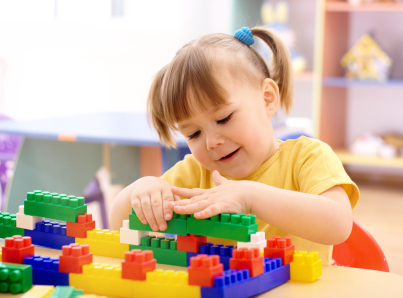
Children participating in a daycare curriculum that incorporates play receive immeasurable—and measurable—benefits. Children naturally learn through play that engages all five senses. Plus, children learn just how fun, well, learning can be!

preschoolers playing4 reasons (and tips) to include play in a daycare curriculum

  1. Play gives children the opportunity to try out new ideas and concepts in a safe environment. Cognitive benefits include boosts to imagination, problem solving, and abstract thinking. Tip: Ask and incorporate children’s ideas into the lessons. Learning about farms? Ask children what kind of animals they would see on the farm. What would they sound like? How would they move? You never know what kind of farm children might create together!
  2. When children play together, they practice cooperation, sharing, taking turns, and conflict resolution—all vital skills needed for success in school, at home, and in life! Tip: Point out positive behavior you see throughout the day.
  3. The language benefits of play include storytelling, vocabulary acquisition, communication skills, and even emergent literacy. Tip: After reading a book to the class, create an “And Then” story together. What happens to the characters after the book ends? After each child’s turn as storyteller, say “And then…”
  4. Play provides opportunities for physical development, such as fine- and gross-motor skills, physical challenges, and self-help skills. Tip: Go outside and play. Research shows children can better concentrate and self-regulate after spending time on a playground during the day.

Preschool curriculum uses music (and play!) to promote school-readiness skills

ABC Music & Me is a standards-based supplemental daycare curriculum. All levels of our toddler and preschool curriculum use music, movement, and play to cultivate turn-taking and sharing, improve self-control, enhance creativity, and boost early language development and early literacy.
For more information about bringing our preschool curriculum to your childcare or daycare, email us at info@abcmusicandme.com.

5 Benefits of Play for Children

Benefits of Play for Children

Benefits of Play for ChildrenI think play is an expression of our creativity; and creativity, I believe, is at the very root of our ability to learn, to cope, and to become whatever we may be.  To me, play is the process of finding new combinations for known things – combinations that may yield new forms of expression, new inventions, new discoveries, and new situations.
Fred Rogers, 1993

We couldn’t agree more, Mister Rogers! That’s why play is such an important part of the Kindermusik experience, both in class – where we explore instruments, use our imaginations, enjoy pretend play, and even play games – and at home – where Kindermusik@Home learning resources and educational activities for kids inspire all kinds of together-time play.
Play is so much more than just the proverbial fun and games. Play is a natural activity for children. The child at play is self-motivated and actively engaged. Whereas games are governed by rules, the value of play is that it provides freedom from evaluation and judgment. The freedom of a playful atmosphere fosters intellectual development as well as self-construction and the development of personality.

In short summary, play is:

  1. how children learn
  2. one of the first steps toward social interaction
  3. a means for children to develop self-motivation
  4. one essential that helps accelerate a child’s cognitive development (Dr. Carla Hannaford, author of Smart Moves: Why Learning is Not All in Your Head)
  5. a great way for adults and children to bond

Kindermusik - Where Music and Learning Play

Shared by Theresa Case, whose Kindermusik program at Piano Central Studios in Greenville, SC, is proudly among the top 1% of Kindermusik programs worldwide.
Using eBooks with ELL students to aid reading comprehension

Using eBooks with children

Today’s children live in an increasingly digital and global society. These digital natives can intuitively navigate around a smart phone, tablet computer, or iPad. As early childhood educators and curricula creators, we closely evaluate how established and emerging technologies can be used in an age-appropriate manner that supports how a child learns best. More and more research continues to emerge about digital learning, including a new study about reading comprehension and eBooks.

How eBooks measure up on reading comprehension

Using eBooks with childrenAs published in the Applied Cognitive Psychology journal, researchers assessed the impact of technology on reading comprehension. Under the leadership of Dr. Sara Margolin, the research team split the 90 participants with an average age of 19 into three groups to read 10 passages. One third read the passages on paper, one third read on a Kindle eReader, and one third viewed the passages on a PDF-reader via computer. The passages contained an equal number of non-fiction and fiction excerpts. After reading each passage, participants answered comprehension questions. The research team found no difference in comprehension scores across all three platforms.

English Language Learners and eBooks

While the students in this study were not ELL students, reading comprehension remains a key focus for teaching English to children. As mentioned in a previous blog, “5 Ways to Support English Language Learners,” the number of young ELL students in the United States continues to rise. However, teaching English to children extends beyond the United States as more and more parents understand how teaching a young child a second (or third!) language can help prepare a child for future success.
With ABC English & Me, we use music and movement to teach English to speakers of other languages that meets the TESOL curriculum standards for Pre-K. This beginners program for English Language Learners combines Kindermusik’s decades of experience in early childhood education with the latest research on learning a foreign language. Plus, with Kindermusik@Home, children and parents get the added benefit of using technology, including eBooks and music downloads, in age-appropriate and fun ways that engage the whole family.

Get more info on teaching English to children around the world with Kindermusik and ABC English & Me.

4 Surprising Ways Your Child Benefits from a Variety of Music

Benefits Of Music for Children

Kindermusik is dedicated to bringing you and your child a variety of music. See how this type of exposure to musical learning expands your child’s development of 4 essential, surprisingly, non-musical skills.

Benefits Of Music for Children

Greater language proficiency

Just as you read a variety of books to expand your child’s vocabulary, exposure to a wide variety of music and sounds expands your child’s “ear vocabulary.” High quality musical recordings and real instruments help your child “fine tune” her ear to recognize and imitate the sounds that make up words and language.

Spatial awareness

When a child listens to music, her mind perceives the sound in multi-dimensional ways. The sound is loud or soft, fast or slow, it moves up and down, or left to right. Eventually, she’ll use that “awareness of space” to work with her body when she walks through the living room and tries not to hit the coffee table. Much later, this same awareness is necessary skill for learning how to get around things, jump, run, and move in zig-zag ways.

Temporal reasoning

You hear this skill in action when a preschooler tells a story. He starts with his own experience and then moves to some imagined place with a princess or a superhero then goes back to something real again. Music does the same thing. It goes back and forth between established places (the chorus) and to new places that take you somewhere else (the verse). The ability to go back and forth from something established to something imagined comes from temporal reasoning, a skill used in music writing, storytelling, and problem solving.

Emotional intelligence

With exposure to a greater variety of musical styles—like jazz, folk, or classical, this increased exposure to music increases a child’s awareness and understanding of different moods and emotions.
So there you have it – at least four reasons why we make the claim that Kindermusik is so much more than just music.  But we’ll not only help your child become a better learner, we’ll also deliver a classroom experience that inspires a lifelong love for music and gives you tips, ideas, and tools like Kindermusik@Home, resources for parents and educational activities for kids with music downloads that make great parenting just a little bit easier.
Edited and revised by Theresa Case, whose Kindermusik program at Piano Central Studios in Greenville, SC, is proudly among the top 1% of Kindermusik programs worldwide.