
Why the Wiggles Aren’t Bad: Understanding the Vestibular System and Children’s Need for Movement

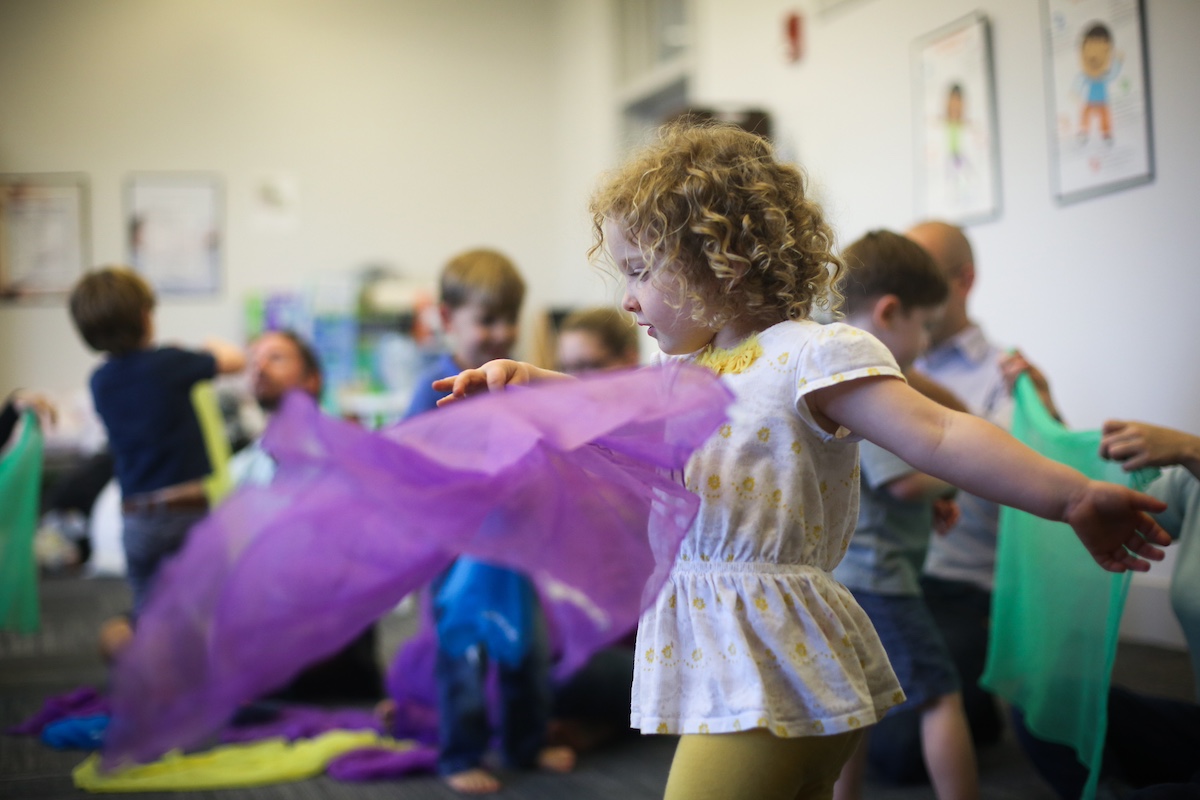
3-year-old girl twirls with scarf during a Kindermusik class to stimulate the vestibular system.

This post was authored by Accredited Kindermusik Educator and Early Education Specialist, Diana Cameron.

Is your child constantly jumping, spinning, or rolling around the floor? Or perhaps they seem the opposite — motion-sensitive, hesitant to swing, or quick to get carsick?

These behaviors aren’t just quirks. They often point to a vital and often overlooked part of your child’s brain development: the vestibular system.

What is the Vestibular System?

The vestibular system is located in the inner ear and is responsible for balance, movement, and spatial orientation. It works like the body’s internal GPS—helping us know where we are in space, whether we’re moving or still, and how to coordinate what we see and hear with how our body moves.

In children, a healthy vestibular system supports everything from emotional regulation to motor planning and even early literacy.

According to Dr. Christopher Zalewski, audiologist and National Institutes of Health research scientist, vestibular input plays a foundational role in developing posture, balance, and cognition. It also helps the brain prioritize sensory messages and stay organized. When functioning well, it frees the brain to focus, attend, and learn.

What Happens When It’s Out of Sync?

When the vestibular system is dysregulated, children may behave in ways that seem puzzling or disruptive, but are actually adaptive.

Some children seek movement. They might:

  • Jump on furniture
  • Spin in circles
  • Rock their bodies
  • Hang upside down

These are not acts of misbehavior. They’re strategies to get the sensory input their brain craves to feel grounded.

Other children may avoid movement. You might notice:

  • Fear of swings or playground equipment
  • Discomfort when their head is tilted
  • Motion sickness in cars
  • Reluctance to climb or spin

In both cases, children are communicating through action. When the vestibular system is out of sync, behavior becomes a form of self-regulation, not rebellion.

And here’s something many people don’t realize—right before children learn a major new movement skill, like jumping or climbing, their brain goes through a kind of “vestibular upgrade.”

You’ll start to see clues: more spinning, rolling, or swinging.

Here’s How You Can Help…

Movement is the answer. That’s why Kindermusik includes intentional, rhythmic movement that stimulates the vestibular system in a safe and supportive way within every level of our curricula.

Before major motor milestones like crawling, walking, or jumping, a child’s brain needs what I call a vestibular upgrade. This often shows up as a spike in spinning, rolling, or bouncing activity 6–8 weeks before the new skill is mastered.

Knowing this, parents and educators can respond with patience and purpose.

And music-based movement activities really pack a punch. A McMaster University study showed that vestibular activity is directly connected to musical rhythm processing—a powerful reason to combine music with movement.

Try these simple vestibular-supportive, music-based activities for each stage of early childhood.

Vestibular System Activities for Babies
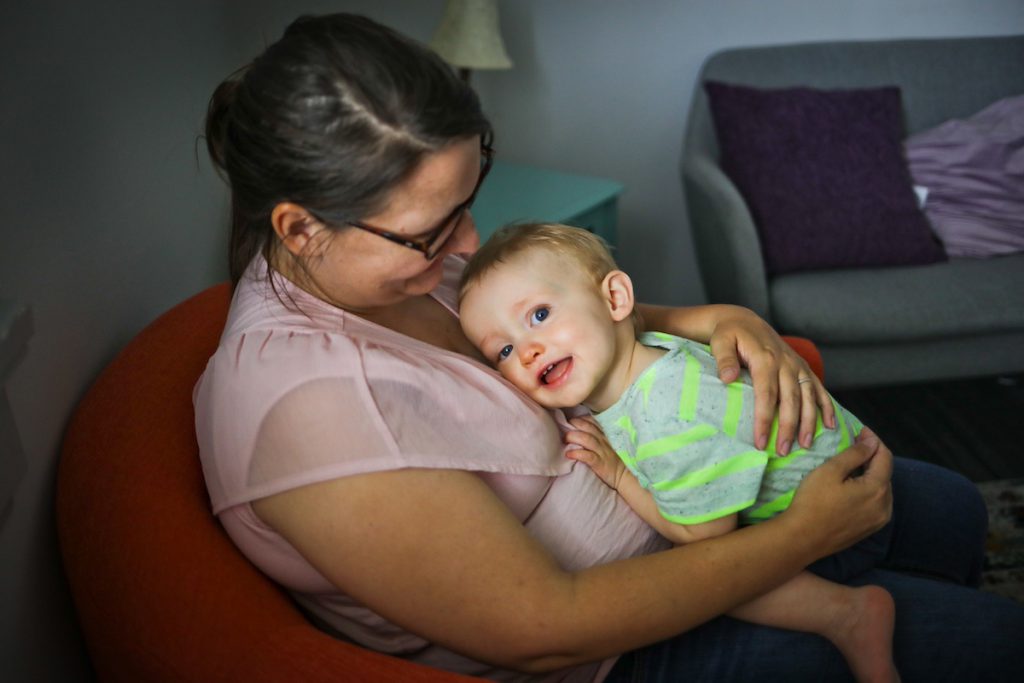
Try 3-way rocking.

Gently rock your baby:

  • Side to side
  • Forward and back
  • In a circular motion

Pair this with humming or soft music for added calming effects.

One of our favorite songs for rocking is “Golden Slumbers.” Play it here or stream it (and many other options) from the Relaxation album in the free Kindermusik app

“Golden Slumbers” from the free Kindermusik app.

Vestibular System Activities for Toddlers

Encourage rolling on the floor, spinning games, or gentle swinging. 

These activities build vestibular pathways needed for jumping, running, and balance.

You can easily incorporate this stimulation through pretend play:

  • For walkers: Using tissues or lightweight scarves, pretend to be birds flying and spinning around the room. 
  • For non-walkers: Pick up the child and gently swing and fly them around the room. Please make sure to safely hold them—to swing them low to the ground, hold their torso under their arms with your hands clasped together across their chest. To swing them up high, place one arm from shoulder to opposite under arm and the other arm through their legs.
“Come Fly with Me” in the free Kindermusik app.

Vestibular System Activities for Preschoolers
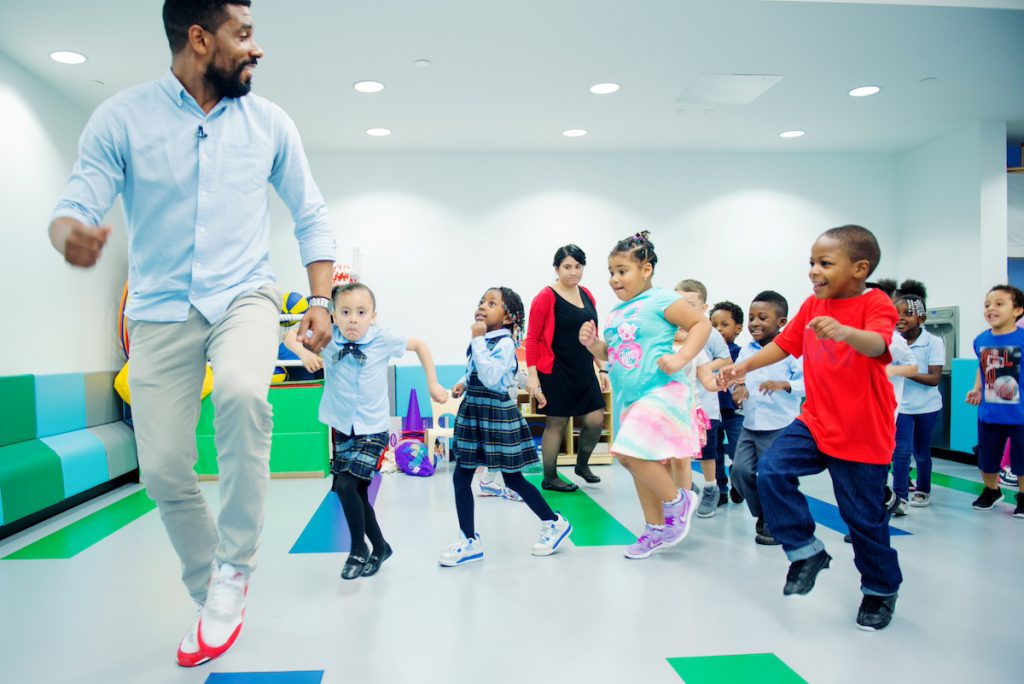
Incorporate direction and rhythmic changes during musical play. 

For 3-5-year-olds, these activities integrate vestibular input with coordination and self-regulation.

Try “Waltz and Jig” from the free Kindermusik app (or play it below). This song goes from a gliding waltz to a bouncy jig within the same track. 

  • Encourage children to twirl and move gently in one direction around the room as the waltz plays. 
  • When the music changes to “Dance a jig…”, instruct them to bounce to the beat in the other direction. 
  • Continue these changes throughout the song.
“Waltz and Jig” from the free Kindermusik app.

Your child’s constant motion (or movement reluctance) isn’t random—it’s a message. And once you understand the role of the vestibular system, that message becomes clear.

Movement isn’t just fun. It’s foundational. It supports balance, focus, behavior, and learning from the inside out.

So the next time your child endlessly jumps, spins, or wiggles, take a breath and ask “What is their brain telling me?”

By supporting vestibular development through intentional and safe musical play, we’re helping answer a developmental need, and giving children the tools they need to thrive.

Diana F. Cameron (MEd) is an Accredited Kindermusik Educator, Kindermusik University coach, and early childhood development specialist in Queensland, Australia. She’s also the owner of Building Brain Connections—find more of her educational videos here.

For more vestibular system activities, find a Kindermusik class near you or check out our teaching solutions for ages 0-6. 
School Readiness Begins at Birth

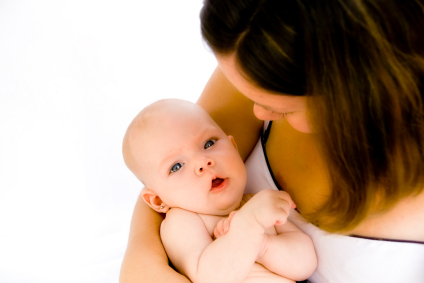
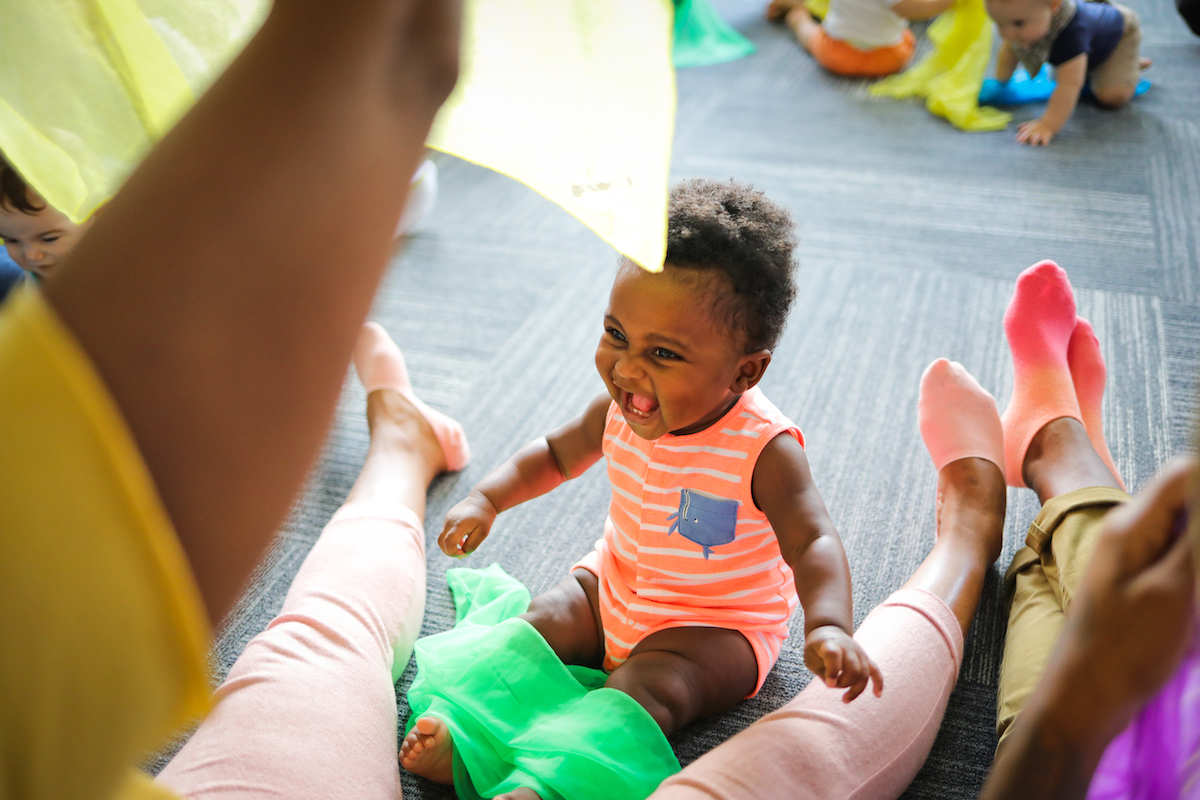
9-month-old baby engages in scarf play with mom during a Kindermusik class designed to support early school readiness.

School readiness for babies? Sounds a little extreme, but did you know an infant’s brain doubles in size during the first year? This window of learning opens wide in those first 12 months, and the easiest way to boost school readiness is to amplify bonding moments, joyful age-appropriate play, and rich multisensory activities that support those critical brain leaps. 

Shared musical play is the perfect tool.

Continue reading “School Readiness Begins at Birth”

Happy Hammock Day!

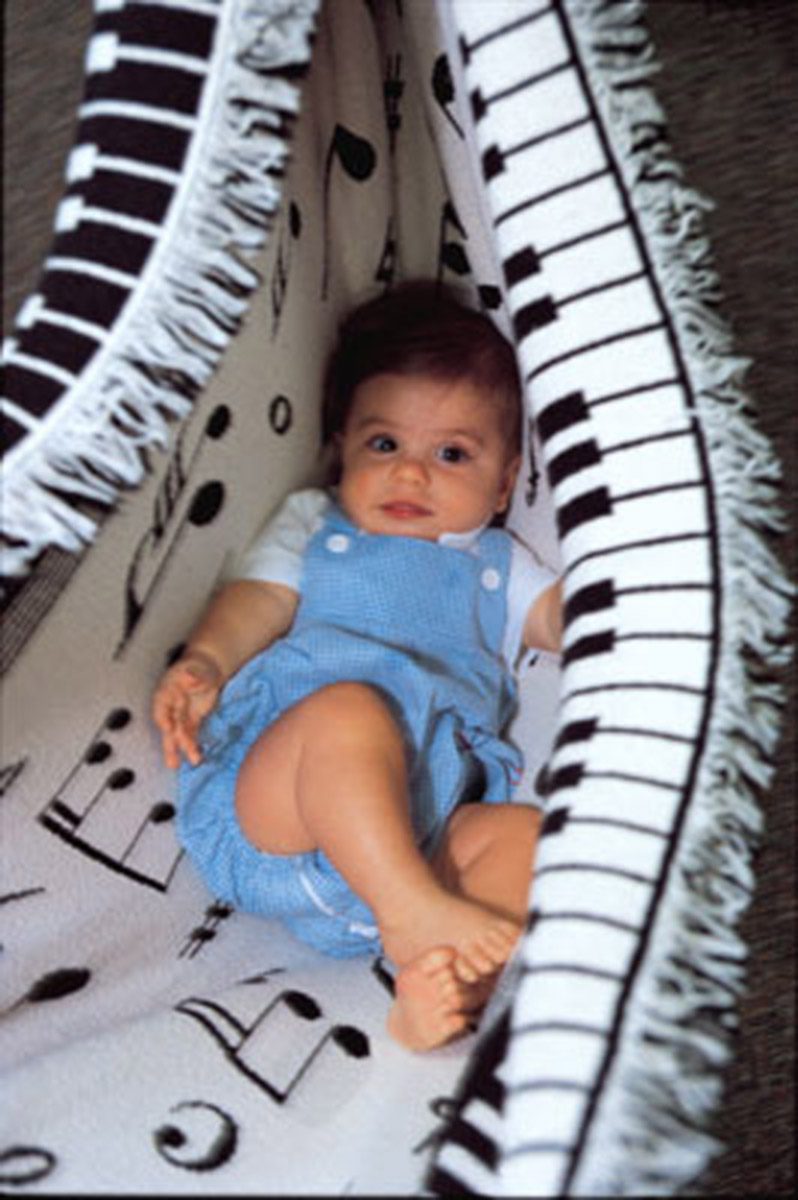
baby boy in hammock blanketToday is a special day… it’s Happy Hammock Day!  A time to celebrate the feel-good joy of hammocking. No hammock, you say? We have a simple solution. A solution if you’re under the age of 5, that is. Two adults holding a beach towel or thick blanket makes for the perfect kid-sized hammock.

But why exactly would you choose to celebrate Happy Hammock Day today or any day? That’s because there are all kinds of benefits to hammocking, which is actually just a type of rocking.

There are many reasons why it’s good to rock, and by rocking, to stimulate the vestibular system. We talk a lot about the vestibular system’s function in controlling balance and coordination. But the vestibular system also coordinates information in the ear, eyes, muscles, hands, feet, and skin. It also helps adjust heart rate, blood pressure, and immune responses… just to name a few! And when the vestibular system is activated, it helps the brain make new learning connections.  Who knew rocking – and the vestibular system – could accomplish all that??!!

Happy Hammock Day to all, and to all some good rocking!

We’d love to see how your family celebrates Hammock Day! Post a photo on social media with the tag: #KindermusikHammockDay

baby boy in a hammock

Vestibular System: Finding the Right Balance

Destin HarborFor parents with young children, Life Balance is a mythical beast! A hammock gently swaying in a warm ocean breeze as you watch ships leave the harbor or the quiet creaking of a porch swing in the dappled afternoon sunlight can bring thoughts of a little Life Balance in an increasingly complex world. For parents of children under 2, however, the nursery glider moving back and forth at 10:16pm, 2:01am, and 5:34am might be the closest you can get to that beach or front porch. It can work in a pinch though!
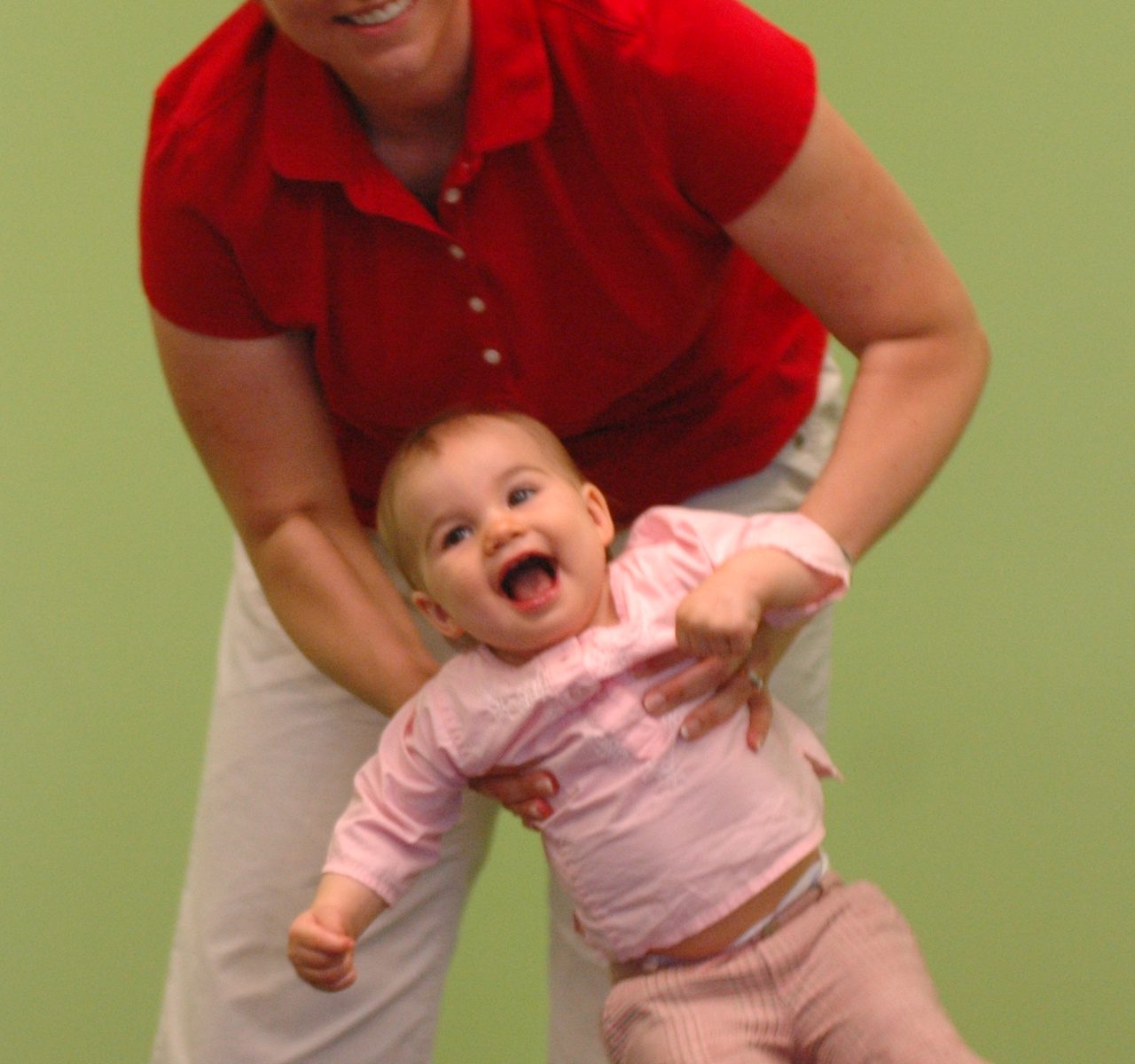
All that nursery rocking reinforces balance of a different kind in young children. The rocking, swaying, and movement stimulate children’s vestibular system, the part of the brain that controls balance. In Kindermusik class, we rock to lullabies, bounce on knees, and even make hammocks out of blankets to help young children begin to develop their sense of balance and to reinforce balance and stability in young walkers.

Try this with the swaying activity with the children in your life for a little balance!


This activity supports more than vestibular development. Children also develop vocabulary, language skills, and make emotional connections with a loving caregiver!

Looking for more ideas on how to support the development of your child? Visit a Kindermusik class and get connected with an early childhood expert!

Contributed by Lisa Camino Rowell a freelance writer in the Atlanta area.

Music and Movement Benefits: The Power of the Vestibular System

The vestibular system controls the sense of movement and balance.  From birth to about 15 months, the vestibular system is very active as the child gains a sense of gravity and knowledge of the physical environment through movement.  Rocking, swaying, and movement which rotates the head stimulates the vestibular system, stimulating the brain for new learning.”  – Smart Moves, by Carla Hannaford.

Activating learning through movement

The vestibular system is the “vestibule” or “entryway” for learning into the brain.  By stimulating the vestibular system, we are helping your child’s brain get ready to learn.  By intentionally stimulating the vestibular system during your baby’s early years, your child becomes even more aware of the physical environment through movement.  Research shows that vestibular stimulation is not only tied to “alertness” but also to a child’s language development.

A parent’s insights can give a child an academic advantage

Understanding how children learn in the early years and what activates that learning is vital to understanding how children will learn and progress through school later on, according to developmental psychologist Dr. Katherine Towney.  This is precisely the reason that Kindermusik educators are so fond of sharing the benefits and the reasons for what we do in class.  We believe that parents are children’s first and best teacher, and the more you know and understand about your child, the better learner you can help him/her become.

Why we move, rock, dance, and sway in a Kindermusik class

Here’s a brief of overview of just how we activate the vestibular system – and a child’s learning – in our Kindermusik classes:
Babies:  Using and labeling movements like twisting, swaying, turning, and rocking.
Toddlers:  Helping the children learn to move confidently and creatively on their own – with mom, dad, grandma, or nanny near by, of course.
Preschoolers:  Introducing a whole new vocabulary of movement and joyfully exploring all of those new words and ways to learn.
Big Kids:  Keeping the movement in our feet and whole bodies inspires the children as they are also learning to read, write, and compose music.

The music in your head: How did it get there?

Music education is a vital part of a child’s life. Research shows that our abilities to sing in tune, move to a steady beat and yes, hear music in our heads, are all formed by the time we are 8- or 9-years old. That doesn’t mean you can’t learn to sing or dance or play the piano after the third grade, but the learning windows for musical aptitudes do begin to close.

Do you ever hear a song in your head over and over again? Can you imagine not being able to hear music this way? Audiation, the ability to hear music when no musical sound is present, is an acquired skill. Similar to thinking thoughts without talking aloud, when you audiate, you internalize and “think” music. To practice audiation with your child, leave off the last word of a favorite song. Stop completely. Observe and listen to your child. What is the reaction? When you play this game with familiar songs, you are engaging your child’s ability to think and “speak” with you musically.

Were you lucky enough to have wonderful parents who sang to you all the time? Did you sing endless rounds of “She’ll Be Comin’ Round The Mountain” when you went on vacation? Repetition is a critical part of your child’s growth and development between the ages of birth and seven. Repetition aids in strengthening the neural pathways in the brain. So when your child wants you to “Read it again, Mommy!” or “Play that song again, Daddy!”, do it!!!

Babies are innately musical. They respond to music and sound in utero. Carla Hannaford, author of Awakening the Child Heart, tells us that hearing and language begin in utero and become the first window to the material world as the embryo physically reacts to sound 23 days after conception. Sound becomes the organizer of our physical structure and later, via the mother’s coherent heart rhythm, gives us the patterns on which to form a coherent understanding of patterns within our world.

People often ask, “What do you do with an infant in a music class?” Babies can be soothed with music. Brain development is stimulated by music. A Kindermusik Village class, for example, provides a rich environment of music, movement, language and touch for babies newborn to 18 months. This combination of music and movement stimulates the Vestibular System, the fluid in the brain. According to Dr. Alfred Tomatis, without a fully developed Vestibular System that allows us verticality and balance, language and learning become difficult. Language development begins with movement and is supported with interactive communication and music. Hannaford points out that early music education, including the interplay of music, movement and sound, is key to developing language, math, relational and learning skills, as well as creativity.

Toddlers love to clap and pat to the steady beat of favorite tunes. Steady beat is the unchanging, underlying beat that pulses through every top-10 tune on the radio. Different from rhythm – a combination of various short and long sounds – steady beat is what we tap our toes, pencils and imaginary drums to. For many toddlers, steady beat is an innate ability nurtured with lots of opportunity to practice. For others, it is a skill that can be learned through practice. The ability to keep a steady beat is a gift that we all want our children to have. A study showed 100% of first string professional football players can move their bodies to a steady beat. Moving to a steady beat develops a sense of timing and the ability to organize and coordinate movements like walking, dribbling a basketball, driving and using scissors. Not true for 2nd string. Kindermusik classes provide many opportunities for toddlers to play instruments and move to a steady beat and parents are educated about ways to keep music alive at home.

Preschoolers are exploding with ideas and questions. Creative music and movement provide an outlet for the imaginary characters that live inside a child. 3- and 4-year olds flourish in an environment where there is music, movement and an opportunity for them to contribute ideas. In a Kindermusik Imagine That! class, a child can explore voice and ideas, add instruments to songs and rhymes, act out enticing characters and grow socially while interacting with peers.

For a kindergarten or first grade child, reading readiness is an important issue. I often imagine how it would have been to have the language of music and the English language concurrently integrated into my life: learning to read and write music while learning to read and write language.

Kindermusik provides a whole child approach to music education. Children move and sing, play musical games, learn about music in other cultures, talk about and listen to the instruments of the orchestra, develop their discriminative listening skills, build self-esteem through group interaction and music making, begin to read and write basic musical notation and much more.

I often get calls from eager parents, ready to spend gobs of money on private music lessons for their 3-, 4- and 5-year olds. I first ask them, how are the children’s fine motor skills? Are they reading? How big are their hands? Are they ready to practice at least 20-30 minutes each day? By the time children complete a 2-year Kindermusik class, they have played a pre-keyboard instrument, a simple string instrument and a wind instrument. They are eager to pursue private lessons and have more staying power!

When you choose a music program, make sure it is compatible with you and your child. Be prepared to be an active participant and supporter of your child’s music experience. It could be the best investment you ever make.

Music turns kids on. So turn it up!

Thanks to Stephanie Bartis, M.M., for sharing this great article, orginally written for the Art of Well Being. Stephanie is a member of Kindermusik’s Maestro Conductor Circle, which distinguishes her and her studio, Bartis Creative Studio, as among the top 1% Kindermusik programs worldwide.

Your child rocks!

When your baby cries, you instinctively scoop him up and rock him.  His need to move and his ability to be soothed by movement are vital in the first 15 months of life when the vestibular system – the area that gives him a sense of balance and distance – is developing.

Aside from the physical benefits of movement, your child also recieves an emotional benefit from rocking and bonding with you.  This quiet, rocking ritual can provide him with a sense of security, allowing him to grow into an assured, confident learner with a healthy self-esteem.

Rocking is still important as your young child grows and will often become a favorite – and memorable – activity for both child and parent.  Even older children benefit from the stimulation of the vestibular system.  Urges to run and tear around the house can be mellowed by taking a few minutes for quiet or even more active rocking.

Kindermusik Tips for your Baby, Toddler, and Preschooler

  • > Rocking your baby: Place a blanket on the floor and lay your baby in the middle.  With an adult caregiver on either side, pick up a corner of the blanket and gently “hammock” your child.  If your baby doesn’t like rocking this way, simple lay him on his back and gently rock him side-to-side to the rhythm of the music.
  • > Rocking with your toddler:  Toddlers can rock a favorite stuffed animal, or while you sit on the floor, your toddler can hug you from behind as you rock back and forth to the music.
  • > Rocking with your preschooler: Preschoolers will love to curl their bodies into little balls, and rock and roll around the room. Want to let your inhibitions go? Do this with them! Fits of giggles are sure to follow.