
This post was authored by Accredited Kindermusik Educator and Early Education Specialist, Diana Cameron.
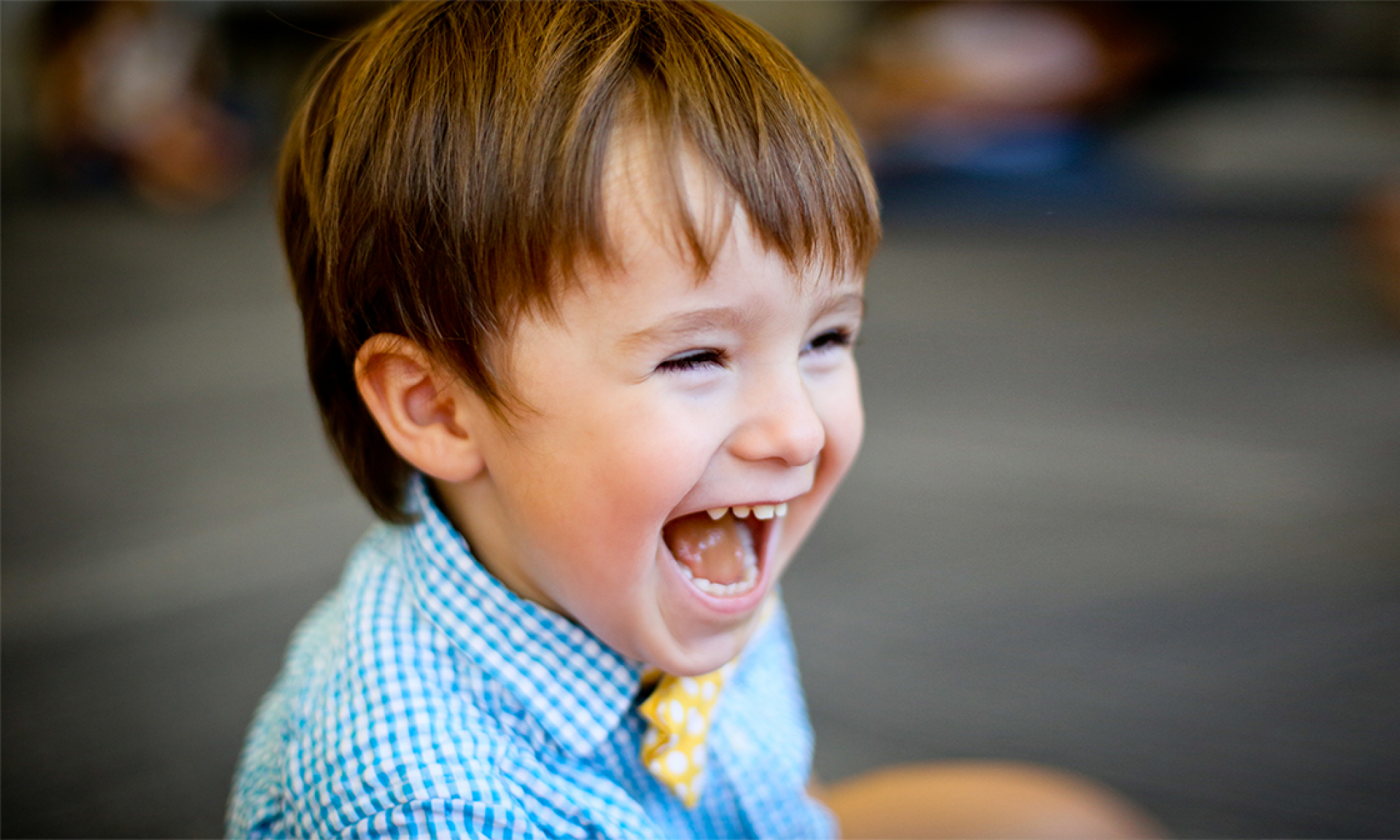
Is your child constantly jumping, spinning, or rolling around the floor? Or perhaps they seem the opposite — motion-sensitive, hesitant to swing, or quick to get carsick?
These behaviors aren’t just quirks. They often point to a vital and often overlooked part of your child’s brain development: the vestibular system.
What is the Vestibular System?
The vestibular system is located in the inner ear and is responsible for balance, movement, and spatial orientation. It works like the body’s internal GPS—helping us know where we are in space, whether we’re moving or still, and how to coordinate what we see and hear with how our body moves.
In children, a healthy vestibular system supports everything from emotional regulation to motor planning and even early literacy.
According to Dr. Christopher Zalewski, audiologist and National Institutes of Health research scientist, vestibular input plays a foundational role in developing posture, balance, and cognition. It also helps the brain prioritize sensory messages and stay organized. When functioning well, it frees the brain to focus, attend, and learn.
What Happens When It’s Out of Sync?
When the vestibular system is dysregulated, children may behave in ways that seem puzzling or disruptive, but are actually adaptive.
Some children seek movement. They might:
- Jump on furniture
- Spin in circles
- Rock their bodies
- Hang upside down
These are not acts of misbehavior. They’re strategies to get the sensory input their brain craves to feel grounded.
Other children may avoid movement. You might notice:
- Fear of swings or playground equipment
- Discomfort when their head is tilted
- Motion sickness in cars
- Reluctance to climb or spin
In both cases, children are communicating through action. When the vestibular system is out of sync, behavior becomes a form of self-regulation, not rebellion.
And here’s something many people don’t realize—right before children learn a major new movement skill, like jumping or climbing, their brain goes through a kind of “vestibular upgrade.”
You’ll start to see clues: more spinning, rolling, or swinging.
Here’s How You Can Help…
Movement is the answer. That’s why Kindermusik includes intentional, rhythmic movement that stimulates the vestibular system in a safe and supportive way within every level of our curricula.
Before major motor milestones like crawling, walking, or jumping, a child’s brain needs what I call a vestibular upgrade. This often shows up as a spike in spinning, rolling, or bouncing activity 6–8 weeks before the new skill is mastered.
Knowing this, parents and educators can respond with patience and purpose.
And music-based movement activities really pack a punch. A McMaster University study showed that vestibular activity is directly connected to musical rhythm processing—a powerful reason to combine music with movement.
Try these simple vestibular-supportive, music-based activities for each stage of early childhood.
Vestibular System Activities for Babies
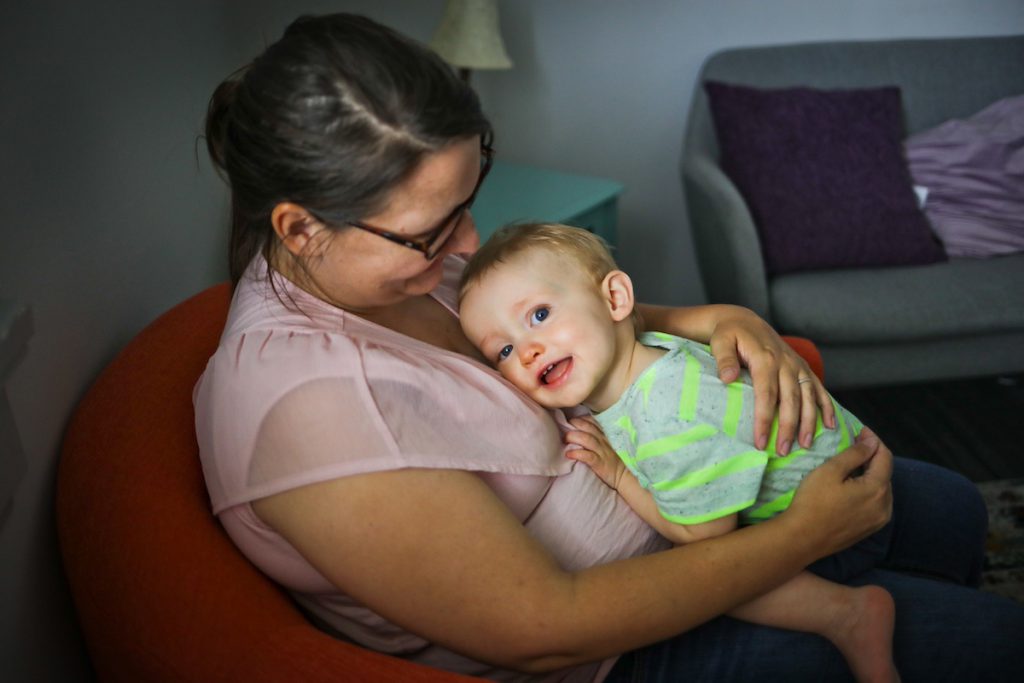
Try 3-way rocking.
Gently rock your baby:
- Side to side
- Forward and back
- In a circular motion
Pair this with humming or soft music for added calming effects.
One of our favorite songs for rocking is “Golden Slumbers.” Play it here or stream it (and many other options) from the Relaxation album in the free Kindermusik app.
Vestibular System Activities for Toddlers
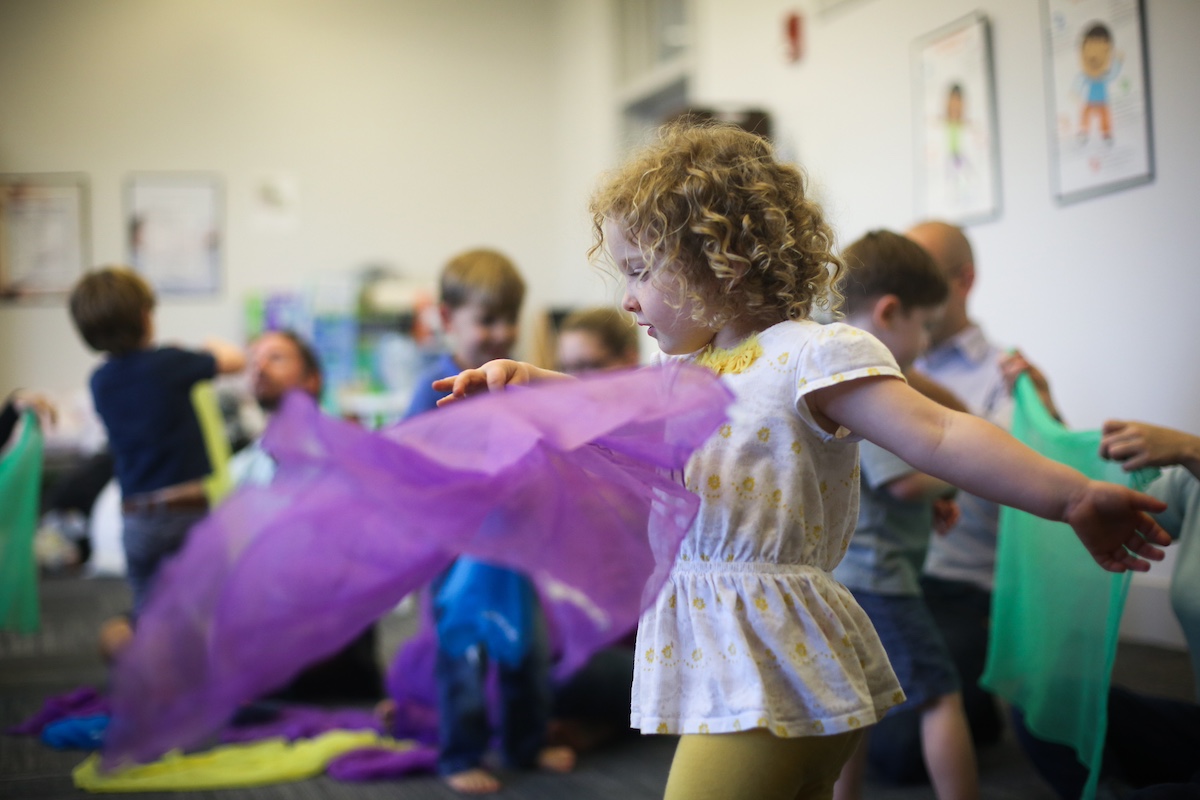
Encourage rolling on the floor, spinning games, or gentle swinging.
These activities build vestibular pathways needed for jumping, running, and balance.
You can easily incorporate this stimulation through pretend play:
- Stream “Come Fly with Me” in the free Kindermusik app or play the track below.
- For walkers: Using tissues or lightweight scarves, pretend to be birds flying and spinning around the room.
- For non-walkers: Pick up the child and gently swing and fly them around the room. Please make sure to safely hold them—to swing them low to the ground, hold their torso under their arms with your hands clasped together across their chest. To swing them up high, place one arm from shoulder to opposite under arm and the other arm through their legs.
Vestibular System Activities for Preschoolers
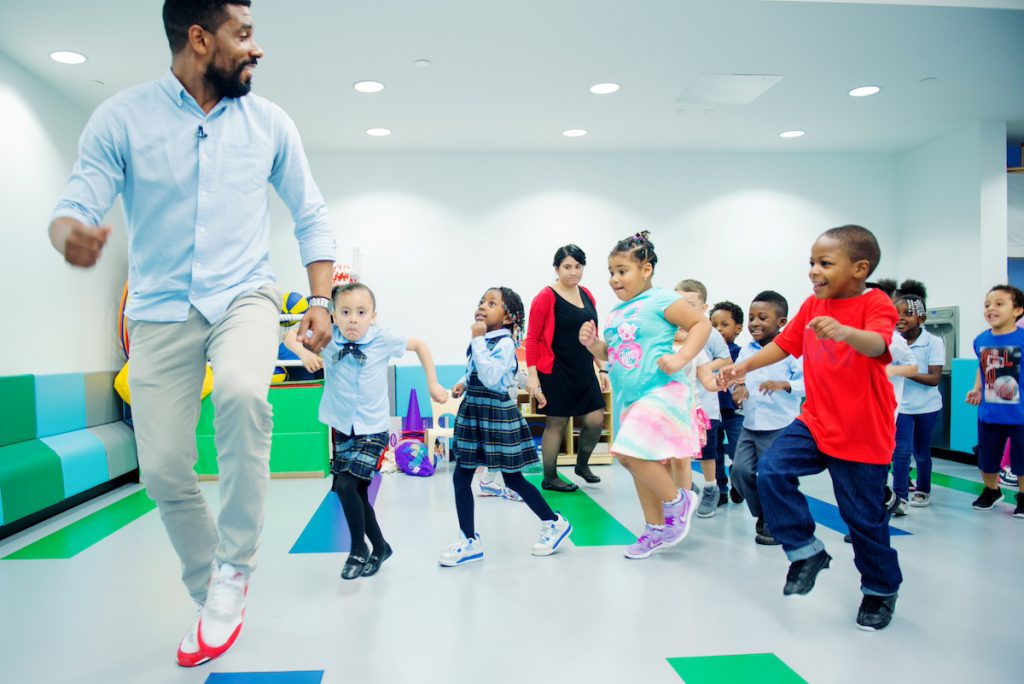
Incorporate direction and rhythmic changes during musical play.
For 3-5-year-olds, these activities integrate vestibular input with coordination and self-regulation.
Try “Waltz and Jig” from the free Kindermusik app (or play it below). This song goes from a gliding waltz to a bouncy jig within the same track.
- Encourage children to twirl and move gently in one direction around the room as the waltz plays.
- When the music changes to “Dance a jig…”, instruct them to bounce to the beat in the other direction.
- Continue these changes throughout the song.
Your child’s constant motion (or movement reluctance) isn’t random—it’s a message. And once you understand the role of the vestibular system, that message becomes clear.
Movement isn’t just fun. It’s foundational. It supports balance, focus, behavior, and learning from the inside out.
So the next time your child endlessly jumps, spins, or wiggles, take a breath and ask “What is their brain telling me?”
By supporting vestibular development through intentional and safe musical play, we’re helping answer a developmental need, and giving children the tools they need to thrive.
Diana F. Cameron (MEd) is an Accredited Kindermusik Educator, Kindermusik University coach, and early childhood development specialist in Queensland, Australia. She’s also the owner of Building Brain Connections—find more of her educational videos here.
For more vestibular system activities, find a Kindermusik class near you or check out our teaching solutions for ages 0-6.
 “I think play is an expression of our creativity; and creativity, I believe, is at the very root of our ability to learn, to cope, and to become whatever we may be. To me, play is the process of finding new combinations for known things – combinations that may yield new forms of expression, new inventions, new discoveries, and new situations.”