

Lesson Learned: How My Son Spent $1200 on iTunes

Lesson Learned

Friends, I’m a parent. It’s the position I’m most proud of. My wife feels the same way. We have two boys – a 14 year old and a 10 year old. They are the twin joys of our life together. In our quest to make the best parenting choices, I’d like to think we’ve done pretty well – most of the time. This story is about one of the times we messed up…pretty badly. But in the end, we turned our mistake into an opportunity to teach our oldest a valuable lesson. Buckle up…it’s going to be a bit bumpy at the outset.

Setting the Scene

It was July of 2014. We live in Western Pennsylvania and my wife’s parents live on the Eastern side of the state. Our boys were almost 300 miles away visiting their grandparents. This will be important later.

Now…my May American Express bill had been a bit high – it reflected about $300 in purchases from iTunes. My wife, who handles our finances, pointed this out and asked me to curtail my spending. I’m a conductor and music educator. I do tend to spend quite a bit on music through iTunes, particularly in the summer when I am planning my year – though $300 is pretty high for one month. I mistakenly just assumed I had somehow lost track and overspent. Not checking to see if I had actually splurged that much on music purchases was my FIRST MISTAKE.

I promised Jane I would avoid any further purchases for the rest of the summer.

We return to July and a child-free house. As much as we love our boys, we were enjoying a bit of quiet. I was working in the kitchen when I heard Jane yell for me in the family room.

“Sweetheart!”

Uh oh. “Yes?”

I could tell I probably did something.

“You spent over $850 on iTunes last month! You said you’d stop!”

At this point, I knew something was off. I knew I hadn’t spent any money on music in June. Refraining from any purchases through iTunes, I had spent a great deal of time listening to music on YouTube. What was going on?

We looked at the bill together – countless charges of $1.08…$5.44…then $10.89…then $21.79. Finally, toward the end of June, someone had charged several items costing $54.49. My bill with Apple totaled $878.

“In the interest of full disclosure, I was relieved that it wasn’t me who was in trouble.” – Dr. Boyle”

Fraud!

I immediately thought my card had been compromised, so I did what anyone would do – I called American Express. While on hold, I remembered – I had connected our oldest son’s iPod Touch to my American Express account.

We had a deal with him: if he wanted to download anything – anything at all – he had to ask permission. Whether an app was free or cost money, he had to ask. Nathan had been good about this deal. He always asked. He hadn’t abused this trust since we purchased the iPod Touch for him two years prior. I would occasionally check his device to see what he’d been doing. In two years I never found anything of concern and slowly reduced how often I checked in. MISTAKE NUMBER TWO.

Still on hold, I asked Jane to call Nathan, just to check if he had downloaded anything. The customer service agent returned and agreed that if I didn’t make the purchases, which due to their repetitive nature and increasing value, things did look suspicious. While discussing possibilities with my friendly Amex Rep, I heard Jane, in an extremely loud and uncharacteristic voice, say the following:

“YOU DID WHAT?!?!?”

I sighed into the receiver. We had apparently caught the culprit – the mastermind behind the charges: our then 10 year-old son.

“Um…Ma’am?” I said sheepishly. “Never mind. We figured out what happened. Thanks for your help, though.”

I hung up.

In our 20 year marriage, I don’t think I have ever seen Jane as angry as she was that day, talking to our son on the phone (who I’m sure was extremely grateful of his 300-mile-safety-buffer). He admitted that he had been playing a game on his iPod – Clash of Clans –  that may have had some “in-app purchases.”

In the interest of full disclosure, I was relieved that it wasn’t me who was in trouble.

Freemium Games and In-App Purchases

This incident introduced us to the relatively new concept of Freemium Games, brilliantly satirized by South Park the following November in the episode, “Freemium Isn’t Free.” I’m sure most know what this is, but for the uninitiated, a Freemium Game is a game that is free to download. It’s also free to play. However, it’s been designed to take advantage of our desire to move quickly through a task to get that final reward. Yes, you can play for free, but for an in-app purchase of only 99¢, you can instantly buy resources instead of collecting them over the course of days or weeks. For for $1.99, you can buy quite a bit more. And for $9.99, you can buy even more! Why wait weeks to complete a task in-game when – for pennies – you can have instant gratification?

This bit of marketing magic works. It works really well, so well that Clash of Clan’s parent company, Supercell, normally takes in over $2 million each day. Let me type that again – the company brings in 7 figures a day for selling…nothing. In Clash of Clans you can purchase gems which simply speed up game play. There is no actual product delivered – digital or otherwise. Last year, Supercell generated $2.3 billion in revenue, selling the ability to increase the speed of gameplay.

iTunes
The “Gems’ purchase screen of Clash of Clans – it’s only 99¢, right?

Parenting Fail into Parenting Win

So…I had failed to verify the purchases from May. As it turns out, all of that $300-plus iTunes bill was Nathan. He started small. As he played the game, he kept increasing the number of gems he was buying. A “Pocketful” of gems costs 99¢; a “Pile” – $4.99. With just a couple clicks, you can get your resources and speed up the play. Once he got going, absent parental supervision, human nature took over. There was no stopping him. He peaked at buying “Boxes” of gems for $49.99. We had caught on before he jumped to the next purchase level – $99.99…plus tax, of course.

Because we had failed to check in on Nathan’s iPod activity, we completely missed the install of the “Freemium” game and the initial purchases. We had to accept some responsibility. Of course, Nathan broke our deal and failed to ask permission to install the game and buy anything in the game. He had been so good in the past – asking if he could buy a $1.99 app or a 99¢ song. We never thought something like this would happen.

So what did we do?

At a friend’s suggestion, I immediately called Apple. I explained the situation to them, and without asking for a refund, they offered to refund the entire amount of $1189. Pretty amazing if you ask me.

But we still needed to deal with Nathan. Thankfully, his absence gave us time to think. We had some important and often complicated concepts we wanted to get across to our son. He had spent the equivalent of our rent on nothing of any real value. He had also abused our trust. What consequence (or set of consequences) would teach rather than simply punish? How could we use this opportunity to help him understand finances?

The Plan

Here’s what we came up with. Nathan immediately lost all his internet connected devices and internet privileges – iPod, Xbox, and computer access outside of school work. This falls into the “negative punishment” block of Operant Conditioning. What we did next required a long term commitment and would result in our son truly appreciating the value of money.

We told Nathan that we transferred the money in his savings account to our account to partially take care of his debt (we didn’t really). This lowered the total amount owed to about $800. We devised a complex life lesson for our son that, in the end, taught him more than just finances. We would teach him how to live on a budget and what that requires in everyday life.

  • Nathan would work five hours a week at minimum wage until the $800 was paid off.
  • Those five real hours would represent a virtual normal 40 hour work week – so each hour equated to an 8 hour day’s pay at minimum wage.
  • This gave him a virtual weekly salary of $290 a week.

Out of that weekly virtual salary, Nathan had to take care of the following weekly virtual expenses:

  • Roughly $40 in taxes and withholdings
  • $90 in rent – based on the low end of one bedroom apartment rent listings in our area
  • $15 in utilities
  • $30 in heath insurance
  • $10 in transportation costs (he’d take public transportation to his “virtual” job)
  • $40 in groceries

This left him with $65 a week. Out of this money, he had to pay down the entire debt of $1189. Each hour he worked beyond his five real hours represented a virtual hour’s work of overtime and he’d virtually be paid time and a half. To his credit, he did take advantage of this and did more than five hours of work almost every week – sometimes as much as 15 real hours total. What did we have him do?

  • Laundry
  • Cooking (taught him to make pasta sauce – a very important skill in my book)
  • Dishes
  • Vacuuming
  • Watching his little brother
  • Assisting both of us with various tasks

Each week, we sat down with him and entered his hours into a Google Sheets document I created, complete with formulas that figured everything out for us. He could see his income, taxes and other withholdings, expenses, and savings. We allowed him to decide how much to save each week, but encouraged him to save as much as he could. If we went out to see a movie as a family, he had to deduct the ticket cost from his savings (no, we didn’t actually make him pay for the ticket – we’re not monsters!). We set up a minimum payment on the debt, but he could elect to pay more. We also allowed him to buy back his electronics (at seriously reduced used prices), as if he had been required to pawn them.

One last monkey wrench – we laid him off one week and “outsourced” his “job” to his 7 year-old brother. He had to rely on his savings to meet his financial requirements that week. We explained that this happens sometimes and people still need to find a way to get by. That’s one of the reasons personal saving is so important – to deal with the unexpected.

In the End

When all was said and done, this learning experience took almost six months to play out. By the end of December, Nathan had paid off the $1189 dollar virtual debt from his virtual income, and finished with about $240 in his virtual savings account. He learned that living on a budget can be a challenging thing, especially at the outset. He learned that money is normally something one earns through hard work. He learned to value his time and the work he produced. We learned that we should never take anything for granted and be as present as we can be in the ever-growing list of digital parental tasks.

Trust me…we wanted to yell at him when he returned from Eastern Pennsylvania. He had spent almost $12oo! But the physical and temporal space afforded to us by the fact that Nathan was visiting his grandparents allowed us to cool down, realize our part in this fiasco, and come up with something that would deliver a serious consequence while attempting to teach him some very valuable life lessons.

Our 10 year-old handled all of this very well. As things got going, he would often be the one to initiate our time together filling out the Google Sheet. He’d point out how much he had saved and make pretty well informed financial decisions for a kid his age – like when it made sense to try and buy back his iPod or his Xbox privileges.

The Digital Parenting Landscape

In reality – we just have new and fascinating technological situations on which we must focus age-old parenting duties. Yes, Nathan was 10, a bit older than your average Kindermusik kid, but believe me, this can happen with any child that has access to an iPod, iPhone, or iPad. We quickly learned how to turn on parental controls for purchases, and as a second option, how to only allow gift cards for purchases on the App Store.

Huff Post recently reported on a 6 year-old girl in Dallas named Brooke who ordered a doll house and four pounds of cookies through the family’s Amazon Echo device. When no one was looking, she asked the internet connected device, “Alexa, can you play doll house with me and get me a doll house?” following the request with, “Alexa, I love you.” Because the girl’s mother had one-click ordering enabled, Amazon shipped a $170 doll house to the family home, much to Brooke’s delight.

As technology continues to deliver conveniences, as parents we need to be ever vigilant, both in monitoring and in educating our kids.

Our now 14 year-old son, Nathan, checks out the Kindermusik page...with typical teenage excitement.
Our now 14 year-old son, Nathan, checks out the Kindermusik page…with typical teenage excitement (he had to get dressed for this photo – he was lounging in his PJs).

Nathan, now a high school freshman, smiles when we recall that summer and subsequent months. He’s gotten very good at saving money. And really, it seems like just a week ago he was four, playing with Thomas the Tank engines on the living room floor. For those of you with young kids, 14 will be here before bedtime. So friends, be ready!

Resources

Apple has continued to develop controls for parents knowing that kids will be interfacing with the App Store and iTunes. Their Family Sharing controls are extremely useful and can be found here.

Likewise, Google has parental controls that are pretty robust. Information on how to adjust them are located here.

For the record, we did eventually tell Nathan that Apple refunded the money. We’re not that cruel – even if once in a blue moon he (and even his younger brother, Patrick) might give us a pretty serious eye roll.
STORY TIME! Reading to Kids the Right Way

Story Time

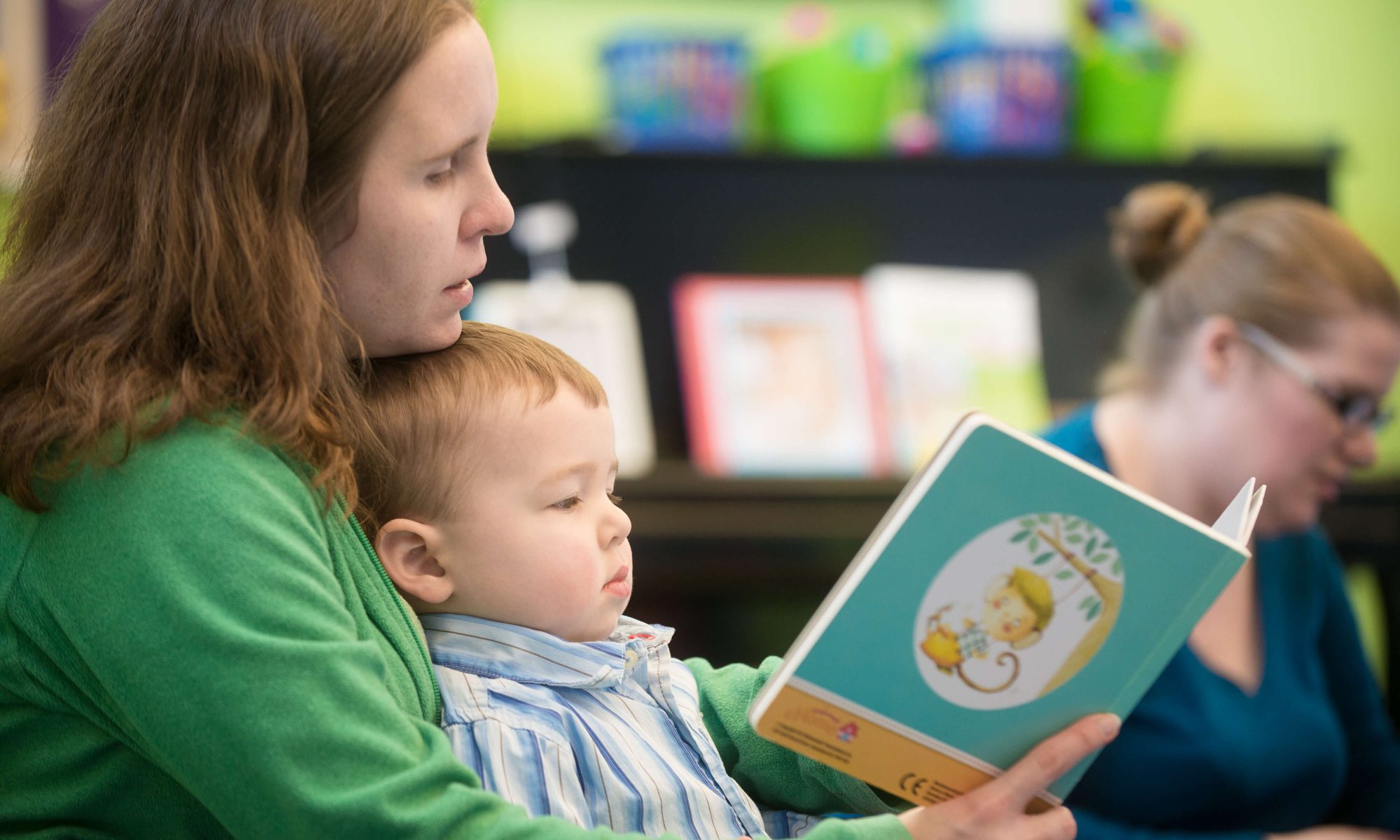
[vc_row][vc_column][vc_column_text]I’m willing to bet that if you read this blog, you take time to read to your kids. I’ll also guess that this time is special, enjoyed by both you and your kids. Perhaps before bedtime, you break out a favorite book, worn from multiple readings, and share a laugh or two. We can use this time a bit more constructively – to engage our children and increase the value of a regular activity. 


[/vc_column_text][/vc_column][/vc_row][vc_row][vc_column][vc_column_text]In a recent article over at Psychology Today, neurobiologist Erin Clabough, Ph.D. (author of Neuroparent, a regular PT blog) shared some wonderful insights on how we might make reading time an opportunity to engage our kids. We can use just about any book, even a book that is not particularly well written, to get children thinking about the story, any conflicts that arise in the narrative, and how they might handle the given situation. Here’s how Dr. Clabough suggests expanding on a story about bullying:

So how do we use books differently? Let’s pull out the conflict. Read through the bullying story until the kids start to be mean to each other. And instead of inwardly wincing and reading faster, press pause and close the book. Ask your child what they would do if they were in the character’s position. Brainstorm, and then open the book back up and allow the author to lead you through to the end.

Dr. Erin Clabough, Psychology Today

[/vc_column_text][/vc_column][/vc_row][vc_row][vc_column][vc_column_text]This is a wonderful way to engage a child through reading. Let’s use Pete the Cat – I Love my White Shoes as an example. As we mentioned in our last post, this book does a wonderful job relating executive function and self-regulation skills. How, as Dr. Clabough suggests, do we “press pause” and engage?

If you recall, Pete the Cat accidentally stepped in a huge mound of strawberries, effectively ruining his favorite footwear. This moment is depicted in beautiful double page rendering by illustrator, James Dean.

Reading and engaging[/vc_column_text][vc_column_text]This is the moment to use Dr. Clabough’s pause technique. Close the book and ask the questions:

What do you think Pete will do?

What do you think you might do if this happened to you?

This is a golden opportunity to build executive function and self-regulation skills. When engaging a child in this way, particularly with preschool kids – keep the side discussion short and sweet. Most young kids possess a relatively abridged attention span. If you push it too far, the benefits might be lost. You know your kids best and will be able to judge how much time you can devote to this technique.[/vc_column_text][/vc_column][/vc_row][vc_row][vc_column][vc_column_text]Once your child answers, you might be able to ask further questions before the reveal. On the next page, Pete shifts gears and celebrates his newly colored red shoes. We see him thinking, “Everything is cool.” Now you can compare Pete’s reaction with your child’s prediction – and even their own predicted reaction.

engagement
Pete’s cool and so are you!

[/vc_column_text][/vc_column][/vc_row][vc_row][vc_column][vc_column_text]This technique can be applied to any book. We can find moments that allow us to ask questions, that get our kids thinking about choices facing the story’s characters. In those moments, we can all reflect on the choices and how they might apply to our lives. You don’t have to do this constantly. Pick your book and pick your moments. Those moments that go beyond the story will add value to the experience.[/vc_column_text][/vc_column][/vc_row]

Book Review: The Gardener and the Carpenter

The Gardner and the Carpenter

[vc_row][vc_column][vc_column_text]Oxford University educated developmental psychologist Dr. Alison Gopnik brings us an excellent parenting book in The Gardener and the Carpenter: What the New Science of Child Development Tells Us About the Relationship Between Parents and Children. In the field of childhood learning and development, Dr. Gopnik is a respected voice and frequent author. The Gardener and The Carpenter is her latest effort.


[/vc_column_text][/vc_column][/vc_row][vc_row][vc_column][vc_column_text]

“Drawing on the study of human evolution and on her own cutting-edge scientific research into how children learn, Gopnik shows that although caring for children is immensely important, the goal shouldn’t be to shape them so they turn out a certain way. Children are designed to be messy and unpredictable, playful and imaginative, and very different both from their parents and from one another. The variability and flexibility of childhood allow them to innovate, create, and survive in an unpredictable world. “Parenting” won’t make children learn – rather, caring parents let children learn by creating a secure, loving environment.”

– Jacket Flap, The Gardener and the Carpenter

Dr. Gopnik provides clear and research based parenting strategies for the parent of the new millennium. Common pitfalls are explored and perhaps the main takeaway from the book is this: while we seek to provide a safe, structured environment for our children in which the can grow physically, socially, mentally, and emotionally, we need to step back and let our kids be kids. Oddly, I am going to quote the conclusion of this book right here at the beginning of this review:[/vc_column_text][/vc_column][/vc_row][vc_row][vc_column][blockquote cite=”Dr. Alison Gopnik, The Gardener and the Carpenter”]”Being a parent isn’t worthwhile because it will lead to some particular outcome in the future, because it will create a particular kind of valuable adult. Instead, being a parent allows a new kind of human being to come into the world, both literally and figuratively. Each new child is entirely unprecedented and unique – the result of a new complicated combination of genes and experience, culture and luck.”[/blockquote][/vc_column][/vc_row][vc_row][vc_column][vc_column_text]This mindset reminds me of the motto of Paul McCartney’s grammar school in Liverpool – Not for ourselves, but for the whole world were we born. It’s a beautiful sentiment, but the pressure! The title of the New York Times review captures this concept beautifully: Memo to Parents: Back Off, and Children Learn More. 

One area Dr. Gopnik addresses is a truth all parents know – kids are messy. It’s just a universal truth. Human children are not born into the world ready to clean up after themselves. And while we try our best as parents to bring order to disorder, Dr. Gopnik reminds us that our 19th century forebears had a different view than the ancient Greeks when it came to chaos and disorder (so did Willy Wonka – a little nonsense now and then…). Disorder and chaos can be the catalyst for “innovation and creativity.”[/vc_column_text][/vc_column][/vc_row][vc_row][vc_column][blockquote cite=”Dr. Alison Gopnik, The Gardener and the Carpenter”]”Mess has merits.”[/blockquote][/vc_column][/vc_row][vc_row][vc_column][vc_column_text]

Learning Through Looking

Through this chapter title, Dr. Gopnik reminds us that our kids are always learning, even when we aren’t actively teaching them. They are opportunistic and indiscriminate when it comes to subject or content. Everything is fair game for the developing mind. The extended period of learning afforded by our way of life is a huge benefit. Through this journey, Gopnik states “children are equipped with particularly powerful devices for learning both from their own experiences and from other people.”

As it turns out, Dr. Gopnik suggests that children may be better than adults [in certain situations) at synthesis – putting it all together – processing what they see other do and attempting to understand why they do what the child observes. The natural conclusion being this: allow for a variety of experiences – it will have a positive impact on your child’s development.[/vc_column_text][/vc_column][/vc_row][vc_row][vc_column][blockquote cite=”Dr. Alison Gopnik, The Gardener and the Carpenter”]”In some ways, at least, your children may actually know more about you than you do yourself”[/blockquote][/vc_column][/vc_row][vc_row][vc_column][vc_column_text]The title of this book, and it’s allegorical implications, perfectly relay what is found inside. Two basic, overarching modes of parenting are presented. Throughout the book, Dr. Gopnik makes a strong case for the gardener – providing a nurturing, loving, tended space in which our children can grow in the sun, experience the world around them, and become the unique individual their magical assortment of genes and cultural trellis encourages them to be. It’s a beautiful framework, with fewer codified instructions, something on which the carpenter relies heavily. It’s somewhat of a paradox, and Gopnik deals with several at the outset of the book. Rather than thinking of things like “free range,” other named philosophies, and overly concerning ourselves with outcomes, we focus on love. We focus on providing a framework in which our kids can discover who they are and we worry less about who they are going to be. Focus on the now and the later takes care of itself.[/vc_column_text][/vc_column][/vc_row][vc_row][vc_column][vc_column_text]Dr. Gopnik has several other books on child development, including The Philosophical Baby and The Scientist in the Crib. You may watch her TEDTalk, titled “What Do Babies Think?”, here.[/vc_column_text][/vc_column][/vc_row]

Apathy vs. Empathy: Creating Compassionate Kids

Brain

I remember when our first child was born; I lectured my in-laws about screen time for our son. “We don’t want him in front of the TV at all.”

It was a lofty goal, but one we quickly failed to achieve.

We purchased just about every Baby Einstein video known to humankind. Our son loved them. I can actually remember his face light up, big smiles and bouncing in his little activity center seat. He’d always cry when the “static ball” scene appeared. 

Jane Tavyev Asher, MD Child Neurologist, shares advice for parents on what the appropriate amount of screen time is for children depending on their developmental stage.

How many of us have tried to limit screen time, only to cave and allow a bit more than we originally intended? And when it comes to screen time, things have become even more complicated with the rise of personal screens.

Small screens like smartphones and tablets can be incredible tools, but they can also have an impact on how our kids learn to interact with the world.

A recent study conducted at the University of California, Los Angeles, took two groups of 6th graders – the first attended a nature and science camp that did not allow electronic devices (I’m not sure I could survive!). The second group stayed home.

At the beginning and end of the study, both groups of students were evaluated for their ability to recognize other people’s emotions in photos and videos. The students were shown 48 pictures of faces that were happy, sad, angry or scared, and asked to identify their feelings.

They also watched videos of actors interacting with one another and were instructed to describe the characters’ emotions. In one scene, students take a test and submit it to their teacher; one of the students is confident and excited, the other is anxious. In another scene, one student is saddened after being excluded from a conversation.

The children who had been at the camp improved significantly over the five days in their ability to read facial emotions and other nonverbal cues to emotion, compared with the students who continued to use their media devices.

Stuart Wolpert/UCLA Newsroom

The researchers concluded what we already know: kids can’t develop empathy staring at an electronic screen. They require human interaction for this important point of growth. When empathy is absent, apathy can fill that void.

Purposeful Interaction

Okay – so we limit screen time. But how can we build compassionate kids? How can we help create a framework for empathy? The answer: purposeful interaction. 

  • Take time to identify emotions in others.

Ask your child questions when you see a good emotional example. “How do you think she feels?” “Is that man sad or happy?” Come up with stories to explain why a person might be smiling. Helping a child pick up on visual cues will establish a foundation.

  • Set the example.

You will be your child’s first and best teacher. The sun will rise and set in your eyes. We all know that what we model, our children will copy. If your child sees you demonstrating empathy on a regular basis, she will follow suit. Dr. Robyn Silverman, a child development specialist, provides the following suggestions on modeling compassion:

  1. Show compassion for other family members.
  2. Show compassion for animals.
  3. Show compassion for playmates.
  • Let your child know you recognize his emotions.

Acknowledging that you are sensitive to your child’s emotional state and talking about it helps develop his ability to process emotions. In turn, he’ll be able to better understand emotions in others. Vanderbilt University provides a wonderful article on this very topic.

As we have mentioned in the past, one of the best ways to aid the development of emotional awareness and empathy is through regular interaction with other children and caring adults.

You know where I’m going, right? You can’t blame me – the Kindermusik curricula, the studio experiences and Kindermusik  for Schools, were built from the ground up with this in mind.

Among the host of benefits of regular group musical instruction is increased social and emotional development. And that, friends, is a great way to build compassionate kids…kids that are sensitive to the needs of others and possess the ability to express their own emotions in a healthy manner. And I bet we can all agree – the world is a better place when compassion and empathy are present.


Interested in a Kindermusik Class? Find a virtual or in-person session near you! 

ADHD – An Adult Perspective on the Journey

ADHD

[vc_row][vc_column][vc_column_text]According to a 2011 report from the Center for Disease Control, the rate of ADHD diagnoses was 11% in children ages 4 to 17. When I was that age the diagnosis rate was about 3% – 5%. If you want to do the math, I’m 43. Recommendations on how to treat the disorder have changed over the years, and we’ll get to that. But first, I wanted to share my experience, as someone who has dealt with Attention Deficit Disorder his entire life. [/vc_column_text][vc_column_text]I always had attention issues. Growing up, the only places these issues didn’t plague me were music class, choir, and band. Everywhere else, I had all the classic symptoms: loss of time, easily distracted, constant talking, and the strangest for me – hyperfocus. Hyperfocus manifested itself quite strongly, and I didn’t know what to call it or how to talk about it until years later. When I had moments of hyperfocus, the world around me seemingly slowed down, my heart felt like it was racing, and my periphery narrowed.[/vc_column_text][/vc_column][/vc_row][vc_row][vc_column][vc_column_text]I was never diagnosed as a child. It was my wife, a public school music teacher, who first suggested that I have myself screened. She witnessed many moments of distraction, loss of focus, and even hyperfocus, which seems counterintuitive to the name of the disorder and its other symptoms. Throughout my undergrad and masters degrees, I was able to use various coping mechanisms in class to overcome ADHD challenges. I’d sit in the front row, constantly ask questions, and borrow friends’ notes, take them home, and retype them. All of this worked until I started my doctoral studies. I finally caved and sought help.

ADHD
Dr. Boyle speaking to an audience at a recent concert

I’ve often been asked what ADHD (I never experienced the “H” part) felt like. This was my best description: if a thought started at the back of my head, and found completion as it moved to the front of my head, I felt like there was a bundle of straws going in every direction between the back and the front, preventing the thought from making the journey efficiently. In my case, I was diagnosed at age 36, and my doctor and I decided to try a medication. The first day taking the meds I went to the library. It was as if all those straws were lined up in perfect parallel. Those thoughts that were getting lost? They now had a clear path from onset to realization. In the past, I’d get a few pages of notes after a three hour visit to the library. That day? I took 35 pages of well organized notes that stuck in my head in perfect order.

This was the right choice for me. I don’t need to take the medication every day, only when I need it. That usually is when I need to do in-depth, complex reading.

My wife calls them my “do the dishes” pills. She says I notice things that need to be taken care of much more readily if I have taken one on a given day. [/vc_column_text][/vc_column][/vc_row][vc_row][vc_column][vc_column_text]

Current CDC Recommendations

The CDC now recommends behavior therapy as the first line of treatment in young children. It is beneficial for parents with children who have been diagnosed to learn as much about ADHD and to go through parent training in behavior therapy. The CDC states:

“Children who have ADHD act in ways that are often challenging for parents. Children may forget things they are told, be overly active, and act before thinking. They might not be able to get positive attention the way that other children can; they tend to misbehave and might be punished more frequently than other children. Even if children with ADHD really try to follow rules, they might not be able to. This can have a negative impact on their self-image, and cause them to give up trying or to act up more often.

A therapist skilled in behavior management can help parents understand how ADHD affects their child. Parent training in behavior therapy is used to help change problem behaviors by building parenting skills, improving the relationship between parents and their child with ADHD, and helping children manage their own behaviors.[/vc_column_text][/vc_column][/vc_row][vc_row][vc_column][vc_column_text]

Music and ADHD

But what about music? This is, after all, a music education blog! Well, a recent ADDitude article, the online magazine offering strategies and support for the ADHD community, provided the following:

Music strengthens the areas of the brain that, in the child with ADHD, are weak. Music builds and strengthens the auditory, visual/spatial, and motor cortices of the brain. These areas are tied to speech and language, reading, reading comprehension, math, problem solving, brain organization, focusing, concentration, and attention issues. Studies indicate that when…children with ADHD learn a musical instrument, attention, concentration, impulse control, social functioning, self-esteem, self-expression, motivation, and memory improve. Some studies show that children who have difficulty focusing when there is background noise are particularly helped by music lessons.”

It makes good sense that these experiences start at an early age. And research supports that. Get them involved from birth. The impact music has on the brain is tremendous.
[/vc_column_text][/vc_column][/vc_row][vc_row][vc_column][vc_column_text]Sharlene Habernyer, the author of the above referenced ADDitude article, provides a list of strategies she used with her son, Brandon, a child diagnosed with ADHD. Here are some of them:

  • Start group music lessons. When he is about 18 months old, find a group music program for your child.
  • Dance to the music. Movement for an ADHD child is a must! In fact, movement is an indispensable part of learning, thinking, and focusing. As a child moves to different cadences and rhythms, his physical coordination and ability to concentrate improve.
  • Draw what you hear. Many ADHD children are creative and in search of creative outlets. Drawing or doodling engages motor skills, organizes the brain, and stimulates artistic juices. After a busy day at school, and before your child jumps into homework, give her paper and crayons, put on some classical music, and let her draw.
  • Read music books. I’m a strong advocate of reading to your children every day. Reading builds focus, concentration, vocabulary, speech and language, and writing skills. I read many books to our sons, some of which were associated with music: Swine Lake, by James Marshall (a great book to introduce your kids to the ballet Swan Lake), and Lentil, by Robert McCloskey.
  • Start private music lessons between the ages of five and seven. If you are a parent with ADHD, take music lessons along with your child.
  • March in the morning. Children with ADHD usually have a hard time attending to tasks during the busy morning hours. Every morning, play marching music (John Philip Sousa tunes are great) and march from activity to activity — getting dressed, making beds, eating breakfast, brushing teeth — with feet moving and arms swaying.
  • Sing your way to school. Teachers want students to be ready to learn when they come to class. So, on your way to school, sing in the car or play classical music.

So…what are you waiting for? Kindermusik provides experiences that benefit every child. And the more you are involved, the better! [/vc_column_text][/vc_column][/vc_row]

Kindermusik and the Music City: Betsy Flanagan Speaks at the National Head Start Conference and Expo

Flanagan

[vc_row][vc_column][vc_column_text]Next week, Kindermusik International’s Director of Professional Development, Betsy Flanagan, will present two sessions at the 43rd Annual National Head Start Conference and Expo in Nashville, Tennessee – the Music City. Think about that nickname – it’s quite appropriate that she’ll be speaking about the benefits of music in learning and reducing stress in the classroom. In addition, Betsy will address music’s power in daily transitional moments, like leaving home for school. Click here to let us know you are coming![/vc_column_text][vc_separator color=”mulled_wine”][vc_column_text]For the better part of a year, Betsy Flanagan has headed professional development for Kindermusik, but for the past 14 years, she’s guided the direction of Musical Pathways Foundation as founder and director, a non-profit organization that offers Kindermusik curricula to families just north of Madison, Wisconsin. A seasoned speaker, she brings her considerable education, knowledge, and experience in the musical education of young children to the NHSA conference attendees.

Betsy Flanagan Speaking
Betsy Flanagan providing professional development for Kindermusik Educators

[/vc_column_text][vc_custom_heading text=”Music + Movement = Monumental Impact” font_container=”tag:h3|text_align:left|color:%238224e3″][vc_column_text]Betsy shares that different aspects of music and movement activities has a positive impact on all domains of learning – physical, social, adaptive, and cognitive. Beyond this, it reduces stress in just about all situations. But how? Betsy tells us, “Music helps children learn to keep their emotions in check: as music is filled with transitional movements from verse to refrain, Self-Regulation skills are practiced, and when young children are allowed to practice through play, learning soars.”

It seems to be that magic combination of group music making, coupled with physical movement, that builds a sense of safety. “Using music activities on a daily or weekly basis, helps children feel the security of a playfully structured environment,” says Betsy.

Music and movement – it’s a powerful combination.

“I have not found another teaching tool like music that
-captures a group of children’s brains for extended periods of time
-while also firing their brains on all cylinders,
-all domains,
-while being easily repeatable
-literally lowering the stress in the environment
-and simultaneously speaking to all learning styles at the same time.”

       – Betsy Flanagan[/vc_column_text][vc_column_text]Benefits of music activity[/vc_column_text][vc_custom_heading text=”The Magic of Music” font_container=”tag:h2|text_align:left|color:%238224e3″][vc_column_text]Because music allows children to increase skill acquisition speed, learning goals are reached faster. And as we have discussed in previous posts, when young children have moments with caring adults – parents, educators, caregivers – the lasting impact is increased.

Have you ever had a challenging time getting your little one to school or picking them up – maybe because he didn’t want to leave a given situation? Well…Betsy has just the prescription for that! Music Rituals, songs coupled with short activities, can ease these moments. “Hello Song is the easiest tool to incorporate for pick-up time at school and for when family members return home. Hello songs that include verses with touch, smiling, and hugging are most effective for refilling the child’s love tank after having missed the parent/family during the school day, or missing the parent who has been gone to work all day. Music is important in this function, as music not only fires the entire brain, but it is also inherently easily repeatable with built-in verses and refrains…and fun of course!”
[/vc_column_text][vc_column_text]As you might imagine, these rituals help build positive connections between parent/child and teacher/child. “The connectedness, the synchrony that children feel when engaging with others in music activities, is priceless for relationship development. Trust and a feeling of safety between two people is required to develop a relationship, and music activities supply those elements,” says Betsy. [/vc_column_text][vc_custom_heading text=” Conference Session Takeaway” font_container=”tag:h2|text_align:left|color:%238224e3″][vc_column_text]What does Betsy for hope those who attend her sessions as learning outcomes?

1. Attendees will learn to integrate impactful music & movement activities into their lesson plans and home visits to accelerate learning, increase joy, and reduce stress.

2. Attendees will receive all songs presented to allow for immediate application in their programs.

3. Attendees will understand each activity’s developmental benefits as related to the Head Start Five Domains.

[/vc_column_text][vc_column_text]So…if you are at the National Head Start Conference and Expo next week, join Betsy for these exciting sessions! Click here and we’ll save you a seat! If you are unable to attend the conference, contact us about how the Kindermusik curricula and our highly rated professional development can benefit you, your students, and your school.[/vc_column_text][vc_separator][/vc_column][/vc_row][vc_row][vc_column][vc_column_text]Betsy Flanagan obtained her Bachelor’s in Music Education (summa cum laude), Kindergarten thru 12th Master’s degree from Illinois State University in Choral Conducting and Vocal Performance, and has completed her Doctoral coursework in Choral Conducting from the University of Illinois in Champaign, Urbana where she was awarded a Fellowship on staff. Betsy has taught children of all ages and backgrounds in public grade schools, high schools, universities, summer camps and also privately in her home studio for over 30 years, providing her students high quality instruction together with passionate motivation.[/vc_column_text][/vc_column][/vc_row]

Using Music to Address Challenging Behaviors

Whether in the classroom or at home, if there are children, there are likely to be challenging behaviors.  That’s because kids will be kids, and we all have our moments.  While there are many appropriate ways to address challenging behaviors depending the child, the situation, and the need of the moment, we’d like to suggest a few creative ways to use music to respond to challenging behaviors.

  • A simple little children’s song, even one adapted for the moment, can ease the transition times in a child’s day.
  • Songs, rhymes, and rhythmic activities can become a part of a reassuring and predictable daily routine that will nearly eliminate feelings of frustration or uncertainty.
  • A song or rhyme like Dr. Becky Bailey’s “I Love You Rituals” can give a child an appropriate way to express himself.
  • Playing recorded music can set the tone for the day in the classroom, bring down the energy level, or even help ease a child into nap time or bed time.
  • Quieter songs and recordings will do wonders to calm and quiet busy little minds and bodies.
  • If a child is singing, he/she can’t be talking!
  • Singing, moving, or listening to music can help re-direct a child’s attention.
  • Moving to music not only wakes up the brain and primes it for learning, but moving to music also eliminates the wiggles.

So try it out.  See for yourself how a song in your head and a song in their hearts will work wonders, especially when it comes to addressing challenging behaviors!


Shared by Theresa Case whose award-winning Kindermusik program is located at Piano Central Studios in the beautiful upstate of South Carolina.


What Kids Need

what kids need

[vc_row][vc_column][vc_column_text]Last month, I wrote an article on what kids want that featured a commercial from an Australian food company. It beautifully demonstrated the importance of quality time vs. quantity of time between parents and kids. As it turns out, kids crave time that involves meaningful interaction, such as mealtime. During a meal you make eye contact, talk about your day…what you saw, what you learned. It’s time to learn a bit more about each other. Your kids are constantly changing.

Recently, early childhood expert Erika Christakis gave an interview over at NPR and focused on her new book, The Importance of Being Little: What Preschoolers Really Need from Grown-Ups.  What kids need is a logical next step in the discussion following what kids want.

What Kids Need[/vc_column_text][vc_column_text]

Less Paper, More Play

Christakis’s basic premise is straightforward and direct. We live in an educational era dominated by test preparation. I have mentioned before that my wife is a public school music teacher and she sees this on a regular basis. The amount of activities in which children take part that are experiential in nature seem to take a back seat to process or didactic learning (think lecture). We need more opportunities for experiential learning.

Play is a wonderful form of experiential learning. Dancing, movement, singing – these are all opportunities to do and learn through doing. And this is what Christakis suggests – kids need opportunities to learn and grow through play. Specifically, our kids need play activities involving adults with whom they have important, positive relationships – like parents and grandparents.

Here’s a brief video explaining experiential learning, and how it benefits growth. One of the most important parts of this is reflecting on the activity at hand. And this can be simply talking with your child – perhaps during a meal (See what I did there? Full circle!). They are initiating the process of learning when they play, developing an understanding of the world around them, how their minds and bodies work in that world, and how they interact with others.[/vc_column_text][vc_video link=”https://www.youtube.com/watch?v=aF63HHVbpQ8″][vc_column_text]Now, don’t get me wrong, there are multiple modes of learning that are effective, however, when you reduce the amount of active participation on the part of the learner, it can have a negative overall outcome.

So…what does Erika Christakis have to say about learning through play? From her February interview with NPR

Playful learning is embedded in relationships and in things that are meaningful to children. I use the example of the iconic Thanksgiving turkey [handprint] . When you really get into what’s behind those cutesy crafts, a lot of curriculum is organized around these traditions, things around the calendar, things that are done because they’ve always been done.

When you look at how kids learn, they learn when something is meaningful to them, when they have a chance to learn through relationships — and that, of course, happens through play. 

And there it is again – the idea that learning is heightened when there is active participation coupled with meaningful relationships. As easy as it is for us to say “go play in your room”; it’s much more meaningful if we play with them, if we move with them, if we sing with them. And the research I mentioned last month indicates that the quality of these moments is far more important than the quantity. Make them count.[/vc_column_text][vc_column_text]

Playful learning
Here’s kid that is having a meaningful experience – it radiates from his eyes!

[/vc_column_text][/vc_column][/vc_row][vc_row][vc_column][vc_column_text]

A Natural Flow

How often does what we need as humans progress so neatly from what we want? They are often two very different things. But with kids and their “blank slate” nature, these two things do tend to align, or at the very least, one feeds the other. If you take the time to have quality moments with your child, this can often result in Christakis’s “playful learning”. What they want becomes what they need when you find ways to make that time experiential and playful. Then, it cycles back on itself when you find opportunities to talk about what went down. And trust me…if it was fun, they will want to talk about it! They’ll want to call up their aunt or grandpa to tell them all about. So take advantage – ask questions. Get them to ask you questions. Connect, learn, grow…together.[/vc_column_text][/vc_column][/vc_row][vc_row][vc_column][class_finder_form css=”.vc_custom_1457327574869{padding-top: 20px !important;padding-right: 20px !important;padding-bottom: 20px !important;padding-left: 20px !important;}”][/vc_column][/vc_row]

Self Awareness and the Dragon: A Parenting Fairytale

Singing Self awareness

[vc_row][vc_column][vc_column_text]When our sons were young (age 4), they memorized a very simple, two-part definition of self-awareness. Here is it:

1. Always know what’s going on around you.

and…

2. Always know how my choices affect other people.

Our boys, considering their surroundings, about to make good choices...hopefully
Our boys, considering their surroundings, about to make good choices…hopefully


The idea was that they would hear my voice, their mother’s voice, or more importantly their own voice recite these words when faced with decisions without one of us present. These two little sentences cover just about any situation that might come up. I thought it might be fun to place “The Definition” (as we refer to it in our family) into a little parenting fairytale.[/vc_column_text][vc_separator][vc_column_text]

Once upon a time, in the faraway realm of Kindermusika, there lived a Brother and a Sister, two young singers of great renown. Now, this pair had loving parents that taught them some very important lessons. They knew the Golden Rule, and to not eat in bed because of the crumbs. But because their parents were sometimes gone running the business of the realm, the King and Queen also taught them The Definition of Self Awareness. These were magic words that helped the young singers learn to think before acting. Once, the Brother came upon a group of children throwing rocks over a wall. He thought, “Do I know what’s on the other side of that wall? What if there are animals or people over there!?”

[/vc_column_text][vc_column_text]While walking down the main village street, the sister saw a woman carrying food back from the market. She always made time to take in her surroundings. This time, she saw the woman trip and drop the basket of food. “I should help her,” the Sister thought. “I know the woman would be glad to have an extra set of hands.”[/vc_column_text][vc_column_text]And so it went. The Siblings did their best to know what was going on around them and to always think about how their choices would affect others.

And then…it happened. As often is the case with these stories, a Dragon appeared. But this wasn’t your ordinary, fire-breathing monster. No…this Dragon made all kinds of bad choices that wreaked havoc on the realm. He’d knock over barrels of rainwater and play in the mud. He’d let the sheep out of their pasture and chase them into the woods. On a particularly bad day, the Dragon ate all of the village baker’s laundry, including his best puffy white hat. He even left claw marks in the dough.[/vc_column_text][vc_column_text]Now, The Brother and Sister saw all this and once again remembered their parents’ words. The Sister said to the Brother, “I bet we could teach this Dragon some manners. Maybe sharing the Definition will help!”
And that’s just what they did. The Brother and Sister knew that with this type of Dragon – no fire and smoke to worry about, just some poor choices – they show him the way.

While the Dragon was busy using the candlestick maker’s curtains to blow his nose, the Brother walked up politely and sat on a tree stump.

“What do you want?” asked the Dragon, as he sneezed into the brand new curtains.

The Brother, knowing Dragons liked music, sang him a little song (that sounded strangely like Twinkle Twinkle).

Dragon with a stuffy snout
Those curtains need to be thrown out.
Use a tissue when you sneeze
Leave the curtains in the breeze.
Dragon, make a better choice
And your friends will all rejoice![/vc_column_text][vc_column_text]As the Brother sang, the Dragon smiled and slowly put down the Candlestick Maker’s curtains (a bit worse for wear). “I never thought of it that way!” said the Dragon, as he absentmindedly almost sat on the Blacksmith’s roof.

“No! No!” shouted the Sister. The Dragon froze and the Sister began to sing to the Dragon (a tune that oddly resembled Pop Goes the Weasel).

Before you go to sit yourself down
Please check if it is clear, sir!
You may destroy a house or a shop
Think of your career, sir!

“Well, I’m in between jobs at the moment, but I get your point,” chuckled the Dragon – and he stood up just before crushing the Blacksmith’s roof.

“Where did you learn to think about others and make good choices?” asked the Dragon. He was amazed at the music and message of these two young siblings.

“Our parents!” they answered. “They taught us to always know what’s going on around us and to know how our choices might affect others.”

“Incredible!” said the Dragon.[/vc_column_text][vc_column_text]With that, the Brother, the Sister, and the Dragon, went out to the jousting field for a picnic, to sing songs, and use tissues whenever they sneezed.

And they all lived musically ever after![/vc_column_text][vc_separator][vc_column_text]Our sons are now 9 and 13 and they still have “The Definition” memorized. I’d like to think it helps them make better choices during their day, and perhaps be a bit more compassionate toward others. And who knows…if they ever come across a poor decision-making dragon, maybe they can pass along some good advice.[/vc_column_text][/vc_column][/vc_row]