

This all-encompassing interview from the 2009 Wisconsin Book Festival, “Wendell Berry Talks About Life,” was the perfect thing to wake up to on a Sunday morning.
Whether you’re familiar or unfamiliar with Wendell Berry, hearing his story and convictions towards the slow food movement, environmental justice, healthy local communities, returning war veterans in the age of technology, mindfulness, and the U.S. government’s agricultural influence since World War II helped center our thoughts at the week’s end. Berry reminds us that BIG QUESTIONS do not always have BIG ANSWERS. Humans will only survive if we live the mysteries, and work on a local level to improve and simplify our communities.
Admittedly, one of the most poignant points Berry makes is this:
Q: “As an essayist and cultural critic who has written a fair amount about community, what is your view of newly emerging digital communities? Are they credible forms of community?”
A: “We’re just flooded with language, which means that we’ve got to be careful about language. You can speak of ‘digital communities’ if you want to. All I ask is that you recognize that you’re using a metaphor. A real community is the people and the place and everything else that’s in it.”
…a sobering reminder that reading is half of our responsibility towards stewardship, and more importantly, towards personal wellbeing. Inspiration from blogs, social media, and television is indispensable, but action should be the result.
What will you do today to make the world a better place?
A few of the helpers …
Parents and Kindermusik Educators share ways they found to be “people who are helping” in the aftermath of the Newtown Elementary School tragedy.
The parent: “We can’t undo this. But we can dig in and help.”
Emily Lampish
The parent, photographer and blogger turned her frustration towards finding ways to help. And she wraps up a few ways in this blog post, “broken.” Suggestions include donation links to the Newton Memorial Fund and the Connecticut United Way, tips to help children grieve, and a link to send a message of love and support to grieving families.
The expert: “Using a caring and matter-of-fact face and voice, adults can help kids by making true statements that contain a positive message. ”
Irene van der Zande
In this article, Irene gives parents and educators phrases that both acknowledge the truth the work being done to keep children safe. For example, “I am sad that this happened, and we are all going to work on ways to be safe everywhere.” If a child asks a tough question, and you don’t know the answer, say “I don’t know.” The fine line is learning to help young people to express their feelings without making them take care of your feelings.
Helping Children Regain Emotional Safety
The advocate: School Shootings: The Conversation You Need to Have With Your Kids
parents.com
A list of simple questions that starts with “What have you heard?” “What are your friends saying?” and finally, “How can we help these families?”
The parent who needs help, right now: “I am Adam Lanza’s Mother”
Liza Long
The writer, musician, Steinway lover, and single mother of four journals the chilling challenges of raising a lovable, intelligent, and sometimes violent child.
“I am sharing this story because I am Adam Lanza’s mother. I am Dylan Klebold’s and Eric Harris’s mother. I am Jason Holmes’s mother. I am Jared Loughner’s mother. I am Seung-Hui Cho’s mother. And these boys—and their mothers—need help. In the wake of another horrific national tragedy, it’s easy to talk about guns. But it’s time to talk about mental illness.”
The Kindermusik Educator: “Music is a balm”
Helen Peterson
Kindermusik Educator Helen Peterson sent an email to her families with a few tips to help parents and their children. “Remember to take care of yourselves by being in conversation with other adults, and help those you know who may be struggling.”
And finally, a note to our Kindermusik Educators around the world who are opening their classrooms to families seeking comfort: There are more resources and information you can share with your families – or use to help yourself – posted to the Teacher’s Lounge.
Sign in to the Teacher’s Lounge
“Music is a balm, use it liberally to calm your selves, to connect with your babies, to feel safe and grounded.”

The following email was recently written by Kindermusik Educator Helen Peterson to her Kindermusik families. Her work to help underserved children in the Minneapolis community was recognized with the first Inspiring Kindermusik Educator of the Year Award. Her love for children is as inspiring as her smile, and we’re grateful to share her words with you.
She is one of the helpers.
It is with such a heavy heart I write tonight, after 3 days of thinking, reading, listening, trying to sort out the tragedy that befell the families of Newtown Connecticut. It is of course impossible to sort, I am sure everyone has held their babies tight, have had rushes of intense love and gratitude followed by flashes of fear and breathlessness considering the unimaginable.
My hope is that Kindermusik, the joy and bonding, the sparkle that happens here, will be a safe harbor when you feel anxious. Music is a balm, use it liberally to calm your selves, to connect with your babies, to feel safe and grounded.
Connections between very young children and their parent are so profound and strong. We know, what you feel as a parent, becomes your child’s emotion in no time at all. Outrage, heartbreak and compassion is pouring out of us, in the wake of this unimaginable act.
Remember to take care of yourselves by being in conversation with other adults, and help those you know who may be struggling.
Images are everywhere, visuals on the television in news promotions during children’s programming, auditory on the radio, in grown up conversations that children always hear. As much as possible shield them.
There is nothing like scooping up a child for a dance around the house, a clean up song, a bathtub tune, a goodnight lullaby to bring equilibrium to lighten our heavy hearts.
Here is a resource you will find helpful in talking to children about tragedy.
I know that I am grateful everyday for the JOY, LOVE and BEAUTY that I experience and witness when we are together making music and making memories.
Warmly,
Helen
FOL Fridays: Go Ahead and Laugh

 Laugh… for your health! Laughter helps strengthen the immune system, lower blood pressure, and reduce stress levels. In addition, humor helps young children handle problems or crisis situations, enhances social skills, and helps them create social bonds and healthy emotional attachments – so laugh away!
Tips for parents: Take a few minutes for some funny faces, silly songs, knock-knock jokes, or just acting silly. Laughing together not only has significant health benefits, it can also diffuse a tense situation and create some special bonds. Who knew a little giggle could go such a long way?!
– Contributed by Theresa Case, whose Greenville, SC program, Kindermusik at Piano Central Studios, is proudly among the top 1% of Kindermusik programs worldwide.
Kindermusik classes are filled with laughter and learning…
Try a Free Class Near You!
Why Spatial Awareness Is Critical to Whole-Child Development
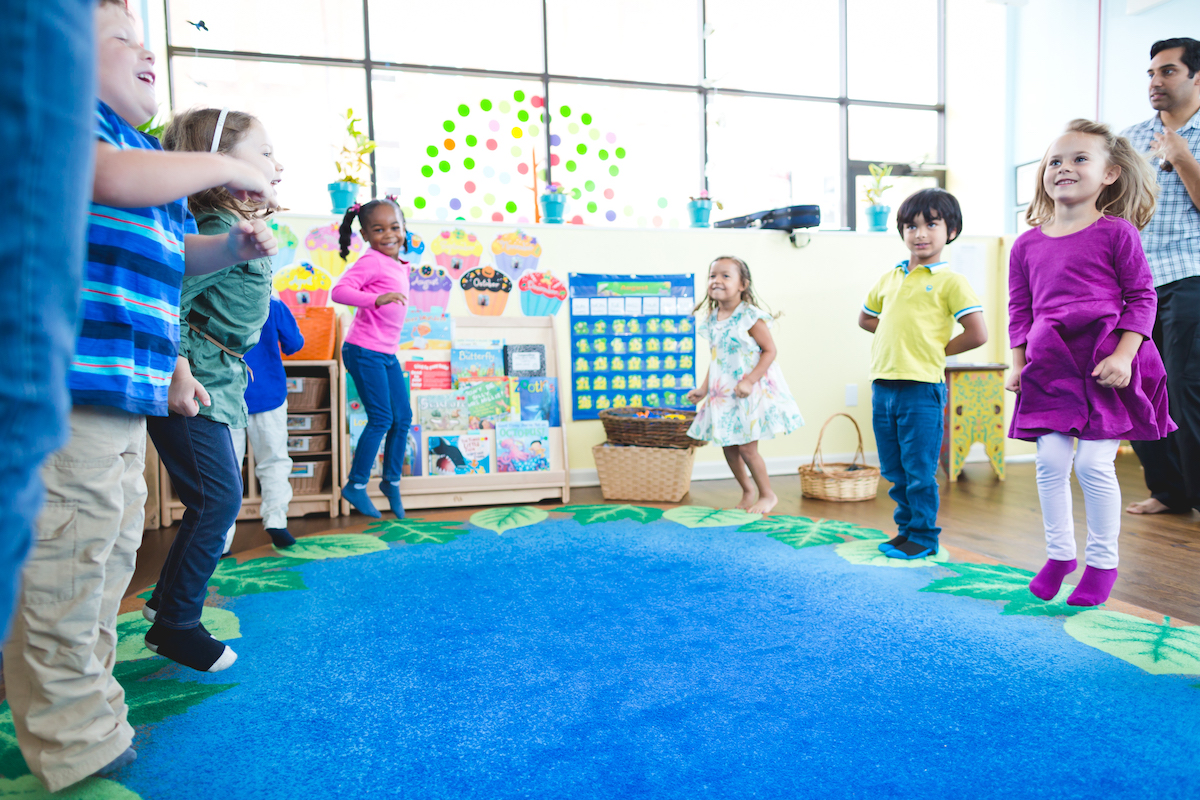
In a nutshell, spatial awareness is the understanding of objects (including your own body) in relationship to the surrounding space. For children, that starts with discovering hands and feet, grows to moving safely on a playground, and leads to judging distances while driving or solving math problems. It’s a huge skillset that affects so many critical aspects of positive whole-child development.
So how do you know if little ones are on or off-track with these skills?
Continue reading “Why Spatial Awareness Is Critical to Whole-Child Development”FOL Fridays: Pre-ensemble Development
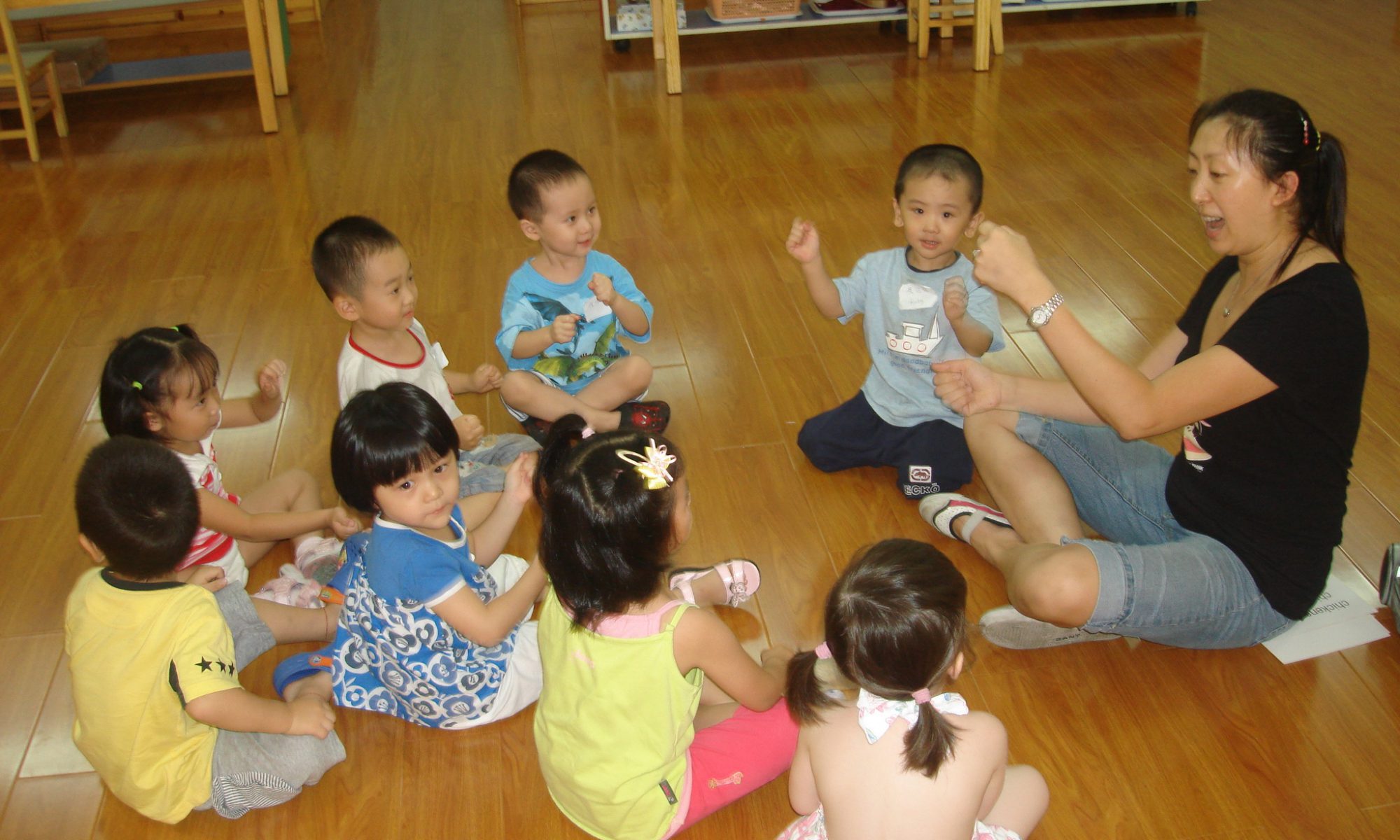
 One day, your child may want to participate in a team sport or play in a band. Kindermusik will provide him or her with the unique opportunity to develop and practice the skills that are required to perform in an ensemble, skills like distinguishing between sounds, listening for the appropriate entrance, timing the participation, accomplishing the steady-beat play with an outside source, and playing with others.
Ideas for parents:
Even the youngest children can experience ensemble, whether it’s in Kindermusik Village or it’s just the two of you at home tapping on the pots and pans. You might even enjoy putting together a Family Jam, a time when the whole family grabs something to tap, shake, or jingle as you all play-along to a recording or a song you’re singing.
– Contributed by Theresa Case, whose Greenville, SC program, Kindermusik at Piano Central Studios, is proudly among the top 1% of Kindermusik programs worldwide.
FOL Fridays: Pattern Awareness
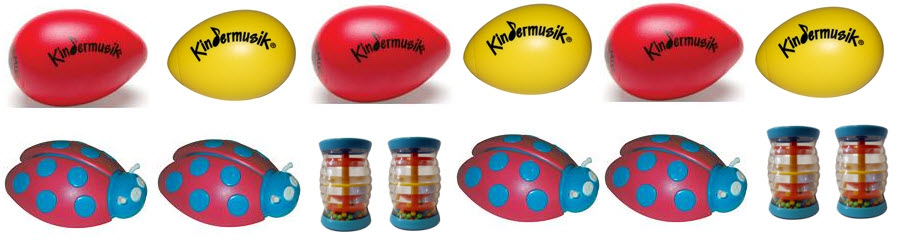
Pattern awareness is crucial to learning and memory. Just as in reading stories, singing and rhythmic speech expose participants directly to the patterns of language, including rhythm, speech sounds, syntax, and rhyme.
Tips for parents:
Patterns are all around – outdoors, indoors, in colors, how we arrange items on the counter or table, and even on the clothes we wear. With patterns surrounding us, it’s easy to play “pick up” pattern games with your child. First, point to the pattern. Have your child identify the individual parts. Then work together to point out how it all goes together. If there are objects that can be moved, you can even challenge your child to create some patterns of his own.
You can even try learning about patterns with your Kindermusik instruments!

– Contributed by Theresa Case, whose Greenville, SC program, Kindermusik at Piano Central Studios, is proudly among the top 1% of Kindermusik programs worldwide.
FOL Fridays: Emerging Literacy

Children begin the process of learning to read long before they enter formal schooling. Families play an important role in this process. For decades, research has shown that children whose parents read to them become better readers and do better in school. Activities such as telling stories and singing songs may also encourage the acquisition of literacy skills (adapted from Sonnenschein, Brady, and Munsterman, 1996; Moss and Fawcett, 1995; and Glazer, 1989)
Ideas for parents:
 Like many aspects of parenting, you know instinctively that reading together has huge benefits for your child.
If you’re looking to add more books to the reading list, get to know your local librarian.Preschool and elementary school teachers can also share their favorite book lists. There are also all kinds of lists online of books to read for kids. If you want to add to your own bookshelf, flea markets, yard sales, and even Goodwill are great places to purchase books very inexpensively.
– Contributed by Theresa Case, whose Greenville, SC program, Kindermusik at Piano Central Studios, is proudly among the top 1% of Kindermusik programs worldwide.
Check out our related ABC Music & Me blog post…and consider recommending to your school!
5 Reasons Parents Should be Reading to their Children
Kindermusik and Your Child: Exercising Your Listening Muscles
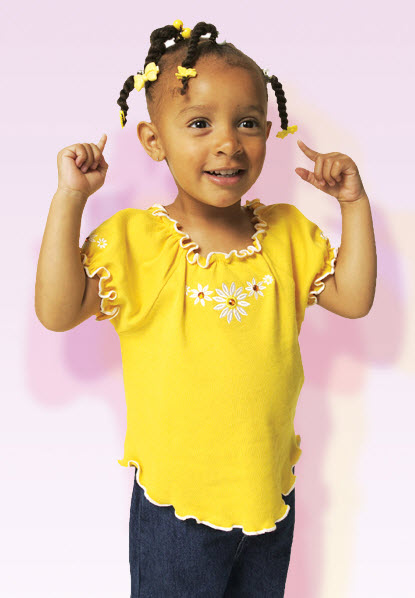
 Like a muscle, your child’s listening skills need constant exercise in order to grow stronger. Kindermusik classes give your child weekly opportunities to “exercise” and develop listening skills as we listen to specific sounds, listen to many various instrumental sounds, listen to directions and musical cues, listen to suggestions from your Kindermusik Educator for ways to participate in class activities, listen to encouragement from you to participate and share ideas, listen to various styles of recorded and live music and singing, and of course listen to ideas from other parents and students!
A good listener is able to focus attention on what he/she hears. Becoming a good listener will help your child:
- Learn more quickly and effectively for later academic success
- Heed danger signals
- Get along better with you and other adults
- Make better friends
There are many things you can do to help your child develop listening skills. Your example speaks volumes to your child if you are a good listener, chances are, your child will learn good listening skills from you! If you ask your child “listening” questions, then your child’s neural network will learn to listen. For some great articles that contain tips for helping your child develop listening skills, check out the following links:
Getting Your Toddler to Listen (8 easy steps)
Fun Activities to Promote Listening Skills (by Learning Style)
How Can Parents Model Good Listening Skills?
Compiled by Theresa Case, whose Kindermusik program at Piano Central Studios in Greenville, SC, is proudly among the top 1% of Kindermusik programs worldwide.
FOL Fridays: Sign Language for Hearing Children
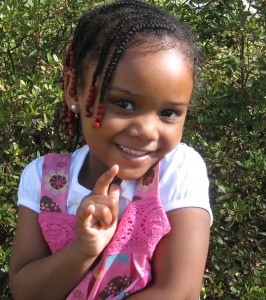
Children are born trying to decipher the mystery of language from the moment they are born. It takes children 12 to 24 months to begin speaking, yet while they are preparing for this huge leap forward, they already have some of the pieces in place. Signing with hearing children takes advantage of their motor abilities, which develop months earlier than the equivalent skills required for speech. Using signing in everyday interactions will help open the door to early communication, facilitated speech, increased intimacy, and long-term learning (adapted from Kindermusik Sign & Sing).
 Ideas for parents:
Start by incorporating just a few basic signs in your daily routines – signs such as “please,” “more,” and “all done.” Be consistent and patient in using the signs. Your child will likely catch on more quickly than you think! You can both have fun adding more signs, including “thank you” and of course, “music!” Visit SigningSavvy.com to find a wonderful video-based sign language resource. It’s quick and easy to look up – and learn! – a few signs.
You can also visit Kindermusik International’s Class Locator to find a Kindermusik educator near you offering Kindermusik Sign & Sing.
– Contributed by Theresa Case, whose Greenville, SC program, Kindermusik at Piano Central Studios, is proudly among the top 1% of Kindermusik programs worldwide.