Musical variety is the spice of life

You’ve probably heard the old proverb: “Variety is the spice of life.” When it comes to music, musical variety is definitely the spice of life! When you expose your children to music from around the world, you expose them to different cultures, countries, ideas, and experiences, along with these developmental benefits:

Greater language proficiency
Just as you read a variety of books to expand your child’s vocabulary, exposure to a wide variety of music and sounds expands your child’s “ear vocabulary.” High quality musical recordings and real instruments help your child “fine tune” her ear to recognize and imitate the sounds that make up words and language.

Spatial awareness
When a child listens to music, her mind perceives the sound in multi-dimensional ways. The sound is loud or soft, fast or slow, it moves up and down, or left to right. Eventually, she’ll use that “awareness of space” to work with her body when she walks through the living room and tries not to hit the coffee table. Much later, this same awareness is necessary skill for learning how to get around things, jump, run, and move in zig-zag ways.

Temporal reasoning
You see this skill in action when a preschooler tells a story. He starts with his own experience and then moves to some imagined place with a princess or a superhero then goes back to something real again. Music does the same thing. It goes back and forth between established places (the chorus) and to new places that take you somewhere else (the verse). The ability to go back and forth from something established to something imagined comes from temporal reasoning, a skill used in music writing, storytelling, and problem solving.

Emotional intelligence
With exposure to a greater variety of musical styles-like jazz, folk, or classical, this increased exposure to music increases a child’s awareness, and understanding of different moods and emotions.

Cognitive skills
Research shows that music contributes to the development of a child’s ability to reason, his sense of patterning, and his memory skills.

Musical appetite
In the early years between newborn and age 7, your child is developing his musical taste buds as he learns to appreciate the finer things and to enjoy new musical tastes and textures. The wider the array of musical styles, the richer his “appetite” will be.

Try this at home… Your child is naturally musical. Hearing you sing and listening to recordings are like food for her musical appetite. Sing with child at least three times a day. Consider these song sessions musical breakfast, lunch, and dinner. (By the way, “lunch” can be interpreted loosely. Just plan the routine of singing together at a time that works for your schedule – when your child wakes up, in the car, doing dishes, at naptime, fixing supper, etc.!) Once you start, you will find that there is a song for everything. If you can’t remember what that song is, make one up!

Posted by Theresa Case whose Kindermusik program at Piano Central Studios is proudly among the top 1% of Kindermusik programs worldwide.

Science in the shower

This post was generously shared from the Studio3Music blog.

I am a teacher by profession, and a home schooling mom by trade. (Or is it the other way around?) In any case, I spend most of my waking hours teaching somebody something. If you are a parent, your “other job” is being a teacher, too.

Your child’s job? (I’m talking about children newborn to 7 specifically, here.) Your child’s job is to play. Play IS work for a child’s brain. The brain is designed for the first seven years of life to simply organize things. And organizing play is how the brain does just that. I don’t mean organized play. Organized play is something that adults do to children. Telling them how and what to play.

So why are their rooms so messy? Well, it’s not THAT kind of organization either. The brain’s job is to organize all the sensory input it is receiving. Done well, and your child will be a happy and eager learner when they enter elementary school.

Way back in 1949, N.A. Alessandrini defined play as, “A child’s way of learning and an outlet for his innate need of activity. It is his business or career. In it he engages himself with the same attitude and energy that we engage ourselves in our regular work. For each child it is a serious undertaking not to be confused with diversion or idle use of time. Play is not folly. It is purposeful activity.”

This is still true today. The “occupation” of play for a child serves as a foundation for the development of future occupations (the kind they earn money for!) when your child grows up.

Now for your job… As teachers of our children, what can we do that allows them to organize their play? By providing them with open ended toys like blocks, cars, dress-up clothes, art supplies, dolls (for boys, too!) legos, a sand box or water table, kid-friendly pans, utensils and pretend food.

Do sit down and play alongside your child. As well, give them room to play as they wish. Remember, there really is no wrong way to play with a toy. (I don’t consider breaking toys or eating sand playing.) Your child will play with the toys the way the brain needs to in order to organize itself.

Case in point. Science in the shower. We have an accumulation of foamie shapes left over from various craft projects. Big and little animals, cars, etc. A couple of months ago, I took a big handful of them and gave them to my 4 year old Natalie in the shower. The only thing I had to do was demonstrate that they “stuck” to the wall when wet. And then I stepped back and observed her.

It’s been months now, and they are still in the shower. She doesn’t want to take a bath because she wants to still play with those foamie pieces. What have I observed? Natalie organized her own play. Literally – Everytime I go to take a shower, all those animals will be arranged in a different pattern. Sometimes by color, by habitat, by size.  That’s science in the shower.

And then I get to see the outward manifestation of the internal organization that is going on. Because sometimes, Natalie takes two of the animals, and one is “bad”, and one is “good”, or one won’t let the other play with it, so she practices making friends, and works through social situations that are typical at this age.

You see, her brain knows what it needs. Your child’s does, too. We just have to provide the “tools” and the space to allow that to happen.

Special thanks to Studio 3 Music for allowing us to share this great post from the Studio 3 Music blog. Studio 3 Music in Seattle, Washington, the world’s largest Kindermusik program.
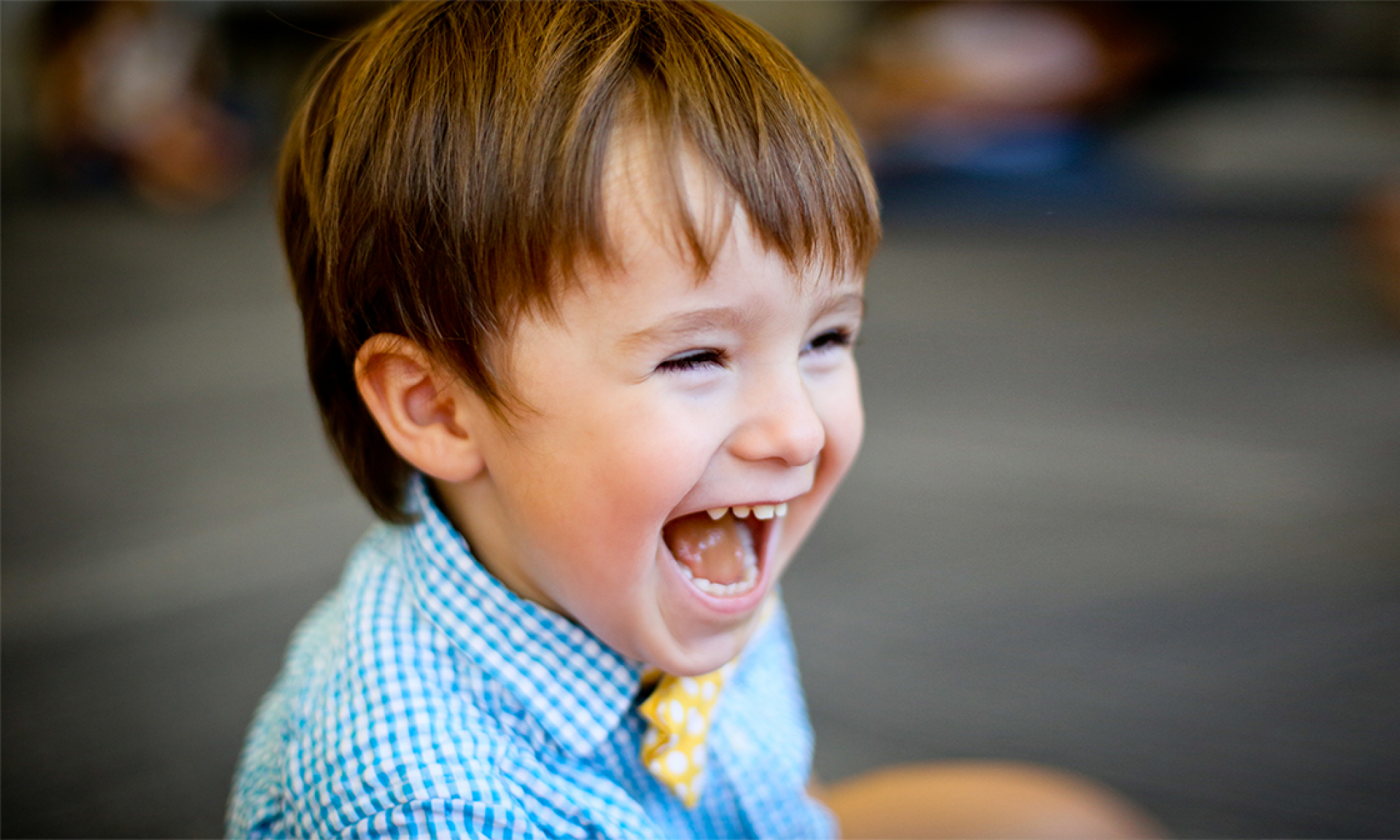

Sometimes ACTIONS are louder than WORDS

Have you ever sat in a movie theater, and several people in the row behind you are all talking? I bet you found it difficult to concentrate on the movie.

What does this have to do with your child in a Kindermusik class? Just imagine this scenario: your Kindermusik teacher brings out a basket of rhythm sticks and sings “two for you and two for your grownup”. Most of the grownups in the room start encouraging their child to go get the sticks. They encourage them with their voices and now we hear 10 adults telling their child to go get sticks. At this point, some of the children will start to “tune you out”. I like to call this “selective hearing loss”. (I have teens at home and I am very familiar with this temporary, albeit sometimes annoying ailment.)

Although we highly encourage you to talk to your child throughout the day and label movements, sounds, and objects to help with language acquisition, there are times when we have to allow them to figure out what to do without being told. Allow them to problem solve.

I want to share with you an experiment we did in a few of my classes. I asked the adults not to give directions to their child during this class – just sing when it was appropriate in the lesson. The toughest part was the “no talking”. But they all agreed and were curious to witness their child in this somewhat altered environment. I encouraged them to guide their little one by being a model and using non-verbal cues.

Here is what some of the adults said at the end of class:
* They showed more patience
* They were more “in the moment” with their children
* Their children were more attentive and focused
* Their children felt freer to create, explore, and express themselves

Try a version of this experiment at home. Take time to explore with your child without giving them opinions or directions. Be a model for them through your actions and not your words. It’s not easy, but it may allow you to be “in the moment” with your child in a way you have not been before.

Special thanks to Kindermusik educator Cathy Huser for sharing this insightful post from her blog.  Cathy’s program, Kindermusik of Cleveland, has been a top ten Kindermusik Maestro program for 10 years running.

Ready? Set. Read!

Every parent knows how much children enjoy being read to: the excitement of new books and the comfort of those read over and over. Then there’s also all the great benefits they’re getting.

Reading to a child aids in language development. As a child hears language spoken to him, he internalizes the sounds, later using them in his own speech. Reading can open up new worlds and expand the mind. It can extend vocabulary and the understanding of things beyond everyday experience. Giving your child the opportunity to become familiar and comfortable with books is an important part of fostering a love of reading.

Reading together:

  • -Fosters reading enjoyment.
  • -Provides predictability through repetition.
  • -Introduces new vocabulary.
  • -Expands understanding of story structures.
  • -Promotes critical thinking.
  • -Encourages language play and creative expression.
  • -Provides cognitive stimulation.
  • -Builds early interest in literacy.

“Literacy is listening, learning, and quality of life. It is reading, writing, thinking, scribbling, drawing, and being motivated to find meaning. It is interpreting, inventing, associating, communicating, responding, sharing, and being able to set visions into action.” —The Storybook Journey, by S. McCord, p. 125.

There is a strong relationship between reading and music. Reading to children closely approximates the experience of singing or conversation. It provides another way to communicate through rhythm, reciprocity, tone, and language that is, after all, very much like music. That’s why pre-literacy development and exposure to books is an integral piece of each Kindermusik class.  Books stir the same responses in young children that music does.  Some books are exciting and encourage movement. Some inspire children to be thoughtful.  And some books soothe a child to sleep just like a lullaby.

Reading can help toddlers understand and process emotions and can teach healthy social behaviors. For children whose emotions are powerful but whose expressive language is still limited, books provide avenues for understanding the emotions they experience. Through hearing stories, toddlers and preschoolers can make sense of their own feelings.

Story Time:

  • -Exposes children to new words and new ways to communicate.
  • -Motivates children to think about things in different ways and even see things from another’s perspective.
  • -Provides opportunity for children to interact with each other.
  • -Can present positive social models and examples.
  • -When shared in the lap of a loving grownup can provide calm, relaxation, and promote bonding.

Reading together at home is so important. Kindermusik includes literature as another medium for communication between parents and children. During Story Time in our toddler and preschool classes (and even sometimes in the baby classes), watch as your teacher engages the children. Gather ideas to use to bring books alive for your child at home. Support and nurture literacy development during read-aloud experiences by building on your child’s comments about the text, posing challenging questions, suggesting alternative interpretations, encouraging personal reactions, drawing attention to letters, words, and illustrations, and engaging in discussions about the text.

At Home:

  • -Set aside a specific time to read with your child each day. This ritual will not only be soothing to your child but also to you.
  • -Visit your public library. Ask the children’s librarian what books she recommends for your child’s age, or look at some of the suggestions on our blog or in your Home Activity Guide.
  • -Look at your Kindermusik books with your child while listening to the read-aloud that is often included on the Home CD.
  • -Make reading interactive. Ask your child questions about the story and the pictures.

“The most important thing you can do to make your child a reader is to read aloud stories and poems—the more the better!” Read to Me: Raising Kids Who Love to Read, by Bernice E. Cullinan.

Special thanks to Kindermusik educator Joy Granade for sharing this post from her blog, Kindermusik with Joy. Information about Joy’s Kindermusik program in Kansas City, MO, can be found at her blog.

What do you hear?

Pitter, patter, pitter, patter… I can HEAR the rain.

Musically speaking, rain sounds are short sounds.  The musical term “staccato” refers to sounds that are separated and often short.  It’s the perfect word to use when playing with – and describing – rain sounds.  But did you know that being able to identify a sound as “short” (staccato) or “long” (legato) actually involves some pretty high-level thinking and listening skills?

Active listening differs from simple hearing in that we must choose it as an intentional act. Analytical listening, like the kind we will do in Kindermusik class when we explore different shaker sounds and mimic and identify a variety of rain sounds, takes the development of our music listening skills to a whole new level.

Analytical listening is an absolutely vital skill, for music class and for life because it requires children to:
– Evaluate what is heard and comprehended
– Contemplate and reflect
– Weigh new information against what is already known
– Discuss by sharing thoughts, opinions, and viewpoints

As Kindermusik teachers, it is an awesome privilege for us to be able to help shape a child’s disposition and aptitude for learning music – practicing the skills that lead to competency and enjoyment and encouraging the attitude that music is fun.  Music truly is a powerful tool for representing ideas and expressing individuality, especially when a child develops the ability to listen analytically.

In the Kindermusik classroom where so many of the senses are often engaged simultaneously and where imagination can soar, musical learning truly has the potential to be the strongest and most powerful.

Posted by Theresa Case, whose Kindermusik program at Piano Central Studios is proudly among the top 1% of programs worldwide.

Let’s jump for joy!

This article was originally written by Kindermusik educator Helen Peterson. Helen’s Kindermusik of the Valley program, located in and around the twin cities, MN, is one of the top programs in the world.

In a relatively recent study, 4 to 6 year old children in music and movement programs were tested to see how they compared to children enrolled in a traditional physical education program. The results were interesting, to say the least. The children getting music and movement instruction showed more growth in motor skills than those in a standard physical education program. Here’s a quote from Early Childhood Research Quarterly (Vol. 19, Issue #4, 2004):

“In a study 50 children were enrolled in a music and movement program, and 42 children were enrolled  in a traditional physical education program. After 8 weeks, the children in the music AND movement group had improved significantly in both jumping and dynamic balance skills when compared to their peers in the traditional program.”

As a Kindermusik educator, I have had many parents ask me how Kindermusik compares to Gymboree or Little Gym, now I can honestly say (as I suspected): movement + music (Kindermusik) really is the best choice.

Meet a Kindermusik educator: Pam Carmagnola

Name:
Pam Carmagnola

Location:
Crozet, VA (outside of Charlottesville, in the foothills of the beautiful Blue Ridge Mountains)

Studio name and link:
Kindermusik with Pam
www.kmusikwithpam.kindermusik.net

Number of years you’ve taught Kindermusik:
Eight

Describe yourself in five words or less:
Dedicated, child-centered, professional, enthusiastic

Favorite Kindermusik song:
“Giraffe and Zebra Move-Along,” from Zoo Train

Favorite Kindermusik activity, and why:
My current favorite activity is the circle dance from Zoo Train, to “Drover’s Dream.”  It’s got a great beat and is very adaptable to different movements.  Everyone loves to hear the unique sound of the didgeridoo!

A proud moment in a Kindermusik classroom:
After several years of classes, including Village and Our Time, a sweet preschooler now enrolled in ABC Music & Me is demonstrating his solid understanding of the concepts he has learned in Kindermusik.  Steady beat, pitch, tempo – you name it!  His good beginning truly will never end!

Something your Kindermusik children or families have taught you (could be inspirational, humorous, practical, etc.):
“Shiny stickers are special!”  “Hand sanitizer is cold!”  “An opened/flattened castanet makes a great pretend phone!”  And finally, “Kindermusik is a place where I am accepted and loved for who I am, just the way I am right now!”

Something funny a child has said or done in your classroom:
One of my favorite, most memorable moments occurred during vocal play when we were making doorbell ringing sounds.  “Ding, dong” said Abigail’s mom.  “Pizza’s here!” said two-year old Abigail!

The reason you teach:
I teach Kindermusik for many reasons.  The one closest to my heart is creating those special moments when parent and child really connect in class.  These days, precious time to focus solely on our children is rare.  It is a blessing to provide these opportunities for families in my community.

Good taste in books

Literacy begins early, with nothing more than simply spending time with a book. Even if your baby puts the book in her mouth while you read, she absorbs the sounds of your words, the action of you turning the page, and the pleasure you derive from reading.

The first time your little one points to a picture in a book, she’s understanding the concept of symbols – the idea that the words and pictures represent objects and ideas. A child’s motivation to learn about and use symbols grows as she realizes that this is how she can make her needs and thoughts known to others.

When it comes to choosing books, recent research shows that children who have been exposed to nursery rhymes and lyrical stories in their younger years become better readers and are more successful in school.

Here are some of our favorite tips for developing good taste in books.

Your baby: Spend time with your baby and an open book. Point to the pictures and talk about what you see. Even if your child doesn’t understand a single word, she’ll absorb your love of books and reading.

Your toddler: Now your child can start adding sound effects when you read together. Choose stories with animals so your toddler can imitate their sounds and movements.

Your preschooler: Your little one is now ready to make up his own stories. He can also use a favorite story as the basis for his own pretend play. Help your preschooler make his own book using a favorite song or family photos. Share this “published” work with the whole family!

Again, again!!

Again, again!!  There’s a reason why those are two of your child’s favorite words – repetition is the way your child learns best.  Repetition also provides children with a sense of security and predictability, setting the stage for optimal learning.  Kindermusik takes full advantage of a learning environment that capitalizes on the comfort of repetition, both in class and at home – especially through the Home Materials.

Childhood is all about learning.  And while it’s tempting to indulge in all the latest learning trends, videos, or technology, for a child, the single best learning tool is repetition.  Each time a child is exposed to a new object or experience, new neural connections are made in his brain. Through repetition, these connections are strengthened. Add a little twist to the repetition, like when we add a new verse to a song or a new prop in class, and these neural pathways strengthen and become super-highways of learning.

Repetition is not only good for your child’s brain; it’s highly beneficial for your child’s overall development.  Repetition helps your child learn and remember new information, thus giving her a boost of joyful self-confidence because she can predict what comes next.  Then there’s also the immense satisfaction of mastering something.  Repetition is the way that your child reminds himself of a newfound skill, and the way he experiences a great deal of pleasure through a sense of completion and mastery.  Parents can use this love of repetition to their advantage by establishing predictable routines and rituals in the morning or evening, thus helping their child feel secure and in control – something that’s very important to a small child!

Each Kindermusik curriculum from Village to Young Child is deliberately designed to repeat certain activities, in part because of this important connection between repetition and learning, but also because repetition of activities promotes bonding and nurtures a sense of community and belonging. With the Kindermusik experience, ritual and repetition are key components of a predictable and nurturing environment in which learning, bonding, and a love for music naturally and beautifully unfold.

Benefits of repetition in a nutshell:

  • >Repetition fuels your child’s memory, confidence, and motor skills.
  • >Repetition expands your child’s understanding of the world around him.
  • >Repetition contributes to your child’s intellectual development by reinforcing her understanding of the way the world works.
  • >Repetition spurs motor development.
  • >Repetition helps your child feel good about himself because it reminds him of what he can do.
  • >Repetition builds a sense of trust, helping a child develop healthy relationships with others.
  • >Repetition is one way your child can exert some control over his environment, which is extremely gratifying for someone with such limited control over her world.

Posted by Theresa Case, whose Kindermusik program at Piano Central Studios is proudly among the top 1% of programs worldwide.

11 Ways to REALLY Listen to Your Child

The follow post was shared with Minds on Music from Kindermusik educator Vanessa Cabrera’s Language, Music & More blog.

A few days ago I read this: “We were given two ears but only one mouth, because listening is twice as hard and important as talking.”

Well, it’s true! It made me think about how much children have lot to say… a lot! Sometimes adults don’t think that children have anything important to say or that they can’t learn from children. So often times the adult does all the talking. They lecture, preach, or, worst of all, ignore the child. Listening to your children will help them grow up to be adults with increased self-esteem because you made them feel that what they have to say is important.

That said, children are not always sure how to communicate their feelings, so they might say something or act completely different from how they actually feel. Active listening can help you to help them figure it out! Here are some tips to REALLY listen to your child:

1.    Stop what you are doing. Don’t be distracted doing something else.

2.    Look at your child. Sit at his/her level.

3.    Pay attention to your child’s nonverbal language. Does the child look happy, sad, afraid?

4.    Be silent. It might be hard, but it is important that they have time to express themselves. It will also give you time to understand the situation before reacting.

5.    Use simple acknowledgement responses that show you are listening. “I see.” “Oh.” “Uh-Huh.” or “Hmmm.”

6.    Use “door-openers”: phrases that encourage further talking. “Tell me more.” “What else?” “Go on.” “How do you feel about that?” “Then what?”

7.    Listen for and name the feelings you think you hear from what your child is telling you. “That made you pretty mad, didn’t it?” “You seem really happy about that!”

8.    Use problem-solving phrases when needed. “What do you wish you could do?” “What do you want to happen?” “What do you think will happen if you do that?”

9. Don’t feel that you must advise or help your child come up with a solution all the time. The value of listening is in the listening itself.

10.    Let them know you are available.

11.  Don’t try to deny, discount, or distract the child from the feelings they are expressing.

Listening helps parents and children avoid the power struggle cycle. Instead of arguing or disagreeing, listen. Show your understanding while maintaining your position. Listening builds stronger relationships,  shows respect, and helps the child explore his/her own feelings and thoughts on a deeper level. It builds their sense of empathy.

So, are you ready to listen to your child?

Special thanks to Kindermusik educator Vanessa Cabrera for sharing this post from her Language, Music & More blog. Information about Vanessa’s Maryland Kindermusik program can be found at her blog.