Here’s some KI Green food for thought: Monday was the first U.S. presidential debate since 1988, when global climate change was first addressed in a presidential debate, to make no explicit mention of the global climate issue. Despite the fact that President Obama calls global warming the “biggest problem this generation faces,” and Romney acknowledges (albeit indirectly) the scope, calling it “global warming,” not “America warming.” The silence left our ears burning. That being said, it was clear that the environment was the backbone for nearly every foreign policy-related topic discussed. This proved the highly interdisciplinary nature of environmental issues—whether they are addressed through auto industry overhauls, foreign policy in Iran, tighter regulation of the Food and Drug Administration, or by achieving Romney’s idyllic “energy independence” to ensure national security. The environment was the major player in every topic of the presidential debates.
Learn more about the U.S. presidential election’s environmental, economic, and energy issues here!
What does this mean for KI Green?
It means that, in order to stay relevant as environmental activists, we need to provide news that impacts our readers’ daily lives. We need to show real life connections between what happens on page 6 of the New York Times, and how that manifests in our community.
Kindermusik Star Steward Competition
Make sure you tell us what YOU’RE doing to enact environmental change!
Tell us how you’ve given a speech, worked in a garden, or canvassed for this year’s election by submitting your post, picture or video to Facebook.com/Kindermusik.
As part of our official Star Steward Competition, enter to Win 50 Free Kindermusik song credits, promotion on our blog, and a $100 donation towards a charity of your choice!
Are you having a Halloween Party for your Kindermusik or ABC English & Me classes? We have a few albums and songs in mind to help you and your little ones enjoy a little musical play with their holiday costumes — and here’s the trick: sneak in a little musical learning along the way!
Sir Henry the Polite Knight
The Polite Knight
He might be shaking under his armor, but Sir Henry the Polite Knight always uses good manners. You can find out how to make an easy, no-sew costume here, and play the Knight-themed music while you and your little one get ready for Halloween!
Pirate costumes are always a favorite around Halloween, and with a few pirate-themed songs sung in English, you can help your little pirate capture a treasure chest full of fun, music, and stories in English. And don’t worry, Rupert always uses the wrong word, too, but that’s how he learns! Look here for a simple no-sew pirate costume and “Ahoy! Mateys! Trick or Treat!”
Almost no one in Tressa’s family believes she’s a princess, until she uses her magical princess powers to quiet down a crying baby brother! Find some princess themed stories, songs, and activities to lend a little musical magic to your child’s no-sew princess costume.
Find more songs about farm animals and animal-themed games in “Old Macdonald.” Find some super easy, no-sew animal themed costumes and play simple counting games, sing songs together, and make animal noises while you go from house to house.
Bilingual learners are far better at processing sounds on BBC News Health
The Foreign-Language Effect: Thinking and writing in several different languages reduces bias in Psychological Science, and a fascinating summary of the study on tumblr.
If you consider music a second language, and even if you don’t, this was a great story about a parent who soothes a crying toddler on train with a simple song on mashable.com
To learn more about helping young children learn English, visit abcenglishandme.com
Singing a song or two (or 50!) a day to even the youngest child can help early language development. Hearing a parent or teacher sing a song requires a child to listen for the individual notes combined with their rhythmic values. In much the same way, early language development requires children to hear speech sounds and begin to divide them into individual sounds or phonemes.
Sally Goddard Blythe reiterates the importance of singing to young children for early language development in her book, The Genius of Natural Childhood. In an article published in The Guardian, Blythe said: “Song is a special type of speech. Lullabies, songs and rhymes of every culture carry the ‘signature’ melodies and inflections of a mother tongue, preparing a child’s ear, voice and brain for language.” In the same article, Blythe contends that singing to young children can help ward off later language development problems.
She goes on to say that “Children’s response to live music is different from recorded music. Babies are particularly responsive when the music comes directly from the parent. Singing along with a parent is for the development of reciprocal communication.”
With more than 30 years of experience in using music as the vehicle for learning, we understand how to tap into the power of music to connect with children, families, and teachers around the world. In private studios, public schools, childcare centers, and at home, children, parents, and teachers enjoy participating in our fun, developmentally appropriate and research-based music education programs that support early language development, early literacy development, parent involvement in early childhood education, and more.
If you are a parent looking for a music class for toddlers, babies, or big kids at a local Kindermusik studio, try our Class Finder.
Instruments are used to create. They embody the creative potential and spirit of the musician—something that will bring joy in the moment and in the future. The word “instrument” comes from the French verb, instruere, which means to “equip” or “construct.” Instruments require action.
But what about an instrument’s past? Instruments have been characters in wars, journeys, and voices in daily routines for centuries. Today, we learned that rainsticks probably originated with the Diaguita Indians of the Acatama Desert and Andes mountains of northern Chile. Why is this a topic for KI Green? In the days before modern agriculture, pesticides, and mass irrigation, nature’s voice rang a little louder. The sound of rain, potentially anticipated for months, could mean bounty or demolition—feast, flood, or famine. What would it feel like to suddenly hear the crack of thunder, followed by a crescendo of pitter patters, break through weeks of dry silence? The Diaguita, an agrarian society known for their cultivation of maize, pumpkins, and beans, lived in one of the driest places on earth. Desperation sparked creativity. They created rainsticks out of dried cactus stalks, used palm needles and beans or seeds, and created the rainstick to coax the sky to rain. Just another interesting reminder of the interconnectedness between man,
Introducing Unit 3, Good Morning, Good Night! Everyday rituals become a musical, English-learning game with our new unit, Good Morning, Good Night! Each class begins with a hello song, and with each lesson children learn the words for new greeting rituals such as “Good Day!” and “Good Night!”
Daily rituals become a musical, English-learning game.
Good Morning, Good Night! will be available in Digital Teacher’s Guides next week (October 15 – 19).
Favorite American Children’s Songs such as “Wheels on the Bus” take us to school, and the “Mulberry Bush” helps to introduce and reinforce new vocabulary words and concepts with additional verses about a child’s daily routine at home.
“This is the way we wash our hands,” … “brush our teeth,” … “comb our hair,” … and “put on socks!”
In addition, children learn the English word and the animal sound to their favorite farm yard animals — sheep, cow, dog, rooster, and pig. And using movement games, concepts are explored with “Stand up!” “Sit down,” “Turn around,” and “Shake your hands!”
Children Learn English through Music and Rituals
Children can begin to speak English in a continuous flow using ABC English & Me’s simple songs and begin to apply English words to their everyday rituals at home, such as going to bed, washing faces, hands, and brushing teeth.
Make learning English a part of your daily routine with ABC English & Me!’s newest Unit, Good Morning, Good Night!
When parents download the Home Audio Good Morning, Good Night! from the ABC English & Me @Home website, they can use the class songs about brushing teeth, getting dressed, and going to school to bring a rhythm and routine to busy mornings and evenings at home!
Speak in a continuous flow
Using the melody from the American song “Mulberry Bush,” children will sing “this is the way we wash our hands, wash our hands, wash our hands.” Additional verses adapt to describe more daily routines such as “brush our teeth,” “comb our hair,” and “put on jeans!”
Counting
Children play musical instruments, one for each hand, and as the teacher passes out the instruments, the children count with her, “1,” “2.” And during interactive puppet play, children help to “Wake Up!” puppet on the count of “1, 2, 3, … Wake Up!”
Movement concepts
Stand up, sit down, jump up, turn around, shake hands, tap your head, say good night, go to bed
go to school, wash our hands, wash our face, brush our teeth, comb our hair, put on our… clothes, shirt, jeans, socks, shoes
New vocabulary words
bus, wheels go round, people go up and down, driver says, “Move on back,” wipers go wash, horn goes beep, babies go “waa”, mommies go “shh”
Conversational terms
Where is he? Is he here? Yes, he is, No, he isn’t. He’s sleeping. Wake up. It’s time to get up. Good morning. How are you? I’m fine, thank you.
We are excited to bring this new curriculum to English Language Learners across the globe!
Visit the English Language Learning category or Subscribe to our blog for current news on ABC English & Me, ELL research, and Kindermusik programs around the world.
English Language Learners comprise an increasingly larger number of students enrolled in public schools in the United States. One study shows a 50 percent increase in the number of ELL students over the past 10 years. This changing face (and language) of the average student in the United States brings new challenges and opportunities for teachers as they balance the implementation of Common Core State Standards with the needs of English Language Learners.
While even veteran teachers receive on-the-job training each day in the classroom, an investment in professional development for teachers can better equip educators and students for measurable success. A study published in the Literacy Research and Instructionjournal examined how professional development for teachers affected the reading abilities of ELLs in elementary school classrooms.
Link between professional development for teachers and the reading abilities of English Language Learners
In this study, the research team wanted to examine the correlation among professional development for teachers, classroom implementation of the training, and ELL students’ achievement in reading. Over the course of 18 months, 23 elementary classroom teachers participated in the study. The teachers ranged in experience from early career to veteran teachers. One group received on-going training on using the Sheltered Instruction Observation Protocol, an approach to teaching English Language Learners. The control group did not receive training in this model. The researchers found evidence that English Language Learners showed greater reading abilities when taught by teachers who received the professional development. The researchers suggest that additional studies be conducted to further unpack their initial findings.
Other research shows that teacher training can be key to classroom success for all students, not just English Language Learners, and can increase teacher job satisfaction.
Early childhood professional development for teachers of English Language Learners
ABC Music & Me uses music to teach early literacy and language development to young children and engage families in their children’s education. The research-based curriculum aligns with state standards, including the Common Core, and can be especially beneficial for English Language Learners.
At ABC Music & Me, our commitment to early childhood education extends beyond the creation of easy-to-teach literacy and language curriculum. Our ELL curriculum includes a combination of on-site training, DVD teaching models, and an online teacher resource website. In addition to our “English Language Learners Strategies Guide” that provides unit-by-unit, lesson-by-lesson tips, ABC Music & Me includes materials (available in English and Spanish) for families to use together at home.
To learn more about how ABC Music & Me can be used in your classroom, school, or district with English Language Learners, contact us at info@abcmusicandme.com.
Attention, stewards! Kindermusik is launching its first official Star Steward Competition to illuminate outstanding sustainability efforts in the Kindermusik community!
If you, your child, or someone close to you has taken on an active environmental leadership role, tell us for a chance to have your story and project shared on Minds on Music.
Winners will gain community support, visibility, and feedback from Kindermusik Green on ways to amplify your project…
$100 donation to a “green” or “sustainable” charity of your choice from Kindermusik International.
Some award-winning efforts might include:
Community Building. Maybe you started a class project or club, community garden, fundraiser, or volunteer activity that got five, ten—or a hundred people involved.
Inventing. Musicians are also great innovators and inventors. Maybe you built a rain water retention system, using a barrel and gutter system, a compost bin, or a bird feeder.
Activism. With the elections around the corner, maybe you’ve gone grassroots! Have you canvassed, given a speech, or stood up for an environmental cause you support?
Feeling inspired by our list? It’s not too late to START a project, and tell us what you’ll finish.
Contest Submissions extended to December 7, 2012.
Submit your story (video, pictures, writing, art, etc.) by posting on the Kindermusik Facebook page.
Do something great!
This Kindermusik Star Steward from the Young Child program uses his kitchen scraps to create compost, an organic fertilizer free of chemicals and pesticides. This provides dirt and fertilizer for his family's garden plants to grow!After creating compost, this Steward goes green by growing his own food in his garden each summer! By having a garden and using natural organic fertilizer like compost, he helps his Mom & Dad save money on grocery bills and eliminates toxic chemicals and pesticides from his family's food. How fruitful!
“KI Green,” the official sustainability blog for Kindermusik International, is excited to bring Sustainability to Minds on Music with an initiating post the great debate: Organic vs. Non-Organic shopping! We’re happy to get a leafy green start to feeding our families the right fall produce. From now on, you’ll be able to check Minds on Music for family-based sustainability solutions that keep sustainability active as a Kindermusik core value.
Why Buy Organic Food for Kids?
But let’s play devil’s advocate just for a minute. Buying organic doesn’t always make a difference, right? The average “dollar difference” per item isn’t worth the “so-so” benefits of USDA organic produce. Right?
In this study from the Natural Resource Defense Counsel, scientists found that children age 5 and under ingest an average of 8 pesticides per day. Young children, whose internal organs are developing rapidly, are most susceptible to the harmful effects of pesticides.
Let’s take a look at your shopping cart today, October 9. Almost everything you have is spring produce, which is out of season. Your asparagus was grown using nearly 22 different types of pesticides. Your grapefruit required about 10. Your mango, 13. Peas: 5, pineapple: 6, corn: 3, avocado: 2. It may be time to do the “reverse shopping cart…” the dance move you learned wherein non-organic produce is put BACK on the shelves, and fast!
Tips for Buying Organic Produce
When you consider the harmful effects of any one of these pesticides, especially for kids, the right choice is always the organic choice. Understandably, though, time and money can be an issue. Here are the NRDC’s helpful tips to make buying organic easier:
The best foods to buy organic are apples, bell peppers, carrots, celery, and strawberries.
If you buy produce in season, it is less likely have pesticides. Seasonal asparagus, avocado, sweet peas, grapefruit, onions, and cabbage, are far less likely to have pesticides when grown in season.
The five cleanest fruits and vegetables are onions, avocados, sweet corn, pineapple, and mango.
If you need an out of season item, buy it frozen.
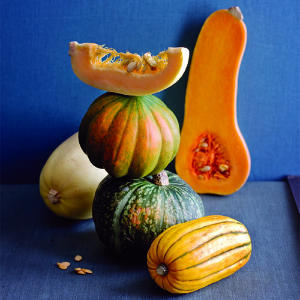
What’s in season now? Brussel sprouts, cabbage, carrots, celery, onions, leeks, potatoes, pumpkins, radishes, greens (spinach, arugula, lettuce, kale, Swiss chard, collards), turnips, winter squash, and apples!



 It means that, in order to stay relevant as environmental activists, we need to provide news that impacts our readers’ daily lives. We need to show real life connections between what happens on page 6 of the New York Times, and how that manifests in our community.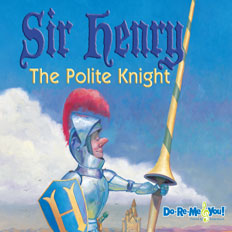














 “KI Green,” the official sustainability blog for Kindermusik International, is excited to bring