
Exercising the Brain

brain

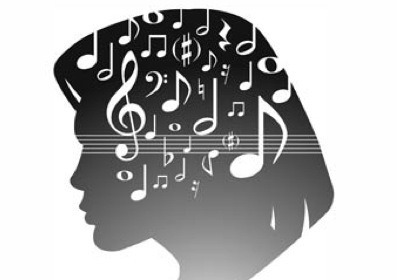
“Evidence suggests that long-term musical involvement reaps cognitive rewards–in language skills, reasoning and creativity–and boosts social adjustment.

Music exercises the brain. Playing an instrument, for instance, involves vision, hearing, touch, motor planning, emotion, symbol interpretation–all of which activate different brain systems.”

According to Norman M. Weinberger, Ph.D., professor of neurobiology and behavior at the University of California at Irvine, musical experiences help to shape the brain, and “[depriving] children of [music’s] intellectual, personal and social benefits . . . by failing to foster musicality, our society is wasting its potential.”

It’s an oldie goldie, but you can read the rest of the original interview from September 2000.

Want to get your child more involved in music?
Find a Kindermusik Class today!

Rags to Riches

We’ve all done it—cleaned out our closets; let big bags of old clothes sit by the door for weeks at a time, waiting for the fabled “perfect Saturday morning” to take the bag to Goodwill, shirking our instinct to effortlessly toss the unseemly bags into the backyard

Photo Credit: goodwill.org

barrels. Then you decide to host a dinner party, and the company comes and you’re left with no choice but to quickly toss the bulging bags before anyone can see. There’s always next season, right?

Donating clothes seems like such an easy way to recycle – yet Americans throw away 12 million tons of textiles each year. Only 25% of that is recycled as second-hand clothing. This in mind, we challenge you to stick to your guns as spring cleaning (not too far off in the distance!) begins. When you donate clothes, unusable material is often converted into industrial rags or sound-dampening material. Not only are you providing usable clothes for families in need—you’re upcycling ratty material for industrial use. And, in the even bigger picture, you’re fostering a more sustainable economy. Goodwill hires a new employee (at their company and at partner companies) every 38 seconds of every business day.

Call your local Goodwill and make this Saturday the perfect Saturday for a field trip. The whole family can help, and get breakfast afterwards.

What will YOU donate this weekend? Comment below or tell us on Facebook!

Children with autism learn social skills by imitating others

(Source: Gloucester County Times. Photo by Lori M. Nichols)

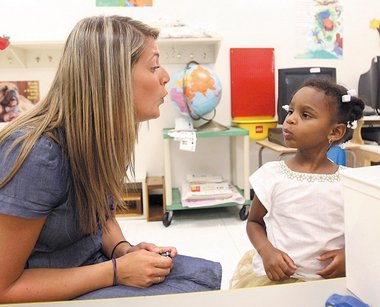
Imitation may be the greatest form of flattery but to a child with autism it might be so much more. Early childhood special education research indicates that teaching young children with autism to imitate others might help develop other social skills, too.

“It’s pretty exciting,” said Brooke Ingersoll, PhD in a press release. “I think we, as a field, are getting a much better idea of what autism looks like in infants and toddlers than we did even five years ago.”

Research highlights importance of early childhood special education

Ingersoll analyzed children with autism between the ages of 27 months and 47 months. As published in the Journal of Autism and Developmental Disorders, Ingersoll found that young children with autism who were taught imitation skills made more attempts to draw the teacher’s attention to an object through gestures and eye contact, both social skills in which children with autism often struggle.

Special education curriculum uses music’s proven methods

ABC Music & Me, our early childhood special education curriculum, uses music to teach children of all abilities, including autism, early literacy and language, social and emotional skills, and to strengthen fine and gross motor skills, and more. Special education teachers who use ABC Music & Me see firsthand how music can help non-verbal children make noises for the first time or help children interact together in the classroom. Plus, activities in class often include opportunities for children to imitate the teacher.

Our special education curriculum includes a supplemental strategies guide, Meeting Special Needs, which suggests activity adaptations for children with particular needs or impairments. Plus, we include IEP objective descriptors for easy cut-and-paste and IEP skills booster index.

For more information about using ABC Music & Me as an early childhood special education curriculum, email us at info@abcmusicandme.com.

FOL Fridays: The Power of Imagination

Preschoolers and imaginative play
Imaginative play in childhood prepares the child to think creatively in later adult settings.

Using the imagination helps a child develop the ability to think abstractly, to use language to describe things others cannot see, and to empathize with other people.

Comment below on ways your child loves to experience imaginative play!

Tips for parents:

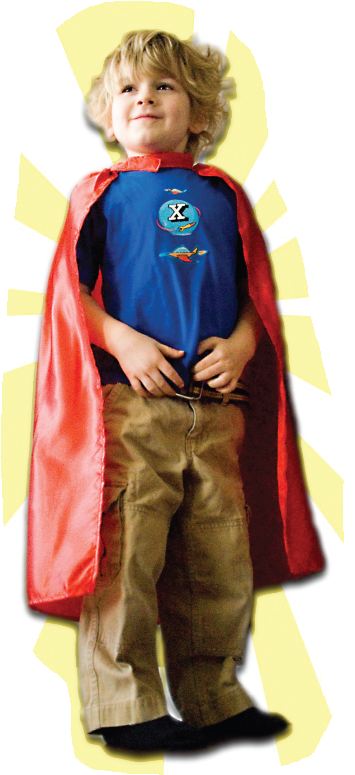
Give your child plenty of time for unstructured, undistracted play every day.  You can fuel your child’s imagination with music, good books, simple toys, or box for dressing up like a favorite princess or storybook hero.  For fun, you might enjoy making one of these simple no-sew capes to inspire a little more imaginative play.

– Contributed by Theresa Case, whose Greenville, SC program, Kindermusik at Piano Central Studios, is proudly among the top 1% of Kindermusik programs worldwide.

Energy Star and EPA Kids Teaching Resources

Have we mentioned that kids environmental resources are often way more fun (and comprehensive) than those made for adults? Crazy cold temperatures have, as usual, piqued our interest in global climate change… hence the refresher:

Today we find ourselves especially impressed by Energy Star Kids — Energy Star Appliances’ interactive resource for children’s environmental learning, and EPA Kids, the Environmental Protection Agency’s site for global climate change. With a special emphasis on green technology, you may want to consider giving kids ages eight and up a 20 minute “play time” on these sites before dinner. Catchy visuals and easy-to-read descriptions make understanding leading green technologies easier, and the interactive bedroom map shows the quick fixes to energy saving. And we like their ways to get involved for extracurricular school or KI class activities!

Kids plugged in to eBooks

Using eBooks with children

Walt Disney understood the magic and wonder of childhood and also the importance of early literacy and reading. After all, he confessed: “there is more treasure in books than in all the pirate’s loot on Treasure Island.” We couldn’t agree more!

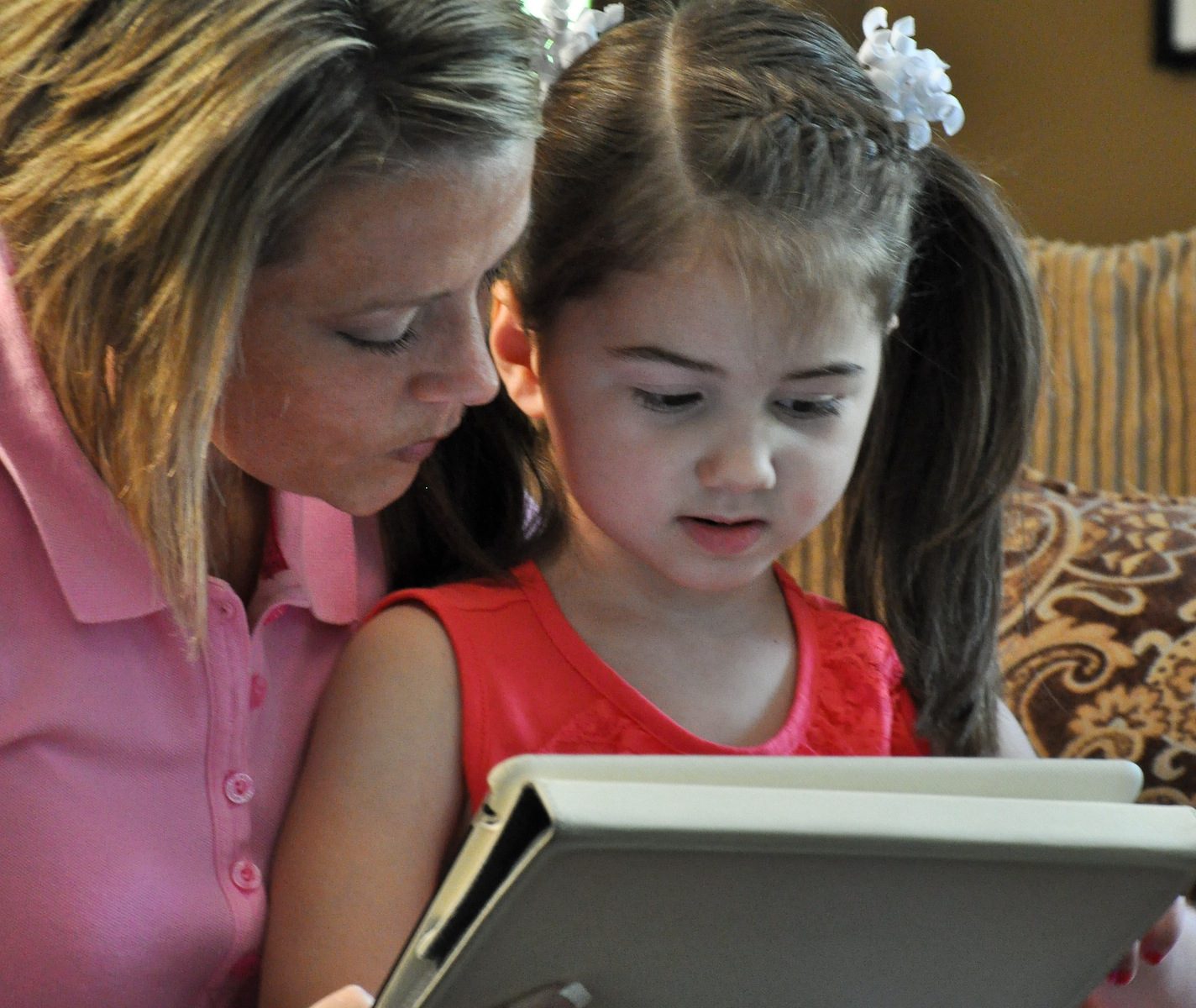
Early literacy experts know that parents can best support their children’s early literacy and language development by reading together. Today parents can choose from a wide variety of books: Board books, bath books, lift-the-flap books, chapter books, comic books, and picture books. Now, thanks to emerging technology, such as smart phones, e-readers, and tablet computers, parents can even carry an entire library of eBooks in their pocket (or diaper bag!).

eBooks for kids gaining in popularity with families

A new report, Kids and Family Reading, published by Scholastic shows that the number of children reading eBooks has more than doubled since 2010.

“We are seeing that kids today are drawn to both print books and eBooks, yet e-reading seems to offer an exciting opportunity to attract and motivate boys and reluctant readers to read more books,” explained Francie Alexander, Chief Academic Officer, Scholastic in a press release. “While many parents express concern over the amount of time their child spends with technology, nearly half do not have a preference of format for their child’s books. The message is clear—parents want to encourage more reading, no matter the medium.”

Kids and Family Reading study highlights

  • Twice as many children are reading eBooks today than two years ago
  • Half of children age 9-17 say they would read more books for fun if they had greater access to eBooks
  • Seventy-two percent of parents show an interest in having their child read eBooks
  • Eighty percent of children who read eBooks still read books for fun primarily in print.
  • Fifty-eight percent of kids age 9-17 say they will always want to read books printed on paper even though there are eBooks available (a slight decline from 66% in 2010), revealing the digital shift in children’s reading that has begun.

Kindermusik now includes eBooks (and more!) through Kindermusik@Home

Our music classes for toddlers, babies, big kids, and families include fun, age-appropriate music and movement activities that help children develop social, pre-literacy, and language skills and practice a wide variety of abilities. An integral part of the Kindermusik experience includes providing parents with the tools they need to tap into the power of music to not only help make parenting easier but also support their role as a child’s first and most important teacher.

Now, with Kindermusik@Home, parents can easily access favorite Kindermusik songs and activities, music, eBooks, and lyrics—as well as recipes, learning games for kids, crafts, and more in a green-friendly digital format any time from any smart phone, iPad, tablet, laptop, or computer.

To learn more about enrolling in Kindermusik classes and receiving access to Kindermusik@Home, contact a local Kindermusik educator via our Class Locator.

Your Brain on Music

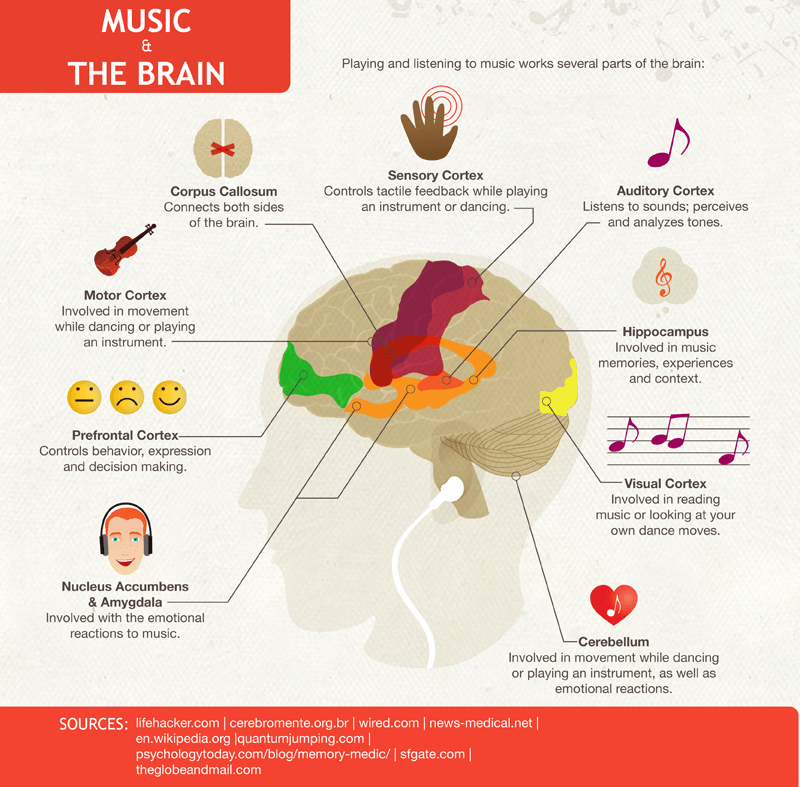
They say a picture is worth a 1000 words, but in this case, it’s an infographic that’s worth 1000 words, so we’ll keep this post brief and to the point.

At FinerMinds.com, the team explored the many effects of music on the brain, specifically those effects caused by playing and listening to music – things our Kindermusik families do every week in Kindermusik class and in their daily routines at home.

Music Stimulates 9 Parts of the Brain

Music is such an important part of every culture around the world that no one can argue with the impact or benefits of music.  But what this infographic illustrates so vividly are those specific parts of the brain that are affected.  According to these authors, there are nine parts of the brain (nine – count them!) that are stimulated while playing and listening to music.  Astounding!

There’s no doubt that music makes a difference cognitively, physically, and emotionally.  And experts tell us that the younger a child is exposed to music and music-making, the better.
That’s one of the reasons why the Kindermusik curricula are specifically designed to capitalize on those effects through a developmentally appropriate, whole-child based approach.  With that in mind, we leave you with this statement from psychologist Richard Davidson when he was a professor at the University of Wisconsin:

“The brain is the only organ designed to change in response to experience.  Musical training changes the structure of the brain and when it begins earlier in life the greater the influence.”

Want to get your child involved in music to help their brain development? Find a Kindermusik Class today!

Written by Theresa Case, whose Kindermusik program at Piano Central Studios in Greenville, SC, is proudly among the top 1% of Kindermusik programs worldwide.


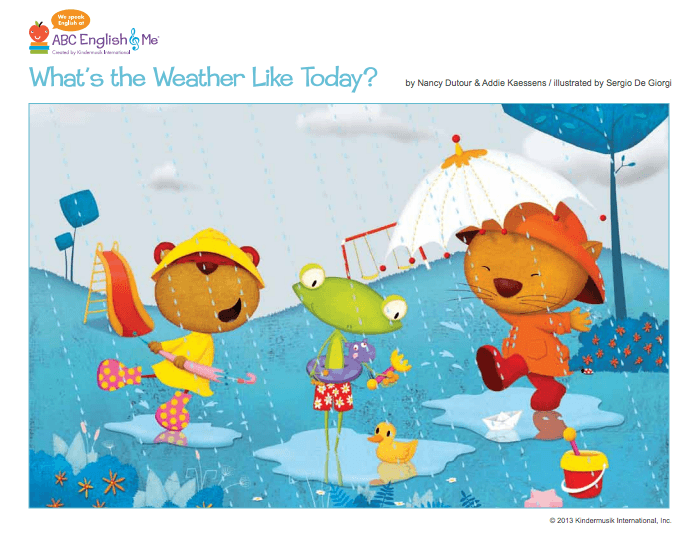
Introducing the new ABC English & Me Unit: Sunny Day/Rainy Day

Sunny Day/Rainy Day uses the weather to help emerging language learners

There are so many songs to sing about the weather! Rain, Rain, Go Away … The Eensy Weensy Spider … and Let It Snow! This four-week unit combines your favorite children’s songs about the weather and combines them with interactive stories and activities — carefully created to help emerging language learners.

First, we’ll meet Teddy Bear, who is learning what to wear in the weather! Should he wear a rain hat in the snow? No! We’ll help Teddy Bear get dressed, learn colors and the English words clothing (such as blue jeans and rain hat), as well as help emerging language learners in your classroom develop rhythm, solve problems, sing, share, and take turns — all while developing a musical love for English!

Download the Sunny Day/Rainy Day Digital Teacher’s Guide

FEATURED SONGS

The Little Green Frog
I Like to Sing When the Rain is Falling
Eensy Weensy Spider
There’s a Spider on the Floor
Rain, Rain, Go Away
I Like to Sing When the Snow is Falling
‘Round and ‘Round
Let It Snow
Good-bye Song

VOCABULARY

snow/snowy, rain, sunny, bear, He puts on…, clothes: pajamas, t-shirt, sweatshirt, socks, shoes, jeans, shorts, sunhat, sunglasses, snow coat, snow boots, mittens, snow hat, raincoat, rain boots, rain hat, umbrella; colors: green, blue, red, yellow, white, black, brown, and more!

INTERACTIVE STORIES ACTIVITIES

In addition to singing songs and reading stories about Teddy getting dressed, children will receive paper dolls to bring the learning home!
The Teddy Bear paper doll activity will help children learn to identify colors, such as yellow, and the English word for clothing, such as rain coat and rain hat.

FOL Fridays: “Aaaand Stop!”

Musical learning at Kindermusik & at home

Musical learning at Kindermusik & at homeActivities that encourage a child to move or STOP moving in response to a cue help the child develop inhibitory control.

This ability to control one’s own body movements is an important first step toward developing both coordination and self-discipline.

Tips for parents:

One start/stop learning game for kids is to turn on a favorite recording or song and have your child dance until you push “pause”. Then start dancing again when the music starts up again.

Learning Through Sign Language

You can also teach your child this ASL sign for STOP. Sometimes giving children something to do, i.e., making the sign for stop themselves, helps them be able to stop their bodies.

– Contributed by Theresa Case, whose Greenville, SC program, Kindermusik at Piano Central Studios, is proudly among the top 1% of Kindermusik programs worldwide.

New Year, New Goals

Kindermusik Green - Sustainability

Kindermusik Green - SustainabilityBy mid January, we’ve reached the tender time in New Year’s resolution making when our December 31st proclamations are either set to become a reality, or they’re fading into the holiday’s festive ghost.

2012 was a significant year for KI Green, most notably because:

  • We sold approximately 12,000 digital home material credits, eliminating the printing and shipping costs of nearly 3,000 home material kits per semester (4 months), which included books, CD’s, instruments, and packaging.
  • Through our Smart Wood Fund, we contributed $2,400 to the World Wildlife Fund’s mahogany protection program in 2012. We gave much more than our goal of $0.20 per dulcimer product established in our 2011 Sustainability report – we ended up donating $1 per dulcimer sold. We will continue to contribute $1 per dulcimer sold in 2013.
  • We engaged nearly 80 Kindermusik parents and educators through contest submissions for our Green Competition to celebrate the powerful efforts our community is contributing to save the planet. We want to double that number in 2013.
Photo Credit: Planet Forward

We’re proud of our achievements. But we can always be better. We were pleased to read Newsweek’s Top 10 Greenest Companies list and find many of these award-winning practices in play, on a smaller but powerful level, at Kindermusik – working remotely, going paperless, reducing company waste and recycling old products. These companies inspire us, but we are hungry to be challenged by our own community.

How can we be better in 2013? What resolutions do YOU have for KI Green? Comment below, or share on Facebook!