

Do Kids Still Love Animals?

Children get mixed messages when it comes to animals. They’re supposed to love things that are cute and fluffy, and squish things with more than four legs. Kindermusik celebrates animals through song, language learning games, role-play and listening activities, but the fact is that many of us don’t have access to thirty acre backyards teeming with wildlife.

Instead, we go to the zoo (or buy a fish – dogs if we’re lucky). An estimated 98% of Americans have been to the zoo at least once in their lifetime, according to this study by Dunlap and Kellert. When families were asked why they were visiting, the majority said they were interested in “family togetherness” or the fact that going to the zoo was a “fun activity.” Being in the presence of wild animals was not a hot topic. It’s not surprising, then, that a swath of cultural attitude studies have reported “generational wildlife amensia” and increasing “biophilia” among younger generations (Phillips & McCulloch, 2005). In other words – kids are scared of wild animals – domestic animals too. Since when has the llama evoked as much fear as the Loch Ness Monster?
This study by Gail F. Melson found many reasons for animal fear. Of course… parents are the central cause. Whether or not we mean to imbue our children with nature fear, our reactions to things like ants in the house, bluejays on the bird feeder, rats in the subway, a wasp in the car, are, increasingly, the only times many children see and experience wildlife. As your child’s #1 teacher, a peeved reaction to cockroaches in the kitchen translates into a general dislike of nature.
Naturally, our reactions to invasive creatures is unavoidable – not to mention, human behavior that began long before the technological age. What is REALLY important, is that we allow children to experience nature in the following ways:

  • in unstructured environments, where kids are allowed to stare, listen, touch, or follow animals as long as they want
  • without parents giving scripted explanations of certain species (i.e. “bluejays are bad,” or “snakes bite”) – but letting a child intuit the animal’s own characteristics
  • by letting the animals take central focus at the zoo or on a hike, though we may be motivated to do these activities for family togetherness time.

Kick off an animal weekend with dozens of KI songs for the car or bath time – then unplug and go for a silent walk to listen and observe the sights and sounds of early spring.

Kindermusik@Home: Problems and solutions for parents and second language teachers in ABC English & Me

Kindermusik@Home

Kindermusik@HomeAt Kindermusik, we believe that a parent is a child’s first and most important teacher. We also realize that second language teachers have a unique set of challenges in the classroom.

  • Diversity. In one classroom, parents and children may speak several different languages.
  • Digital divide. Some parents are comfortable with digital and tablet learning. Some parents are more comfortable with CDs and printed materials. The same is true for the schools you’re preparing these children to attend: some are making the digital transition and some aren’t.
  • Seeing double. Often times in ABC English & Me, a young child is learning a second language with their parent. Educators are teaching two people at a time! The child and the child’s parent or loving caregiver.

That’s why Kindermusik@Home materials were created to provide extra learning support for parents. The interactive Web site functions like an online classroom for parents, and features the songs and activities from class. The site also gives parents more information about the second language learning process, in a language they understand — whether it’s print or digital, French or English.

my.kindermusik.com

Print and digital options
Choose your music. When parents visit my.kindermusik.com at home, parents can choose to either burn a CD, or play the .mp3s on a tablet, computer, or mobile device.
Choose your story. Parents and children can share the stories together in a tablet-friendly format, or print out the stories and read together on paper.
Choose print or digital. Activities are available in multiple formats — from print-out paper doll activities, music and movement activities in mp3 activities, to word games. The variety of formats lets a parent decide how little or how much they’d like to expose a young child to tablet-based and mobile learning.

One classroom, five families, five different languages? At home, parents can go to my.kindermusik.com and choose to navigate the site in their preferred language, and learn more about the classroom activities in their own privacy, on their own time.

Families in your classrooms may speak a variety of languages. Some parents may not feel comfortable about stopping the class to ask a question. The Kindermusik@Home materials make it easy for families to translate all the activities, song lyrics, and research-based information to their preferred language.
Short videos model second language learning concepts for parents
Videos can be used as an interactive learning experience for parents to watch, or parents and children to watch together on a tablet.
For example, in this short video from Hello, Teddy!, the narrator employs the “3 E’s” (Excite, Engage, Expand), a commonly used technique for teaching young children new vocabulary, particularly children who are learning a new language.
When parents watch the video, they can hear and see a demonstration of the 3 E’s and incorporate it into the child’s daily dressing routine.
Video activities include a short description of the learning benefit behind the activity, and helps parents better understand the second language learning process. Take a look.

Bear in the Morning excites children by building a tiny element of suspense: Bear is looking around, searching, and wondering where his clothes and toys are. The game engages children by asking them to think and participate (e.g., “Where is his t-shirt?”).
And the game expands your child’s learning by asking him follow-up questions using additional vocabulary (e.g., What color is Bear’s t-shirt?”). You no doubt used this same technique when your child was a baby and learning his native language!

Parents can learn more about the second language learning process

Each featured activity gives parents the research-based approach behind the activities. For example, the ABC English & Me story “Where Is Bear?” features what experts call “accessible text,” in the story. A description of this approach is included alongside the story in the Kindermusik@Home experience.

Where Is Bear? is a powerful example of what language acquisition experts call “accessible text.” Such text is ideal for introducing young children to English, and for reinforcing their learning. Why is this simple story about an adventuresome bear such a good one for learning English? There are several reasons:

Repetitive phrases. The key sentence (or question) of the story is posed to your child over and over again: Where is Bear? Your child will grow accustomed to hearing this prompt, and that helps her predict what’s coming next and to follow the pattern of the story.

High-imagery words. Most of the words in the story are directly associated with a picture on the screen. Or, they refer to things with which your child has probably had some direct experience. Words like bear, horse, farm, and kitchen are all excellent high-imagery words for young children learning English.
High-frequency words. Where Is Bear? includes several high-frequency English words—words that are central to the English language, used all the time, and necessary in forming most spoken or written sentences. Examples are: is, the, on, and his. Hearing these high-frequency words used across many contexts will expedite your child’s learning of English.
A few unique words. Finally, with its simple and predictable pattern, Where Is Bear? contains a limited number of unique words for your child to learn and understand. This frees her up to focus on the meaning of the story.


See the Hello Teddy activity on my.kindermusik.com
Parents can choose how interactive they want to be
If some parents are uncomfortable with the concept of tablet-based learning, the Kindermusik@Home experience provides fun games, songs, and lyrics that the parent can print out from their home computer. Matching games, and paper doll games, like the ones featured in Hello Teddy, all reinforce the learning concepts from class, by asking children to identify pieces of Teddy’s clothing.
Would you like to know more about the research-based approach of ABC English & Me? Click here for more information. We’d love to show you how it works.

Behind the music on Kindermusik recordings: Howard Levy

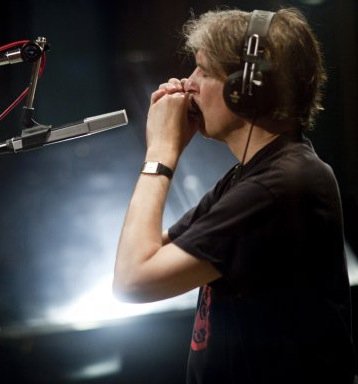
Howard Levy is a featured musician on one of Kindermusik's recordings.

Musician Howard Levy has played with some of the world’s best musicians – from the innovative, future-forward stylings of banjoist Béla Fleck to Dolly Parton, Bobby McFerrin, as well as symphony orchestra musicians around the world with his Concerto for Diatonic Harmonica and Orchestra.
Howard is also a featured musician on two Kindermusik recordings: “Riding the Rails” and “I’ve Been Working on the Railroad.”
Composer and arranger Jon Negus worked with Howard on the Away We Go! session. Here’s what Jon had to say about it:

When I was describing to Howard and the violinist (Peter La Bella) that “Riding the Rails” was going to be a duel between harmonica and violin, Peter said “Gee… I wonder who’s going to win that one….!”.
Howard was “off the charts” amazing even back then. A kind and gentle man who always educated while he played.

Musician, composer and arranger David Huff added this about the session:

Jon and I were completely awestruck by this man’s virtuosity. Though Howard got it in one take, Jon asked him to do it again just so we could repeat the experience of watching/hearing him play.

Howard is a world-touring musician, playing piano and harmonica. He’s also a dedicated educator teaching harmonica at the online school Artist Works. In this video, Howard talks about his musical beginnings.

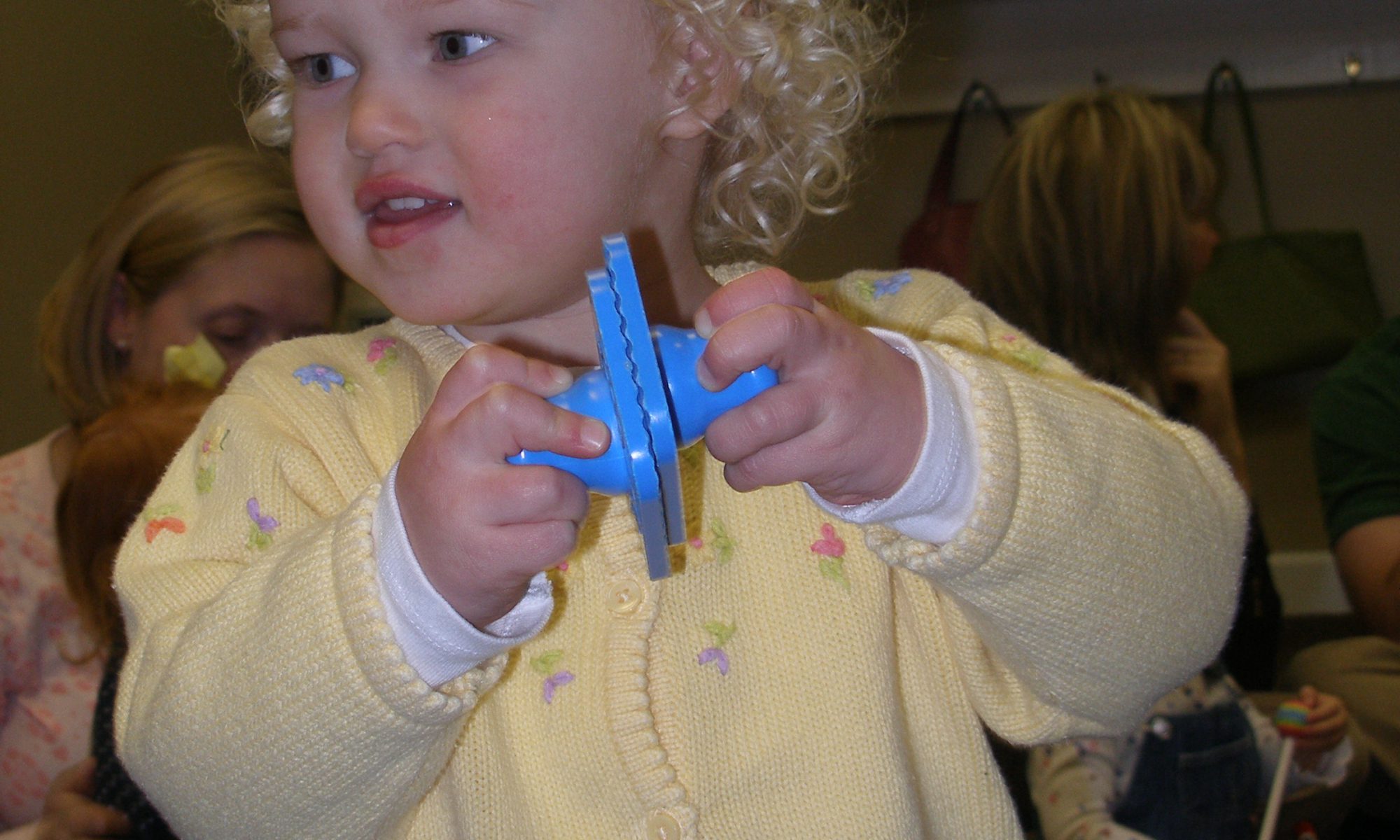
Kindermusik's age-appropriate Hohner harmonicas

Want to play?
Harmonica is a featured instrument in Kindermusik’s Away We Go! music and movement program for toddlers.
Join the worldwide community of educators and musicians around the world — sharing the gift of musical learning with children and their loving caregivers.
If you’re ready to become a Kindermusik educator, our online training program provides a flexible, supportive learning environment.

5 Ways Music Prepares Children for School

It’s no secret. We love music. Music can move us in profound ways. No question about it. With more than 35 years of experience creating music classes for toddlers, babies, big kids, and families as well as standards-aligned daycare and preschool curriculum, we know the lasting impact music education can have on a child. We also know, as music educator Cheryl Lavender puts it, “The fact that children can make beautiful music is less significant than the fact that music can make beautiful children.”
As if creating beautiful children wasn’t enough, research shows that music can even help prepare children for school. All of that makes us fall in love with music all over again! Here are just five ways music can help prepare children for school. (By the way, we use all of these ways…and more…in our developmentally appropriate and research-based music education programs in private studios, public schools, and childcare centers!)

5 Ways Music Prepares Children for School

  1. Learning to read musical notation uses a similar set of cognitive skills and pattern recognition also found in reading. In our preschool curriculum, ABC Music & Me, and in our Kindermusik classes, when children sing high or low based on whether an image is above or below a line or when children imitate a recorded sound by playing a C-A pattern on an instrument, children are learning the symbolic representation for sounds. Learning musical notation in this way mirrors how listening to and imitating spoken language evolves into reading.
  2. Music gives children many opportunities to practice active listening skills. Developing strong active listening skills prepares children for classroom learning, including language and literacy development. During the school years, children will spend an estimated 50 to 75 percent of classroom time listening to the teacher, to other students, or to media. When children intently listen for the sounds of a specific instrument in a song, use wood blocks to produce a Staccato sound, or move smoothly with scarves when they hear the music change from Staccato to Legato, children are practicing active listening.
  3. Music and movement helps children learn to tell their bodies what to do, when to stop, when to go, and when to move to another activity. Self-regulation is the ability to control one’s own thoughts, feelings, and actions and can be a key ingredient to successfully transitioning into Kindergarten. So, in our music classes when we play a “Stop & Go” game, participate in circle dances, transition from one activity to another, and even share instruments, children learn and practice self-regulation skills. Those same skills will help children pay attention in school and act and behave appropriately, even among the many distractions found in a typical classroom setting.
  4. Music leads children to experience patterns through movement, listening, and playing instruments. Rhythm patterns are combinations of long and short sounds and silences. In our preschool or toddler curriculum, educators may lead the class to “step, step, step, stop” or “ta, ta, ta, rest” with rhythm sticks. This helps children learn rhythm patterns (quarter note, quarter note, quarter note, rest), a basic musical concept. Plus, whole body involvement with patterning not only lays an early foundation for reading music but also for math and literacy.
  5. Through vocal play, children learn to form vowels and consonants, say words and phrases, and imitate rhythm and vocal inflection. Our music classes and daycare curriculum provide many vocal play opportunities through songs, chants, and carefully-crafted activities, such as mimicking the high sounds of birds or the low sounds of frogs. Vocal play using glissando also encourages the expressive qualities of children’s speaking and singing voice as well as vocal range.

To learn more about enrolling in a Kindermusik class, contact a local educator via our Class Locator.

Schools, preschools, and childcare centers can learn more about using our daycare curriculum, ABC Music & Me, by emailing us at info@abcmusicandme.com

Psychology Today: Born With a Preference for Two Languages

Researchers have known for years that babies have a preference for the sound of their mother’s voice. A preference they show by turning their head towards the sound of their mother, and increase suckling.
Recently researchers asked if a baby born to a bilingual mother would have a preference for one language over the other. If a child’s mother is bilingual, which language would the baby prefer? The mother’s first language, or the second?
The answer is both — and then some.
In the study, (published June 6, 2012 by Francois Grosjean, Ph.D. in Life as a Bilingual), researchers studied children born to bilingual mothers — who spoke English and Tagalog — and children born to monolingual mothers.
When the babies were exposed the sounds of language, researchers watched the baby’s suckling behavior: an increase in suckling showed a baby’s increased interest in a language.
In the study, babies born to bilingual mothers showed interest in both of the mother’s languages — English and Tagalog. Babies born to monolingual mothers showed an interest only in their mother’s first language.

Tuned in to a new language

In the same study, researchers introduced a third language, Chinese, which is similar to Tagalog, and the babies born to bilingual mothers also responded with suckling to the sound of the new language. Babies born to a monolingual mother seemed to show no additional interest.

“The authors concluded that the acquired interest in the two languages these infants had been exposed to could help them pay attention to the languages and hence acquire them in their first years of life ….. IF they were raised in a bilingual environment, of course.”

Kindermusik@Home

Clever Cows

Create a bilingual environment and nurture early language learning with ABC English & Me. Try this activity:
No matter how you say it — love, giliw, or 爱 — your child loves the sound of your voice. The ability to hear and distinguish between sounds in English or any other language is called phonemic awareness, and is a skill critical to school success and learning to read. And because nursery rhymes are often silly and fun to say, they are particularly developmentally appropriate for very young English learners!
By watching and listening to (over and over again) this Clever Cows video, and learning this simple nursery rhyme, your child is developing his or her rhyming, word segmentation, and sound discrimination skills; enriching her growing English vocabulary; and being introduced to basic story structures such as beginning and end, problem and solution, and cause and effect. Don’t forget to count the cows when you are done: 1, 2, 3, 4!

See more music and movement activities featuring the Clever Cows, music, and second language learning at my.kindermusik.com

ABC English & Me - Teaching English to Children through Music

Honoring Influential Female Composers

As promised, this week we’ll share snapshots of three women who did achieve musical fame in a male-dominated history of famous composers, in honor of Women’s History Month and Music in Our Schools Month. Today, we bring you Dame Ethel Smyth.

Dame Ethel Smyth via Universität Paderborn

Dame Ethel Smyth – Ethel was not without adversity from a young age; when her father began to think that Ethel’s passion for the piano was “too intense,” he prohibited her from taking lessons. Ethel refused to leave her room, attend meals, church, school or social functions until her father allowed her to study composition at Leipzig Conservatory. As a student, Ethel studied alongside Dvořák, Grieg and Tchaikovsky. By 1893, she’d gained some recognition in England with the performance of her Mass in D for chorus and orchestra in 1893. Still, she struggled to get her operas performed. In 1910, Ethel briefly halted her composing, and devoted herself to the Women’s Suffrage Movement where she rallied with Emmeline Pankhurst. In 1911, she wrote and conducted Laggard Dawn and The March of the Women at London’s Albert Hall, endowing the women’s movement with its immortal and prolific composer. Her character was represented in the fiction of battle cry.
Virginia Woolf (left) and Dame Ethel Smyth via New York Public Library digital collection

Throughout her life, Ethel was publicly regarded as an outspoken suffragist and prolific composer. Her character was represented in the fiction of battle cry. Throughout her life, Ethel was publicly regarded as an outspoken suffragist and prolific composer. She was represented in E. F. Benson’s Dodo books (1893–1921), essays by Virginia Woolf, with whom she became close, and in radio plays by Henry Reed.
Listen to March of the Women here, or Cello Sonata No. 2 .

Georgia’s PreK program finds ways to improve its preschool curriculum

One of the key attributes of a learner is that the quest for knowledge continues throughout the year—whether you are a 4-year-old learning how to write letters, a teacher attending a training on how to implement a new preschool curriculum, or even an childcare administrator uncovering ways to make your program more effective. As creators of daycare curriculum and other early childhood programs, we continue to monitor and implement the latest findings on how children learn. So, we loved hearing how one of the leaders in universal PreK programs in the United States, commissioned a study to find out how they can better reach children and families.

Georgia’s PreK program looks for ways to improve preschool curriculum

With one of the few state-funded universal PreK programs, Georgia’s PreK program reached 94,000 children throughout the 2011-2012 school year in local school systems, private preschools, and blended Head Start/Georgia’s PreK classrooms. However, Bright from the Start, who administers Georgia’s PreK program, wanted to evaluate the program and uncover ways to increase its effectiveness. In partnership with the Frank Porter Graham Child Development Institute, they conducted an evaluation study during the 2011-2012 school year. The study included a random sample of 100 PreK classrooms in the program and assessments

of the language, literacy, math, general knowledge, and behavioral skills of a sample of 509 children.

As published in the Children’s Growth and Classroom Experiences in Georgia’s PreK Program report, the researchers uncovered interesting findings:

Children’s outcomes

  1. Children exhibited significant growth during their PreK year across all domains of learning, including language and literacy skills, math skills, general knowledge, and behavioral skills.
  2. Children who were Spanish‐speaking dual language learners showed growth in skills in both English and Spanish, although their growth tended to be greater in English.

“For many areas, this indicated that they progressed at an even faster rate than would be expected for normal developmental growth,” explained senior scientist Ellen Peisner-Feinberg in a press release.

Two ways to improve Georgia’s PreK program

The report showed that English proficiency, number of English Language Learners in the classroom, and attendance of a PreK program in a local school system predicted greater growth in skills. In addition, researchers identified two ways to improve the overall effectiveness of the preschool curriculum.

  1. Reduce class size
  2. Add bilingual supports during classroom experiences

Preschool curriculum offers bilingual support

ABC Music & Me uses music to promote school-readiness and skills development, including early literacy and language development and social skills in young children. The research-based childcare curriculum aligns with state standards, including the Common Core, and can be especially beneficial for English Language Learners. In addition to our “English Language Learners Strategies Guide” that provides unit-by-unit, lesson-by-lesson tips and tools to use in the classroom, ABC Music & Me includes materials in English and Spanish to increase parent involvement and support the common language spoken in the home.

For more information about using ABC Music & Me as a daycare or preschool curriculum, email us at info@abcmusicandme.com.

Where Have All the Female Composers Gone?

March is Music in Our Schools Month and Women’s History Month, but when was the last time your child came home from school rattling high praise for his or her favorite female composer? Perhaps we should speak for ourselves, but our repertoire of  “favorite female composers” seems a bit slim when we consider how long our list of favorite male composers is.
As Virginia Woolf wrote, “a woman must have money and a room of her own if she is to write fiction.”
We think women need those things, sure – but to become musicians, or any other creative profession, women need education.
Since the dawn of the first musical instrument, a reed flute from 67,000 years ago, women are phantoms of musical history. There are exceptions, of course, but from the Middle Ages to the late nineteenth century, women learned basic musicianship chiefly so they could entertain and appear well mannered. Or, like the German abbess, St. Hildegard von Bingen (1098-1176 C.E.), they became nuns, where study was unlimited but public performance was.

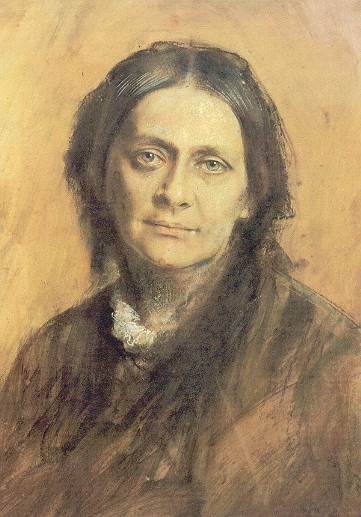
Clara Schumann via Wikipedia

At the height of the Romantic Era, women like Clara Schumann and Fanny Mendelssohn, though prodigal and deserving, rose to fame primarily due to their brothers (Robert Schumann and Felix Mendelssohn).
Robert Schumann openly admired his older sister, who became one of the most distinguished pianists of the era—one of the first to perform from memory. She was also the breadwinner for the Schumann family. It was her talents, and her perseverance, that supported the family long after her brother’s early death.
Fanny Mendelssohn via Wikipedia

Fanny Mendelssohn was also prolific, composing over 460 musical pieces in her lifetime. Still, in one letter, she wrote:

I have been composing a good deal lately, and have called my piano pieces after the names of my favourite haunts, partly because they really came into my mind at these spots, partly because our pleasant excursions were in my mind while I was writing them. They will form a delightful souvenir, a kind of second diary. But do not imagine that I give these names when playing them in society, they are for home use entirely.

And in 1820, Fanny Mendelssohn’s father wrote, “”Music will perhaps become Felix’s profession, while for you (Fanny) it can and must be only an ornament. ”
The spread of women’s suffrage in the early twentieth century stimulated enough social and economic empowerment to spawn the swath of female musicians we know today: Amy Beach, Nadia Boulanger, Cecile Cheminade, Teresa Careño, Charlotte Church, Vivian Fine – to name a few.
We’ll take a look at some of these women of note next week. Stay tuned! And in the meantime, who are some of your favorite female musicians?

We're multi-lingual! ABC English & Me's app and tablet learning @Home

Kindermusik@Home

Kindermusik@Home

We’re multi-lingual! ABC English & Me can now speak nine languages, including English! We’re delighted to announce the new language translations in Kindermusik@Home for ABC English & Me.
Kindermusik@Home materials feature the interactive songs, stories, and activities from class — in an easily downloadable format for a variety of mobile and at-home computer devices.
And now, parents and caregivers can translate the Kindermusik@Home Web site into a preferred language:

  • Traditional Chinese
  • Simplified Chinese
  • Brazilian Portuguese
  • French
  • Italian
  • German
  • Greek
  • Spanish

Step 1: Log on to my.kindermusik.com

Parents and caregivers enrolled in ABC English & Me login to the @Home site at my.kindermusik.com Here, you’ll find all the stories and songs from class, plus special activities you can do together at home.


Step 2: Select your language


Select your preferred language from the drop down menu.

Where do I find my materials?

When the Web site refreshes, you’ll see instructions on the Web site written in your preferred language. Explore the site!
Access the Kindermusik@Home materials in the lower right-hand corner. Click on each one of the four icons – music, lyrics, stories, and activities. Soon, your computer will download an archive zip file of all the activities featured in class.
Look for instructions in your preferred language and follow along.

What do the Kindermusik@Home materials include?


All the songs and stories from stories from class in the English language. Instructions on how to download the music to a computer will appear in the parent’s chosen language.

Stories
You can download the illustrated story from class – written in English – or simply read along together on your home computer, tablet or mobile device.
Activities
Extra activities you can play together at home – such as a memory game featuring animals or vocabulary words from that mont’s class.
Lyrics
Lyric sheets to all the songs from class.
Music
Sing together the English-language nursery rhymes! Enjoy the music and movement activities from class and do them together at home. Listen to ABC English & Me’s wide variety of songs in a range of musical styles.

Would you like to know more about the research-based approach of ABC English & Me? Click here for more information. We’d love to show you how it works.

National Bubble Week

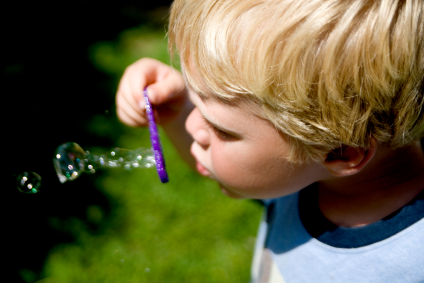
Did you know that the second week of March is National Bubble Week? Someone, somewhere, has determined that the second week in March is the week when we as a nation should all enjoy some bubbles. (Hmm… wonder if a bubble bath counts?!)
When I think of bubbles, a lot of happy childhood memories come flooding back. Bubbles are such simple things, but they make for a few minutes or even many hours of delighted squeals and happy smiles. Bubbles are usually a “together” activity between the adult who can’t blow fast enough and the child who makes herself nearly dizzy trying to chase and catch all of the bubbles before they pop on the ground.
You know, bubbles are a lot like music. Music makes memories too, because it brings families together. That togetherness is what warms my heart most as a Kindermusik educator. I freely admit that I often find tears pricking my eyes as I observe parents and children in class bonding together and enjoying precious time with each other. And then what’s really great is hearing how the music doesn’t stop once class is over; it goes home — soothing, delighting, engaging, entertaining, giving, and making a difference in all the important ways.
So… whether you celebrate National Bubble Week or not, I hope you’ll be reminded of the simple joys in life — music, together time with your child, and oh yes, bubbles.
Go ahead, celebrate!  Click here for a simple, easy recipe for homemade bubbles.

Colored Bubbles

1 cup granulated soap or soap powder (Ivory Soap powder)
1 quart warm water
Liquid food coloring
Dissolve the soap in warm water then stir in a few drops of food coloring

More ideas:  http://www.tooter4kids.com/Bubbles/Activities_Recipes.htm
Originally written by Molly McGinn for Kindermusik International