
Realizing your Child’s Musical Potential

Smarter

[vc_row][vc_column][vc_column_text]Fryling

By Dr. Doreen Fryling, Ed.D.[/vc_column_text][vc_column_text]If you’re reading this, you are probably the parent of a young child. So, I know you’ve only got a minute. I’ll keep this short.

You want your child to reap the benefits of a lifetime of music making. You’ve heard the buzz, read the articles about why music education is beneficial to children, and maybe even experienced the rewards of music yourself. But this age’s seemingly unlimited access to music-making can be daunting rather than empowering. It can be hard to know if you’re doing the right thing with your child.

Start by making music a normalized activity. This means that music is a part of your child’s everyday life, happens spontaneously, and without judgment. For young children, music making most often occurs as some form of singing. The very youngest will coo and babble and imitate. Vocalization becomes more consistent and structured as children age, with school-aged children able to sing complete songs. [/vc_column_text][vc_column_text]

The author and her son (19 months).[/vc_column_text][/vc_column][/vc_row][vc_row][vc_column][vc_column_text]

Someone told me not to sing…


But let’s talk about judgment. The number one thing that I hear from people when I tell them that I am a music teacher is that someone told them not to sing. Most often, they recount stories of family members making fun of them. Let’s put an end to this useless and harmful practice. Make your home a place where your child feels safe to sing. Don’t tease–or worse, coach–your child. Young children are, by nature, not great singers. It’s all part of the developmental process. Don’t let adult ears put undue pressure on a child to “be better.”  Let your child just sing. Make it a normal thing that happens in your home.

Music making for young children is not about performing. Try to balance the need to show-off your child’s abilities by understanding that they make music not for the sake of performing, but because it’s a natural human ability that offers psychological and physical rewards. Music making for young children might happen anywhere – in a stroller, in the car, or while playing on the floor. It doesn’t necessarily need to be directed, though it’s a wonderful bonding activity to sing with your child. Allow for creative vocal improvising (singing narratives while playing with toys) by providing quiet times for play. Turn off TVs, stereos, computers, tablets, and smartphones, and give your child time to make music without the competition of our noisy world. You, too, might find yourself singing, if you allow for quiet time during the day.[/vc_column_text][vc_video link=”https://youtu.be/wNZF7J717DU”][vc_column_text]The author’s son (4 years old) spontaneously singing at a museum.[/vc_column_text][/vc_column][/vc_row][vc_row][vc_column][vc_column_text]

Music: Not for the few…


Music making for the young child, and anyone really, is not reserved only for people with a profound natural ability. Music making can be enjoyable for anyone at any ability level. That being said, if you are a parent who does not love their own singing voice for whatever reason, I beg of you to ignore that inner dialogue holding you back from singing in front of anyone and let your child hear you sing. Sing while you change their diaper, sing while you prepare meals, sing while you clean-up (together). The model you provide of a confident, expressive singer will be the foundation for your child’s own musical beliefs.[/vc_column_text][/vc_column][/vc_row][vc_row][vc_column width=”1/2″][vc_column_text]

singing and imitation
The author’s daughter imitating what she’s seen her parents do when they look at music. She was just happily singing whatever she wanted as she turned the pages.

[/vc_column_text][/vc_column][vc_column width=”1/2″][vc_column_text]

Find music around you


Children absorb the music around them. Don’t feel like you have to feed them a steady stream of Mozart, or so-called “children’s music.” First of all, you’ll drive yourself crazy. Second of all, good music is good music. Let them hear the music you enjoy. (Just make sure it’s not too loud. Protect those little ears).

Find music around you. Point out music in stores, on the street, and at events. Try a young person’s concert at a local venue. Just be realistic about how long your child will stay engaged. You may want to take them to a show, but know that you may need to step out (several times) or leave before it’s done. Seek out free music concerts, because they’re way easier to cut your losses and leave early if need be. Outdoor concerts are perfect for little kids.[/vc_column_text][/vc_column][/vc_row][vc_row][vc_column][vc_column_text]Foster creativity in your child by letting your child free play with small instruments (hand drums, bells, shakers, pots and pans!). And no, your child will not be scarred for life if you don’t start violin lessons at age three. If there’s an interest and a willingness on your part to find the right teacher and help with practicing, go for it. If not, wait until your child is ready and/or your school offers instrumental lessons.

Vocal lessons, however, are unnecessary until after your child goes through puberty. If your child wants to sing more, take them to group music lessons as young children and then enroll them in a children’s choir when they are school-aged. Don’t forget to support your local school music programs, because that’s the place where they’ll have their most consistent music education as they journey from childhood to young adulthood![/vc_column_text][/vc_column][/vc_row][vc_row][vc_column width=”1/2″][vc_column_text]

Just to review:

  • Make music everyday with your child
  • Don’t judge your child’s music making
  • Sing for/with your child
  • Let your child play in a quiet environment
  • Seek out appropriate concert experiences
  • Listen to any kind of music with your child
  • Limit exposure to devices that displace creative free play
  • Don’t project your own feelings of musical inadequacy on your child
  • Express joy/thankfulness/praise when your child makes music for/with you

Benefits from music making as a child include improved well-being, intellectual growth, health benefits, joy from music making, and social benefits such as self-confidence and connectivity to other children. So whatever you do, provide time and support for music making to occur in your child’s life. It just may be the greatest gift you give them.

.[/vc_column_text][/vc_column][vc_column width=”1/2″][vc_column_text]

The author’s children magically getting along while improvising at the piano.

[/vc_column_text][/vc_column][/vc_row][vc_row][vc_column][vc_column_text]A note from Dr. Boyle: Wonderful information from Dr. Fryling! So what are you waiting for? Sign up for a free Kindermusik class near you![/vc_column_text][vc_column_text]


Doreen Fryling, Ed.D. is in her twentieth year as a public school music educator. She currently teaches IB Music and chorus classes at South Side High School in Rockville Centre, NY, and has previously taught K-5 general music and middle school chorus. Doreen is a founding member of the eVoco Voice Collective and a professional chorister in the Brick Choir in NYC. In addition to her school choirs, Doreen has conducted the Hofstra University Chorale, the Hofstra University Chorus, and the MYO Nassau Concert Choir. She also maintains an active schedule as a collaborative pianist.

Doreen recently completed a Doctorate of Education in Learning and Teaching at Hofstra University. She holds degrees, as well, from Susquehanna University and the University of Michigan. In 2016, Doreen was recognized as a semifinalist for the Grammy Music Educator Award. Doreen shares her love of music making with her husband, David, and their two children. You can read more from the author at www.doreenfryling.org.


Fryling, D. S. (2015). Persistence in choral music: An investigation into psychological and sociological factors involved in choral membership (Order No. 3734137). Available from Dissertations & Theses @ Hofstra University; ProQuest Dissertations & Theses A&I. (1732359916). Retrieved from http://ezproxy.hofstra.edu/login?url=http://search.proquest.com.ezproxy.hofstra.edu/docview/1732359916?accountid=11449

Hallam, S. (2010). The power of music: Its impact on the intellectual, social and personal development of children and young people. International Journal of Music Education, 28(3), 269-289. doi:10.1177/0255761410370658

Media Use by Children Younger Than 2 Years. (2001, November 1). Retrieved January 18, 2016, from http://pediatrics.aappublications.org/content/128/5/1040..info

Williams, K. E., Barrett, M. S., Welch, G. F., Abad, V., & Broughton, M. (2015). Associations between early shared music activities in the home and later child outcomes: Findings from the Longitudinal Study of Australian Children. Early Childhood Research Quarterly, 31113-124. doi:10.1016/j.ecresq.2015.01.004[/vc_column_text][/vc_column][/vc_row]
Movement and Music: Hop, Wiggle, Squirm, and Sing!

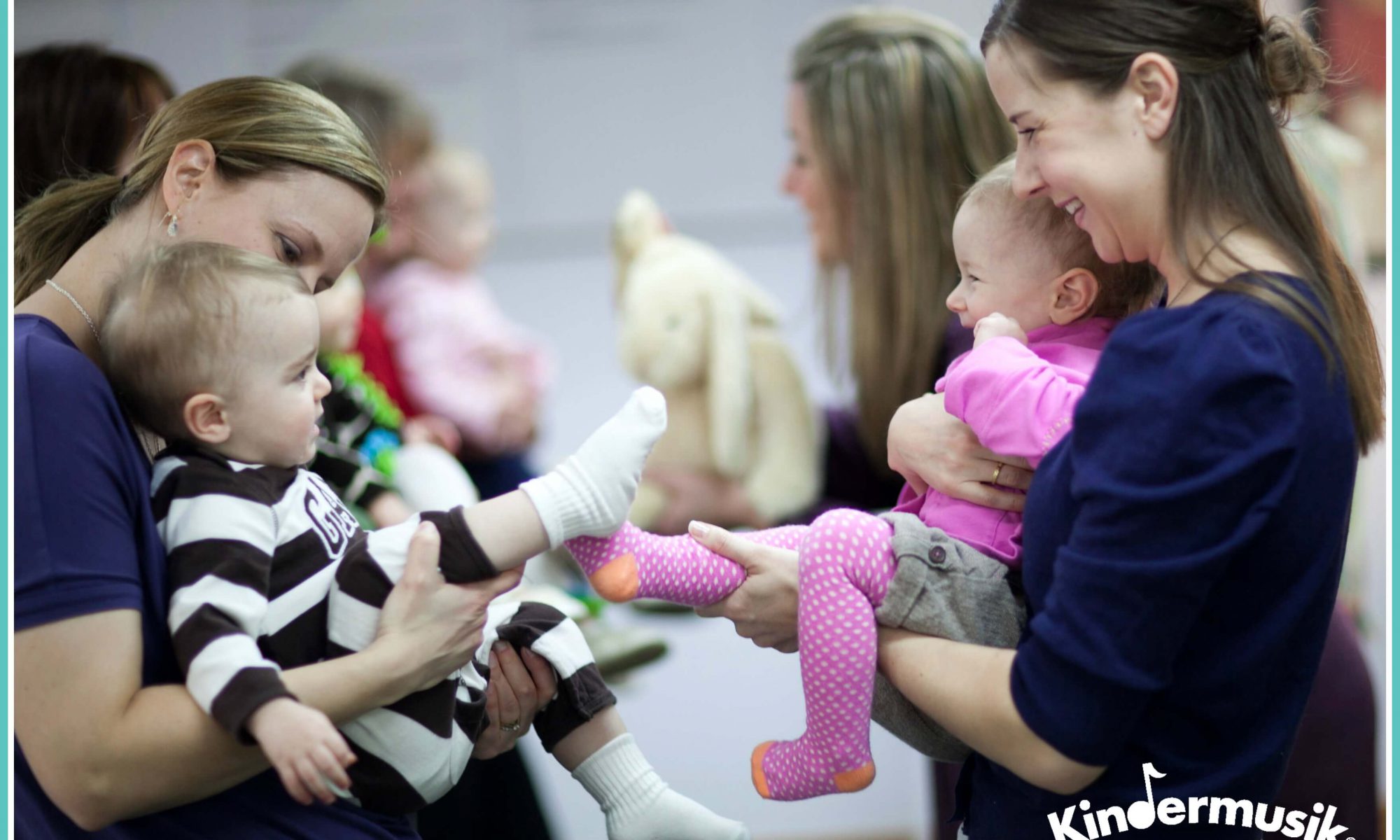
Babies movement smiles

[vc_row][vc_column][vc_column_text]Lisa Sempsey, Kodály Educator

Kids have boundless energy! That statement is no surprise if you’re a parent, caregiver, or teacher to a child. There are times that you may look at the children under your care and think, “they may not need a nap, but I do!” or, “how do they just keep going?” Well, movement: touching, rolling, skipping, jumping, wiggling…it’s just part of how a child explores her world. It’s also how their brain/body develops “must have” connections to grow up in a healthy way. Movement is key! But, traditional sports or dance classes are not the only way to keep children moving. Don’t get me wrong, organized athletics and dance programs have an important impact in the world, but there are also other ways to keep your little ones on the move and having fun![/vc_column_text][blockquote cite=”Ralph Waldo Emerson”]It is a happy talent to know how to play.[/blockquote][vc_column_text]Music and movement have a natural connection. Think about it, when you sing to an infant, you rock them. Squirmy toddler? You’ll probably bounce that little guy on your knee as you recite a traditional rhyme to him. Is your kindergartner having a birthday party? Then, you might organize a round of musical chairs. All of these examples have a music-movement connection. But, they just scratch the surface. There are hundreds of “old” movement games that children still love to play, plus, new ideas on how children can explore movement, and often, music at the same time.

Not sure where to start? There are many websites and online libraries that are treasure troves for kid-friendly and parent/teacher approved, movement rich activities. I used to use them with my own child. (He’s twelve now!) I use them for planning activities at summer camps, and school lessons with many age levels, pre-school through high school. Try out the two online resources below. Take a look. Explore and see how much fun you and your children can have![/vc_column_text][/vc_column][/vc_row][vc_row][vc_column][vc_column_text]

Music and Movement Resources

  • GoNoodle.com: What a fun website! Sign up for free, create a monster, click on an activity, and let the fun begin. Whether it’s yoga with Maximo, Zumba for Kids, silly movement with Koo Koo Kachoo, or one of the many other choices. Kids are engaged, challenged, and most likely giggling!
  • Kodaly.hnu.edu: This is an online library for folk songs, inspired by the Kodaly philosophy of music education. While I have many, MANY song sources for my classroom, this is my go-to resource when I’m in a pinch. Click on “search the collection” to look for song material that meets your needs. Looking for a movement activity? Scroll all the way to the bottom to the “game type” drop-down box. Choose a genre and you’ll get many songs with the game or dance directions written out for you. Some songs even have field recordings that you can listen to.

[/vc_column_text][/vc_column][/vc_row][vc_row][vc_column][blockquote cite=”Zoltán Kodály”]Singing connected with movements and action is a much more ancient, and, at the same time, more complex phenomenon than is a simple song.[/blockquote][/vc_column][/vc_row][vc_row][vc_column][vc_column_text]Want even more ideas?  Looking to integrate movement into a group setting with children?  There are many books with music and movement ideas together.  Some of my favorites are:

Music and movement are a natural fit at home and in school.  Those wiggly kids will sing, play, move, and laugh their way through great games and dances both old and new!


Lisa Sempsey
Lisa Sempsey

Mrs. Sempsey is an active clinician and workshop presenter in south-central Pennsylvania covering topics including classroom management, choral reading sessions, technology in the music classroom, movement and music curricular connections, Kodaly philosophy, curriculum development, and lesson planning, and Orff-Schulwerk philosophy, curriculum development, and lesson planning.


Mrs. Sempsey has taught kindergarten through sixth grade general music, elementary choruses, as well as elementary and middle school strings in Lower Dauphin and Conestoga Valley School Districts, as well as been the Artistic Director and Prelude Choir Director for the Children’s Choir of Lancaster from 2005-2012.  Currently, Mrs. Sempsey teaches kindergarten through sixth grade general music, choruses, and Orff & Drum Ensembles in Columbia Borough School District.   She is also the K-12 Art & Music Curriculum Coordinator.[/vc_column_text][/vc_column][/vc_row]

You Know it: Kids Feel Stress, Too

stressed child

[vc_row][vc_column][vc_single_image image=”8342″ img_size=”620×288″ alignment=”center”][/vc_column][/vc_row][vc_row][vc_column][vc_column_text]Ok…I’m about to tell you all something you already know…our babies, our toddlers, our kids…they feel stress! We “old” folks don’t have a monopoly on this lovely feature of the human condition. Now think about this: we are supposed to have things together by adulthood, but let’s face it, how many times do you get into a situation and look around for a more “adultier” adult than you!? We are supposed to have a developed sense of self-awareness that allows us to – hopefully – use developed coping strategies to process stress in a heathy way. Now…imagine an infant or toddler experiencing a stressful situation. Not only might the situation be new, they are still figuring out how to respond! This can compound stress in a child. No fun, right?

stressed child stress toddler
Harumph! Don’t look at me!

Recently, the Center for the Developing Child at Harvard University (I’ve heard of this Harvard – supposedly they’re pretty smart, guys) posted about ways to mitigate (Ivy League lingo for the win!) toxic stress in kids. The main idea? If we can’t help kids deal with stress, the health development of the next generation might be thrown of the tracks and “can have damaging effects on learning, behavior, and health across the lifespan.” So…what can we do?[/vc_column_text][/vc_column][/vc_row][vc_row][vc_column][vc_column_text]

Responses to Stress

The Center defines three types of responses to stress and how these responses impact the body:

  • Positive – this is common and often short-lived. New babysitter? Perhaps a new food to try? A child might experience this type of response. Think a short rise in heart rate.
  • Tolerable – Often the result of a loss of a loved one or perhaps experiencing something scary like breaking a bone. This can last longer than the Positove response. With an environment of supportive adult relationships, the effects of this type of stress can have a buffering impact and help a child recover.
  • Toxic – this is longer lasting and can be a result of such awful things as neglect, abuse, or the results of economic hardship – and occurs when supportive relationships are not present.

One aspect of these supportive relationships is “Serve and Return.” As it turns out, a tennis match of interactions between our children and caring adults has a positive impact on developing brain structures, stress levels, and processing stress in a healthy way. From the Center:

“When an infant or young child babbles, gestures, or cries, and an adult responds appropriately with eye contact, words, or a hug, neural connections are built and strengthened in the child’s brain that support the development of communication and social skills. Much like a lively game of tennis, volleyball, or Ping-Pong, this back-and-forth is both fun and capacity-building. When caregivers are sensitive and responsive to a young child’s signals and needs, they provide an environment rich in serve and return experiences.”

As you build the circle of positive interactions for your child, you increase the child’s ability to respond to the world, learning that these “tall people” really care, and it would seem that the earlier this occurs, the better.

Now…think about the types of interactions that occur during Kindermusik classes. See a connection? I do! When taking part in regular group musical activities lead by a caring adult, a child’s circle of positive relationships grows. Singing together, call and response activities (a musical version of “serve and return”), and group movement, all can have a positive impact on stress levels. Did you know that groups that sing together can sync their heart beats? Crazy, right?

So consider this the next time your child is overwhelmed by the world around them…and not just when they are anxious to go to bed at night…sing a song together, dance together, or get out some pots and use them as drums. You bang and then have them mimic you. Music can reduce those hormone levels, singing can control breathing, and that stress response can be brought back to a healthy place.

Friends…the power of music![/vc_column_text][/vc_column][/vc_row]

Educator Spotlight Preview

Christa Beck, Educator

[vc_row][vc_column][vc_single_image image=”8332″ img_size=”full” add_caption=”yes” alignment=”center”][/vc_column][/vc_row][vc_row][vc_column][vc_column_text]Happy Monday, friends! Next month, we will be starting a regular feature at Minds on Music – our Educator Spotlight! I will have the good fortune of interviewing a Kindermusik Educator. The sun never sets on Kindermusik! Somewhere on the globe, at any moment, there’s a Kindermusik educator leading children in song and movement. These talented, dedicated folks make the magic happen. We should get to know them!

Christa Beck, Educator
Christa Beck

Our first subject will be 9 time Maestro Award recipient Christa Beck. As a preview, here’s a recent article about Christa and her work with Kindermusik that appeared in the Pittsburgh Tribune-Review. She is a wonderful example of the type of people teaching our kids, and a great place to start!

Know an educator we should feature? Let me know! Contact me at dr.boyle@markaboyle.com.[/vc_column_text][/vc_column][/vc_row]
Why Do You Sing?

[vc_row][vc_column][vc_column_text]

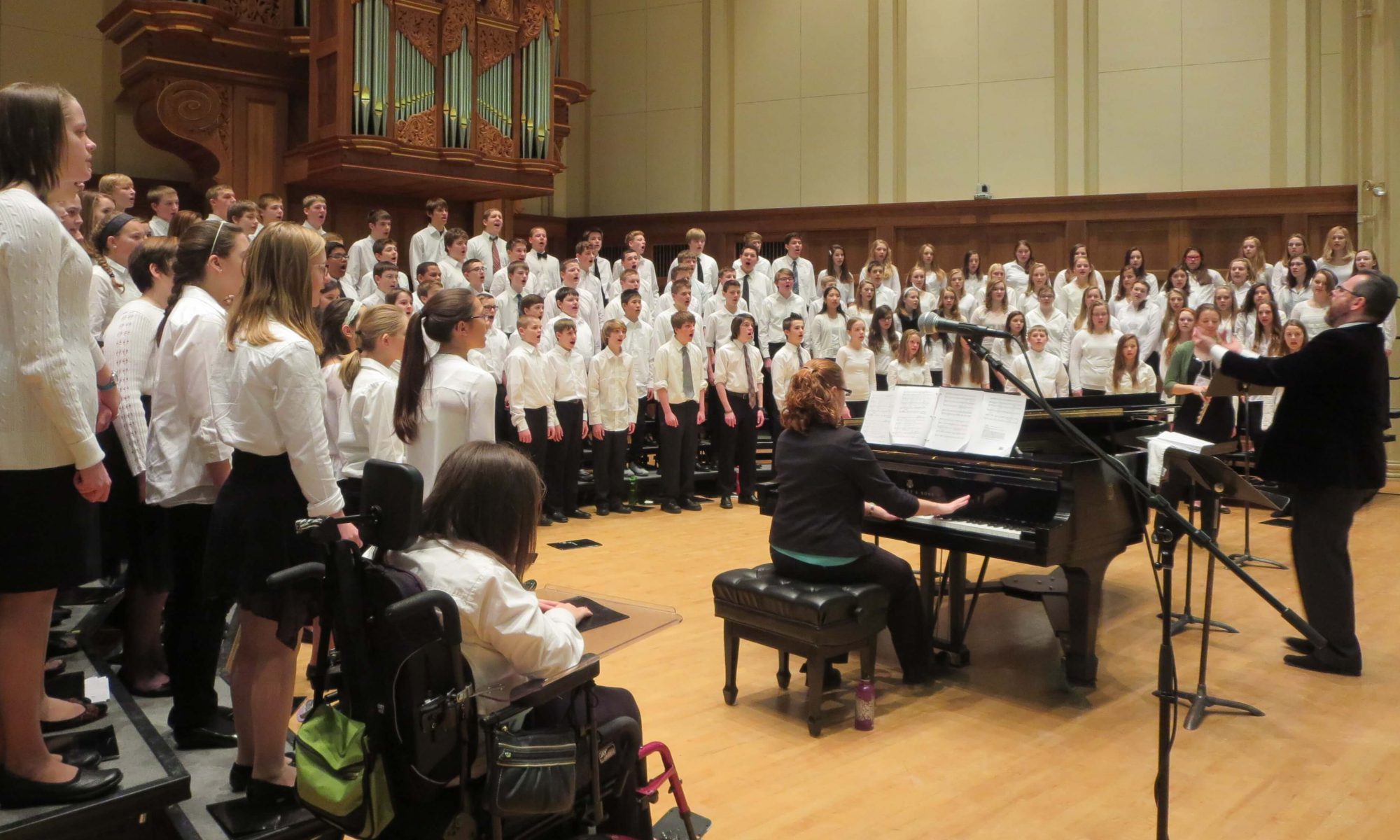
Dr. Boyle conducts the Middle Level All State Choir in Wisconsin. Scedra is right in the front row.

[/vc_column_text][/vc_column][/vc_row][vc_row][vc_column][vc_column_text]I teach my students that it’s the conductors job to make others musically powerful. This concept was crystalized for me by Ben Zander in his TED Talk. If you haven’t watched it, you should! As conductors, we develop a vision and inspire others to realize that vision.

When I work with choirs, I tell it like it is. I tell them what I expect – and to paraphrase my friend and fraternity brother, Karl Paulnack, from his Welcome Address to the parents of incoming Boston Conservatory students – I expect them to save lives with their music.

The Wisconsin Middle Level All State Choir was no different. They sang! They gave away their collective voice, honoring the composers, each other, and the audience. I told them – you never know whose life you might change with your music. I believe that. I believe that there could be someone in that audience whose life is at the crossroads – and honest and selfless art given freely by a group of emotionally connected middle schoolers has the power to pull them down the road that leads to life.

We sang! But we also talked about the music. We talked about the historical context of McCartney’s “Blackbird” – so relevant today. Not about a blackbird, friends. Sir Paul wrote this in response to the riots occurring in ’68 after Dr. King was assassinated. And the middle school musicians ate up this information. You could have heard a pin drop when I talked to them about this.

I have started taking a moment at festivals to ask students why they sing – particularly in choir. One young woman, Scedra (pronounced Say-dra – her name was a combination of the initials of grandmothers and great grandmothers) particularly touched me. Scedra was born 2 months premature. She fit in the palm of your hand. Her father’s wedding ring could slide up her arm to her shoulder with room to spare. Scedra is in a wheel chair. She put her hand up to share why she sang….[/vc_column_text][/vc_column][/vc_row][vc_row][vc_column][blockquote cite=””]“I sing because it makes me feel like flying. I don’t feel like I’m in my chair. It’s like I’m not disabled anymore.”[/blockquote][/vc_column][/vc_row][vc_row][vc_column][vc_column_text]I wept. I’m weeping now typing this. 149 of her new friends instantly applauded her. The smile on her face eclipsed her chair. Scedra is often (at first sight) defined by her wheelchair, but in that moment, she was simply and beautifully a young woman overjoyed to be making music with her new friends.

Scedra and a host of her colleagues shared from their hearts in a room full of people they had just met. Music did this. Music created this place that allowed these people to be who they were (are!) without fear of judgment.

And that is music’s power.

These young men and women changed my life and for that I will be forever grateful.

Thank God, the universe, and all good things for music.[/vc_column_text][/vc_column][/vc_row]

New Thoughts for a New Year: Music for Music’s Sake

Music for Music's Sake

Happy New Year! It is my great honor to join the Kindermusik team as the editor of Minds on Music Blog. Music has and continues to be my life’s passion, and I am excited to curate a useful resource on behalf of this wonderful organization. Learn more about me here.

We often read that music has tremendous collateral benefit in other subject areas, such as math and English. This is quite true, with plenty of research to back this up. But music possesses intrinsic worth, providing a host of benefits to our human condition. In fact, last year the US Senate voted to list music as a core subject in the Every Child Achieves Act. This recognition was a huge win for music educators and students alike. We’ll explore some of these intrinsic benefits in depth this year, but before we do, here’s a brief list exploring involvement in music for music’s sake.

Continue reading “New Thoughts for a New Year: Music for Music’s Sake”

Music, Autism, and One Little Girl’s Story

During certain times of the year, our lives seem to operate on warp speed. December often flies by the fastest. So, today, we ask that you press pause on your life for a moment and catch a glimpse of one little girl’s story, the loving adults invested in her life, and their shared experience with and through music. This little girl’s story, like music, will challenge you to listen with your heart as well as your ears. As her mom explains: “Life is busy. She has taught us to slow down. I love to look at the world through her eyes….to hear your child sing when they have been nonverbal for so long is amazing.”

So, take a moment and see the world through her eyes.

Music & Autism Video


Learn more about music as a curriculum solution in your school and working with children with special needs.

Contributed by Lisa Camino Rowell, a freelance writer in the Atlanta area.

Toddler and Preschooler Craft: Snow Globe

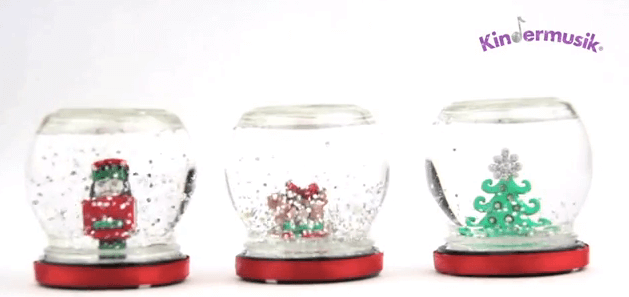
Looking for an idea to entertain the little ones this week? Let it snow globe! Let it snow globe! Let it snow globe! Gather up a few materials and your toddlers and preschoolers can create both memories and a keepsake with you.

KindermusikSnowGlobe

Post your family’s creations on the Kindermusik International Facebook page. Tag it #KindermusikSnowGlobe.

Research: Involving Parents Increases Positive Outcome for Kids Enrolled in Head Start

New research once again shows that an intentional partnership between parents and teachers positively supports children’s educational outcomes. Without a doubt, parents are a child’s first and best teacher. We know that intuitively and we hear that from early childhood experts and teachers. But, let’s face it. Parents need help. They need partners in their children’s education to best equip them in their role as teachers. They need information and they need practical ideas and tools that they can easily use in their everyday routines with their children.


Involving Parents Helps Young Children Maintain Literacy Skills

Recently, a research team recruited 200 children and parents from families enrolled in 24 Head Start programs in rural and urban Pennsylvania. The families were split into two groups. The control group received math games to play on their own. The other group received materials, such as books and learning games, and visits from “educational counselors” who provided coaching on how to use the games with their children. Those materials specifically supported the lessons from the Head Start classroom.

The children who participated in the second group showed significantly higher retention of literacy skills (vocabulary and fluency) and social skills (self-directed learning and social competence) acquired in the classroom when compared to the control group.

A Listening Game to Support Early Literacy Skills

While not a part of the Head Start study above, Kindermusik programs provide materials (games, music, books) and child development information and resources parents can use OUTSIDE the classroom to support what happens INSIDE the classroom. For example, this fun game—“Reading” the Violin”—supports children’s early literacy skills.

 Violin game

Matching sounds to a visual image is an extremely important early literacy skill. It is, in fact, the precursor skill to the alphabetic principle, or the understanding that there is a relationship between letters and sounds. Before children can explore letter-sound relationships and learn to decode words, they must first understand the connection between a sound they hear and an image they see.

This game provides kids lots of practice with associating a specific bit of audio with a specific bit of visual, and they’ll have no idea that this game is actually preparing them to read. It also supports other important early childhood cognitive competences, including:

  • Selective Attention: the ability to selectively concentrate on one aspect of the environment while ignoring distractions.
  • Auditory Working Memory: the ability to retain information that has been presented orally (e.g., listening to a target sound and then matching the sound to its image)
  • Auditory Discrimination: the ability to discriminate between similar sounds.

Did you know Kindermusik offers a program for Head Start and Early Head Start Programs that include materials and resources, like the game above, for families to use? Learn more.

7 Reasons to Give the Gift of Experiences—Like Early Childhood Music Classes!

We love music around here. Surprised? We didn’t think so. During the holiday season, you can often find us listening to favorite songs we first heard as children. (Muppets Christmas, anyone?)

Just listening to certain songs revives memories of twinkling lights, candlelight, laughter, the smell of yummy goodness baking in the oven, and the comfort of family. Each year we look forward to creating more musical memories with our friends and families. It’s no wonder that Oscar Wilde penned: “Memory is the diary we all carry about with us.”

Our childhood memories and experiences help shape who we become as adults. This holiday season why not give the gift of experiences to your child. Every child on your shopping list will love the gift of time and an individualized gift of doing something you love WITH someone you love!

Graphic_GiveTheGiftOfMusic_gift-certificate_holiday_Instagram_510x510-510x510

7 Reasons to Give the Gift Experiences to Children

  1. The memories will last a lifetime—long after a child loses interest in the latest toy or gadget.
  2. An “experience” gift can be custom-tailored to a child. Does your little one love new books? Take a trip to the library and read 20 books in one afternoon or all the picture books by the same author. Does your child sing throughout the day? Host a family karoke night and spend the evening singing and dancing together. Is your little guy or girl fascinated with the great outdoors? Camp out in the living room!
  3. You don’t need to find a spot for one more toy. (You know what we are talking about!)
  4. Your child learns the value of spending time together.
  5. No batteries or assembly required (i.e. no late nights spent putting together toys or lamenting proper sticker placement on tiny plastic cars.) Woo-hoo!
  6. It’s fun for you, too.
  7. Investing time with our kids pays off by creating heart-to-heart connections with them. As your children grow, they will begin to shift focus to peer-to-peer relationships but by teaching them the value of spending time as a family, children will RETURN the gift to you during the teen and adult years….and pass the gift on to their own children.

Of course, we would LOVE for you to give the gift of music. It’s what we do after all. However, here are 18 other ideas for “experience” gifts.

Graphic_GiveTheGiftOfMusic_holiday-icon_Pinterest_600x600Find a local Kindermusik educator to give the gift of music AND support a local small business owner.