The signs of a new era in bilingual learning

Parking signs in Tewali. Photo by Andy McCarthy UK

Ofelia García spends a lot of time sitting near the floor. The professor in the Ph.D. programs of Urban Education and of Hispanic and Luso-Brazilian Literatures and Languages at the Graduate Center of the City University of New York is there observing children who, in her words, “are learning to adapt to the rigors of multi-language communication.”

Ofelia Garcia

“The idea that children are classified (as Limited English Proficient) makes no sense. It’s based on exams and assessments that are completely arbitrary,” García says in a 2009 keynote speech to the National Association of Language Development in the Curriculum (NALDIC).

“It’s a continuum, not a category, over the course of a lifetime. If you think of them as emergent learners, you will never leave behind their languages and their cultures.”

García wrote “Bilingual Education in the 21st Century: A Global Perspective”, a massive text on the topic, and is a globally-known speaker and advocate for promoting a translanguaging, an approach to emerging English learners, where speakers switch from one language to another. It’s a bottom/up understanding of the bilingual learning process, García says, instead of top/down.

Until recently, bilingual learners in the United States were studied from a monolingual perspective. In schools, educators approached bilingual education in one of the following ways: Continue reading “The signs of a new era in bilingual learning”

Music and the Senses

Kindermusik Classes - Learning Through Music & Our Senses

Happy New Year from Kindermusik International!

What better way to start the new year than to learn through music and our senses. Are you enrolled for classes in January?

Kindermusik Classes - Learning Through Music & Our Senses“Experiences and sensations are learning.  Sensations form the base understanding from which concepts and thinking develop.  Therefore, sensory enriched environments are imperative to learning.”
(Smart Moves by Carla Hannaford)

Multi-sensory learning is like glue for the brain.  According to Carla Hannaford’s work in Smart Moves, multi-sensory learning partnered with a positive emotional experience leads to learning, reasoning, thought.  That’s a Kindermusik class!

Kindermusik Classes use Music, Movement, and our Senses!

Each week in Kindermusik class we are using your child’s senses – eyes, ears, tongue, the skin, etc. – to build a foundation of knowledge.  It has been said that learning does not occur without movement, because the brain is not taking in information from the environment. As a result, your child is moving and learning and thinking and creating new ideas.

Sensory rich environments are also considered one of three major factors that lead to competency in adulthood.  What are the other two factors? Continue reading “Music and the Senses”

10 Predictions About the Future of Digital Learning

We think it’s going to look a lot like this: what you see here in this Google Tablet video. A parent and child using a tablet like a book – to inspire imagination, not take it hostage. Like any good super hero cape or a musical instrument, with imagination and practice technology can become a conduit of learning.

Which makes this one of the most exciting times in the history of education publishing. So as we hang up our 2013 paper calendars and look forward, we have some ideas about about how a few things might unfold in this new era of digital learning. We’d love to hear what some of these ideas might inspire for you, too.

Happy New Year.

1. Someday, musicians will be physicians. Inspired by by the story of cello-prodigy turned street musician Nathaniel Ayers, classical musician Robert Gupta started a non-profit organization, Street Symphony, to bring healing and a sense of community to people suffering with mental illnesses in the streets and jails of Los Angeles. In this TEDTalks video, he talks about the non-profit organization, the various parallels between medicine and music.

2. Parents will still read print books to their children. Even as studies show improved test scores with tablets over textbooks, studies also show that children and adults can better retain information they read in books. It has something to do with “The Importance of Physical Locations and Human Memory.” Online, readers tend to scroll through information and lose a sense of “where” they read something. Whereas print readers tend to “know” information from a book better because they can remember where they read it on the page. If you’re looking for a few good print book ideas, we’d like to recommend these great books. Continue reading “10 Predictions About the Future of Digital Learning”

Lisa Jackson’s Outstanding Environmental Achievement

Last Thursday, Lisa P. Jackson announced her resignation as the administrator of the United States Environmental Protection Agency, staking a revolutionary role in environmental history. She also proved, regretfully, that the number one obstacle to successful environmental protection is opposition from an industry-backed, bipartisan government. Despite opposition from Republicans in Congress, and at times the Obama Administration, Lisa was an E.P.A. Administrator of many significant firsts, such as: Continue reading “Lisa Jackson’s Outstanding Environmental Achievement”

12 musical books for early literacy teachers and parents

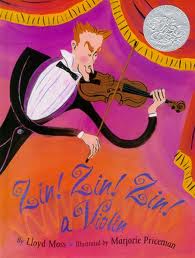
We agree with Lloyd Moss: “It’s music that we all adore.” At Kindermusik International, we love music for music’s sake and for its ability to touch the hearts, souls, and minds of young children and families. Music can support early language development, increase phonemic awareness, and even profoundly impact children with special needs.

So make a resolution to gather your children together—whether at home or in the classroom—for musical story times that will support early literacy development and their love of music! Below you will find some of our favorite musical stories, including a Caldecott Winner, Reading Rainbow selections, audio story, and even a book written by a Kindermusik educator.

12 musical books to support early literacy and language development

Preschoolers count their way to math success

Preparing children to be successful in math during elementary school begins long before that first day of Kindergarten. New research shows that both reciting and counting (assigning numerical values to objects) should be emphasized in a preschool or daycare curriculum to lay the groundwork for understanding more challenging math concepts in elementary school. In fact, the study implies that being able to count objects up to 20 in chronological order predicts success in first grade.

Preschoolers’ counting abilities and first-grade math abilities

Louis Manfra, PhD reviewed the reciting and counting abilities of 3,000 at-risk students in preschool and then later in first grade. Manfra found that the students with the highest math scores in first grade could also recite and count to 20 while in preschool. Unfortunately, less than 10 percent of the at-risk students could count and recite to 20.

“Counting gives children stronger foundations when they start school,” Manfra said in a press release. “The skills children have when they start kindergarten affect their trajectories through early elementary school; therefore, it’s important that children start with as many skills as possible.” Continue reading “Preschoolers count their way to math success”

A few of the helpers …

Parents and Kindermusik Educators share ways they found to be “people who are helping” in the aftermath of the Newtown Elementary School tragedy.

The parent: “We can’t undo this. But we can dig in and help.”
Emily Lampish

The parent, photographer and blogger turned her frustration towards finding ways to help. And she wraps up a few ways in this blog post, “broken.” Suggestions include donation links to the Newton Memorial Fund and the Connecticut United Way, tips to help children grieve, and a link to send a message of love and support to grieving families.

broken

The expert: “Using a caring and matter-of-fact face and voice, adults can help kids by making true statements that contain a positive message. ”
Irene van der Zande

In this article, Irene gives parents and educators phrases that both acknowledge the truth the work being done to keep children safe. For example, “I am sad that this happened, and we are all going to work on ways to be safe everywhere.” If a child asks a tough question, and you don’t know the answer, say “I don’t know.” The fine line is learning to help young people to express their feelings without making them take care of your feelings.

Helping Children Regain Emotional Safety

The advocate: School Shootings: The Conversation You Need to Have With Your Kids
parents.com

A list of simple questions that starts with “What have you heard?” “What are your friends saying?” and finally, “How can we help these families?”

Parents.com

The parent who needs help, right now: “I am Adam Lanza’s Mother”
Liza Long

The writer, musician, Steinway lover, and single mother of four journals the chilling challenges of raising a lovable, intelligent, and sometimes violent child.

“I am sharing this story because I am Adam Lanza’s mother. I am Dylan Klebold’s and Eric Harris’s mother. I am Jason Holmes’s mother. I am Jared Loughner’s mother. I am Seung-Hui Cho’s mother. And these boys—and their mothers—need help. In the wake of another horrific national tragedy, it’s easy to talk about guns. But it’s time to talk about mental illness.”

Thinking the Unthinkable

The Kindermusik Educator: “Music is a balm”
Helen Peterson

Kindermusik Educator Helen Peterson sent an email to her families with a few tips to help parents and their children. “Remember to take care of yourselves by being in conversation with other adults, and help those you know who may be struggling.”

mindsonmusic.kindermusik.com

And finally, a note to our Kindermusik Educators around the world who are opening their classrooms to families seeking comfort: There are more resources and information you can share with your families – or use to help yourself – posted to the Teacher’s Lounge.

Sign in to the Teacher’s Lounge

“Music is a balm, use it liberally to calm your selves, to connect with your babies, to feel safe and grounded.”

The following email was recently written by Kindermusik Educator Helen Peterson to her Kindermusik families. Her work to help underserved children in the Minneapolis community was recognized with the first Inspiring Kindermusik Educator of the Year Award. Her love for children is as inspiring as her smile, and we’re grateful to share her words with you.

It is with such a heavy heart I write tonight, after 3 days of thinking, reading, listening, trying to sort out the tragedy that befell the families of Newtown Connecticut. It is of course impossible to sort, I am sure everyone has held their babies tight, have had rushes of intense love and gratitude followed by flashes of fear and breathlessness considering the unimaginable.

My hope is that Kindermusik, the joy and bonding, the sparkle that happens here, will be a safe harbor when you feel anxious. Music is a balm, use it liberally to calm your selves, to connect with your babies, to feel safe and grounded.

Connections between very young children and their parent are so profound and strong. We know, what you feel as a parent, becomes your child’s emotion in no time at all. Outrage, heartbreak and compassion is pouring out of us, in the wake of this unimaginable act.

Remember to take care of yourselves by being in conversation with other adults, and help those you know who may be struggling.

Images are everywhere, visuals on the television in news promotions during children’s programming, auditory on the radio, in grown up conversations that children always hear. As much as possible shield them.

There is nothing like scooping up a child for a dance around the house, a clean up song, a bathtub tune, a goodnight lullaby to bring equilibrium to lighten our heavy hearts.

Here is a resource you will find helpful in talking to children about tragedy.

I know that I am grateful everyday for the JOY, LOVE and BEAUTY that I experience and witness when we are together making music and making memories.

Warmly,

Helen

Our thoughts are with all the families affected by today’s tragedy

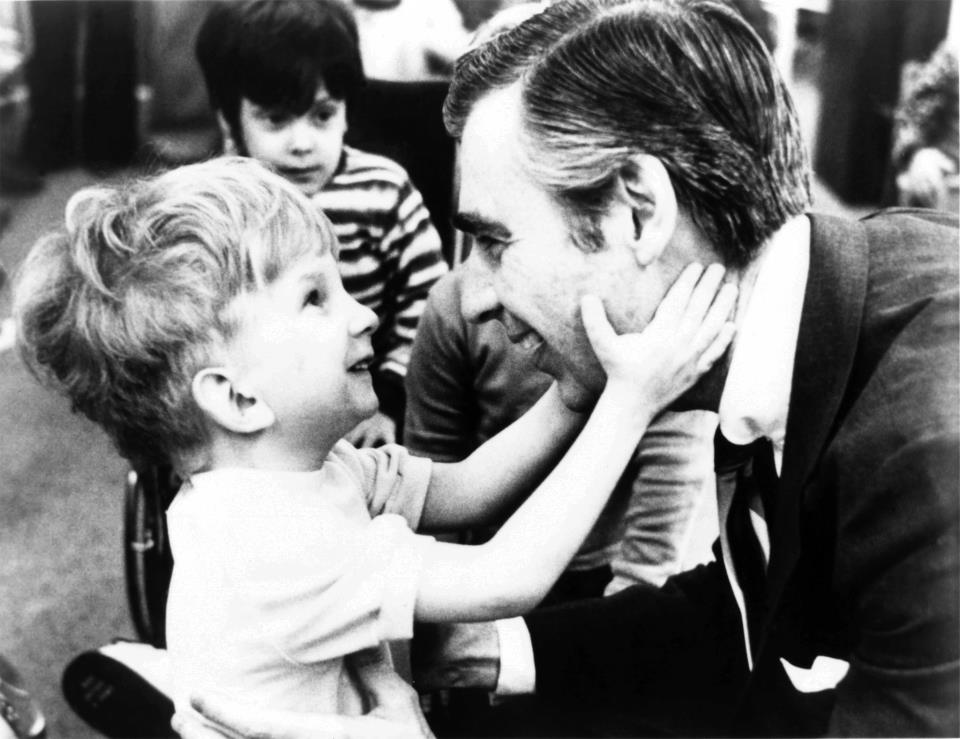
Look for the helpers

“When I was a boy and I would see scary things in the news, my mother would say to me, ‘Look for the helpers. You will always find people who are helping.’ To this day, especially in times of ‘disaster,’ I remember my mother’s words and I am always comforted by realizing that there are still so many helpers – so many caring people in this world.Mr. Rogers

How to help children grieve

“Let the children take some time to deal with their own internal questions, and their internal grief, and then they’re going to ask these questions, and ask the hard questions … and they need to. And the big one – Why? – you won’t have the answer. As much of an eloquent talker you are as a parent, it’s time to be an eloquent listener.” Bob Rider, Dean of the College of Education, Health and Human Sciences, University of Tennessee, and quoted by Gerald Witt, reporter at the Knoxville News Sentinel