Researchers, scientists, and teachers have long recognized the link between music and early math skills, but did you know the benefits are longterm, and extend to heightened performance on standardized tests and problem-solving abilities later in school?
There is nothing routine about a routine. In fact, we think routines get a bad rap. After all, people often refer to routines as being “stuck in a rut” or “same old, same old” or even boring with a capital B. However, from a child’s perspective, routines are anything but boring and can be especially beneficial during the back-to-school season.
Routines help children predict the future and feel safe and secure. Pair a routine with a ritual and children receive the added benefits of continuity and connectedness. For example, giving a child the same instruments to play with while you get a snack together each day, let’s the child know that it’s almost time to eat something yummy.
During the back-to-school periods of childhood, routines help ease children through transition periods, whether it’s adjusting to a new teacher, a new school, or even navigating through a growth spurt, which somehow always coincide with a new school year. The best time to introduce children to routines and rituals is NOW.
Turn up the music during routines and rituals and you will never use the word boring again when referring to routines! Try these tips for adding music into the back-to-school routine.
6 Ways to Add Music into the Routine and Get Kids into the Rhythm of Back-to-School
1. Wake children up or welcome them to the classroom by singing a favorite song or by listening to a playlist with songs about the morning time. “Morning Sun Has Risen” is one of our favorites. Take a listen (and look):
2. The rhythm of the morning routine naturally lends itself to a little musical play. Sing songs or chants about getting dressed, brushing teeth, eating breakfast, or even getting in the car to go to school.
3. On the drive to school, listen to music and sing along! Children will begin to look forward to this special ritual in the morning. Download this free Kindermusik road trip playlist.
4. For teachers, add music throughout the day to let children know it is time to clean up for recess, to mark the beginning of circle time, or even to get the class ready to walk down the hallway. We love how this teacher uses music to remind children how to be quiet in the hallway.
[youtube]https://www.youtube.com/watch?v=Tn-wGrhb5d4[/youtube] 5. Add music to the nightly routine to help children recognize that the day is over and it is time to settle down for bed. Make a “quiet music” playlist and start playing it right after dinner or just before bathtime. Helping children settle and fall asleep carries over into the morning routine. A well-rested child is easier to get moving than a sleepy one.
6. Reading to children 20 minutes a day makes a significant impact on their early language and literacy development. When added to the night time routine, the right book can help a child get the wiggles out or calmly relax a child. Need some reading suggestions? Add a few musical books from the Kindermusik Pinterest Board ~ Books for Kids We Loveto the nightly reading routine.
7. Sing a lullaby while tucking a child into bed to signal the end of the routine. You can even rock and sway back and forth together for a little extra cuddle!
Sign language is one of the many ways in which adults can engage babies and young toddlers on their paths to learning language. Sign language is unique because, when paired with words, it makes language learning a multisensory experience. Signing comes naturally to babies and toddlers, and it comes with a host of other benefits as well.
8 reasons why every baby should learn sign language:
Signing allows baby to engage as an active participant in the learning environment.
Using signs can reduce or eliminate baby’s frustration at not being able to communicate.
Signing makes learning to speak even easier.
Learning to sign stimulates intellectual development.
Success with signing nurtures baby’s self-esteem and self-confidence.
Since signing often requires eye contact, it helps children focus, an important skill in cultures in which children are often overloaded with various stimuli.
Signing strengthens the bond between parent and child.
Using sign language empowers parents because they know they are providing their children with an invaluable additional communication tool.
Watch as this little communicator shows off some of the impressive sign language skills he learned in Kindermusik class!
Find out more about how Kindermusik can help your baby communicate earlier and easier at www.Kindermusik.com.
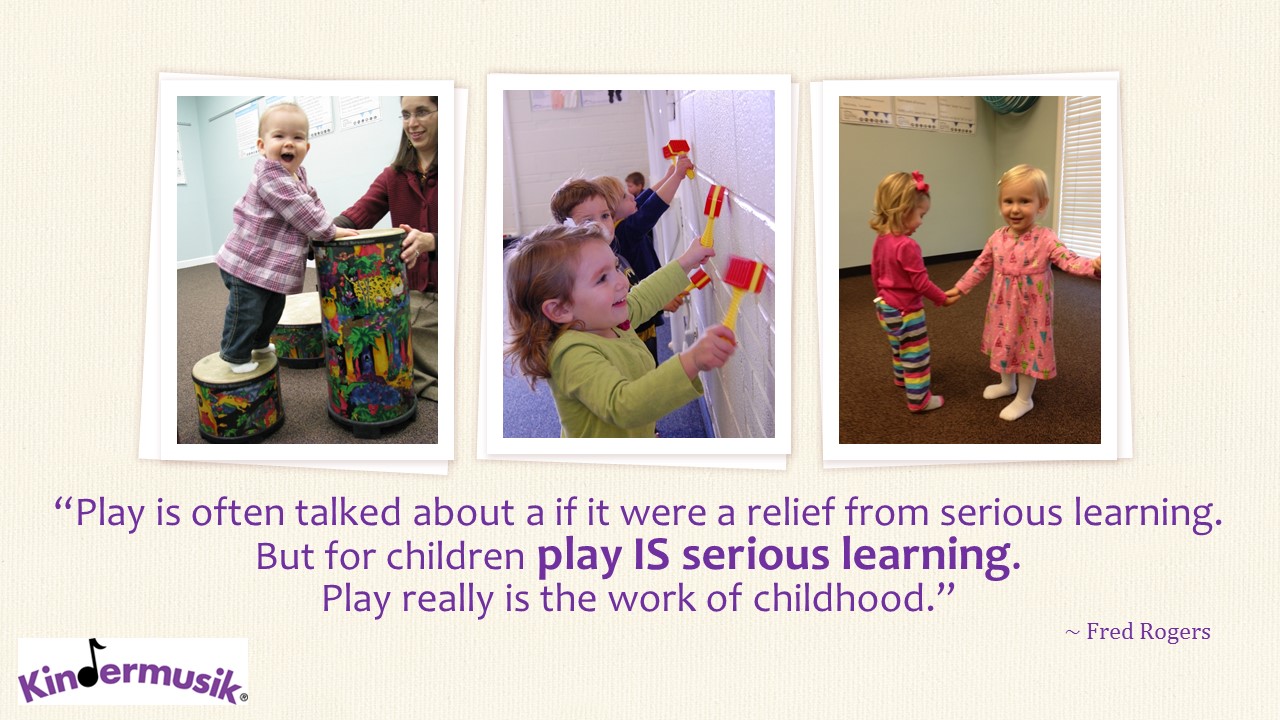
So why DO kids blur the line between work and play? Because play IS their work! Play is the most important activity of early childhood. So even when it looks like a child is “just” playing, there’s really some serious learning and developing happening as a result of the play.
Music and movement activities are perfect for inspiring a child’s play, not just in Kindermusik class but also at home, because musical activites:
encourage children to think creatively and “out of the box”
give children many opportunities for open-ended exploration
use usual objects in unusual ways (i.e., a plastic hair curler that becomes a pull toy)
invite children to use their imaginations
stimulate expressive skills
incorporate pretend play
Children will engage in play in different ways at their different stages of development. Here’s a quick overview so that you know what to expect as you observe your child at play.
Shared by Theresa Case who has an award-winning Kindermusik program at Piano Central Studios in beautiful upstate South Carolina.
The steady diet beat of “Pizza, Pickle, Pumpernickel” helps children learn how to read. Of course, we are talking about the children’s nursery rhyme, not the food! Being able to move the entire body to a steady beat contributes to the ability to speak and read fluidly. In fact, children who can keep a steady beat independently score higher on reading assessments.
In this lap bounce version from Kindermusik@Home, even the youngest children can experience steady beat throughout their entire bodies. The more children experience steady beat with the help of a grown-up, the more likely they will be able to keep a steady beat independently. This steady beat activity works for older children, too. Try clapping hands to the beat or bouncing a favorite stuffed animal. As an added bonus to this music activity for kids, fingerplays improve and advance memory and language skills by linking motions to words.
The pressure to establish strong pre-readers can be overwhelming. Early literacy development (the foundations needed for reading and writing) depends greatly on auditory processing skills, which includes auditory identification, discrimination, and sequencing. It’s hard to imagine the time it would take to focus on all of those skill sets individually. But there’s a one-stop-shop.
Music changes us. Of course, we know that music can move us to tears, conjure up (and make) memories, or even quiet a child’s cries. However, music also literally changes our brains!
A new presentation from neuroscientist Nina Kraus at the American Psychological Association’s 122nd Annual Convention displays some of the strongest research to-date proving how music changes the brains of children who are most at risk.
The Science Behind Music’s Impact on Learning
At the convention, Kraus shared her research findings that indicate learning to play a musical instrument or to sing can help disadvantaged children strengthen their reading and language skills by improving the way their nervous systems process sounds in a busy environment, such as a classroom. The boost to the neural function can lead to improved memory and longer attention spans, which help children focus better in school and improve communication skills.
“Research has shown that there are differences in the brains of children raised in impoverished environments that affect their ability to learn,” Kraus explained in a press release about her research study, Biological, Behavioral, and Academic Impact of Musical Training in At-Risk Children. “While more affluent students do better in school than children from lower income backgrounds, we are finding that musical training can alter the nervous system to create a better learnerand help offset this academic gap.”
See, music changes our brains!
Kraus’ partner at The Harmony Project is Margaret Martin, DrPH, MPH. She started The Harmony Project in 2001 to serve children of poverty in areas with school dropout rates above 50 percent. To help prove that music improves language and literacy abilities of children, she enlisted the help of Kraus. And, what a great partnership for all music educators!
“Early sustained music learning is actually the frame upon which education itself can be built for low income kids,” Martin explained in this PBSNewsHour segment:
[youtube]https://www.youtube.com/watch?v=AZHg8dr6gf0#t=18[/youtube]
Musical training in early childhood
In Kindermusik early childhood classes for children from newborn through age 7, we intentionally use music as the vehicle for learning. So naturally, we get excited when research proves that musical activities really do have a positive impact on the way children learn.
Kindermusik supports all areas of development including—musical, language, emotional, physical, social, and cognitive development. When children actively participate in musical experiences, they engage their whole brain in the process. Here are just four areas andexamples of how Kindermusik programs use music (and movement) to support a young child’s development:
Communication Skills: When we recite a rhyme about shaking an apple tree then shake our bodies in the same way or sing “Head, Shoulders, Knees & Toes” and move our bodies to touch our heads, shoulders, etc., children develop a vocabulary and understanding of these concepts, even in infancy…by seeing, hearing, and doing.
Listening Skills: By focusing intently on one sound, such as the beat of a drum, Kindermusik class in Zimbabwe teaches children through music.
children practice the skills of attention and engaged listening. Encouraging children to imitate the sound and discussing the sound increases comprehension and learning.
Memory: Young children move to learn and learn to move. We specifically include lots of movement in our classes, which stimulates the release of chemicals in children’s brains that support memory and learning. So, when we dance a jig or hop like a frog children get the wiggles out….and keep the learning in!
Comprehension: Engaging in language and literacy-rich musical activities that incorporate movement such as tapping the steady beat to a nursery rhyme correspond to greater comprehension.
Once upon a time, an educator who loved music moved from Milan, Italy, to bring the joy of learning English through music to children in a land faraway. Around the same time, an enchanting place called Monte Carlo Munchkins Club opened its doors to welcome children during their most formative years. As in any great fairytale, the two were destined to meet.
On the way to happily ever after
And, so begins the magical journey of Kindermusik educator Alina Botezatu, who explains in her own words how teaching children is changing her life and theirs! “I love Kindermusik and seeing how the little curious minds assimilate information like sponges. It took some time to win the children’s trust, but now, as soon as they see me, they hug me and are excited about joining the class. This is such a wonderful feeling for a teacher. “I’ve only been living in Monte Carlo and teaching Kindermusik at the Munchkins Club for a few months but I can already see the children’s progress in so many ways, including:
They learn new English words faster.
They sing many of the songs with me.
They dance and move their bodies in a more balanced way.
They know the stories we read together.
They have better concentration and listening abilities.
They are happy to take turns sharing instruments and helping each other and me during the class.
“It is always a lot of fun to sing and dance together. I’d like to thank my mentor, Laura D’Abbondanza Berryman, for all her invaluable support and my cute friends—the puppets—that make the children laugh and have fun during the lessons!” Of course, what fairytale is complete without a princess? Alina’s story includes Princess Charlene of Monaco, who visited the Munchkins Club to show her support for early childhood education.
We love happy endings. And, with Kindermusik, it is a good beginning with a happy ending that never ends!
Young children love music, dancing, painting, playing, and other creative ways to express themselves and make sense of the world around them. However, as if those reasons weren’t enough to include things like art and music in early childhood education, research indicates that the arts, including music education for kids, significantly impacts cognitive development, increases self-esteem, and actively engages everyone in learning—children, parents, and teachers!
We believe that music is the best vehicle for early childhood learning. We want to empower our Educators, parents, and teachers to instill a lifelong love of music and learning in their children.
4 Reasons to Include the Arts in Early Childhood Education
The creative arts engage children through multi-sensory learning.
Children thrive on (and naturally respond to!) multi-sensory learning opportunities, such as music and the visual arts. Each of our five senses (sight, smell, sound, touch, taste) activates specific neurons in the brain. For young children, multi-sensory activities provide more learning opportunities than single-sensory activities because more of the brain becomes involved in the lesson. For example in a music class, children experience multi-sensory learning when they listen to and imitate animal sounds vocally or with an instrument, see the animals in the story, and then move around like them. Art activities can bring in the sense of smell and taste through edible art works, such as creating rainbows out of colored cereal or even using edible finger paints for the youngest learners. Plus, experiences that integrate several senses simultaneously are responsible for lasting impressions and greater retention.
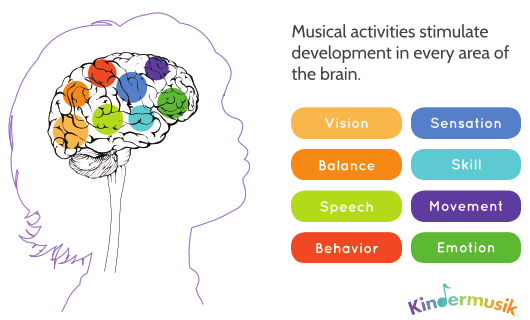
Musical activities stimulate development in every area of the brain.
While multi-sensory learning engages children and provides greater retention, music education for children—in particular—provides research-proven cognitive benefits. Incorporating music and movement into a child’s learning routine stimulates all areas of the brain, including: vision, balance, hearing, speech, behavior, sensation, cognition, movement, and emotion. Take a look at the mental benefits of playing music: [youtube]https://www.youtube.com/watch?v=R0JKCYZ8hng#t=76[/youtube]
Art and music classes teach children to love learning and school.
Teachers and parents agree. We all want children to love learning and school. After all, it makes those early morning wake-up calls and afternoon lunch slumps a little bit easier. When asked: “What was your favorite thing about school today,” art and music consistently rank high on the list for young children. Why? It’s fun! As children grow beyond the early years, they carry that love of learning and school into the upper elementary years and beyond. Plus, the lessons learned in music classes can be applied throughout the day. Children who actively participate in playing music together learn teamwork, sharing, listening to and incorporating the ideas of others–and in turn learning the value of their own ideas, too! Plus, musical activities can help children learn self-regulation, the ability to regulate thoughts, feelings, and actions. All together, these skills translate into being ready to learn and success in school.
Grown-ups love the arts, too.
While we spend much time thinking about children in early childhood education (of course!), the grown-ups remain equally important. After all, children can tell when educators enjoy teaching. When teachers laugh and smile during the lesson, they model for students that learning is fun…and it is! For parents, the arts provide an easy way to support children’s education and get actively involved. This could mean listening intently as a child explains the colors of the rainbow on a painting brought home from school and then finding the perfect spot on the refrigerator to hang it. Or it can mean singing and dancing to the songs from music class or pretending to be favorite characters in the book from circle time.
Music In the Classroom
In our Preschool curriculum (ABC Music & Me supplemental curriculum for ages birth to early elementary), children and teachers sing and play instruments, participate in dance and creative movement activities, engage in vocal and pretend play, and receive all of the benefits of the creative arts. Plus, teachers and parents love Kindermusik. It’s easy to use with minimal planning and intentionally provides a method for teachers to participate, notice, and observe the class. Teachers can just pop in the hosted audio and a trained Kindermusik educator comes alive in their classroom through the guided activities.
ABC Music & Me brings the learning home with materials that provide a peek into the classroom with “teachable moment” extensions and favorite songs, stories, and activities from class.
A music class really wouldn’t be a music class without instruments, but the benefits of instrument play extend far beyond the obvious musical benefits. Here are a few surprising ways in which instrument play supports six core strengths that are essential for all children to develop.

 There is nothing routine about a routine. In fact, we think routines get a bad rap. After all, people often refer to routines as being “stuck in a rut” or “same old, same old” or even boring with a capital B. However, from a child’s perspective, routines are anything but boring and can be especially beneficial during the back-to-school season.



 The steady
 Music changes us. Of course, we know that music can move us to tears, conjure up (and make) memories, or even quiet a child’s cries. However, music also literally changes our brains!
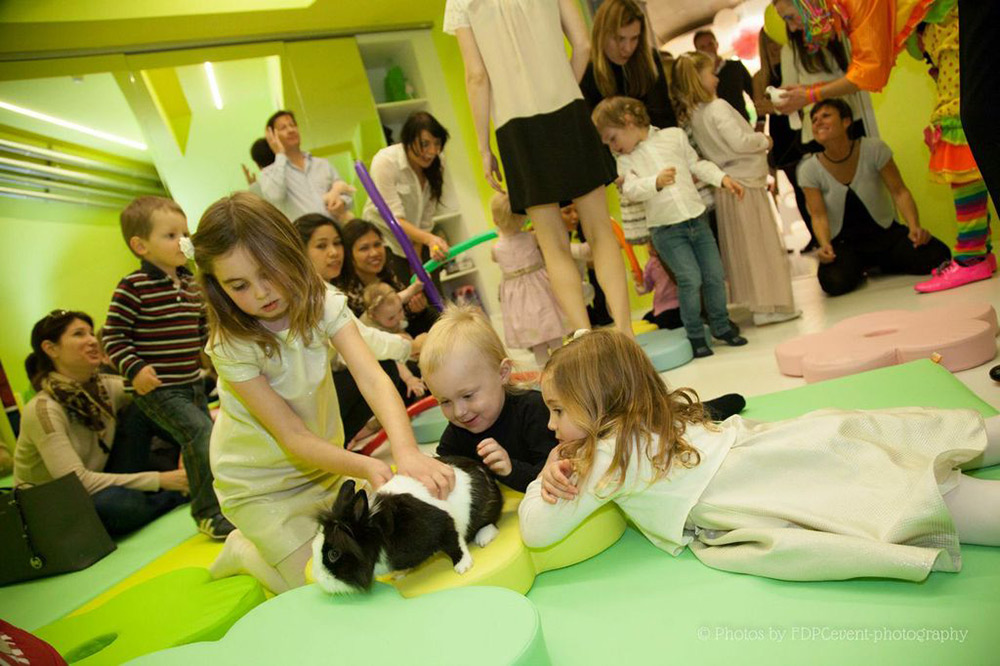
 Once upon a time, an educator who loved music moved from Milan, Italy, to bring the joy of learning English through music to children in a land faraway. Around the same time, an enchanting place called
  “I’ve only been living in Monte Carlo and teaching Kindermusik at the Munchkins Club for a few months but I can already see the children’s progress in so many ways, including:
 Of course, what fairytale is complete without a princess? Alina’s story includes Princess Charlene of Monaco, who visited the Munchkins Club to show her support for early childhood education.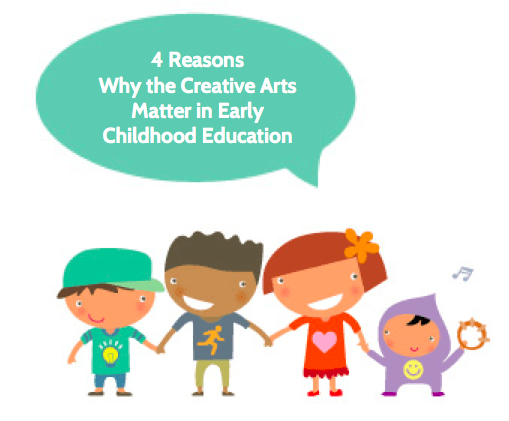
 Young children love music, dancing, painting, playing, and other creative ways to express themselves and make sense of the world around them. However, as if those reasons weren’t enough to include things like art and music in early childhood education, research indicates that the arts, including music education for kids, significantly impacts cognitive development, increases self-esteem, and actively engages everyone in learning—children, parents, and teachers!
 Children thrive on (and naturally respond to!) multi-sensory learning opportunities, such as music and the visual arts. Each of our five senses (sight, smell, sound, touch, taste) activates specific neurons in the brain. For young children, multi-sensory activities provide more learning opportunities than single-sensory activities because more of the brain becomes involved in the lesson. For example in a music class, children experience multi-sensory learning when they listen to and imitate animal sounds vocally or with an instrument, see the animals in the story, and then move around like them. Art activities can bring in the sense of smell and taste through edible art works, such as creating rainbows out of colored cereal or even using edible finger paints for the youngest learners. Plus, experiences that integrate several senses simultaneously are responsible for lasting impressions and greater retention.
 This could mean listening intently as a child explains the colors of the rainbow on a painting brought home from school and then finding the perfect spot on the refrigerator to hang it. Or it can mean singing and dancing to the songs from music class or pretending to be favorite characters in the book from circle time.
![KindermusikPresents_ABCMusicAndMe_AGlobalEarlyChildhoodCurriculum[1]](https://media2.kindermusik.com/website/sites/2/2014/05/KindermusikPresents_ABCMusicAndMe_AGlobalEarlyChildhoodCurriculum1-300x167.png) Plus, teachers and parents love Kindermusik. It’s easy to use with minimal planning and intentionally provides a method for teachers to participate, notice, and observe the class. Teachers can just pop in the hosted audio and a trained Kindermusik educator comes alive in their classroom through the guided activities.
Plus, teachers and parents love Kindermusik. It’s easy to use with minimal planning and intentionally provides a method for teachers to participate, notice, and observe the class. Teachers can just pop in the hosted audio and a trained Kindermusik educator comes alive in their classroom through the guided activities.
