
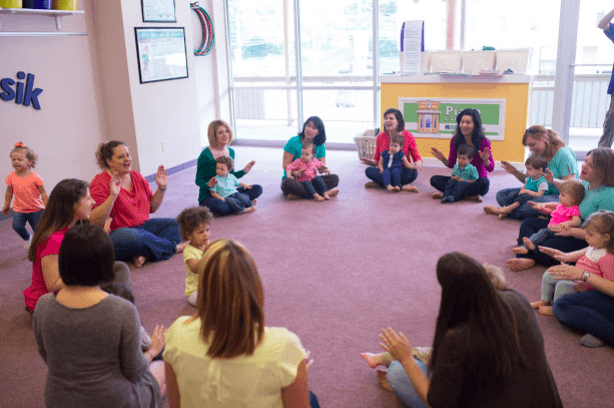
Sound First – Symbol Second

Music and reading

[vc_row][vc_column][vc_column_text]It’s how we acquire any language – sound first – symbol second. We learn to speak before we learn to read. Music is the same way – we mimic what we hear before we can read it on the page. We learn by rote before we learn through understanding. Our last post talked about music’s positive impact on language learning. Well…music also has a positive impact on reading skill. Dr. Boyle explores the latest research on music and reading.[/vc_column_text][vc_separator][/vc_column][/vc_row][vc_row][vc_column][vc_column_text]Think about your musical experiences as a child. Whether you realized it or not, you learned new words through music. In my main profession as a choral conductor, I learn new words through music regularly; poetry drives what I do. I keep a dictionary right by my piano so I am able to look up words I don’t know as I come across them. I am grateful for this extra gift music gives me.

We have shared research many times that point toward music’s role in increasing cognitive skills in children. Cognition, the ability to form and process memory, learn new information, also includes understanding written information. Music is about patterns, particularly music to which young children are often exposed. Lots of repetition is found in this type of music, and regularly singing this music helps kids recognize patterns elsewhere.[/vc_column_text][/vc_column][/vc_row][vc_row][vc_column][vc_column_text]

Research on Music and Reading

Studies conducted at the University of Toronto and Johns Hopkins have supported the concept that participation in musical activities increases cognitive skill. Drs. Nina Kraus and Samira Anderson of Northwestern University produced a study that indicated the ability to keep a steady beat related to reading readiness. In the study, subjects were separated through assessment into two groups: those who could keep a study beat (synchronizers) and those who found it challenging (non-synchronizers).

“The synchronizers also had higher pre-reading skills (phonological
processing, auditory short-term memory, and rapid
naming) compared with non-synchronizers. Overall, the results
supported the idea that accurate temporal processing is
important for developing the foundational skills needed in order
to learn how to read.”

– Beat-Keeping Ability Relates to Reading Readiness/Kraus and Anderson

[/vc_column_text][/vc_column][/vc_row][vc_row][vc_column][vc_column_text]

What does this mean?

Developing musical skills early has a positive impact on reading ability. The reality is this: those non-synchronizers? It is completely possible to improve their rhythmic ability through regular musical activity. This then has a clear effect on cognitive skill and all that that encompasses.[/vc_column_text][/vc_column][/vc_row][vc_row][vc_column][vc_column_text]

When is the right time to start?

Now! Start now! Get those kids involved in musical activities – and Kindermusik is a perfect place to start. In a recent articleDr. Robert A. Cutietta, Dean of the USC Thorton School of Music, lays it out plainly:

“There is a growing (and convincing) body of research that indicates a “window of opportunity” from birth to age nine for developing a musical sensibility within children. During this time, the mental structures and mechanisms associated with processing and understanding music are in the prime stages of development, making it of utmost importance to expose children in this age range to music.”

PBS Parents/Robert A. Cutietta

[/vc_column_text][/vc_column][/vc_row][vc_row][vc_column][vc_column_text]From birth to age nine! Don’t wait. Get them involved as soon as you feel comfortable doing so and your son or daughter will reap a host of benefits from their involvement, setting the stage for a lifetime of musical appreciation. Not everyone will go on to be the principal violinist of the New York Phil, or sing at Lollapalooza, but the stronger the musical foundation a child has, the more enjoyment will be found in the vast world of music.[/vc_column_text][/vc_column][/vc_row][vc_row][vc_column][class_finder_form css=”.vc_custom_1469711353415{padding-top: 20px !important;padding-right: 20px !important;padding-bottom: 20px !important;padding-left: 20px !important;}”][/vc_column][/vc_row]
Science Center Stage: Music May Boost Language Learning in Babies

Language Learning

[vc_row][vc_column][vc_column_text]In our regular science feature, Science Center Stage, Dr. Boyle explores music’s role in boosting language acquisition in infants. [/vc_column_text][/vc_column][/vc_row][vc_row][vc_column][vc_column_text]That first word! Parents wait for it and when it comes the world knows. We rush to Facebook and every other social media platform to share the news. I remember really reaching with our first. I stretched every sound out of that kid’s mouth into crazy multisyllabic words.

“I think he just said onomatopoeia!”

My wife was always the voice of reason.

“That was a burp, dear.”[/vc_column_text][/vc_column][/vc_row][vc_row][vc_column][vc_column_text]Now, here’s the reality: our kids aren’t going to spout of titles of Dickens’s novels at nine months, but regular exposure to music early in life may have a positive impact on language acquisition. A recent study conducted at the University of Washington found that routine play sessions involving music had a positive impact on both music processing and recognizing new speech sounds.


“Our study is the first in young babies to suggest that experiencing a rhythmic pattern in music can also improve the ability to detect and make predictions about rhythmic patterns in speech,” said lead author Christina Zhao, a postdoctoral researcher at I-LABS.

“This means that early, engaging musical experiences can have a more global effect on cognitive skills,” Zhao said.

UW Today/Molly McAElroy

[/vc_column_text][vc_video link=”https://www.youtube.com/watch?v=whzxMNvHBD4&feature=youtu.be”][/vc_column][/vc_row][vc_row][vc_column][vc_column_text]Other academics have chimed in on the study. Dr. Deanna Hanson-Abromeit, Assistant Professor of Music Education and Music Therapy at the University of Kansas School of Music feels music classes are key to development.


“Music classes can be beneficial for parents and infants…These classes can build community and provide resources to parents to teach songs and music-based experiences to build comfort in using music within the home and everyday life.”

HealthDay/Randy Dotinga

[/vc_column_text][/vc_column][/vc_row][vc_row][vc_column][vc_column_text]It doesn’t stop in infancy. A five year study at the Brain and Creativity Institute of the University of Southern California produced results that mirrored the UW study.

“The researchers began following 45 children, all from economically disadvantaged, bilingual households (most are Latino, one is Korean) in Southern California, starting when the children were 6 and 7. The initial group was split into three: One set of 13 students is receiving music instruction through the Youth Orchestra of Los Angeles, one group is playing soccer, and another is involved in no particular after-school activity…

Two years in, the students in the music group were more able to identify differences in musical pitch on a piano than other students. The brain scans also showed that these students had more-developed auditory pathways than their peers.

The authors write that this development in auditory processing also affects students’ ability to process speech and language—which means it could have an impact on students’ academic progress as well as their musical abilities.”

Education Week/Jackie Zubrzycki

[/vc_column_text][/vc_column][/vc_row][vc_row][vc_column][vc_column_text]It’s very difficult to ignore this science, friends. Two separate studies indicate that exposing children of all ages to music has a positive impact on language acquisition and development. The key in both of these studies is regular participation in structured musical activities. So get them out there! And get them out there early. Remember, we have classes for kids starting from birth! When you’re ready, we’re here for you. [/vc_column_text][class_finder_form css=”.vc_custom_1469449348470{padding-top: 20px !important;padding-right: 20px !important;padding-bottom: 20px !important;padding-left: 20px !important;}”][/vc_column][/vc_row]
Apathy vs. Empathy: Creating Compassionate Kids

Brain

I remember when our first child was born; I lectured my in-laws about screen time for our son. “We don’t want him in front of the TV at all.”

It was a lofty goal, but one we quickly failed to achieve.

We purchased just about every Baby Einstein video known to humankind. Our son loved them. I can actually remember his face light up, big smiles and bouncing in his little activity center seat. He’d always cry when the “static ball” scene appeared. 

Jane Tavyev Asher, MD Child Neurologist, shares advice for parents on what the appropriate amount of screen time is for children depending on their developmental stage.

How many of us have tried to limit screen time, only to cave and allow a bit more than we originally intended? And when it comes to screen time, things have become even more complicated with the rise of personal screens.

Small screens like smartphones and tablets can be incredible tools, but they can also have an impact on how our kids learn to interact with the world.

A recent study conducted at the University of California, Los Angeles, took two groups of 6th graders – the first attended a nature and science camp that did not allow electronic devices (I’m not sure I could survive!). The second group stayed home.

At the beginning and end of the study, both groups of students were evaluated for their ability to recognize other people’s emotions in photos and videos. The students were shown 48 pictures of faces that were happy, sad, angry or scared, and asked to identify their feelings.

They also watched videos of actors interacting with one another and were instructed to describe the characters’ emotions. In one scene, students take a test and submit it to their teacher; one of the students is confident and excited, the other is anxious. In another scene, one student is saddened after being excluded from a conversation.

The children who had been at the camp improved significantly over the five days in their ability to read facial emotions and other nonverbal cues to emotion, compared with the students who continued to use their media devices.

Stuart Wolpert/UCLA Newsroom

The researchers concluded what we already know: kids can’t develop empathy staring at an electronic screen. They require human interaction for this important point of growth. When empathy is absent, apathy can fill that void.

Purposeful Interaction

Okay – so we limit screen time. But how can we build compassionate kids? How can we help create a framework for empathy? The answer: purposeful interaction. 

  • Take time to identify emotions in others.

Ask your child questions when you see a good emotional example. “How do you think she feels?” “Is that man sad or happy?” Come up with stories to explain why a person might be smiling. Helping a child pick up on visual cues will establish a foundation.

  • Set the example.

You will be your child’s first and best teacher. The sun will rise and set in your eyes. We all know that what we model, our children will copy. If your child sees you demonstrating empathy on a regular basis, she will follow suit. Dr. Robyn Silverman, a child development specialist, provides the following suggestions on modeling compassion:

  1. Show compassion for other family members.
  2. Show compassion for animals.
  3. Show compassion for playmates.
  • Let your child know you recognize his emotions.

Acknowledging that you are sensitive to your child’s emotional state and talking about it helps develop his ability to process emotions. In turn, he’ll be able to better understand emotions in others. Vanderbilt University provides a wonderful article on this very topic.

As we have mentioned in the past, one of the best ways to aid the development of emotional awareness and empathy is through regular interaction with other children and caring adults.

You know where I’m going, right? You can’t blame me – the Kindermusik curricula, the studio experiences and Kindermusik  for Schools, were built from the ground up with this in mind.

Among the host of benefits of regular group musical instruction is increased social and emotional development. And that, friends, is a great way to build compassionate kids…kids that are sensitive to the needs of others and possess the ability to express their own emotions in a healthy manner. And I bet we can all agree – the world is a better place when compassion and empathy are present.


Interested in a Kindermusik Class? Find a virtual or in-person session near you! 

ADHD – An Adult Perspective on the Journey

ADHD

[vc_row][vc_column][vc_column_text]According to a 2011 report from the Center for Disease Control, the rate of ADHD diagnoses was 11% in children ages 4 to 17. When I was that age the diagnosis rate was about 3% – 5%. If you want to do the math, I’m 43. Recommendations on how to treat the disorder have changed over the years, and we’ll get to that. But first, I wanted to share my experience, as someone who has dealt with Attention Deficit Disorder his entire life. [/vc_column_text][vc_column_text]I always had attention issues. Growing up, the only places these issues didn’t plague me were music class, choir, and band. Everywhere else, I had all the classic symptoms: loss of time, easily distracted, constant talking, and the strangest for me – hyperfocus. Hyperfocus manifested itself quite strongly, and I didn’t know what to call it or how to talk about it until years later. When I had moments of hyperfocus, the world around me seemingly slowed down, my heart felt like it was racing, and my periphery narrowed.[/vc_column_text][/vc_column][/vc_row][vc_row][vc_column][vc_column_text]I was never diagnosed as a child. It was my wife, a public school music teacher, who first suggested that I have myself screened. She witnessed many moments of distraction, loss of focus, and even hyperfocus, which seems counterintuitive to the name of the disorder and its other symptoms. Throughout my undergrad and masters degrees, I was able to use various coping mechanisms in class to overcome ADHD challenges. I’d sit in the front row, constantly ask questions, and borrow friends’ notes, take them home, and retype them. All of this worked until I started my doctoral studies. I finally caved and sought help.

ADHD
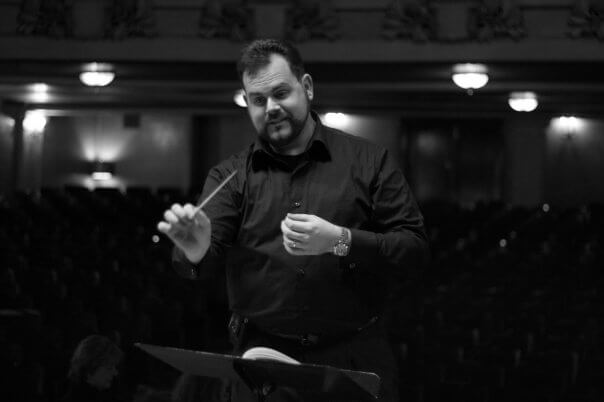
Dr. Boyle speaking to an audience at a recent concert

I’ve often been asked what ADHD (I never experienced the “H” part) felt like. This was my best description: if a thought started at the back of my head, and found completion as it moved to the front of my head, I felt like there was a bundle of straws going in every direction between the back and the front, preventing the thought from making the journey efficiently. In my case, I was diagnosed at age 36, and my doctor and I decided to try a medication. The first day taking the meds I went to the library. It was as if all those straws were lined up in perfect parallel. Those thoughts that were getting lost? They now had a clear path from onset to realization. In the past, I’d get a few pages of notes after a three hour visit to the library. That day? I took 35 pages of well organized notes that stuck in my head in perfect order.

This was the right choice for me. I don’t need to take the medication every day, only when I need it. That usually is when I need to do in-depth, complex reading.

My wife calls them my “do the dishes” pills. She says I notice things that need to be taken care of much more readily if I have taken one on a given day. [/vc_column_text][/vc_column][/vc_row][vc_row][vc_column][vc_column_text]

Current CDC Recommendations

The CDC now recommends behavior therapy as the first line of treatment in young children. It is beneficial for parents with children who have been diagnosed to learn as much about ADHD and to go through parent training in behavior therapy. The CDC states:

“Children who have ADHD act in ways that are often challenging for parents. Children may forget things they are told, be overly active, and act before thinking. They might not be able to get positive attention the way that other children can; they tend to misbehave and might be punished more frequently than other children. Even if children with ADHD really try to follow rules, they might not be able to. This can have a negative impact on their self-image, and cause them to give up trying or to act up more often.

A therapist skilled in behavior management can help parents understand how ADHD affects their child. Parent training in behavior therapy is used to help change problem behaviors by building parenting skills, improving the relationship between parents and their child with ADHD, and helping children manage their own behaviors.[/vc_column_text][/vc_column][/vc_row][vc_row][vc_column][vc_column_text]

Music and ADHD

But what about music? This is, after all, a music education blog! Well, a recent ADDitude article, the online magazine offering strategies and support for the ADHD community, provided the following:

Music strengthens the areas of the brain that, in the child with ADHD, are weak. Music builds and strengthens the auditory, visual/spatial, and motor cortices of the brain. These areas are tied to speech and language, reading, reading comprehension, math, problem solving, brain organization, focusing, concentration, and attention issues. Studies indicate that when…children with ADHD learn a musical instrument, attention, concentration, impulse control, social functioning, self-esteem, self-expression, motivation, and memory improve. Some studies show that children who have difficulty focusing when there is background noise are particularly helped by music lessons.”

It makes good sense that these experiences start at an early age. And research supports that. Get them involved from birth. The impact music has on the brain is tremendous.
[/vc_column_text][/vc_column][/vc_row][vc_row][vc_column][vc_column_text]Sharlene Habernyer, the author of the above referenced ADDitude article, provides a list of strategies she used with her son, Brandon, a child diagnosed with ADHD. Here are some of them:

  • Start group music lessons. When he is about 18 months old, find a group music program for your child.
  • Dance to the music. Movement for an ADHD child is a must! In fact, movement is an indispensable part of learning, thinking, and focusing. As a child moves to different cadences and rhythms, his physical coordination and ability to concentrate improve.
  • Draw what you hear. Many ADHD children are creative and in search of creative outlets. Drawing or doodling engages motor skills, organizes the brain, and stimulates artistic juices. After a busy day at school, and before your child jumps into homework, give her paper and crayons, put on some classical music, and let her draw.
  • Read music books. I’m a strong advocate of reading to your children every day. Reading builds focus, concentration, vocabulary, speech and language, and writing skills. I read many books to our sons, some of which were associated with music: Swine Lake, by James Marshall (a great book to introduce your kids to the ballet Swan Lake), and Lentil, by Robert McCloskey.
  • Start private music lessons between the ages of five and seven. If you are a parent with ADHD, take music lessons along with your child.
  • March in the morning. Children with ADHD usually have a hard time attending to tasks during the busy morning hours. Every morning, play marching music (John Philip Sousa tunes are great) and march from activity to activity — getting dressed, making beds, eating breakfast, brushing teeth — with feet moving and arms swaying.
  • Sing your way to school. Teachers want students to be ready to learn when they come to class. So, on your way to school, sing in the car or play classical music.

So…what are you waiting for? Kindermusik provides experiences that benefit every child. And the more you are involved, the better! [/vc_column_text][/vc_column][/vc_row]

Educator Spotlight: Shirley Boening

Educator Spotlight

[vc_row][vc_column][vc_column_text]Theresa Case interviews Shirley Boening, Kindermusik Educator from College Station, Texas.[/vc_column_text][vc_separator][vc_column_text]TC: How long have you been teaching Kindermusik?
SB: We first opened our business in 1989, so it’s been 27 years this past May that I’ve been running my Kindermusik business and teaching.

TC: What do your Kindermusik kids call you?
SB: Mrs. Shirley

TC: What’s your favorite part of teaching Kindermusik?
SB: My favorite part of teaching Kindermusik is knowing that what I am teaching is changing lives. I am making a difference in children’s physical, cognitive, emotional, and musical lives. That’s a pretty heady thought.

TC: What’s your favorite Kindermusik song to sing?
SB: Oh, my, there are so many! I love “Morning Song”. I always have so much fun with pictures of animals and puppets when singing this with my classes. I love “Walk Along Rover”. There are just too many to name. I especially love the rocking songs “Skye Boat Song”, “The Water is Wide” and most of all,“Turtle Dove”. Listening to these always makes me a bit teary eyed while watching the lovely bonding time happening between the parents and children.[/vc_column_text][vc_video link=”https://youtu.be/Rp1ZU-V1WgA”][/vc_column][/vc_row][vc_row][vc_column][vc_column_text]TC: What’s your favorite Kindermusik dance to lead?
SB: I love all the many Cuddle & Bounce dances, and the parents love them, too. With the Wiggle & Grow crowd I love “Jing Jang”. And in Young Child, dancing to “Old Lady No Nose” and “Heel and Toe Polka” never gets old. So fun!

TC: What’s the funniest OR most touching thing that’s ever happened to you as a Kindermusik teacher?
SB: The most recent funny happening is that one morning I was so preoccupied with thinking about the studio and what I had to do that day that I showed up for class wearing unmatched shoes! Didn’t notice until class time when I looked down at my feet while slipping off my shoes. Thank goodness we wear socks in class!

TC: Describe a teaching experience or favorite Kindermusik family that has impacted you as a teacher. SB: All of the families who have come through our doors have shaped the teacher I am today. And, I am constantly impacted by the children and parents we serve. The children and families have given me so much through the years and it is very humbling.

TC: What makes Kindermusik of College Station – Bryan such a special place?
SB: Our Values. We strive to make every child and every parent who enters our studio feel welcomed and special. And, we create a joyful community in which we nurture each child’s love of music through a creative, warm atmosphere. Our ultimate goal for our students is to give them a quality musical foundation, and to inspire within them a lifelong love of music.

[/vc_column_text][/vc_column][/vc_row][vc_row][vc_column][vc_column_text]TC: If you had to name just one secret to success in the Kindermusik classroom, what would it be?

SB: Be prepared 150% ! If overly prepared, one can handle the curve balls that inevitably come one’s way in class. The words can go on automatic pilot while thinking about how to connect with a parent or child; how to change the lesson plan to accommodate the runner, the child who has just burst into tears, or the late-comer; or how to adjust the next activity because you intuitively know how it was planned is not going to work with this particular group today. Preparedness gives flexibility to teach the class with success.

TC: What do you feel has made your studio business a success?
SB: An absolute passion in bringing the best Kindermusik experience possible to every child and every parent who walks through our door. In addition, I have always been very fortunate to have a strong team on board. I am particularly indebted to a dear friend, Chris Borchardt, who has taught with me for the past 21 years and who has been very instrumental in helping make the studio a success.

TC: What are some of the goals you have for your business?
SB: My short term goal is to increase our numbers and to hire an administrative assistant to allow me to have more time to work on the business in ways I never seem to have enough time for. Long term goals are to position the studio so that I will be able to cut back on administrative and teaching duties and to eventually sell the studio in the future when the time is right.

TC: What’s something new and exciting that’s happening with your business?
SB: Having a business coach. After reading Facebook posts about Chantelle Bruinsma Duffield’s Studio Expansion Program last year, watching her webinars for Kindermusik educators, and seeing her in action last October at the Maestro Conference, I decided to join The Studio Expansion Program. Once I delved into the SEP a bit, I knew that I needed to sign up for Studio Squared in order to have more one on one time with Chantelle if my team and I were going to get our numbers moving up once more. In November, I joined Studio Squared. Chantelle has been fabulous and through her careful guidance and my team’s strong support and hard work, we are seeing a turnaround in our studio’s numbers. Our summer enrollment has been 23% more than last summer. And, for September we are setting our fall goal at 36% more than September 2015.

TC: If you could share one tip with a new Kindermusik business owner, what would it be?
SB: If I were starting over and wanting to quickly grow a larger program, knowing what I know now, I would consult with a business coach from day one. I think the money spent would be earned back posthaste and would be a sound investment in the future of the business.

TC: What are some of your hobbies?
SB: More than anything, I love spending time with my husband, our 2 sons and daughter-in-law, and our three grandchildren. The highlight of every summer is having the two older grandchildren, Alison and Jacob, spend a week with us and attend our August week long Kindermusik camp. Jacob still attends the camp as a camper, but Alison has aged out and is now a helper at camp. Such fun!

TC: Do you have a favorite inspirational quote?
SB: This isn’t an inspirational quote, but it is my favorite quote because I passionately believe what it says with every fiber of my being. “Children must receive musical instruction as naturally as food, and with as much pleasure as they derive from a ball game… and this must happen from the beginning of their lives.” – Leonard Bernstein[/vc_column_text][/vc_column][/vc_row]

Meet Julie Zimmer – Kindermusik Mom

Julie's eldest, Elena

[vc_row][vc_column][vc_column_text]Julie is a busy mom of three adorable kids – Elena, age 6; Luc, age 3, and Gia, age 1. They call Greenville, South Carolina home. Let’s learn a little bit about this Kindermusik Mom…[/vc_column_text][/vc_column][/vc_row][vc_row][vc_column][vc_column_text]TC: Tell me a little about your own musical background.
JZ: I took piano lessons at the age of 5 and grew up having the privilege of many musical opportunities. I graduated with 2 degrees: in piano pedagogy and piano performance. I taught piano for 10 years.

TC: Why did you want to enroll your children in Kindermusik?
JZ: Because I understand the value of music mentally, socially and emotionally on a life. I started my oldest daughter, Elena, in Kindermusik classes as a baby, and she is now a proud 2016 Young Child graduate.

TC: How has being in Kindermusik impacted Elena?
JZ: It has really helped her develop a musical ear. She is not my naturally musically gifted one, and when she was little, she struggled with matching pitches or even coming close. As she grew up in Kindermusik, her musical ear grew stronger, too. It also taught her the disciplines of setting aside time to practice her instruments she learned in Young Child. Socially, it helped her work with her peers during ensemble play and in the younger classes, the concept of sharing and listening to others came much easier.[/vc_column_text][/vc_column][/vc_row][vc_row][vc_column][vc_column_text]TC: You also have Luc and Gia in the program. What do you love most about getting to do Kindermusik the second and third time over?
JZ: I enjoy the one on one time with them more and just carving out that time in the day to be very present with my child: to watch her, to listen, to play and explore together, a wonderful bonding environment. I also have learned the value of playing the music at home more. I have found it really helps them “play better” and get along better.

TC: What are some ways that Kindermusik has helped you be a better parent?
JZ: Reminding me that there’s not just ONE way to do things. I love the encouragement to explore together. Kindermusik has also taught me the value of SEEING the value in the “small” things we do each day with our children. “Just” holding them or rocking them is huge for the child and parent! Not just emotionally but physically.

TC: How has Kindermusik affected your relationship with each of your children?
JZ: Kindermusik has helped remind me that each child is different and that’s a good thing! One child may not be “actively-to-the-human-eye” participating due to anxieties or whatever reason, but Kindermusik reminds us of many different learning styles and some children absorb and process information much more internally than externally. And that’s ok! So learning to appreciate each child’s way of learning.[/vc_column_text][/vc_column][/vc_row][vc_row][vc_column][vc_column_text]TC: Do you feel your children are more musically inclined as a result of being in Kindermusik?
JZ: Yes, definitely.

TC: What is one way that Kindermusik has helped one of your children developmentally?
JZ: My 3 year old struggles with anxiety so Kindermusik is so good for him to in learning to deal with “new” situations, “new” friends, and “new” sounds.

TC: How does Kindermusik class “follow you at home” throughout the week?
JZ: We play music much more often now during playtime, while mommy is cooking, etc.
TC: How has being in Kindermusik benefited you personally?
JZ: I have found without even thinking I sing-talk through many of our activities. For instance, we have a song now for getting ready for church. A little tune that came to me that I just put words to that had to do with what we’re doing: getting ready for church. And there’s just something about singing your instructions to the kids that makes everyone enjoy the process more and look forward to the “activity” more.[/vc_column_text][/vc_column][/vc_row][vc_row][vc_column][vc_column_text]TC: What would you say is the greatest benefit your children have gained from being consistently enrolled in Kindermusik?
JZ: Their LOVE and appreciation of music

TC: What are some of your children’s most favorite Kindermusik songs?
JZ: “Toast, Toast” is a favorite when we’re making breakfast. Elena loves Bell Horses. I used “Ruru” as my second child’s special lullaby. All three kids LOVE “Catch Me.” Mommy’s favorite is “Toys away Toys away” – ha! 🙂

TC: Where do you see your children musically 5 or 10 years from now?
JZ: Taking piano lessons or violin lessons using their gifts to serve others.

TC: Why do you recommend Kindermusik to your friends? And why would you encourage a friend to sacrifice as you have to have all three children enrolled?
JZ: Because the benefits don’t stop when you leave the classroom. They continue for years to come. I have visual proof of that having taught piano students for years who grew up in the KM program. It won’t just benefit their music lessons but their school work as well.[/vc_column_text][vc_separator][/vc_column][/vc_row][vc_row][vc_column][vc_column_text]Shared by Theresa Case, who has had the immeasurable privilege of teaching all three of Julie’s beautiful children in her Kindermusik classes at Piano Central Studios in Greenville, SC.[/vc_column_text][/vc_column][/vc_row]

Square Peg in a Square Hole: Music in the Preschool Experience – A Natural Fit

Preschool music

[vc_row][vc_column][vc_column_text]It fits; it really fits. In fact, there’s no better fit in the preschool years or for a preschool curriculum than music and music classes. Here are a few reasons why.[/vc_column_text][vc_column_text]

  • Introducing children to abstract musical concepts will also develop their abstract thinking skills, expressive speaking, and creative expression.
  • Learning musical terminology significantly expands a child’s vocabulary, language awareness, and literacy development.
  • A child’s physical, emotional, social, cognitive, and language development is not just nurtured, it can actually be accelerated with the music class experience.
  • Music classes encourage every child to be a contributor to the learning process, providing a secure learning environment where children explore, grow, contribute, and flourish.
  • A regular weekly music class is a unique setting that continually invites new ideas, curiosity, investigation, listening, engagement, and discovery – all of which promote confidence and self-esteem.
  • With a music curriculum that is enriched with a carefully integrated selection and development of musical concepts and activities, each child experiences physical, emotional, social, cognitive, language and musical development – development that is not just supported, but also enhanced.
  • Outside of the music class time, songs and rhymes can easily be carried over throughout the day, easing transitions, enriching learning, encouraging cooperation, and improving classroom management.

[/vc_column_text][/vc_column][/vc_row][vc_row][vc_column][vc_column_text]If you’re looking for that square peg for your square hole, look no further than Kindermusik @School.  Kindermusik offers easy-to-implement curriculum solutions that are already at work in all types of early childhood learning environments – all around the world. Here’s how to find the best fit for your program.[/vc_column_text][vc_separator][vc_column_text]Contributed by Theresa Case whose award-winning Kindermusik program at Piano Central Studios in upstate South Carolina has been inspiring children and families for over 20 years now.[/vc_column_text][/vc_column][/vc_row]

Four on the 4th: Four Ways Early Music Classes Prepare Your Child for School… and for Life

Why Early Childhood Music

[vc_row][vc_column][vc_column_text]We’re pretty sure we could have listed forty-four ways early childhood music classes prepare your child for school and for life, but we don’t want to make your eyes glaze over. After all, this is a blog post, not a doctoral thesis. Plus, “Four on the 4th” just sounded catchier…so we’ll just point out four of the many ways music makes a difference in the mind and heart of a young child.[/vc_column_text][vc_column_text]

Learning Music Makes Kids Better Learners

Maybe it’s because we as humans come hard-wired to respond to music.  Or maybe it’s the way music wakes up the brain, causing learning to happen with greater ease and impact.  Thanks to technological advances, we know that musicians’ brains actually work differently than non-musicians’ brains.  The really exciting thing is that educators and researchers continue to find undeniable links between early childhood music experiences and enhancement in every of a child’s development.[/vc_column_text][/vc_column][/vc_row][vc_row][vc_column][vc_column_text]

Early Childhood Music Classes Promote Creative Thinking

In Kindermusik, there’s a reason why our emphasis is on process and not performance, on exploring rather than precisely imitating. We want the children in our classes to explore without defined parameters, to move and play instruments in all different kinds of ways because we understand that creative thinkers become expert problem-solvers and solution-finders. These creative thinking skills lead to success in the classroom, in the workplace, and in life.[/vc_column_text][/vc_column][/vc_row][vc_row][vc_column][vc_column_text]

Being Part of a Musical Group Encourages Cooperation and Teamwork

Whether it’s exploring instruments with mom or dad or being part of an ensemble play-along later on, working together in a group music class requires an attitude of cooperation and a spirit of teamwork. Developing cooperation and teamwork is often happening without conscious effort because both really are a natural outcome of the way the music class and the activities themselves are presented. These are two essential skills, success predictors even, that a person will benefit from for the rest of their lives.[/vc_column_text][/vc_column][/vc_row][vc_row][vc_column][vc_column_text]

Music Classes Strengthen Emotional Bonds and Social Abilities

At first, parents might enroll in a weekly music class in order to bond with their child. Music elicits all kinds of emotional responses, creates unique memories, and helps parents and children connect in a deeper way. But what also becomes apparent is that music classes are a beautiful place to foster friendships and give kids practice interacting socially. There’s just something uniquely special about making music together.[/vc_column_text][/vc_column][/vc_row][vc_row][vc_column][vc_column_text]Music has the potential to do so much good – in our hearts, in our minds, in our communities, and throughout our entire lives. And the greatest potential for impact on a child starts in the very early years when the critical windows of learning are open the widest, when the brain is primed for learning, and when the memories of those consistent early music experiences will be most deeply embedded. There is no other single activity that is better for a young child – indeed for all of us – than the rich experience of enjoying music, learning from music, and making music.

For those celebrating – Happy Independence Day! Be safe![/vc_column_text][vc_separator][vc_column_text]Contributed by Theresa Case, whose award-winning Kindermusik program at Piano Central Studios in upstate South Carolina has been inspiring children and families for over 20 years now.[/vc_column_text][/vc_column][/vc_row]

Impact: Music and the Differently Abled

Brain

[vc_row][vc_column][vc_column_text]Over the past month we have touched on music’s role in enhancing the learning experience, its power to transform lives, and how it benefits social and cognitive development. Today, Dr. Boyle touches on music’s impact on children who are differently abled. [/vc_column_text][vc_separator][vc_column_text]I’m not above getting personal. I have mild dyslexia, which made reading difficult as I grew up. Actually, it still does. But the most difficult challenge to my learning was ADD. Despite dealing with it in one way or another while growing up, I wasn’t officially diagnosed until working on my doctorate. The coping mechanisms I had developed when I was young just weren’t cutting it with the higher level of work. Admitting to myself that there was a challenge was…well…a challenge! Once I asked for help, the support system at Rutgers University was tremendous. I can tell you this: music – just listening to music while studying – helped me tremendously. You’d think I would have realized that as it’s my field! But music’s impact on learning challenges goes beyond the benefits gleaned by simply listening.[/vc_column_text][vc_column_text]

Learning Challenges
Dr. Oliver Sacks

[/vc_column_text][vc_column_text]Dr. Oliver Sacks, the late author and neurologist, once said, “Nothing activates the brain so extensively as music.” In his book, Musicophillia, he relates the power of music in reducing tics in patients with Tourette Syndrome and reaching those with autism. Last year, we featured this video – the powerful story of music’s impact on students in need of specialized instruction in Bowling Green, Kentucky.
[/vc_column_text][vc_video link=”https://www.youtube.com/watch?v=5QSK8guVJuU”][vc_column_text]My wife, Jane (an elementary music specialist), sees the impact regularly. Jane had a nonverbal student on the Autism Spectrum in her class. After repeated exposure to the class’s “Hello” song (those ever popular transition rituals), she began to take part, singing along with the tune. In the moment, Jane locked eyes with the student’s learning support aid and mouthed the question, “Is she singing along?!”

Stunned, the aide mouthed back, “Yes!”

It was an emotional moment. I recall Jane coming home that day and sharing the story with me. I wept. So did Jane. Seeing that child make a connection, coming out of her shell, was a career highlight she carries with her still.

This child was seven. Research indicates that early contact with regular music making can tremendously impact the learning and social processes of children with developmental challenges.

Impact. I keep using that word. I’ve resisted reaching for my thesaurus – the word is simply too perfect. Music is a force, and that force is unstoppable in its power to change, improve, connect, and enhance the lives of all it touches. That, friends, is a true impact.[/vc_column_text][/vc_column][/vc_row]

Music Makes It

Music Makes It

[vc_row][vc_column][vc_column_text]What drives us? What is important in our lives? Connections…family…friends…and all things beautiful in this world; art, poetry, dancing, and music. Can you imagine your life without music? Movies without a sound track? Cars without a radio? The truth is this: music does more than entertain. It lights up parts of the brain seemingly put there to react to it. Dr. Boyle explores research that indicates integrating music into other subjects makes them come alive…and how music transformed the lives of some special young people. [/vc_column_text][vc_column_text][/vc_column_text][vc_column_text]We learn the alphabet through song, there are songs about math facts, songs that teach the names of the states, and more. There’s even a rap that teaches the presidents of the United States. And who can forget School House Rock? Admit it, you still can sing Conjunction Junction and I’m Just a Bill.

Way back in the 1960s, two Bulgarian researchers discovered what moms and dads the world round already knew: music increases the quality of memories formed, leading to easier recall of facts and experiences. Drs. Georgi Lozanov and Evelyna Gateva developed methodologies which involved incorporating music into language learning. The results were rather amazing, specifically the retention length. This was greatly improved when music was incorporated, even in a passive way.

Author and educator Chris Boyd Brewer provides us with a wonderful list of benefits when music is integrated into early childhood learning experiences:

  • establish a positive learning state
  • create a desired atmosphere
  • build a sense of anticipation
  • energize learning activities
  • change brain wave states
  • focus concentration
  • increase attention
  • improve memory
  • facilitate a multisensory learning experience
  • release tension
  • enhance imagination
  • align groups
  • develop rapport
  • provide inspiration and motivation
  • add an element of fun
  • accentuate theme-oriented units

[/vc_column_text][/vc_column][/vc_row][vc_row][vc_column][vc_column_text]Last week, I attended a summer composers festival at Lehigh University in Bethlehem, Pennsylvania. One of the mentor composers was Dr. Steven Sametz, Professor of Music at Lehigh. He recently received the Raymond and Beverly Sacker 2013 Music Prize from the University of Connecticut, an award that commissions new music. In Dr. Sametz’s case, being a son of Connecticut, he opted to write a large scale choral/orchestral work that would honor the victims of the Sandy Hook tragedy. As most of the victims were young children, he decided that the voices of children, expressing how they deal with grief, needed to be part of the work.

Dr. Sametz traveled to an inner-city school in Philadelphia to meet with a group of students, each of whom had experienced violent loss in their young lives. At first, these kids were silent; it was difficult to get them to talk about their experiences. As the process went on, they opened up and began to share. When their words were integrated into the work, titled A Child’s Requiem, these young people were transformed. Their stories were being told. People cared about what they had to say. They suddenly had a voice – magnified by music.

These Philly kids attended the New York and Stamford, Connecticut premieres and were recognized on stage for their contributions to the work. These kids, who could barely see past tomorrow, began talking about what they wanted to be when they grew up…

“I want to be a poet.”

“I want to be a film maker.”

…all because of music.

I asked Katie Young, the dedicated music teacher of these amazing kids, what the most important effect of the whole process was for them. She said, “They couldn’t talk about the loss in their lives before. Now they can. I can see a much brighter future for them.”

…all because of music.


While reading an article on the state of music instruction in preschool programs, wading through academic jargon and buzzwords, I came across a quote from one of the teachers who participated in a research survey. It grabbed my attention in its honest simplicity:

“Our teachers sing all the time – the children sing and clap and dance around. Music makes our days happy.”

– Journal of Research in Music Education

For parents and teachers, that’s the brass ring. Happy children…happy teachers…this makes for a more productive and effective learning environment. Music, while bringing, joy to young children, unlocks their potential in other areas. They start to see what the first though was impossible…as perfectly possible. Frankly, that’s what we all want.[/vc_column_text][/vc_column][/vc_row]