
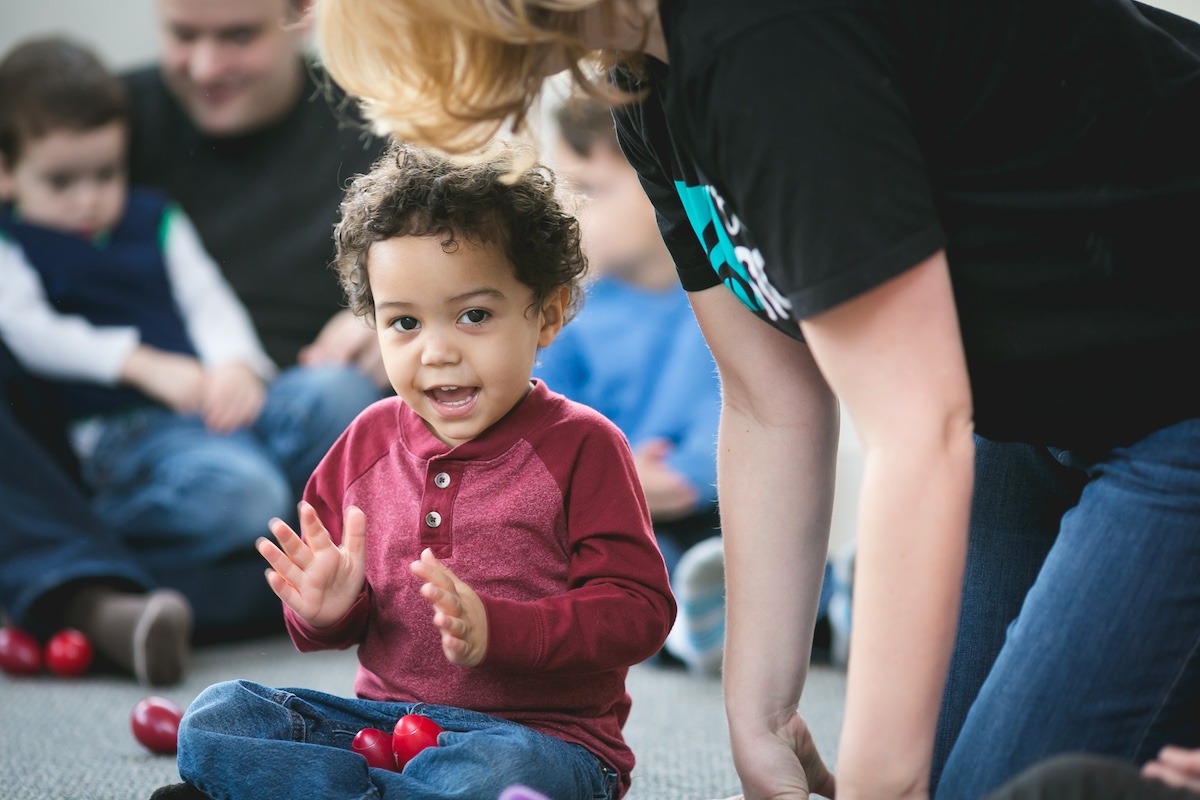
Clapping is generally perceived as a tool for keeping time with the music or showing appreciation as applause. However, the biological and neurological effects of this simple motor activity reach far beyond songs and ovations, enhancing self-regulation, reading skills, handwriting proficiency, and speech processing.
Take a look at what’s happening in our brains and bodies when we clap, why it is so intrinsically connected to early childhood development, and initial steps you can take to help children harness the power of their hands.
Clapping helps children self-regulate.
When children can regulate their bodies, they’re able to process emotions more effectively and even heal from traumas. When it comes to self-regulation, clapping produces:
- Rhythm: Rhythmic movement organizes the brain, synchronizing motor and auditory systems, which helps regulate attention and emotions.
- Circulation and Stress Relief: Clapping boosts blood flow and oxygen delivery, while rhythmic sound and movement release endorphins that reduce stress.
Activity Idea
- Play “Let Everyone Clap Hands with Me” below.
- Clap, shush, laugh, and call out as directed.
By starting and stopping these directives, you’re encouraging inhibitory control. And if you’re working with young toddlers, you’re helping them move from more uncontrolled movements to intentional ones.
Clapping boosts reading skills.
Everything has a beat, even reading.
When children clap along to a song, they’re not just having fun — they’re wiring their brains for reading. Research shows that keeping a steady beat and synchronizing to rhythm parallels literacy development.
In fact, researchers from Northwestern University found that preschoolers between ages 3 and 4 who can demonstrate beat synchronization show stronger reading preparedness.
This plays into “the science of reading,” and intentional music-making—like clapping to the beat—can increase measurable outcomes.
Activity Idea
Keeping a steady beat through an entire song—even for an older preschooler—can be challenging. Try breaking it up.
- Download the free Kindermusik app, and play “Peanut Butter and Jelly.”
- Clap your hands to the beat during “Peanut, peanut butter.”
- Raise them on “jelly” (at 4).
This little shift in movement brings some excitement into the mix. For the rest of the song, you can act out the movements as described (like “dig ’em,” “crack ’em,” etc.) and then come back to that steady beat exercise.
Clapping leads to better handwriting.
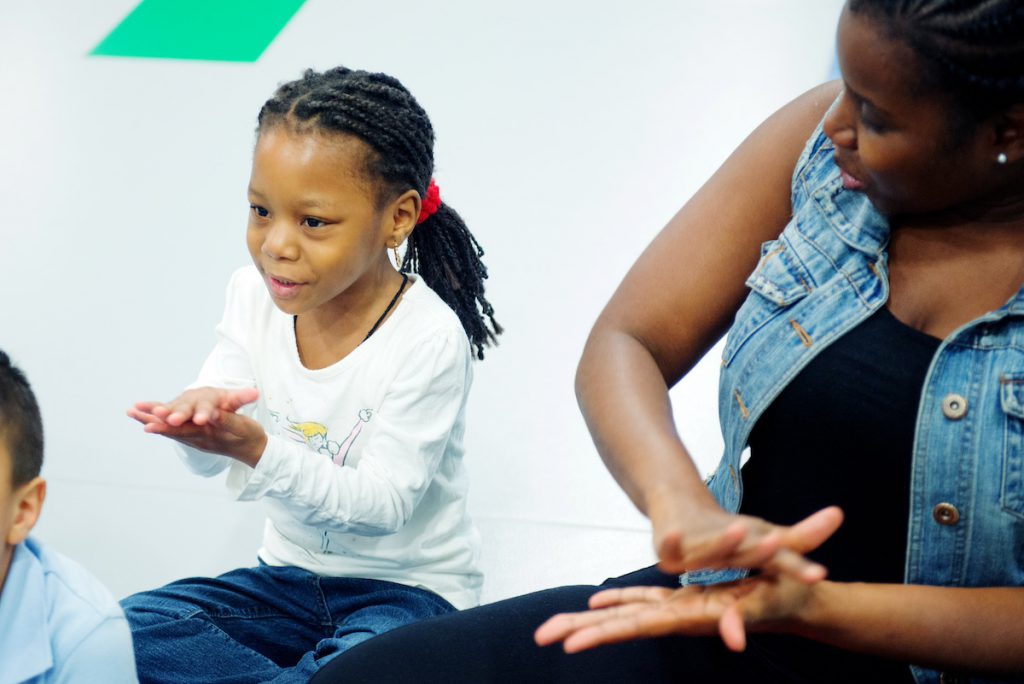
The simple act of clapping involves the visual and sensory cortices of the brain that we use for handwriting (when we write, our visual tracking informs our motor movements).
Some clapping patterns (think hand games like Miss Mary Mack”) involve crossing the midline of the body, strengthening connections between left and right hemispheres of the brain . That’s just how we write—from left to right.
One study from Ben-Gurion University found that “[early elementary] children who spontaneously perform hand-clapping songs…have neater handwriting, write better and make fewer spelling errors.” So, when we instill these musical movements before kindergarten begins, children are that much more prepared to write at a developmentally appropriate level.
Activity Idea
“Clap, Clap, Clap Your Hands” is a versatile activity that you can use with pre-walkers to older preschoolers.
- Play the song below and listen for the movement cues.
- “Clap, clap, clap” individually and enchance the activity for older children (like double high-fives or diagonal hand-to-hand clapping with a partner).
Clapping improves speech and language development.
The area of the brain that processes speech overlaps with the area that processes music, so the connection between rhythm and language development is tightly connected.
Clapping out syllables—which research suggests should precede letter introduction for emerging readers—holds attention, helps cue up the auditory system, and supports early phonemic awareness.
Activity Idea
This silly chant is perfect for older toddlers and preschoolers, and is available in English and Spanish.
- Download the free Kindermusik app and search for “Hickety Pickety Buttercup” (in English or Spanish).
- Clap out the syllables of the first three words, “Hick-e-ty, Pick-e-ty, But-ter-cup.”
- As you’re clapping, exaggerate your mouth movements, so that children not only experience auditory and sensory stimulation, but have the visual benefit of word modeling.
From circle time in the classroom to family time at home, incorporating intentional clapping into daily rituals and routines will fuel connection and progress toward these early childhood milestones. No instruments needed.
Clap along with Accredited Kindermusik Educators in a studio class near you, or check out our rhythmic teaching solutions for schools, home visiting, and more.