
5 cognitive benefits of a bilingual curriculum

(Source: Hispanicallyspeakingnews.com)

According to research, learning to speak English as a second language—or another foreign language—impacts the cognitive development in children. Of course, experiencing a bilingual curriculum can help prepare a child for a global workforce as adults. Plus, the younger a child learns a second language the more likely they are to speak like a native speaker.
In our ESL curriculum development for ABC English & Me, we combined our more than 35 years of experience with music and learning with the latest research on English Language Learning. Here are just a few of the benefits revealed in the research.

5 effects of a bilingual curriculum on child brain development

  1. Children who learn another language, including ELL students, score better on standardized tests, especially in math, reading, and vocabulary.
  2. Children who speak more than one language can easily switch between two or more systems of speech, writing, and structure.
  3. Bilingual and multilingual children exhibit stronger memories than monolinguals.
  4. Learning another language boosts the language capabilities of the first language.
  5. Bilingual children score higher on nonverbal problem-solving tests when compared to children who only speak one language.

ABC English & Me - Teaching English to Children through MusicRead more about the positive impact of music and movement on young ELL students, the research behind it, and how our ESL curriculum, which uses English songs for kids, puts it into practice.




New Vice President at Kindermusik lights a spark

Kelly Green, Vice President and General Manager, Schools Division

Spark. It’s what happens in the classroom. Those a-ha moments in early childhood education when children make a fresh discovery, master a new skill, or read words for the first time. That spark of early learning ignites a quest for more knowledge.

Teachers of daycare, preschool, or Head Start curriculum light a “spark” each day in the classroom. So, it’s no wonder Kelly Green chose “spark” as her one word to represent both the start of the new school year and her new role at Kindermusik International.
As Kindermusik’s new Vice President and General Manager of Business to Business and Business to Institution Sales in the US and Canada, Kelly brings  more than 19 years of experience in early childhood education. Prior to Kindermusik, Kelly worked at Hatch Early Childhood as the Vice President of Sales and Business Development.
“I am excited to bring my knowledge and passion for the field of early childhood education to Kindermusik,” explains Kelly. “The research clearly shows how music can be used as a powerful learning tool when used as part of a childcare, Head Start, or a Common Core curriculum. I look forward to sharing the power of the Kindermusik classroom experience with public schools and community-based organizations serving young children.”
Welcome to the Kindermusik International community, Kelly! We know you will help light many new sparks of early learning.

Follow Kelly on Twitter (@KinderKGreen) as she shares her passion for the power of early education.

Music and cognitive development in children

We love music—everything about it. Of course, we love how music and learning go together in Kindermusik classrooms and in homes around the world when parents support cognitive development in children through musical activities. We also love how that certain lullaby or silly nonsense song can calm both a child and a parent during one of those moments. Perhaps one of our favorite things we love about music is its ability to support healthy child brain development.

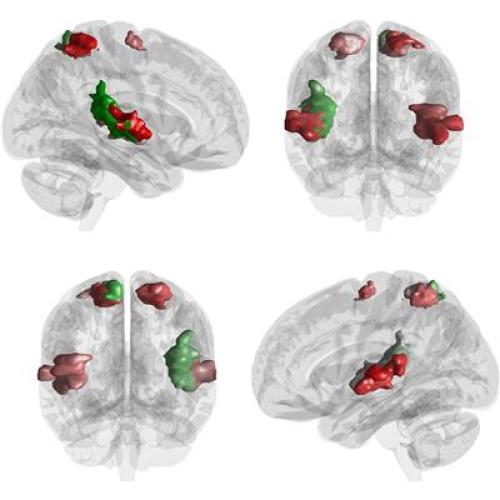
What our brains look like when we listen to music

(Source: Academy of Finland)

When we listen to and engage in musical activities, our brains light up. Now, new research gives us pictures of what our brains look like when we listen to music. Researchers from Finland, Denmark, and the United Kingdom, used brain imaging and computer modeling to see just want happens to our brains when we listen to music. Led by Dr. Vinoo Alluri, the research team recorded the brain responses of adult participants while they listened to a variety of music, including Vivaldi, Miles Davis, and The Beatles. During the process, they also tracked the musical components, such as timbre, rhythm, and tonality.
The team discovered that listening to music activates the auditory, motor, and limbic regions of the brain as well as the regions of the brain used for self-referential appraisal and aesthetic judgments. Interestingly, our brains respond differently between vocal and instrumental music. When listening to music with lyrics, the brain shifts the processing of musical features towards the right auditory cortex to better process the lyrics.
“The new method provides a powerful means to predict brain responses to music, speech, and soundscapes across a variety of contexts,” explained Dr. Vinoo Alluri in a press release.

Musical variety supports child brain development

Throughout the Kindermusik experience, we deliberately introduce children to a wide variety of musical genres to give them a greater understanding of what is possible through music. One month we may explore the precision of classical music. The next month you and your child may experience the value of improvisation and emotional expression while we play around with jazz. Together we may also move and play along with drumming songs from Africa and South America or dance around to music from New Zealand, China, or France.
Exposure to a variety of sounds and rhythms is critical to cognitive development in children. Varied exposure leads to language proficiency, spatial reasoning, and temporal reasoning. It also increases understanding of moods, emotions, and other cultures. Read more about the four surprising ways your child benefits from a variety of music.

Better yet, find a local educator and come experience it for yourself. Try a free class today!


Taking the Language Learning All the Way Home

Kindermusik International is truly international, and one of the company’s latest initiatives has been to develop a music and movement curriculum called ABC English & Me that provides early language learning (ELL) for English as a foreign language.
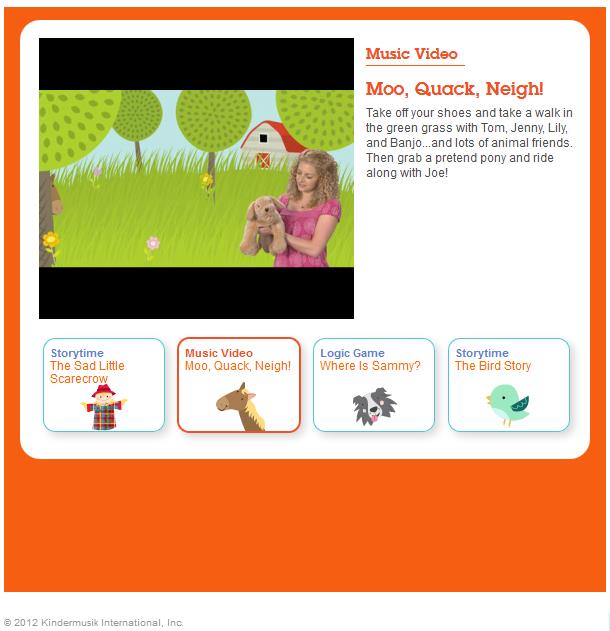
Moo Quack NeighAs with all Kindermusik curricula, there is a strong emphasis on the classroom-to-home learning connection, now made more convenient, more accessible, and more powerful through the online learning activities available with the Kindermusik @Home Materials each family receives with their enrollment.
The delightful activity “Moo, Quack, Neigh!” (from the Moo, Quack, Neigh! unit) is a perfect example of how the language learning comes home, reinforcing the fun and learning from class and supporting parent involvement in early childhood education at home.  “Moo, Quack, Neigh!” is just one of many activities for kids at home that makes learning a second language so much fun that the language learning comes easily and naturally.

Take a free peek at “Moo, Quack, Neigh!” for yourself and see if you don’t agree!

Learn more about the positive impact of music and movement activities on young children’s acquisition of English and how our ESL curriculum, ABC English & Me, puts it into practice.

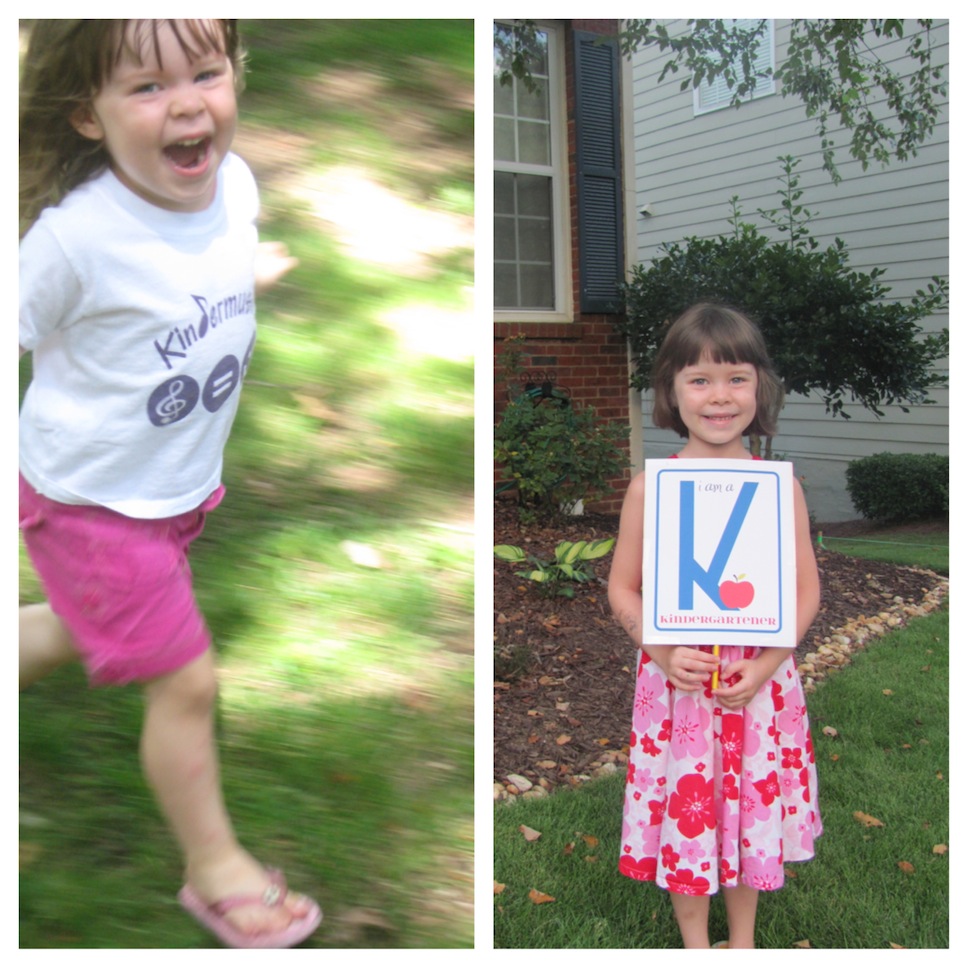
5 ways Kindermusik prepares PARENTS for Kindergarten

From Kindermusik to Kindermusik

Of course, Kindermusik helps prepare young children for school success. (You can read just 9 of the ways our music classes for babies, toddlers, big kids, and families lay the groundwork for success in elementary school.) But, Kindermusik also prepares parents for Kindergarten. Here’s how:

5 ways Kindermusik prepares parents for Kindergarten, including parental involvement in early childhood education

  1. You get real-life experience with your child learning independently in a classroom setting. Kindermusik grows with your child. As your child progresses from infant to toddler to preschooler to big kid Kindermusik classes, your little one (and you!) slowly transition from being together in the classroom all of the time to the parents coming in at the end of class.
  2. You learn how to connect the classroom learning to your everyday lives. In class, Educators share the developmental benefits behind the activities so you learn both the "hows" and the "whys." Plus, Kindermusik@Home gives parents activities for kids, including the music and eBooks from class so the learning happens throughout the week. In later years, when your child comes home from Kindergarten with homework, your family already naturally integrates the learning in fun and engaging ways throughout the week.
  3. Parent involvement in early childhood education becomes second-nature. You are your child’s first and best teacher. As your child grows, more teachers will enter your child’s life, but you maintain the top spot. You will understand from personal experience the positive and unique impact of parental involvement in early childhood education.
  4. All of those animal noises and sounds you make in Kindermusik and at home with your child will make you a highly requested Mystery Reader in Kindergarten. It’s true. Dr. Seuss, Piggie & Gerald, and other favorite children’s books just sound better when the one reading the story can make the silly sounds! So, go ahead, practice your elephant trumpet!
  5. The social skills and confidence your child gains in Kindermusik will make the transition to Kindergarten easier for your little one—and for you. We can’t promise you won’t shed a tear or two, but your child will be more comfortable in a classroom setting, exhibit stronger inhibitory control abilities, and more easily make new friends.

Come see for yourself how Kindermusik prepares you and your child for Kindergarten. Try a free class today!


Music Makes Your Day

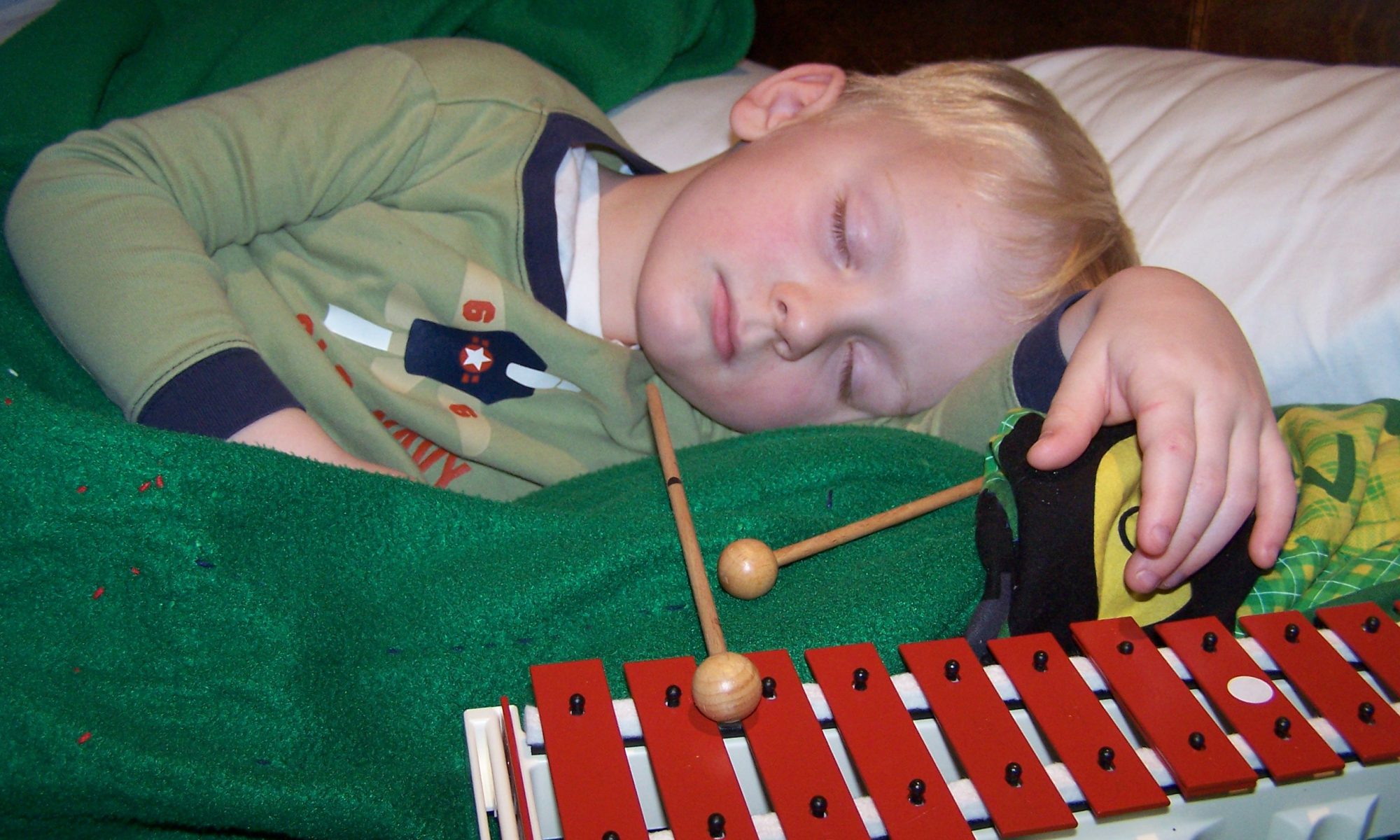
boy asleep with musicOne of Kindermusik’s core promises is to help make great parenting a little bit easier.  Without a doubt, music is one vital tool that parents can use not just for fun and bonding, but as way to make the daily routines go more smoothly with less tears and more joy.

Wake up with music

Singing your child’s favorite song can chase away the morning grumpies and coax that first smile of cooperation.  Try this free “Get up and Move” activity from Kindermusik @Home to get your morning off to a great start together.
Play some recorded music as you are getting your child ready for the day – quiet and soothing or happy and energetic – whatever your child responds best to.  With your Kindermusik music downloads and ever-expanding library, it’s easy to create playlists of favorite music to suit any mood.

Go places with music

Sing together in the car.  No one else will hear, and your child will love having the chance to make music together with you.
Utilize Kindermusik’s radio app or stream your class music so that you can have fun music with you wherever you go.

Take naps with music

There’s nothing more soothing than a playlist or CD of gentle lullaby sleepy-time music.  Or even just cuddling and singing a sweet quiet song before tucking your child in for a nap will make naptime that much easier.  Making music a part of the naptime routine will send your child off into the land of nod quicker than almost anything else.

Transition with music

Many children have difficulty transitioning from one thing to the next – they want to keep playing when it’s time to leave to pick up big sister from school.  Or they’re not quite ready to sit in the high chair for lunch.  You name it – there’s probably a way to turn that difficulty into something fun.  It’s easy to “piggyback” a song, replacing the words with words you make up.
Or how about that time in the day when everyone is hungry and supper isn’t ready yet?  Turn on a favorite recording and make an impromptu band using wooden spoons and plastic bowls (keeping safety and age-appropriateness in mind, of course!).

Splish splash with music

Yes, even tub time is more fun with some lively music playing in the background.  Your child may not be singing in the shower just yet, but the two of you can have lots of fun making bathtime a highlight of the day singing and listening to music in between all of the bubbles.

Music is one of the very best activities for kids at home and on the go!  And we promise, music can make the moments of your day easier and happier.

Need some musical inspiration and resources?  Try a Kindermusik class – free previews available!
– Written by Theresa Case who has an award-winning Kindermusik program at Piano Central Studios in Greenville, SC

FOL Fridays: Cultivating Empathy

Empathy between children and the world is a main developmental objective for preschool children. They don’t differentiate between themselves and others. Cultivating relationships with animals, both real and imagined, is one of the best ways to foster empathy during childhood. Children want to run like deer, slither along like snakes, be clever as a fox, and quick like a rabbit (adapted from Sobel, David. 1999)

Ideas for parents: Looking for activities for 3 year olds – or older or younger siblings? Try playing a simple game of Animal Charades with the whole family. You can have lots of fun moving and making sounds like some of your favorite animals, and in this fun way, help your child

develop a greater capacity for empathy. And of course, we can’t help but mention that group activities for kids that support parent involvement in early childhood education, such as Kindermusik, are one of the best ways for music and learning about empathy to go hand-in-hand.

– Contributed by Theresa Case, whose Greenville, SC program, Kindermusik at Piano Central Studios, is proudly among the top 1% of Kindermusik programs worldwide.

2 new brain studies look at music and learning in a group

ABC Music & Me early literacy curriculum

ABC Music & Me early literacy curriculumWhat do you get when you cross group activities for kids with music and learning? That’s just one of the questions a research team led by Dr. Nina Kraus seeks to answer in two new brain studies funded by the NAMM Foundation. Unlike past research that compares children taking private music lessons to those not enrolled, one unique aspect of Kraus’s latest music and learning research is that it focuses on children learning in a group as part of a school curriculum.

“The NAMM Foundation is honored to support Dr. Kraus in these studies, which we believe will push the boundaries of knowledge about the effects and impact of music learning,” said Mary Luehrsen, executive director of the NAMM Foundation in a press release. “Over time, these and other studies will continue to substantiate that music education is essential to learning for every child.”

The Music and Learning Brain Studies led by Dr. Kraus

  1. “The Harmony Project: Biological Benefits of Musical Training in At-Risk Children.” The initial phase of the research study found that children between the ages of 6 and 9 years old who took music lessons could better differentiate speech sounds, which directly relates to language and literacy skills. In the next phase, the team expects to find that children with musical training have an enhanced auditory cognitive function, which can also directly correlate to increased literacy skills.
  2. “The Impact of In-School Music Classes: Rhythm, Language and the Brain.” In collaboration with the Chicago Public Schools, Kraus and her team want to better understand how musical training impacts cognitive, linguistic, and perceptual skills and associated brain development.

And the answer is…

So back to the first question (with an added bonus!): What do you get when you cross group activities for kids with music and learning AND parent involvement in early childhood education? Well, Kindermusik, of course! From Kindermusik classes in more than 70 countries around the world to ABC Music & Me programs used as part of an elementary school, PreK, or Head Start curriculum, we use

music as the vehicle for learning. Plus, we include materials that connect the classroom learning with the everyday lives and routines of children to increase family involvement in education.

To find a Kindermusik educator in your area, visit the Class Locator.

To learn more about ABC Music & Me as part of a PreK, Head Start, or elementary school curriculum, email us at info@abcmusicandme.com.