 “Dance, even if you have nowhere to do it but your living room.”
~ Kurt Vonnegut
A Minds on Music Quote



Minds On Music – The Kindermusik Blog
For three generations, Kindermusik has helped millions of children around the world build a strong foundation for a lifetime of learning.
“Dance, even if you have nowhere to do it but your living room.”
~ Kurt Vonnegut
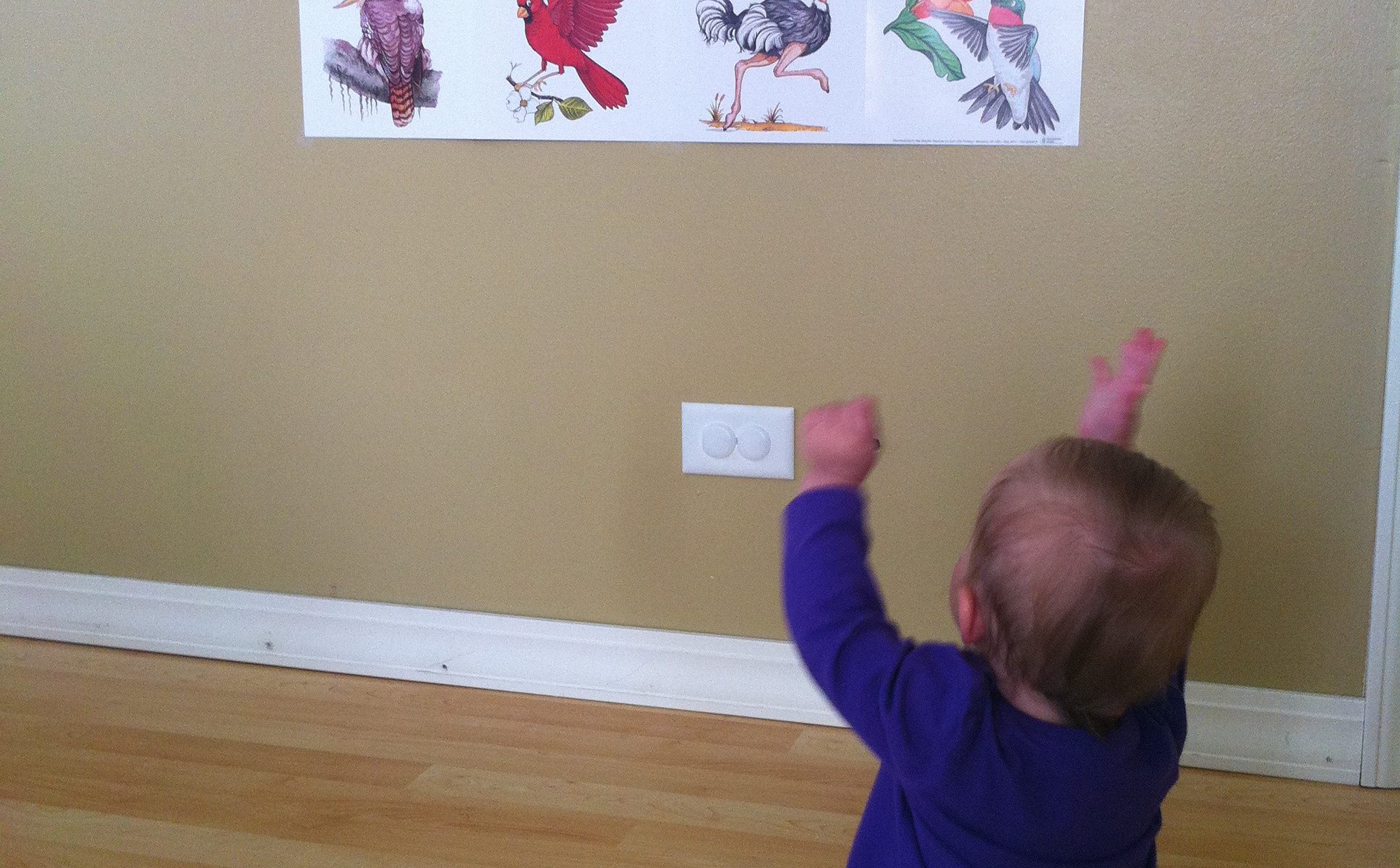
We are very appreciative when we find reviews of Kindermusik on our favorite Mommy blogs and forums. A big thank you goes out to Kathy, for the kind review posted in “Back to School: Kindermusik” on the SeekingSelf.com blog.
Our favorite part of Kathy’s review was how much her little one loved the “Feathers” curriculum in her Village class:
During class the instructor guides you and baby in song, to use instruments or move to music focused on a theme. The first theme is feathers. This is great timing because my little Girly just started to become more interested in birds chirping in the trees. She’ll toss her head back and forth to look for the birds or point to them soaring across the sky. While in our first class, Girly just giggled with excitement a few times as she watched the other babies (and mamas) doing the activities.
The class comes with home materials to further the exploration of the theme. The materials included a Feathers board book, a ball with a bell in it, a CD of the music from class, and a banner that coordinates with the book. I posted this feathers banner while Girly was napping. When she found the birds on our wall she was so excited. She had a whole conversation with these feathered friends for 15 minutes! I can’t wait to see how Girly grows as she spends more time in the class and with the materials.
What’s your child’s favorite thing about Kindermusik music class?
“To watch us dance is to hear our hearts speak.”
~ Hopi Indian saying
My husband won’t stop reminding me of a new research study we came across recently. Any time I disagree with him over anything, he reminds me that musicians are smarter than the rest of us, as reported this summer. And, therefore, he must be right. (He’s a professional musician and has studied music for 25+ years and played professionally for 19). So, I have to remind my husband that I studied viola, voice, & musical theater for many years, so that makes me right! Right?
…Moving on…
The one thing that I thought long and hard about after reading these research findings – something that is truly is amazing to me – is the amount of hard research surrounding the topic of the benefits of music education on babies, toddlers, kids, adults, & even senior citizens. In fact, this particular study found that “musicians might have brains that function better than their peers well into old age.”
As the Huffington Post reports:
Researchers tested the mental abilities of senior citizens and discovered that musicians performed better at a number of tests. In particular, musicians excelled at visual memory tasks. While musicians had similar verbal capabilities to non-musicians, the musicians’ ability to memorize new words was markedly better, too. Perhaps most importantly, the musicians’ IQ scores were higher overall than those who spent their lives listening to music rather than performing it.
Kindermusik just posted on this blog about how 6 year olds taking music lessons were shown to have enhanced IQs. This study shows that the benefit to intelligence and IQ lasts throughout life, well into the senior years. That leads to another very important point that I read. The research proved that the younger the musician was when he or she started playing an instrument, the sharper the mind in old age. Now, that doesn’t mean starting your toddler at piano lessons at age 2 is right either (there is an appropriate age for proper music instruction to start). But, it does mean that doing age-appropriate musical activities with your children from a very young age may actually help raise your child’s IQ and intelligence.
And, that’s why my family involves music in our every day life. We think Kindermusik music classes are essential to our son’s development. My oldest son, Marcus, who is 5 years old, has some special needs. He has epilepsy and, as a result of his abnormal brain activity and daily anticonvulsant medicine, has had some speech and language learning developments. Since he started his Kindermusik Young Child curriculum, which gives him the opportunity to practice his speech in a social environment AND expend his energy, he has shown a lot of progress in his development! The ‘homework’ assigned in music class gives him the chance to practice singing, words, and creative thinking. And, in his words, “Music class is SOOO fun!!!” So, he has a great time too. #Winning! Continue reading “Musicians are Smarter than the Rest of Us”
“Music can name the unnameable and communicate the unknowable.”
~ Leonard Bernstein
 Ok, so we all want to set our children up with the tools to learn, grow, and succeed from a very early age. And, we know that volumes of research (and our own logic) proves that music has so many benefits for early development, even improving a child’s IQ! It makes you think that music education should be super important to our school systems, right? Sadly, it’s not. One of the trends in public schools has been to put music and arts education programs on the chopping block due to budget cuts and funding issues. NAMM, the National Association of Music Merchants, one of the leading music organizations and music education advocates, partnered with a number of big name artists, arts organizations, and sponsors like Jason Mraz, Barry Manilow, the VHI Save the Music Foundation, & the Gibson Foundation to create an informative insert for the Washington Post that contains a great amount of information to help parents, teachers, and other decision makers understand the power of music. We absolutely loved every article contained in this great piece of content and urge others interested in keeping music and arts in our schools to read and take the steps outlined in the articles to make a difference!
The insert includes a number of pieces linking music to success in academic achievement and life. As the first article states,
“Every year, more studies unveil the impact that early interaction with music has on babies, toddlers, and school age children who participate in age appropriate, sequential music education. This vast body of scientific research shows that children who have comprehensive music education as a part of their early childhood experience and in their school curriculum enjoy improved success in their studies, think creatively and critically, stay in school and go on to graduate college.”
As the document continues to outline through more good information than we can include in this post, humans are wired to respond to music – and the benefits of music to cognitive development is incredible and proven (many times over).
“According to the National Association of Music Merchants (NAMM), the many benefits of learning to play music instruments include increased self-esteem, improved cognitive skills, and higher test scores. Research supported by NAMM explores the connections between music making and academic achievement and has found that children’s overall academic performance is higher if they participate in a rigorous music education program.”
Yet, so many schools continue to cut down on or completely eliminate music education because resources are lacking or curriculum has been narrowed to meet the demands of testing. A recent U.S. Department of Education study shows that 15 to 20 percent of middle and high school students participate in school music programs. And, in many places, the students don’t even have the option or opportunity to participate.
“Without fail, high performing schools have robust music arts programs and often low performing schools do not. Simply put, a child’s education is not complete unless it includes music education.”
The article “Tools for teaching young children about music” is especially in line with Kindermusik’s mission and values, as this covers the tools you can use during the most critical young years (the first five or so years after birth) for essential early childhood development. As we know and are further informed, “the preschool age is the period of most rapid growth in cognitive ability. Therefore, it is the best time to engage children in an active program of music education.” This is why 100,000 families choose to enroll in Kindermusik music classes with their children aged newborn to 7 each year. It also explains why schools choose to utilize Kindermusik’s music and movement-based curricula to teach language arts and English language learning! We definitely recommend you read this particular piece if you are a Kindermusik parent, educator, or even former student, as it really validates the importance of these music activities for kids in their early years.
The final must-read in this piece is the most important – and that is because it outlines the top 25 ways YOU can take action to help keep music in our kids schools. Some of our favorite ideas on how to make a difference were:
# 1. Start early: Provide your child with access to the benefits of music education from birth; sing to your baby, move to music and feel the joy of making music together. Visit your local community music school to find musical opportunities and discover what you can do to get started. (Find out how to get your children started early by finding Kindermusik classes in your area!)
#4. Get involved: Participate in school and/or district planning committees including curriculum, assessment and budget. Position music education as an important instructional tool for improved student leaning and to close the achievement gap.
#8. Form a coalition: Encourage parents and community members to become advocates for your community’s school music programs and form a local coalition.
#15. Educate your community: Turn a local performance into an ‘informance’ by placing interesting music facts inside concert programs. Hold a reception after so that community leaders can start conversations with music supporters.
#19. Reach out to TV and radio: Ask your local television and radio stations to publicly recognize local music programs throughout the year and salute “Music In Our Schools Month” in March. Follow this by providing a calendar of local musical events during March and ask your local media to dedicate them to “Music in our Schools Month.”
#22. Take it to Congress: Write a letter to your Member of Congress about the value of music education in your community and take a delegation of music students to meet with your Congressional representative at their local office. List upcoming local school music events and invite him or her to attend.
#24. Get donations: Encourage local business to support music programs with special donations for special projects that supplement core education funds from the district. Be sure that this support is not seen as a replacement for district funding of music programs.
We’re doing everything we can to ensure that every child is inspired by and developed through music from birth. We’d love to hear what you’re doing to support music education and will feature the best advocates’ efforts on our blog!
Download the PDF of NAMM’s Washington Post music education insert here.
“Hands-on parenting cannot be underestimated in its effect on young children and their brain development. As parents, we must provide numerous, ongoing, and enriching experiences that will nourish our children’s brains. Music is such an experience.”
~author Sharlene Habermeyer
We heard a really great story today that we thought would be nice to share. It really reinforces how our Kindermusik children grow to have a lifelong love of music. One of our proud Kindermusik teachers, Miss Lindsay, who runs “Kindermusik with Miss Lindsay & Friends” recently had a nice surprise in her email inbox, finding out that two of her former students (Victoria & Katie Beth) have been cast in the Nutcracker this season.
As Victoria’s mom wrote:
Have no doubt that the impression and affect you have on children (and parents) lasts a lifetime… We are still enjoying all we learned in Kindermusik. The girls are both taking piano now and are getting quite good. They also sing at their piano lessons — I am loving this new teacher.
Miss Lindsay really felt that it was “so moving to hear that the program really did have a long-term impact” on these girls and instilled a great appreciation for music! Even better, her former student, Victoria, was prompted to write to her because they were singing the Kindermusik song, “Hello, how do you do?” which made her think to share her good news with Miss Lindsay. We believe that early exposure to music and movement will instill a lifelong love of music – and we’re always happy to feature stories that show this is the case. So, Kindermusik parents, feel free to comment below and share YOUR favorite story about how Kindermusik made an impact on your child(ren)!
And, we would like to wish good luck to Victoria & Katie Beth in their Nutcracker performance this year!
What parent doesn’t want to raise their child’s IQ and give them every opportunity to learn from an early age? Well, music lessons are one proven way to do this! We at Kindermusik know that our music and movement programs provide many learning benefits to young children, especially in the areas of cognitive, language, physical, & social development. A new study from The University of Toronto helps us continue to prove the benefits of music to young children. The recently published research report provides solid evidence that music lessons can improve a young child’s IQ and intellectual development. The study was conducted on a group of 6 year old children who were assigned to participate in music lessons, drama lessons, or no lessons. Since the researchers found solid evidence supporting that music lessons enhance a child’s IQ, the report was chosen to be published in the August issue of Psychological Science.
As the report shares:
The participating children were given IQ tests before and after the lessons. The results of this study revealed that increases in IQ from pre- to post-test were larger in the music groups than in the two others. Generally these increases occurred across IQ subtests, index scores, and academic achievement.
The study also mentions that drama lessons provided improvement to the area of adaptive social behavior, which was not seen with the music lessons. But, this study looked only at standard keyboard and vocal lessons. The classroom-like setting for a Kindermusik music class provides social benefits and helps prepare young children for school and other social situations. So, it looks like a Kindermusik class has got it all! Led by our skilled educators, Kindermusik’s research-based and research-proven programs will enhance a young child’s development and instill a lifelong love of music.
One of the best things music brings to a child is a good beginning. At Kindermusik, we believe this so strongly that we chose as our tagline “a good beginning never ends”. Nothing is more important to us than early childhood education and the benefits of music to early childhood development.
At Kindermusik, we’re always looking for ways to make children’s lives better and do what we can to get children off to a great start. This led to our Good Beginnings Grant Program. If you haven’t heard us talking about it yet, the Good Beginnings grant program allows anyone (individuals, small organizations, schools, foundations, Kindermusik educators, etc.) to apply for a $1,000 grant for any project that will help children. We awarded five total Good Beginnings grants and opened the projects to the public for voting. The response was overwhelming. We had over half a million votes cast in the space of just over one month! It was nice to see how many others believe in a good beginning too!
We are happy to share a video from one of the Kindermusik community’s Good Beginnings grant winners, Camille Empey. This Kindermusik grant was able to make a difference by helping the Sojourner Elementary School improve their early childhood education Spanish program. With this grant, the school was able to purchase Latin instruments and the first level of an early Spanish curriculum that uses music and movement for young children to learn!
[youtube]http://www.youtube.com/watch?v=7Qfnc4DBuDo&w=480&h=360[/youtube]
