
Inspiration behind the Mother Tongue Lullaby Project

Experts say linguistic diversity is a crucial component to preserving disappearing languages around the world. This video – as well as all the Kindermusik Educators in over 35 countries around the world – inspired the Mother Tongue Lullaby Project.

With this project, we’re hoping to record mothers and fathers from around the world singing their first language lullabies. These soothing songs are one of the first ways we, as children, experience language, comfort, and bonding. Before we could understand the words and their meaning, lullabies could communicate that “music is in the house, all is well. Everything here is safe enough to soothe and sing to you. ”

As you can hear from the hand full of lullabies we’ve already recorded and posted, these lullabies still communicate an unbreakable bond between the parent, or grandparent and child.

If you’re a Kindermusik Educator, a parent, grandparent, or loving uncle, or aunt; or you simply have a favorite lullaby to sing for us in your Mother Tongue language, please let us know. We’d love to record you.

We can record your songs over the phone, and we’ll post the recordings to the project’s sound cloud account, as well as on the project’s tumblr site.

Kindermusik and Your Child: Bedtime Rituals

Kindermusik Bedtime Rituals - Little Boy Snuggles Teddy

Bedtime is a monumental moment to a baby or toddler, a time of transition in which parents hold nearly shamanistic power to tame the forces of darkness. – Meg Cox, The Heart of A Family, p. 213.

Kindermusik And Your Child - Bedtime Rituals and RoutinesIn a Kindermusik class, we have some very special rituals we include in every class.  That’s because young children thrive on the love and comfort of favorite rituals.  At home, bedtime provides a special time of connection for parent and child. As children grow, it can also become a very special time for parents to stay connected and in touch with what is really going on in their children’s lives.

Sleeping dragon watercolorBedtime Ritual Ideas You Can Share with Your Children

  • Reading
  • Listening to crickets
  • Inventing stories
  • Singing
  • Going through a specific bedtime routine (get a drink, change diapers/get a drink, kiss & hug, turn out the light)
  • Infant massage, back scratches, and foot rubs

Bedtime Songs for Kids

A great way to help kids unwind after a long and busy day is to choose a dedicated lullaby that you sing together every single night at bedtime. Your child will love not only the music, but also the predictability and comfort of that special bonding ritual. He or she might also enjoy listening to some soothing music with the lights out. Some great choices are available on our Sailing to Dreamland CD


Find a Kindermusik Class in your area today!

Compiled by Theresa Case, whose Kindermusik program at Piano Central Studios in Greenville, SC, is proudly among the top 1% of Kindermusik programs worldwide.

Recognizing Pitch = Positive Effects on Early Language Development

Music Benefits Early Childhood Development

At Kindermusik, we know music has positive effects on early childhood development and language acquisition.  And when there’s new research to prove it, we get more excited!

Language Development in Children

Music Benefits Early Childhood Development
Photo Credit: dailymail.co.uk

New research, reported this week in Science Daily suggests that babies who are able to recognize pitch could also detect language rules, even better than adults. Scientists found that “when it comes to extracting complex rules from spoken language, a three-month-old outperforms adult learners”.

By monitoring babies’ brain responses, scientists were able to determine that infants detected discrepancies with language rules just by hearing changes in syllables or pitch.

These findings not only help understand how children manage to learn language so quickly during early development, but also point to a strong link between very basic auditory skills and sophisticated rule learning abilities.”

So, next time you’re at Kindermusik class with your little one, think about all the different changes in pitch and tone your child is exposed to – this is actively supporting your child’s language development skills.
Not yet enrolled in Kindermusik? Explore the joy of learning and
Try a FREE Preview Class
.

A Little Bit of Music Goes a Long Way!

Music Makes you Smarter
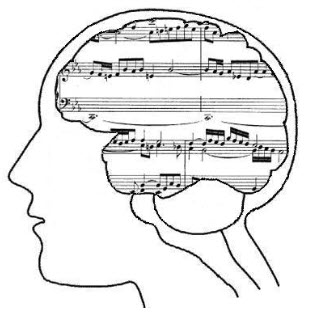
Music Benefits the Brain
Source: blogs.scientificamerican.com

We know music has many benefits, especially for the way kids learn and how a child’s brain develops. So we get excited about supportive research like this study recently published in the Journal of Neuroscience:

Even A Few Years Of Music Training Benefits The Brain.

A team of researchers at Northwestern University, including the well-known Nina Kraus, share findings on the benefits of early childhood music education.

“…Childhood music instruction has strong linguistic benefits and improves performance on everyday listening tasks. Since we live in an inherently noisy world, the better we are at focusing on sound and perceiving different sounds, the better. This can be particularly important for children with learning disorders or those for whom English is a second language.”

Through this study and other research, here are some known benefits of music training:

  • Improves hearing
  • Bolsters brain function
  • Strengthens reading skills
  • Increases math abilities
  • Improves social development
  • Helps people become better team players
  • Supports self-esteem

Our mission at Kindermusik, to instill a lifelong love of music and a foundation for learning in children, completely aligns with this research. We are especially thrilled about the quote from Nina Kraus, supporting the concept that even little exposure to music as can go a long way…

Based on what we already know about the ways that music helps shape the brain, the study suggests that short-term music lessons may enhance lifelong listening and learning,” said Kraus.

We encourage you to share your love for music & extend the benefits of music to others. Please invite your friends and family to Try a Free Kindermusik Class!

Kindermusik and Your Child: Social-Emotional Development

  • Making friends.
  • Sharing.
  • Learning how to express frustration appropriately.
  • Figuring out conflicts peacefully.
  • Helping someone who has been hurt.
  • Waiting patiently.
  • Following rules.
  • Enjoying the company of others.
  • Internal motivation to succeed.

All of these qualities (and more!) describe what we all wish to see as parents is the healthy social development of our children. Like any skill, young children develop these abilities in small steps over time, and they learn them from you, their first social connection and teacher. On the whole, young children who spend time singing, playing, and moving with other children are better prepared to be confident and self-aware, build positive relationships with peers, and get the best out of the learning environments and opportunities that life will bring them…just one of the many reasons that Kindermusik is so much more than music!

The Kindermusik classroom is the perfect place for your child to practice and develop social skills. Our activities help children learn to work with, understand, and enjoy others, while teaching parents to model activities that include social interaction and the joy of learning. At every level from Birth – 7, Kindermusik curricula are written to support the development of your child’s social & emotional skills with age-appropriate, challenging activities.

In fact, studies show that music and movement experiences in a group setting impact all seven areas of social-emotional development* identified by researchers.  Those seven areas are:

  • Confidence
  • Curiosity
  • Intentionality
  • Self-control
  • Relatedness
  • Capacity to communicate
  • Cooperativeness

*Click to read more FABULOUS Research on the 7 Social Competencies and Kindermusik by Heidi Bennett.

Compiled by Theresa Case, whose Kindermusik program at Piano Central Studios in Greenville, SC, is proudly among the top 1% of Kindermusik programs worldwide.

FOL Fridays: The Joy of Music

Music is unique to humans, and as basic as language to human development and existence. It is through music that a child gains insight into herself, into others, and into life itself. Perhaps most importantly, music is part of what enables a child to better develop and sustain her creativity and imagination. Because a day does not pass without hearing or participating in some kind of music, it is to a child’s advantage to understand music as thoroughly as she can.

As a result, she will learn to appreciate, listen to, and partake in music all the rest of her life (adapted from Gordon, 1990).

Ideas for parents:

It can be very simple to surround your child with music – the greater the variety, the better!

  • Singing simple songs together can get the morning off to a great start.
  • Child-safe instruments and some recorded music can provide happy times of self-entertainment or together time.
  • Quiet, soothing music before naps and bedtime establishes a wonderfully reassuring sleep time routine.
  • A dance around the kitchen can soothe the supper-time “fussies.”
  • A cuddle and a lullaby at the end of the day adds the sweetest and happiest of memorable moments.

– Contributed by Theresa Case, whose Greenville, SC program, Kindermusik at Piano Central Studios, is proudly among the top 1% of Kindermusik programs worldwide.

Playing for Change: Peace through Music

The below video is taken from the award-winning documentary: “Playing for Change: Peace through Music.” The documentary has turned into a movement and the movement has created a foundation to change the world and make a positive influence through music and arts education.

The documentary itself focuses on a film crew that traveled the world for 4 years, filming musicians from across the globe and creating song composites of their music. Here is the Playing for Change [PFC] band with their rendition of the Ben E. King classic, “Stand by Me” because, as the video acknowledges,

“This song says…No matter who you are, no matter where you go in your life, at some point you gonna need somebody to stand by you.”

[youtube]http://www.youtube.com/watch?v=Us-TVg40ExM&w=480&h=360[/youtube]

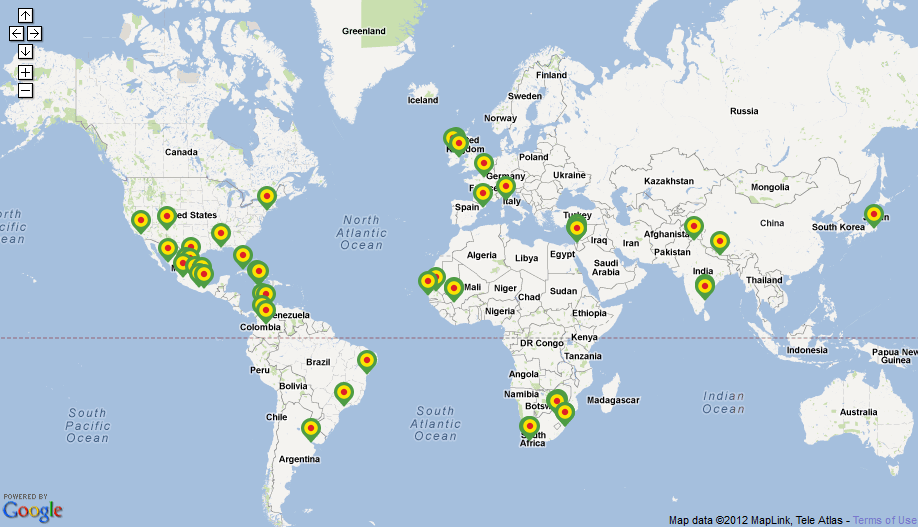
Find out more about the international music and locations featured in the Playing for Change videos by clicking on the map below:

Join the movement to help inspire people from around the world to come together through music. Find out more on their Web site and YouTube channel. You have the Kindermusik satisfaction guarantee that you will not regret subscribing to this channel!

Most importantly, if you are an appreciator of music and arts education and understand the importance of it to children across the globe, please take the time to find out more about the Playing for Change Foundation and its work. Click on the image below to visit the Web site to learn more and donate:

Playing for Change Music Education Foundation

A Minds on Music Quote

Minds on Music Quote

Minds on Music Quote“The fact that children make beautiful music is less significant than the fact that music makes children beautiful.”–Cheryl Lavendar

Kindermusik and Your Child: Making Music Together

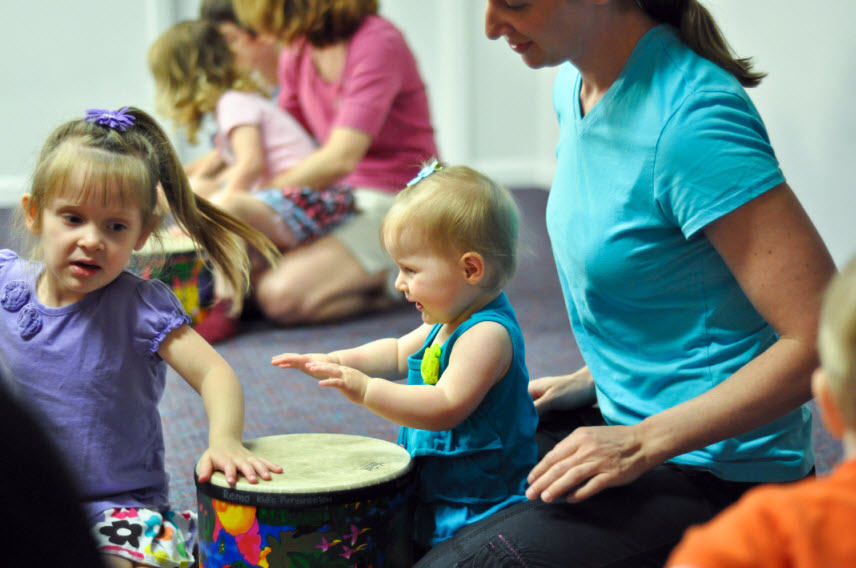
Kindermusik Class - Music & Learning

When creating music together with others in an ensemble setting, children and adults alike have a better opportunity to experience music with “greater harmonic color, musical depth, variety of sound, and rhythmic complexities” than if they only played alone. Ensemble opportunities like the ones found in Kindermusik class also “stimulate and challenge” self-confidence, imagination, creativity, self-expression, and musical understanding. (Leung 2006)

Kindermusik Class - Making Music Togther

Before you know it, your child will likely want to participate in a team sport, play in a band or orchestra, or sing in a choir. In class we help introduce you and your child to the opportunity to develop and practice the skills that are required to perform in an ensemble, such as:

  • strong self-control – stopping on cue
  • distinguishing between sounds
  • listening for an appropriate entrance on cue
  • timing the participation on cue
  • matching the steady-beat play with an outside sound source, and
  • playing with others on cue

These skills of timing, coordination, and group participation are also essential characteristics for success in sports. Kindermusik is truly so much MORE than just music!

Making Music Together

Making music together is what music is all about! When children learn to contribute their part to a beautiful whole, they have benefited from one of the most important advantages of group instruction. Music becomes even more exciting when children begin to develop a growing awareness of themselves within the context of the group.

For example, in Kindermusik classes, when an Our Time age child moves up to Imagine That, he/she will be both the leader and the follower in ensemble and will have the opportunity to learn all of the basic skills necessary for ensemble participation in Young Child when they enter Kindergarten. This is a truly amazing musical journey, made possible in the early years by the quality time, and fun, productive, musical play in which you engage your child in and out of class.

Compiled by Theresa Case, whose Kindermusik program at Piano Central Studios in Greenville, SC, is proudly among the top 1% of Kindermusik programs worldwide.