

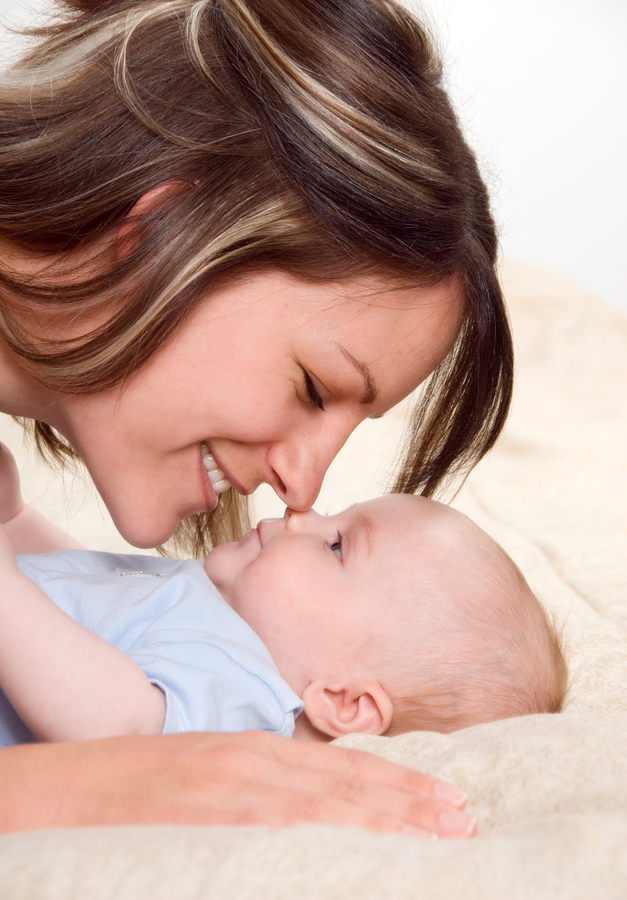
 3,600. That’s the approximate number of times a baby needs a diaper change in the first year alone. (Yowser! That’s a lot of diapers.) Of course, every diaper change satisfies the physical needs of a baby, but it also meets a baby’s developing social and emotional needs. Every time a baby cries and a parent responds to the need, it strengthens the vital parent-child connection. Building an attachment and a sense of trust not only lays a solid foundation of social and emotional development but also primes a baby’s brain for learning.
Strong healthy parent-child bonds as infants help children make friends
Researchers from the University of Illinois recently published a study in the journal of Developmental Psychology that showed young children with strong parent-child bonds tend to be more responsive and adaptable when meeting—and playing with—other children. They also tend to be more sympathetic to the needs and moods of other children.
In the study, the team measured the security of child-mother bonds for 114 children who were 33 months old. As part of the study, the parents reported on their child’s temperament, such as propensity towards anger or social fearfulness. Then when the children reached 39 months old, the researchers paired same-gender children and observed them playing together over three laboratory visits in the course of a month.
“Securely attached kids were more responsive to a new peer partner the first time they met,” explained Dr. Nancy McElwain in a press release. “A more securely attached child was also likely to use suggestions and requests rather than commands and intrusive behavior (such as grabbing toys away) during play with an anger-prone peer during the first two visits.”
The researchers believe that toddlers and preschoolers who develop strong bonds with their parents learn early on that their needs matter and confidently express themselves.
Kindermusik supports strong parent-child bonds from birth
Building healthy parent-child bonds starts in infancy. In our music classes  for babies (for all ages actually!), we create many moments to strengthen and celebrate this vital parent-child connection. Every time a parent sings lovingly to a wee one, the bond grows stronger. With each intentional and gentle touch, rock, or lap bounce, the bond grows stronger. And every time a caregiver gazes into a child’s eyes and smiles during tummy time, the bond grows stronger. As babies grow, this sense of security—and trust—gives little ones the confidence to explore new environments, try new things, and make new friends.
Enjoy this free activity from Kindermusik@Home that supports parent-child bonds.
Contact your local Kindermusik educator to experience for yourself how music creates healthy parent-child bonds.
Contributed by Lisa Camino Rowell, a freelance writer living in the Atlanta area.


