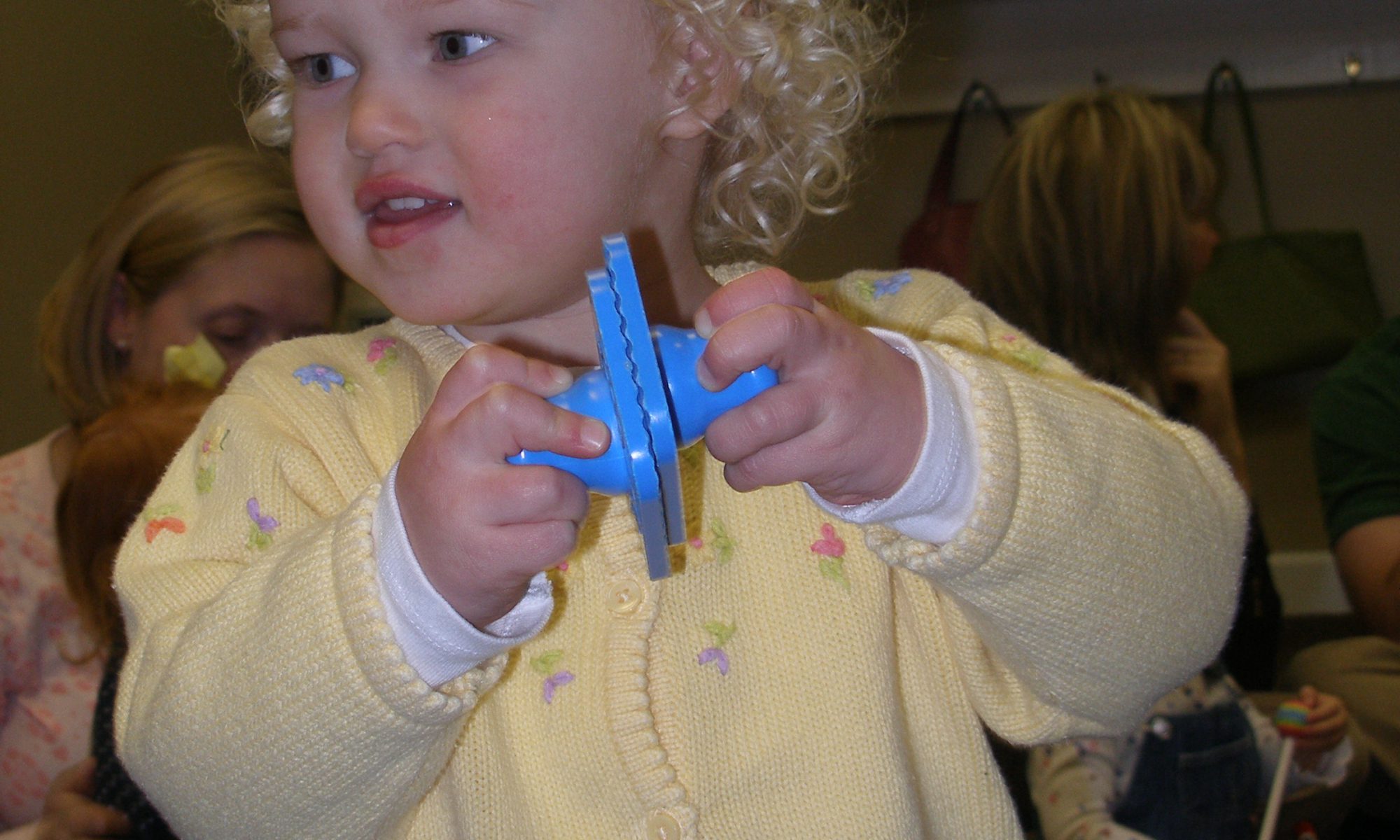


Early intervention matters in all areas of child development…from speech and language, motor skills, early literacy skills, positive behavior, and more. The sooner a child receives help the greater the impact. As educators, therapists, doctors, and researchers learn more and more how to identify early markers for intervention needs, children at risk for delays receive early intervention strategies, well, earlier. Some of the indicators may seem unrelated at first. For example, new research gives guidance in identifying young children who may need extra mathematical help…all by looking at their motor skills!
Motor Skills as Early Predictor of Math Skills
A Norwegian study shows that two-year-olds with poor motor skills also exhibit poor mathematical skills. Teachers can use this information to identify children who may need extra help.
“It is important that teachers of small children are aware of these findings. It will be easier for them to identify children who may be at risk of having difficulties in understanding mathematics. This knowledge can ensure that teachers and staff are quicker to help and support such children with mathematics,” said Associate Professor Elin Reikerås of the Norwegian Reading Centre in a University of Stavanger press release.
In the study, the research team evaluated the motor skills of two-year-old children by assessing their abilities to complete jigsaw puzzles, eat with utensils, use scissors, walk around a room without bumping into things, playing on the playground, and throwing and catching balls. Based on their motor skills abilities, the team divided the children into three groups: poor, average, and strong.
Then, the team examined various mathematical abilities of the children, such as if the children were able to use their fingers to show how old they were, if they could use the shape sorter box, play picture lotto, sort toys or objects by color or size, demonstrate the difference between big and small through the use of body language or words, and use numerals.
“Children create experiences when they use their bodies. This is also important within mathematics. When children play, climb, crawl and hide outdoors, this contributes to the development of spatial awareness. Shapes and sizes are explored through drawing, painting and playing with blocks. Putting on clothes in the right order or sorting and tidying toys requires both logical reasoning and motor skills. Dealing with numbers, such as giving a cup to everyone and then pointing and saying the numbers, also involves connections with motor function,” Reikerås explains in the press release.
How Early Childhood Music Puts into Play this Research
In early childhood classrooms around the world, many teachers use music and movement to support the development of both gross and fine motor skills and early mathematical concepts, such as counting and spatial awareness. Take a look at how music and movement can teach children mathematical concepts by using their whole bodies.

Contributed by Lisa Camino Rowell, a freelance writer in the Atlanta area.