
 Want a child to speak more than one language fluently? Start early! Research shows that when children learn another language at a young age the more likely they are to understand it and speak like a native speaker. It’s never too early to begin learning another language. In fact, evidence indicates that babies have the ability to learn all the languages of the world but self-select to their native language as early as 9 months.
Our EFL Program, ABC English & Me, adopts the “Natural Approach” to support English language learning for very young learners. We emphasize language “acquisition” as opposed to language “processing.” In other words, children learn to speak and think in the second or foreign language.
Learning Another Language through Movement
Movement or Total Physical Control (TPR) coordinates meaning to physical movement. Language acquisition indicates that TPR allows children to internalize meaning and greatly influences fluency.
TPR can be closely related to drama and pretend play. Using drama techniques enhance the quality of TPR activities and prepare children for gross motor movement activities. Here are a three ways we use TPR in our EFL program.
3 Ideas for Using TPR with English Language Learners
- Freeze games can be done with children as young as 2. In addition to developing inhibitory control, freeze games promote improvisation skills and children’s ability to act spontaneously especially as they get older.
 Freeze Game Activity for the Classroom: Have the children spread around the room. Tell them that they can run around the room freely once you clap your hands, but when you shout, “Freeze,” they must stop in their current position. To begin, let the children run around for 30 seconds and then shout “Freeze!” Make sure children hold the position for at least 10-15 seconds before you let them run around again. When focusing on language learning, use simple linguistic phrases to describe what you see: “Andrea is standing up like a tree”or “Olivia is a stone.” Repeat several times.
- Miming is great to explore and develop physical skills (movement, actions, posture, gesture, facial expression, and body language). Create and perform mime sequences to develop imaginative skills and the TPR exploration of nouns.
Mime Activity for the Classroom: Use a theme like animals or Christmas presents. Ask children to draw a picture of a noun. Then, take turns miming their words while the rest of the children try to guess the answer.
- Fingerplays are ideal for younger children to develop body awareness through identification and labelling of the body parts as well as developing fine motor movement through muscular coordination. As children get older, fingerplays sharpen memory and linguistic skills and is the perfect TPR activity to perform with a lack of space for those big gross motor movements.
We like this fun twist on a classic fingerplay:
The games identified above develop physical movement but also the 4-Cs: confidence, communication, co-ordination and concentration, which are necessary for any child acquiring a new language!
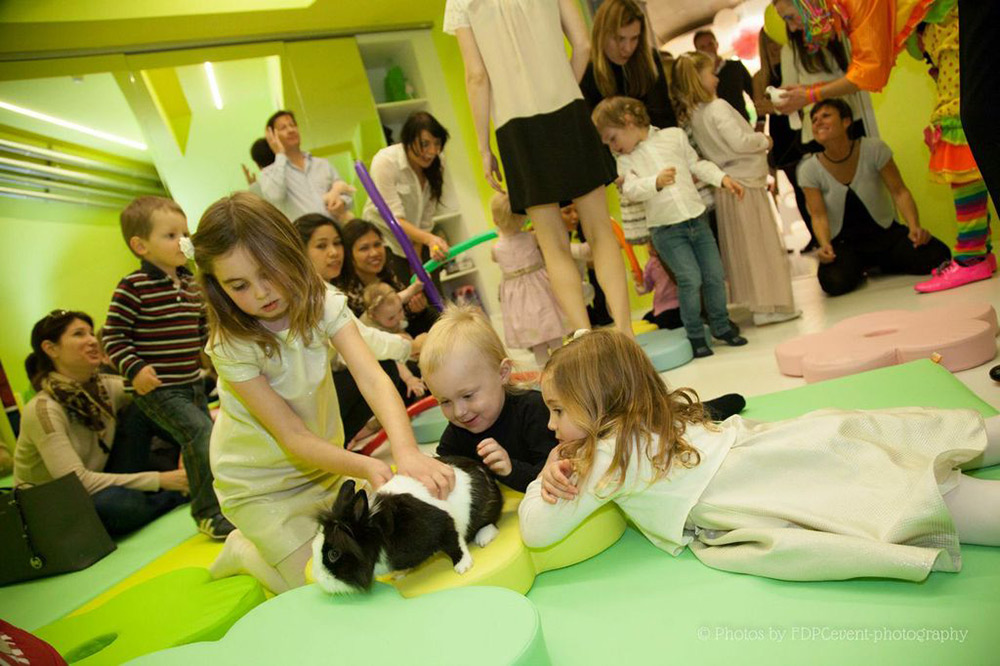
 Once upon a time, an educator who loved music moved from Milan, Italy, to bring the joy of learning English through music to children in a land faraway. Around the same time, an enchanting place called
  “I’ve only been living in Monte Carlo and teaching Kindermusik at the Munchkins Club for a few months but I can already see the children’s progress in so many ways, including:
 Of course, what fairytale is complete without a princess? Alina’s story includes Princess Charlene of Monaco, who visited the Munchkins Club to show her support for early childhood education.





 Young children love to search for hidden or missing items. Following the English language directions in the video, and then finding (and saying hello to!) the frogs, fish, and ducks, provides young ELL students much-needed feelings of mastery and success in English.
 We rock out in our early childhood music classes—literally and figuratively. From our
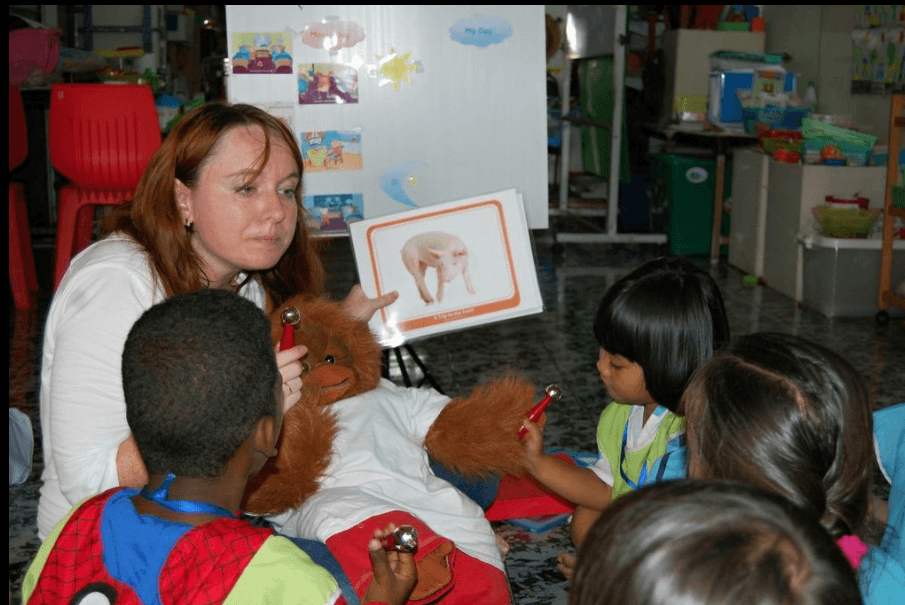
 For over 30 years,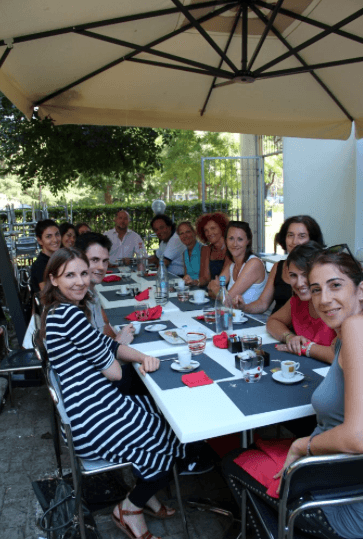
 With educators in over 70 countries, you can imagine we speak a lot of languages when we get together! Thankfully, we do share one common language: music and learning. A group of VYL ELL teachers in Italy recently experienced this common language at a one-day training session hosted by Kindermusik.
 “I’ve really enjoyed this ABC English & Me Training day. It was very informative and gave us many opportunities to try out this comprehensive and effective way of teaching. I was pleased to see that it is based on strong research and feel it is something that will surely help me develop, both professionally and personally. I am confident that this method of teaching will successfully bring a whole new way of language learning to this school that can only benefit our students.” ~ Kate Letts – Lingua Point
 “This training was very useful. In reality, putting the method into practice is much simpler than it seems with the help of the Kindermusik site and digital teachers guides. I have no doubt that the children will find the lesson activities engaging and fun. On the other hand, the teachers can find all the support necessary on the website and through the music provided.” ~ Sara Verducci – The Victoria Company