FOL Fridays: Benefits of Reading Aloud

Reading to Toddlers

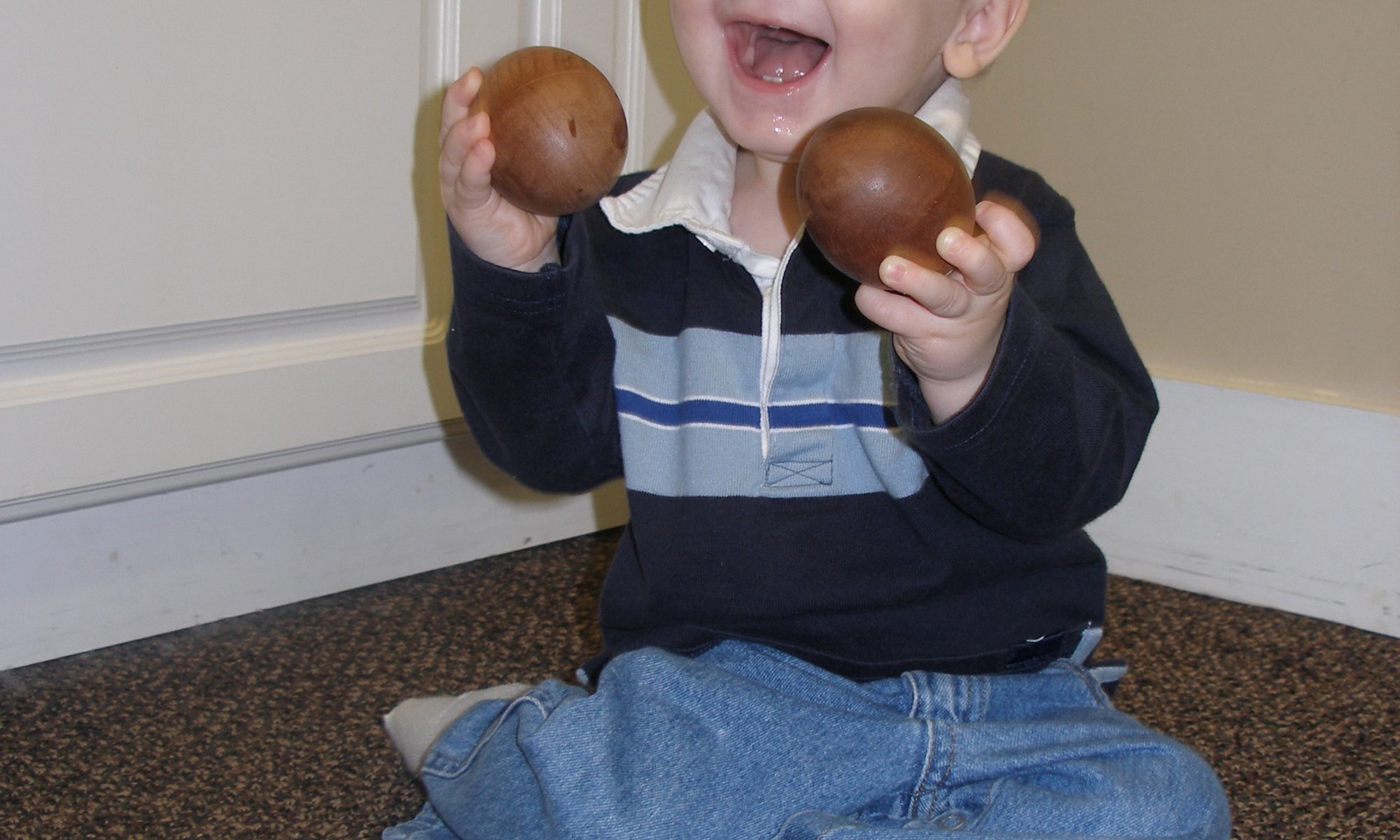
Reading to ToddlersReading to a child on a regular basis benefits him in several key ways. Reading increases his knowledge of the world, his vocabulary, his familiarity with the written language, and his interest in becoming literate. In fact, the larger the variety of fluent readers a child hears, the better.

Ideas for parents: Even if other special adults in your child’s life do not live nearby, it’s still possible for your child to hear them reading aloud. Hallmark has recordable books. Skype offers free video calls. And MailVU makes it possible to record and send a video email. The possibilities are endless!

– Contributed by Theresa Case, whose Greenville, SC program, Kindermusik at Piano Central Studios, is proudly among the top 1% of Kindermusik programs worldwide.

Kindermusik and Your Child: The Development of the Singer

Because they are experiencing an explosion of language, many preschool children tend to respond first to the words in a song rather than the rhythm or melody. Once they have heard the whole song and understand the song’s "story," they are most likely to then be able to concentrate on the melodic line. Children are most successful when singing songs that have a limited range, common rhythmic and melodic patterns, simple words, and plenty of repetition. That’s why Kindermusik songs are so catchy!

Joanne Rutowski, an expert on the child’s voice, describes the stages of vocal, or singing, development:

The Pre-Singer
Speaks rather than sings; uses little vocal inflection
The Speaking Range Singer
Talk-sings in a limited speaking range, with little vocal inflection
The Limited Range Singer
Sings in a range that is a bit higher than the speaking range but still limited
The Singer
Sings in a wide range; uses much vocal inflection when speaking

So what can you do to foster your child’s singing development?

  • Children love singing when they are singing songs they know. Download the tracks from your Home CD onto your iPod at http://play.kindermusik.com and keep your Home CD in the car so that your child can become familiar with the music from this semester.
  • Encourage your child to sing in a light head voice.
  • Surround your child with a rich listening environment.
  • Sing with your child. Love and enjoyment of singing is contagious!

When children are happily singing, they are stimulating all developmental domains: physical, emotional, language, and cognitive. Particularly

significant is the reinforcement singing provides in abilities relating to sequences, patterns, memory, and language.

Compiled by Theresa Case, whose Kindermusik program at Piano Central Studios in Greenville, SC, is proudly among the top 1% of Kindermusik programs worldwide.


FOL Fridays: Reading Time and Children

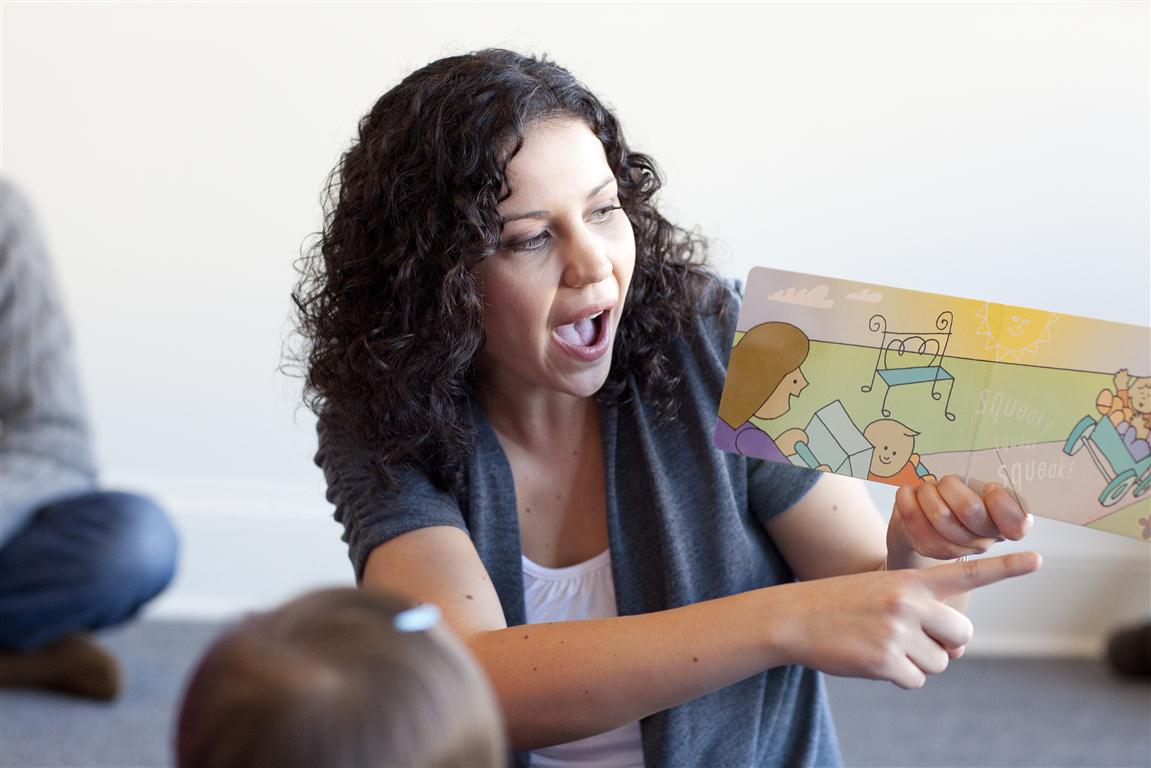
Reading to young children is such a valuable tool, not to mention a delightful activity with all kinds of benefits. Research shows that children who are read to do better in school, and that reading is also a calming, wonderful way for parents to bond with their children. Reading provides the experience of different types of language, rhythms, and sounds, as well as teaching about many topics that might not come up naturally in conversation.

Ideas for parents: Why not establish a “Reading Ritual” with your child? Make the ritual even more special by designating a reading chair, by setting aside a specific time each day to read, and by having a basket of favorite “read-aloud” books from which to choose. Even a few minutes a day spent reading to your child will have a lasting effect on your child’s emotional well-being and potential for academic success.

– Contributed by Theresa Case, whose Greenville, SC program, Kindermusik at Piano Central Studios, is proudly among the top 1% of Kindermusik programs worldwide.
FOL Fridays: Sequence Development

Music and Learning

Music and LearningSequencing is the ability to remember an order of events or instructions. If you’re wondering how long of a list your child should be able to remember or follow, a good rule of thumb is that young children are able to remember a sequence with approximately as many steps as their age. For example, a two-year-old can likely complete a two-step direction, three-year-olds can often sequence three steps, and so on.

Tips for parents: Like most skills, learning to sequence is a skill that can be practiced. Look for ways throughout your day to help your child practice following steps or remembering a sequence. This “practice” can come in the form of giving instruction (i.e., Pick up your socks and then take them to Daddy.), giving a sequence of events (First, we’ll eat breakfast, then we’ll get dressed, and then we’ll go to Kindermusik!), or discovering the sequence in a story book.

– Contributed by Theresa Case, whose Greenville, SC program, Kindermusik at Piano Central Studios, is proudly among the top 1% of Kindermusik programs worldwide.

FOL Fridays: Pretend Play

Pretend play is the ability to transform objects and actions symbolically. If you closely watch a young child’s pretend play, you will see that he is learning about the real world around him by exploring imaginary situations. Children use pretend play to “practice” and explore what is and isn’t possible. Pretend play also gives children the opportunity to try out their ideas and solve problems as they create the characters and “rules” in their world

Tips for parents: Encourage your child’s pretend play in two easy ways. First, set aside some time each day dedicated to just playing. This should be time that is free from distractions, like TV. Secondly, create a Pretend Play Box or cabinet that contains items that will inspire your child’s imagination. Items like dress-up clothes, props, empty boxes, cardboard tubes, and blankets can open up a whole world of fun, imaginary, pretend play – just the kind of play that will help your child learn to entertain themselves and to be creative thinkers and problem-solvers.

– Contributed by Theresa Case, whose Greenville, SC program, Kindermusik at Piano Central Studios, is proudly among the top 1% of Kindermusik programs worldwide.

FOL Fridays: Experiential Learning

Baby Brains

Baby in Music ClassMoving with a prop provides an excellent opportunity for multi-sensory learning. Gliding a hoop through the room to music, for example, engages the senses of touch, hearing, and sight. Moreover, children can visualize the

rhythm and melody and physically apply what they are hearing when they move their props. Props are a fun way to experience music and movement concepts!

Resources for parents: Make your own props by recycling simple things around the house. An oatmeal container can become a drum. A paper towel tube can become a conductor’s baton or a fairy princesses’ scepter. Empty boxes can become a jack-in-the-box toy to hide in and jump out of. A shoe box can become a stringed instrument by cutting a whole in the top and stretching some rubber bands across it. Sturdy paper plates can be filled with dried pasta and securely fastened together to make a tambourine shaker. What excites your child’s imagination and gets them moving around?

– Contributed by Theresa Case, whose Greenville, SC program, Kindermusik at Piano Central Studios, is proudly among the top 1% of Kindermusik programs worldwide.

FOL Fridays: Rituals and Routines

From infancy on, children count on rituals and routines for comfort and security. Routines comfort children and serve as cues for what is expected of them, giving them a sense of control over their environment. When a child knows what will happen next and what is expected of him, he will be better able to participate and to act independently, which is an important developmental step.

Tips for parents: Around the holidays, it’s easy for the schedule to be disrupted. When you are able to keep as much of a consistent routine as possible for your child, you’ll find the holidays to be much happier and enjoyable for all! Another help is to keep some favorite and/or familiar music playing in the car and at home. The holidays are also a good time to establish special rituals which, over time as they are repeated year after year, will add greatly to the joy and anticipation of the season.

– Contributed by Theresa Case, whose Greenville, SC program, Kindermusik at Piano Central Studios, is proudly among the top 1% of Kindermusik programs worldwide.

FOL Fridays: Audi-what? Audiation!

Dr. Edwin Gordon, of the Gordon Institute of Music & Learning, defined audiation as “the hearing and comprehending of sound that is not physically present.” According to Gordon, “audiation is to music as thinking is

to language.” Just as children babble before speaking and thinking in language, they also progress through steps in music before they fluently speak and think in music.

Tips for parents: This is a fun game to play with in the car, in the kitchen, or while cuddling on a lazy Saturday morning when the children pile in bed with you. Start singing a favorite song, and then stop before you sing the last note of a phrase or the end of the song. Wait and see if your child sings it for you. If he does, he is successfully “thinking music,” or hearing it in his head.

– Contributed by Theresa Case, whose Greenville, SC program, Kindermusik at Piano Central Studios, is proudly among the top 1% of Kindermusik programs worldwide.

The Importance of Repetition in Child Development

The below article is from Kindermusik Educator Analiisa Reichlin, of Seattle, Washington. 


Do We Have To Do This Again?

Recently, I received a great question from one of our Studio3Music mommas. I’m sure she’s not the first person to wonder, so I thought I should share it with you all.

Question: Is it typical for each class to be very similar each week? We’ve noticed that we are singing the same songs each week and I’m hoping that the class changes a bit from week to week. Could you let me know?

Continue reading “The Importance of Repetition in Child Development”

FOL Fridays: Rocking and a Sense of Balance

As you rock from center to one side then the other, or even as you rock forward and backward, there is an experience of alternating between being on-balance and off-balance. This gentle motion stimulates the vestibular system, helping children develop an improved sense of balance and coordination. Rocking, especially active rocking, is also a good way to burn energy without having to race around the house!

Tips for parents: Rocking can be a quiet and

calming activity, or it can be a wonderful outlet for pent-up energy! Depending on the need of the hour, choose the appropriate music and take some time together just to rock.

– Contributed by Theresa Case, whose Greenville, SC program, Kindermusik at Piano Central Studios, is proudly among the top 1% of Kindermusik programs worldwide.