 “Music is love in search of a voice.”
– Leo Tolstoy
A Minds on Music Quote



For three generations, Kindermusik has helped millions of children around the world build a strong foundation for a lifetime of learning.
“Music is love in search of a voice.”
– Leo Tolstoy
We educators have a favorite acronym for the Foundations of Learning that are the fundamental underpinnings of the Kindermusik curriculum – we call them FOLs. These Foundations of Learning statements, or FOLs, help us communicate the “why” and the “so what” behind many of the activities we do in class. But our FOLs are also rich and nuggets of information for educators and parents alike! They give a coveted window into your child’s growing mind and body. With that in mind, we celebrate the return of FOL Fridays when we will highlight an interesting FOL along with correlating tips, ideas, and/or resources for parents.
– Compiled by Theresa Case, whose Greenville, SC program, Kindermusik at Piano Central Studios, is proudly among the top 1% of Kindermusik programs worldwide.
“Music is like a multivitamin for our children’s brains.” – Kindermusik educator Jeannie Castillo
If you’re a huge Glee fan like me, I’m guessing you absolutely get how important music education is to a school’s curriculum & activity offerings. The Give A Note Foundation is teaming up with the crew at Glee to offer $1 MILLION to school music programs across the US with the Glee Give A Note contest – and you can enter to win $ for your school’s music program!
It’s easy to enter, but don’t wait – video uploads are due 10/11!
Seventy-three schools will win between $10,000 and $50,000! For more details, click the Glee Give A Note banner. Don’t wait – the deadline is already October 11, 2011 to upload your video!
You could also buy the Glee season 2 DVD & Blue Ray. One dollar will be donated for every DVD sold, with a $1 million dollar guaranteed donation to save music and arts programs. You can also donate here.
So, go relive the days of Finnchel and try to forget about what happens at Nationals…at least your purchase will make a difference!
My husband is a professional musician. He’s spent the majority of his life playing loud music through loud amplifiers (and in booming tones). Did I mention he’s a bassist? Not only that, but he likes to listen to pretty loud music – and he wears headphones to do his recording and other loud, musical work every day. I’ve expressed my concern for his ears and the potential hearing loss I was sure he was doomed to deal with. But, despite my nagging…I mean, despite my expressions of concern… he has always insisted that he has “tough ears.”
One time, he was having a hard time hearing – to the point that he decided to go to the doctor. This is something, because he is one of those guys who likes to avoid the doctor, unless it is very serious. I was sure I was going to have my ‘told you so’ moment on his hearing. Turns out, it was a massive amount of earwax! And, after taking a requisite hearing test at the ear, nose & throat specialist, he was deemed to have “exceptional hearing.”
Now, this just didn’t compute for me. Didn’t my Dad tell me he lost a little bit of his hearing at an early age from standing too close to the amps at big concerts in the 70s? How does exposing yourself to music constantly, as a part of your profession, allow anybody to have better hearing? Perhaps it’s just my husband. He really is a ninja (black belt in Isshinryu karate), so maybe this is just another way his ‘ninja-ness’ manifests itself?
Turns out recent research actually suggests that musicians’ ears ARE tougher. NPR published that embracing music early in life can actually stave off age-related hearing loss!
The article states:
“If you spend a lot of your life interacting with sound in an active manner, then your nervous system has made lots of sound-to-meaning connections” that can strengthen your auditory system, says Nina Kraus, director of the Auditory Neuroscience Laboratory at Northwestern University. Musicians focus extraordinary attention on deciphering low notes from high notes and detecting different tonal qualities. Kraus has studied younger musicians and found that their hearing is far superior to that of their non-musician counterparts. Continue reading “How Music Can Protect Against Hearing Loss”
“Dance, even if you have nowhere to do it but your living room.”
~ Kurt Vonnegut
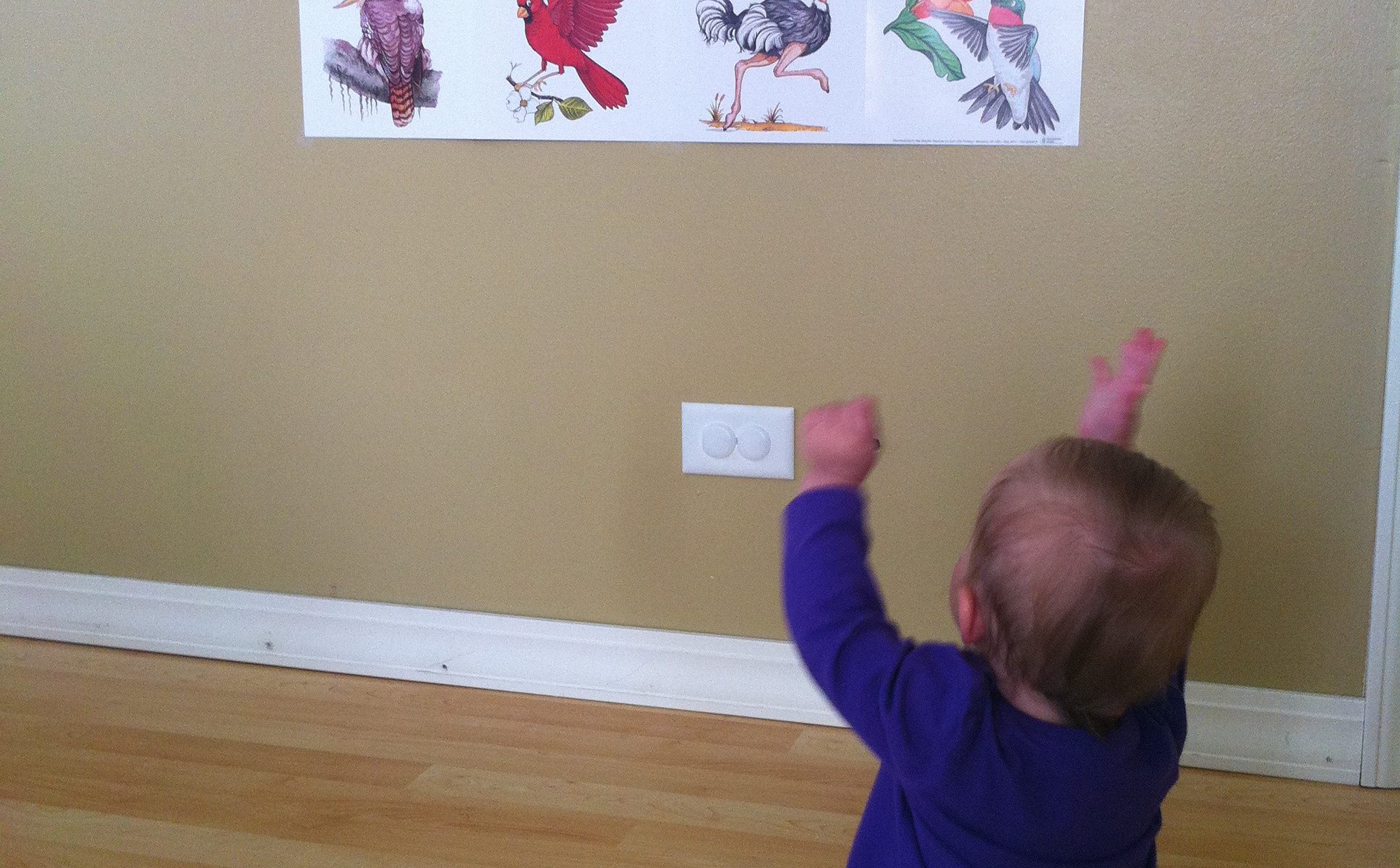
We are very appreciative when we find reviews of Kindermusik on our favorite Mommy blogs and forums. A big thank you goes out to Kathy, for the kind review posted in “Back to School: Kindermusik” on the SeekingSelf.com blog.
Our favorite part of Kathy’s review was how much her little one loved the “Feathers” curriculum in her Village class:
During class the instructor guides you and baby in song, to use instruments or move to music focused on a theme. The first theme is feathers. This is great timing because my little Girly just started to become more interested in birds chirping in the trees. She’ll toss her head back and forth to look for the birds or point to them soaring across the sky. While in our first class, Girly just giggled with excitement a few times as she watched the other babies (and mamas) doing the activities.
The class comes with home materials to further the exploration of the theme. The materials included a Feathers board book, a ball with a bell in it, a CD of the music from class, and a banner that coordinates with the book. I posted this feathers banner while Girly was napping. When she found the birds on our wall she was so excited. She had a whole conversation with these feathered friends for 15 minutes! I can’t wait to see how Girly grows as she spends more time in the class and with the materials.
What’s your child’s favorite thing about Kindermusik music class?
Here’s a little activity from Kindermusik that you can do to bond with your baby and help with baby’s digestion, circulation, and even mood!
Position your baby on his back. Beginning with your hands at the top of your baby’s chest, slowly move your hands outward and down, in the shape of a heart, to gently warm up his mid-body. Sing or hum Twinkle, Twinkle Little Star or another favorite lullaby as you continue to move your hands slowly outward and down. This type of loving touch stimulates healthy levels of stress hormone in your baby’s brain and aids his digestion and circulation.
More activities for babies, toddlers, and kids to come!
“To watch us dance is to hear our hearts speak.”
~ Hopi Indian saying
My husband won’t stop reminding me of a new research study we came across recently. Any time I disagree with him over anything, he reminds me that musicians are smarter than the rest of us, as reported this summer. And, therefore, he must be right. (He’s a professional musician and has studied music for 25+ years and played professionally for 19). So, I have to remind my husband that I studied viola, voice, & musical theater for many years, so that makes me right! Right?
…Moving on…
The one thing that I thought long and hard about after reading these research findings – something that is truly is amazing to me – is the amount of hard research surrounding the topic of the benefits of music education on babies, toddlers, kids, adults, & even senior citizens. In fact, this particular study found that “musicians might have brains that function better than their peers well into old age.”
As the Huffington Post reports:
Researchers tested the mental abilities of senior citizens and discovered that musicians performed better at a number of tests. In particular, musicians excelled at visual memory tasks. While musicians had similar verbal capabilities to non-musicians, the musicians’ ability to memorize new words was markedly better, too. Perhaps most importantly, the musicians’ IQ scores were higher overall than those who spent their lives listening to music rather than performing it.
Kindermusik just posted on this blog about how 6 year olds taking music lessons were shown to have enhanced IQs. This study shows that the benefit to intelligence and IQ lasts throughout life, well into the senior years. That leads to another very important point that I read. The research proved that the younger the musician was when he or she started playing an instrument, the sharper the mind in old age. Now, that doesn’t mean starting your toddler at piano lessons at age 2 is right either (there is an appropriate age for proper music instruction to start). But, it does mean that doing age-appropriate musical activities with your children from a very young age may actually help raise your child’s IQ and intelligence.
And, that’s why my family involves music in our every day life. We think Kindermusik music classes are essential to our son’s development. My oldest son, Marcus, who is 5 years old, has some special needs. He has epilepsy and, as a result of his abnormal brain activity and daily anticonvulsant medicine, has had some speech and language learning developments. Since he started his Kindermusik Young Child curriculum, which gives him the opportunity to practice his speech in a social environment AND expend his energy, he has shown a lot of progress in his development! The ‘homework’ assigned in music class gives him the chance to practice singing, words, and creative thinking. And, in his words, “Music class is SOOO fun!!!” So, he has a great time too. #Winning! Continue reading “Musicians are Smarter than the Rest of Us”
