
KI Green Competition: One Week Left!

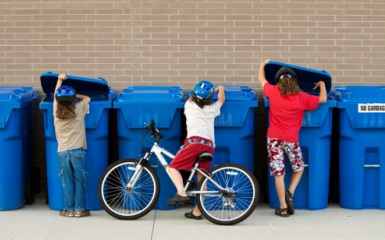
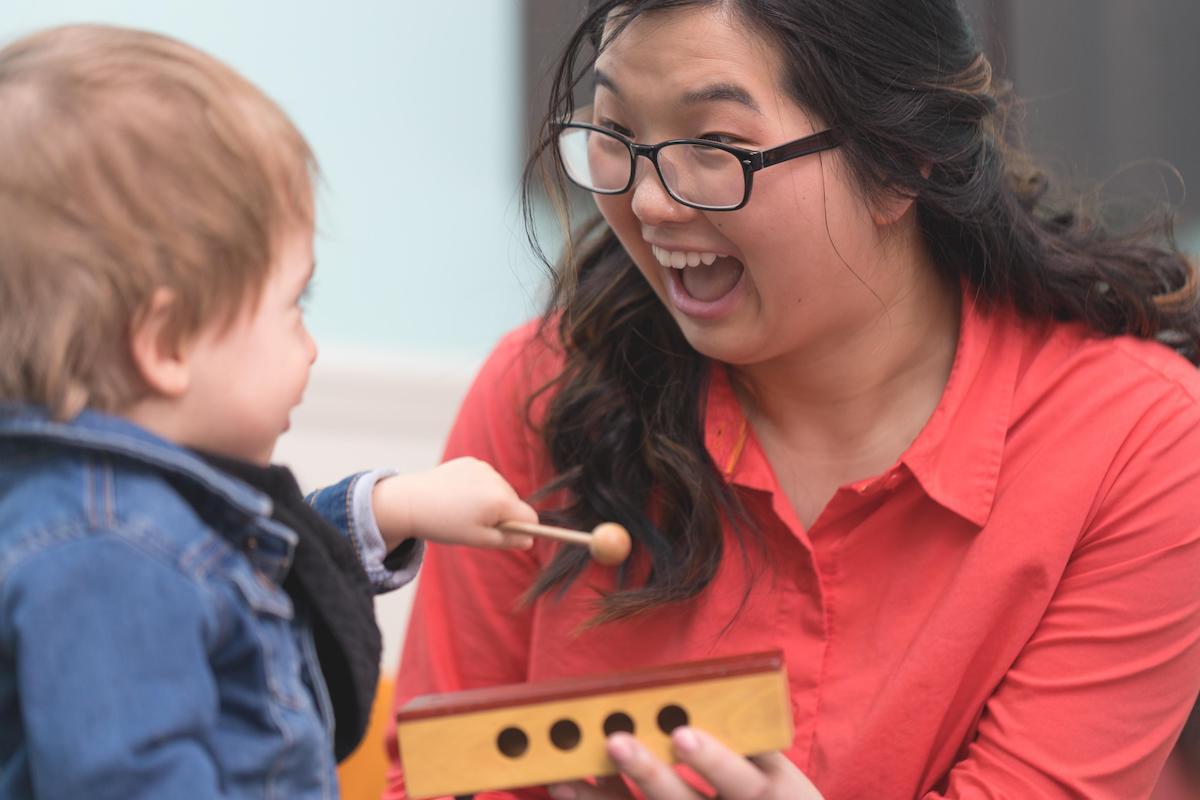
Americans recycled & composted 34% (84k tons) of trash in 2010. Shawn Currie, KI employee-owner and KI Green Competition contestant teaches his 18-month old son that most things belong in recycling, not the garbage. Shawn and his son are definitely in the running for winner of the KI Green Competition! Are you the 34% of world-saving recyclers? Post your story and/or picture to our Facebook wall by December 7th for a chance to win 50 free KI song credits, and a $100 donation to your favorite charity! And don’t forget to check out our America Recycles Day post for recycling pointers and myth-busting if you haven’t already.

E-books can put the “E” in early literacy development

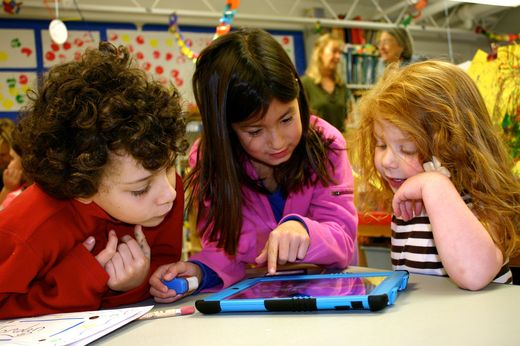
Supporting early literacy development in a classroom of preschoolers takes many different tools and tactics. Some children immediately walk into the classroom and head over to the book corner each morning. Those children seem to eat phonemes for breakfast. Children on the other end of the early literacy development spectrum may not engage in reading and literacy activities as eagerly. Recent literacy research from Kansas State University

implies that e-readers can be used to motivate less enthusiastic students.

E-readers can interest children in reading

In her research, Assistant Professor Lotta Larson used Kindle readers with second-graders. At the time, the version of the e-reader used allowed children to make the text audible, increase or decrease font size, and let them make notes while reading.

“It’s interesting to see the kinds of things these kids have been able to do,” Larson explained in a press release. “As a teacher, I know a student understands the book if she’s talking to the characters. If you take a look at those notes, it’s like having a glimpse into their brains as they’re reading.”

While research continues to emerge about the impact of e-readers and e-books on early literacy and language development, we compiled current best practices for early childhood teachers to use in the classroom.

Early literacy development through music and technology

At Kindermusik International, we share a commitment to follow, participate in, and integrate the latest research on how children learn best, including educationally appropriate ways to include digital formats of music and books. Our standards-based early language and literacy curriculum, ABC Music & Me, uses music as the vehicle for learning in preschools, daycares, and public schools while also appropriately implementing technology into the process. We’d love to schedule a demonstration to show you firsthand how to use music, technology, and the latest research to teach children early language and literacy, including at risk students who may also be reluctant readers.
For more information about using ABC Music & Me to boost early literacy and language development, email us at info@abcmusicandme.com.

Nutrition Infographic

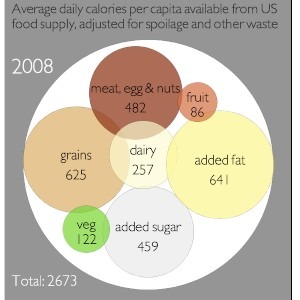
Happy Thanksgiving Gastronomic Aftermath, everyone! Given how closely linked nutrition and sustainability are, we thought we’d share this neat infographic from “Civil Eats,” a food justice blog partnered with the UC Berkley Graduate School of Journalism. In the animated infographic, you can see the “calories available per day per capita” for people living in the United States from 1970 to 2008. As a side note, we’re dying to see how this graph varies across the globe – hopefully UC Berkley students can continue on with that project! In any case, this graph shows the amount of calories an American individual has each day in each food group. As you run your mouse from left to right, the plate sizes (number of calories per food group) grow or shrink proportionate to time. Between 1970 and 1980, calorie intake only roseKindermusik Green - Sustainability1.2%; from 1990 to 2008, the average American caloric intake increased by more than 20% from the 1970 value, with 2,673 calories available per person per day. The amount of grains and added fat far outweighs the caloric intake from other food groups, indicating a heavily over-processed market. Though this graph recapitulates the obvious – eat more organic fruits and vegetables, and less in general – we know we need a gentle, visual reminder to keep our families in check at this time of year!


Music therapy and early childhood special education

Source: American Music Therapy Association

With more than 30 years experience of using music to reach children of all abilities, we experience every day the profound impact of music, including how music can be used in early childhood special education. Last year NPR’s Talk of the Nation featured a discussion with licensed music therapists who use music to treat stress and speech disorders. In addition to highlighting personal experiences in practicing music therapy, these music therapists discussed the latest research that showed music therapy can:

  • Decrease anxiety levels in cancer patients and people with heart disease
  • Improve quality of life in cancer patients and patients at the end of life
  • Reduce heart rate, respiratory rate, and blood pressure
  • Help people who have lost expressive language communicate through singing

Children with autism and music therapy

One of the callers, a parent with two children with autism shared her family’s experience with music therapy:

My son, my 6-six-year-old son, basically did not speak. He would string maybe two words together. That was his idea of a sentence. I walked into a pet store one day, and he sang from beginning to end the song “Slippery Fish.” It had seven stanzas. And I—my jaw hit the floor—and I went back to his access liaison with the state, and I said he doesn’t speak, yet he sang this song. She goes he needs music therapy….

We have had eight different music therapists now…my child, my nonverbal child, the one that spoke like two words together with his sentence, he speaks, he communicates, he can give us his wants.

I mean, he’s not talkative. He’s not—but the music therapist, she comes twice a week. This has made such a huge difference to our family, to our life, his ability to be educated, to provide self-care.”

To hear the show, Talk of the Nation: “Treating Stress, Speech Disorders with Music,” in its entirety or to read the transcripts, go here.

Early childhood special education curriculum uses music to teach children

Our special education curriculum, ABC Music & Me, uses music to teach children of all abilities early literacy and language, social and emotional skills, and to strengthen fine and gross motor skills, and more. ABC Music & Me is not a therapeutic program, however, many music therapists use or recommend ABC Music & Me or Kindermusik curricula to families whose children experience physical, emotional, cognitive, or social challenges. Students with special needs who use our early childhood special education curriculum show gains in literacy and language skills.

Special needs teachers appreciate the supplemental strategies guide, Meeting Special Needs, organized unit-by-unit and lesson-by-lesson, that suggests activity adaptations for children with particular needs or impairments. Plus, our exclusive customer website includes the tools teachers need for students’ IEPs, including IEP objective descriptors for easy cut-and-paste and IEP skills booster index.

For more information about using ABC Music & Me as an early childhood special education curriculum, email us at info@abcmusicandme.com.

Thankful Turkeys

Attention shoppers! Allow us to help you kill two birds with one post… here’s a certifiable tool to find a local, organic turkey near you. We are what we eat – and the short-term cost of feeding your loved ones a marginally more expensive, organically fed, hormone-free bird far outweighs the long-term risks of hormone toxicity.

Kindermusik Green - SustainabilityOkay, phew. Let’s eat thankful turkeys. And speaking of being thankful, Thanksgiving is

a great time to sit back and reflect on your family values– what you’re grateful for, and how expressing your gratitude instigates positive change. Countless studies have shown the powerful impact of gratitude on personal mental health—humans build deeper, more mutually beneficial relationships with people when they express gratitude towards one another. This effect is amplified when gratitude is expressed over time, and through written forms of communication (ah, those naggy thank-you notes ARE worth it!). We think the confidence and mindfulness stemming from gratitude might even make individuals more successful in the classroom, in careers, and as creative inventors and thinkers. And, not surprisingly, as environmental stewards.

What aspect of the environment are YOU and YOUR family thankful for? Holiday hikes? Backyard gardening time? Trips to the local compost center?

WIN 50 free Kindermusik songs & $100 donation to your favorite charity by sharing your family’s Green/Sustainability/Eco efforts by 12/07/12.

Submit your posts, pictures or videos to: Facebook.com/Kindermusik.

5 early literacy Christmas activities

Mother Goose could well be called the Mother of Early Literacy. “Hey Diddle, Diddle,” “Little Miss Muffet,” and other nursery rhymes support early literacy by building phonemic awareness through experiences that recognize, repeat, and predict rhymes. Rhyming word play contributes to phonemic awareness as children begin to hear the differences and similarities between words like “moon” and “spoon” and “muffet” and “tuffet.”

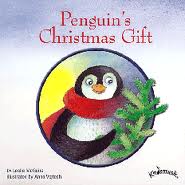
Along with favorites from Mother Goose, this holiday season add a penguin to your early literacy activities with Penguin’s Christmas Gift. This story download, created by Kindermusik International, combines rhymes with active listening as children hear the story of a tiny penguin who turns an ordinary tree into an extraordinary one for an extra special Christmas at the zoo.

Download Penguin’s Christmas Gift here and use it in your class next month to support early literacy growth.

4 additional early literacy activities to use with Penguin’s Christmas Gift

If you are like many early literacy educators, your Pinterest boards contain dozens (if not hundreds!) of early literacy activities to use in the classroom. We culled through some of our favorites to use along with Penguin’s Christmas Gift.

  1. Letter P Penguin Craft
  2. Beginning Middle & End Instead of using a candy corn image, use a Christmas tree.
  3. Rhyming Tree Literacy Activity Use branches of a Christmas tree instead. Also for pre-readers, use images and words.
  4. Body Rhyme Early Literacy Activity This early literacy activity isn’t really about penguins or Christmas. We just love the movement and use of rhyming words to support phonemic awareness.

Follow our early literacy and language board on Pinterest for even more ideas.

Early literacy curriculum that uses music as the vehicle for learning

ABC Music & Me, our early literacy curriculum, uses music and movement to teach young children early literacy and language. In addition to the research-based curriculum, ABC Music & Me increases parent involvement in early childhood education by providing families with materials to use together at home.

For more information about using ABC Music & Me as an early literacy curriculum, email us at info@abcmusicandme.com.

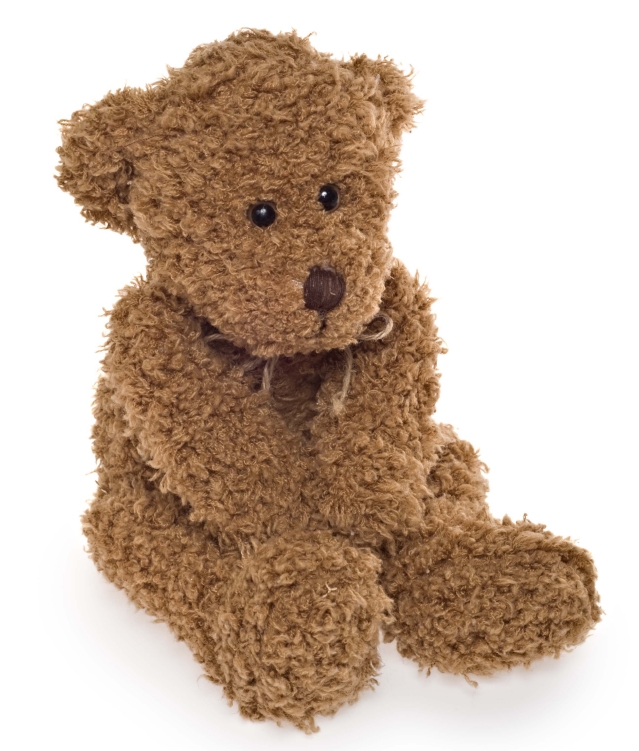
Who ever heard of an impolite Teddy Bear? Nobody! Introducing Unit 4 of ABC English & Me, Hello Teddy

Is there such a thing as impolite Teddy Bear? No! This lovable toy provides a sense of comfort to every child — and every parent who was once a child. In this unit, Teddy Bear will help children learn polite greeting rituals, label different colors and clothes when he gets dressed for school, and he’ll help young children develop gross motor skills and learn to follow directions through simple games such as throwing and catching a ball. All while being huggably polite.

Additional movement activities help children develop an internal sense of control as they play instruments along to the music — stopping when the music stops, speeding up and slowing the tempo.

Target concepts

Following directions
Inhibitory control
Developing gross motor skills such as throwing and catching a ball
Polite rituals and greeting vocabulary

New and reinforced vocabulary words

bear, farm, horse, town, bus, car, bed, kitchen, tractor
teddy bear puts on…, t-shirt, jeans, shoes, socks, sweatshirt, green, blue, red, yellow, white, black, brown

New movement concepts

Turn around, touch the ground, show your shoe, dance on your toes
touch your nose, tap your head, go to bed, wake up now, take a bow
wave your hands, side-to-side, walk, tiptoe, skip, leap
sit down, tap your head, touch your nose, reach up high

Music activities

Playing with sandblocks: tap, up high, down low, fast, slowly, stop, “Let’s play with the music!”
The drum! Focused listening activities include counting and tapping the drum, as well as taking turns with the drum

Available now in the Digital Teacher’s Guides.
To learn more about digital teacher’s guides and Kindermusik, click here.

Kindermusik International leads the way in Digital Publishing for educators, families, and children

Kindermusik Digital Learning Platform for Kids
Homepage with Monthly Units

Yes, we’re tooting our own horns a bit because we don’t think a bumper sticker, like “My textbooks fit in my earbuds,” would ever really take off. So every once in a while, we need to celebrate in other ways.

Kindermusik International is leading the way in Digital Publishing. In the last 5 years we’ve been working to convert over 25 years worth of research and curricula, into one easily downloadable system. And the process is running more smoothly than ever before.

No more clunky, spiral bound notebooks. No more children walking home from school, weighed down by an increasingly heavy load of books. And no more paper waste. Kindermusik International’s online textbooks and interactive learning lessons are available on a variety of mobile devices.

Learn more about online Kindermusik Educator training. Click here to receive FREE information on becoming a Kindermusik Educator.

Lesson prep is as easy as updating as syncing your iPod. And Digital Teachers Guides are available online so you can download the lessons and print them out, or, bring your iPad right into the classroom.

And even if you’re not ready to go completely digital, we’ve got you covered, too. You can easily download the class music and activities and burn them to CDs.

Not convinced? Consider this.
Will iPads Replace Textbooks? Seeking Alpha, November 1, 2012
If test scores keep going up, they will. Educators can’t ignore a student’s preference for an interactive tablet over a used textbook, and it seems grades are improving, too. “Houghton Mifflin recently performed a pilot study using an iPad text for Algebra 1 courses, and found that 20 increase in the number of students who scored ‘Proficient’ or ‘Advanced’ in subject comprehension when using tablets rather than paper textbook counterparts.”

America Recycles Day!

November 15th is "America Recycles Day" in the United States, so we’re celebrating all over the world. Here are a few tips from americarecyclesday.org:

  • Tip #1: Plastic bottle caps are usually recyclable along with the bottle!
  • Tip #2 Recycle the TOP (non-greasy) part of your pizza box
  • Tips #3: Check with your local recycling center to learn what numbers are accepted.
  • Tip #4: Recycle the cardboard sleeves from your coffee cup, but not the coffee cup itself – it has a waxy, non-recyclable lining.
  • Tip #5: Take a family visit to your recycling center.
  • Tip #6: Unsubscribe to unwanted mail sources.
  • Tip #7: Check AmericaRecyclesDay.org/find-recycling where you can bring those harder-to-recycle items so that you don’t contaminate your batch.
  • Tip #8: Keep bags for both trash and recycling in your car.
  • Tip #9: Recycling goes beyond the kitchen – recycle shampoo bottles, shoe boxes, or old glass containers when you can!
  • Tip #10: Metals (aluminum) are ESPECIALLY important to recycle because they require so much energy to create.
  • Tip #11: Answer the call to recycle your wireless phone! 100 million of them go out of use each year, according to the U.S. EPA. Donate your out-of-use cell phone to a local charity or find a drop-off facility near you (AmericaRecyclesDay.org/find-recycling).

We just signed the pledge to act and continue to learn about recycling. 34% of the population of the United States recycles. Are you represented in that 34%?

Kindermusik Green - SustainabilityEnter to Win the Kindermusik Green Contest!

WIN 50 free Kindermusik songs & $100 donation to your favorite charity by sharing your family’s Green/Sustainability/Eco efforts by 12/07/12.

Submit your posts, pictures or videos to: Facebook.com/Kindermusik.

Kindermusik Green Competition Extended!

Picture from: http://www.sourcethestation.com/idea/community-gardens/

Picture from: http://www.sourcethestation.com/idea/community-gardens/

“A powerful idea communicates some of its strength to him who challenges it.” – Marcel Proust

It’s the “Season of Giving” for many Kindermusik families. For the hard-nosed environmentalists among us, the holidays create a certain challenge to sustain the sustainability mindset when buying, wasting, and indulging are part of the holiday milieu.

THUS, we’ve decided to extend the Kindermusik Green Competition
deadline through Friday, December 7th.

We know you’re busy, but we firmly believe in the positive contagiousness of challenging one another to be environmental leaders by sharing our stories among the community. Environmental leadership is both about standing OUT to set an example for what’s right, and about letting examples of others’ good works to instigate our moral mojo.

Kindermusik Green - Sustainability

KI Green has celebrated company sustainability efforts for over a year. Now it’s time to celebrate YOU.

WIN 50 free Kindermusik songs & $100 donation to your favorite charity by sharing your family’s Green/Sustainability/Eco efforts by 12/07/12.

Submit your posts, pictures or videos to Facebook.com/Kindermusik.