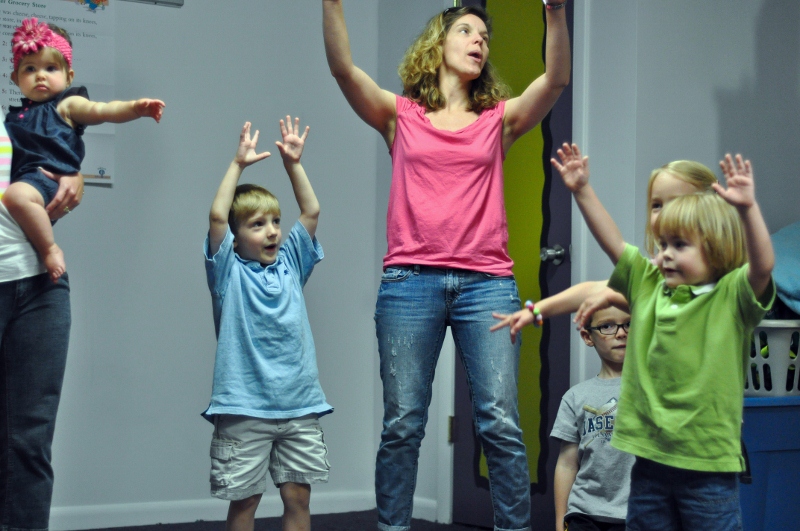
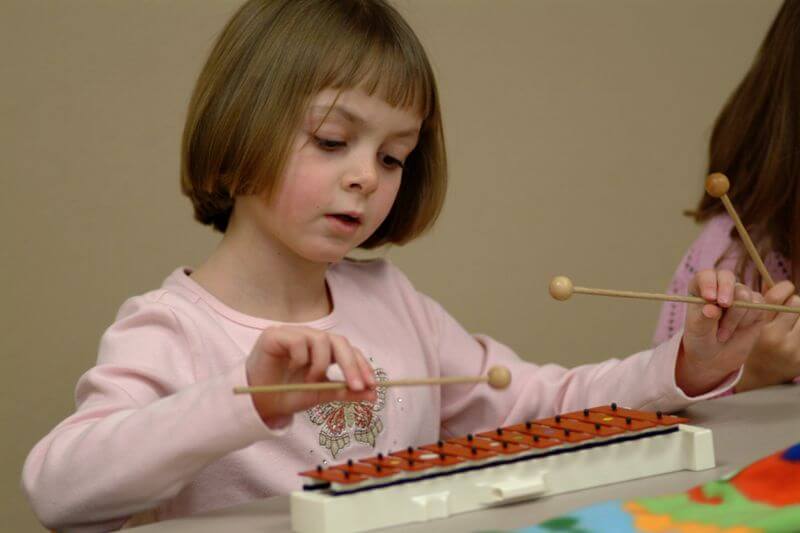
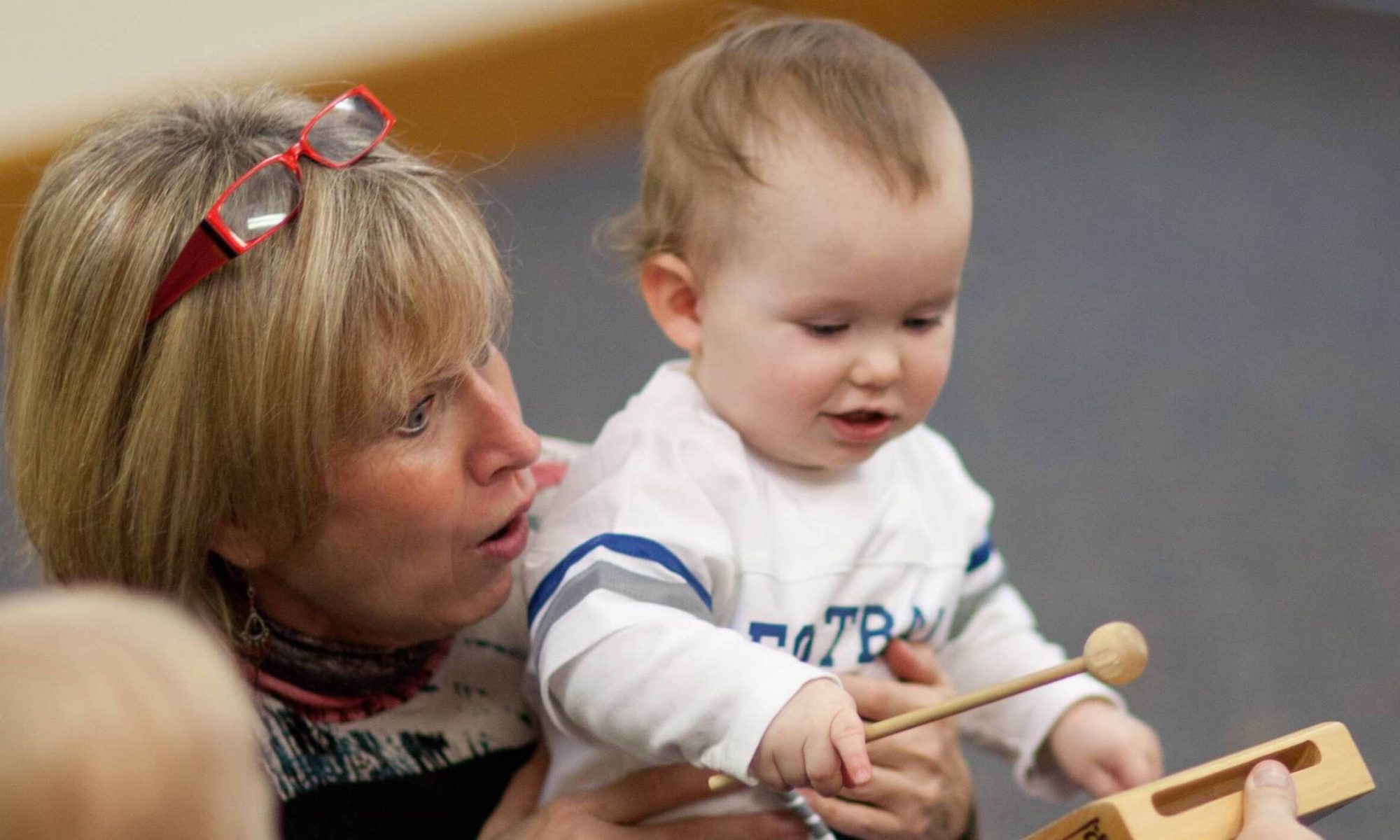
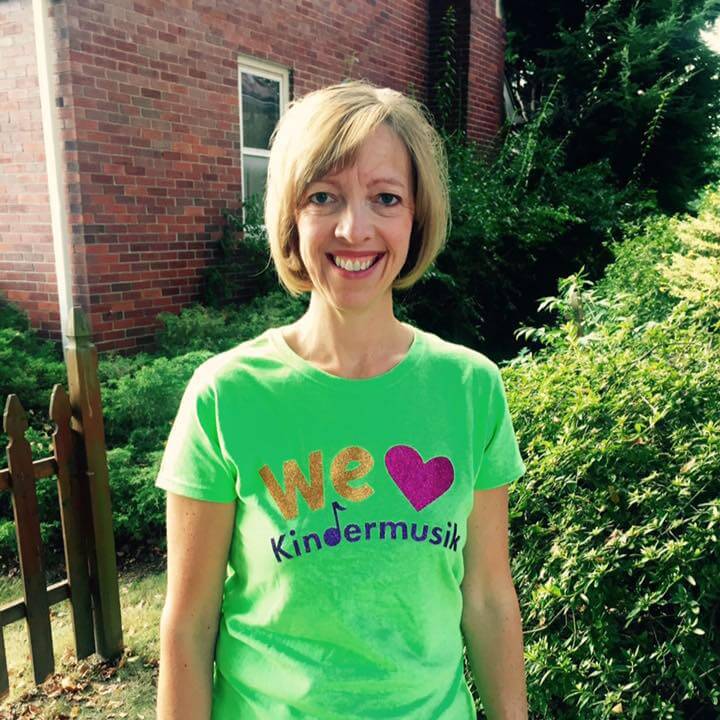
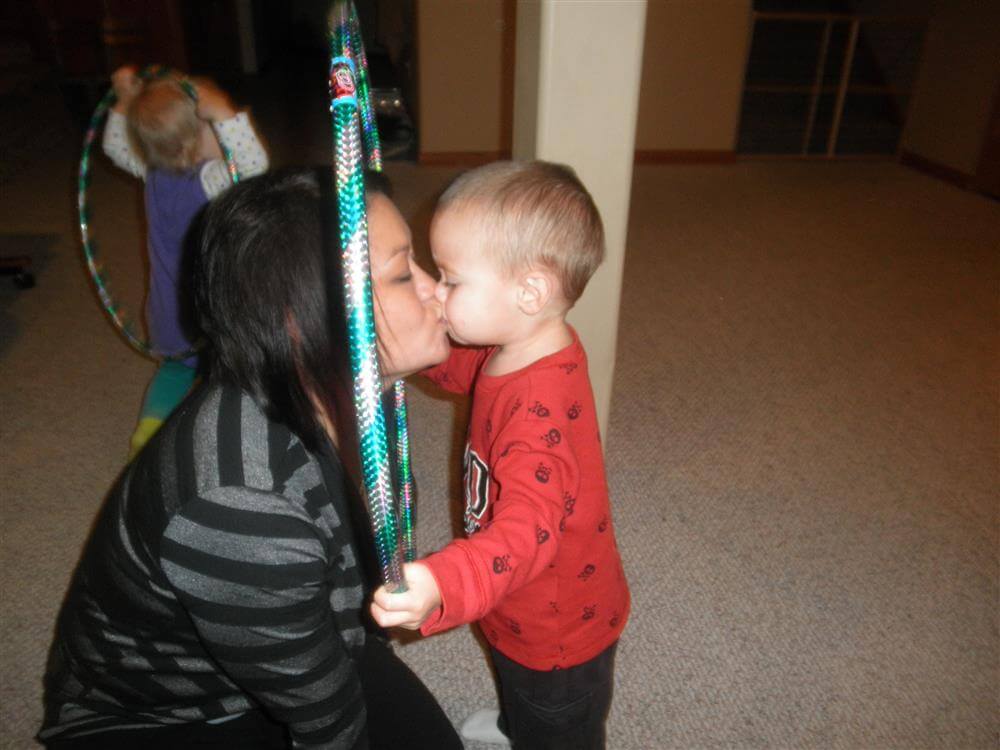
At the heart of Dr. Becky Bailey’s transformative Conscious Discipline approach are her “I Love You Rituals.” When used with intention and consistency, Dr. Bailey’s poems and songs are powerful tools that help children connect, calm, and make good choices. Best of all, these “I Love You Rituals” work beautifully not just in the classroom but also at home. Here are a few of our favorites from Dr. Becky Bailey that have been successfully incorporated into many Kindermusik classrooms and routines:
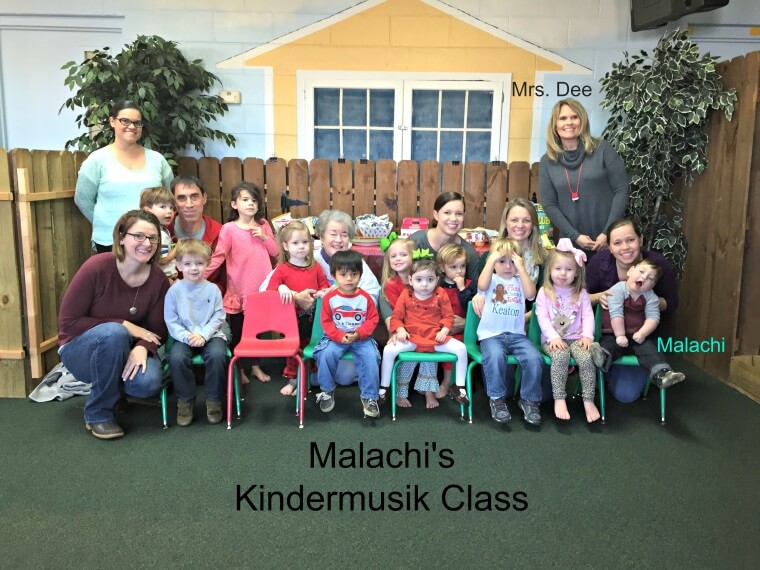
[vc_row][vc_column][vc_column_text]My name is Dee Lancaster and I am a Maestro Educator ending my 13th year of teaching Kindermusik in Cleveland, TN. I love my job and thank God every day for the beautiful families that have come into my life through Kindermusik.
One of the most rewarding things about my job is getting to know these families and hearing about the difference Kindermusik is making not only in their child’s development but also in their family interactions and relationships. I feel especially blessed to play a part in the lives of families with unique challenges and special needs. I wanted to share a letter with you from one of these families who also happens to be a current recipient of the Carol D. Penney scholarship. The letter is long but so worth the read. It is my great pleasure to introduce you to Malachi.
[/vc_column_text][vc_column_text][/vc_column_text][vc_column_text]In February 2013 our lives were dramatically changed by the birth of our son Malachi. While most birth stories are riddled with joy, ours was overshadowed by fear and uncertainty. Our son Malachi was born at just 24 weeks gestation with a birth weight of only 1 pound 12 ounces. Malachi was born without a heartbeat, and after 15 long minutes of CPR he came to life. During that time his brain hemorrhaged internally causing major, irreversible damage. We were given the option to stop lifesaving care and we were told that Malachi would never walk, talk, or breathe on his own. We chose to allow him to fight as long as God saw fit, and I am pleased to tell you that today we have a joyful and happy almost three year old.
As a result of his traumatic birth, Malachi has several medical conditions. In addition to his cerebral palsy, Malachi is legally blind, suffers from severe epilepsy, and has a VP shunt to control his hydrocephalus. He also has multiple orthopedic issues and we are still told that he is not expected to walk, but we continue to hold out hope. To date, Malachi has had 11 surgeries on his eyes, brain, feet, stomach, and heart. These diagnoses require several specialist appointments every week resulting in lots of road trips and unpleasant medical testing.
When we first heard about Kindermusik I was immediately intrigued. Before Malachi’s birth, I always envisioned myself as the type of mother who would have her kids involved in as many activities as possible. I found myself not only mourning the loss of having a “typical” child, but also mourning the loss of being able to experience “typical motherhood”. Due to Malachi’s weakened immune system, he had not been able to be around any children and we were starting to feel very isolated. I decided to take Malachi to a trial Kindermusik class, and what I saw in my son amazed me.
Malachi immediately responded to the stimulus around him with such joy. I was afraid that the excitement would trigger his seizures, but those fears disappeared as I watched him anticipate what we would be doing next. He has always been motivated by music, but even more exciting was to see him react to hearing the other children in the room. The curiosity and excitement in his eyes reassured me that this was something we needed to pursue.
Malachi struggles to maintain an upright sitting position and control his head, but during Kindermusik class he is so excited that he engages those muscles with ease. He gets more of a workout at his weekly Kindermusik class than during his weekly physical therapy sessions! Aside from seeing many physical improvements during our sessions, cognitively Malachi is tracking conversations, learning how to follow directions, and responding when asked questions. It is so refreshing as his mother to find an activity that helps us get closer to so many of our goals for Malachi.
Kindermusik days are something that Malachi looks forward to, and responds with excitement when I tell him that we are going to music class. It is the one weekly appointment in our very busy week that he can’t wait to get to. And I am so thankful that I can brighten up his schedule with something that brings him so much joy. It has certainly been a blessing to our family. There is nothing more heart-warming than hearing your child giggle uncontrollably at the children around him.
We also have been able to incorporate our home materials into our every day. We sing the songs during therapy to keep him engaged and we play the CD in the car on our long car trips. He has the books memorized and smiles with anticipation when we come to his favorite part. Malachi takes a little longer to process things and repetitive things allow him time to catch up with the song. He will even attempt to sing along during many of the songs.
Thanks to Kindermusik and the Carol D. Penney scholarship, I no longer have to mourn over the loss of my “typical motherhood”. In fact, just a few weeks ago we saw one of our classmates out in public. The little boy said hi to Malachi and treated him like a friend. We didn’t have to answer questions about his leg braces, or explain why Malachi didn’t look at him and respond. Kindermusik has brought some much needed normalcy to our world.
Thank you for providing ways for families like mine to participate in your amazing program. There is a sweet little boy in Tennessee who appreciates you more than you know. If you would like to follow Malachi’s story you can find us on Facebook by searching “Malachi’s Miracles”.[/vc_column_text][/vc_column][/vc_row]
Elizabeth Mesick – Educator, Philosopher, Mom, and Blogger
[/vc_column_text][vc_column_text]As a parent, finding the balance between protecting your child and allowing for safe risks is a constant struggle. If we don’t allow risks, we logically know that it will not end well for our little ones, but still, all we want to do is scoop them up and snoodled them and keep them safe from bullies, kidnappers and even scarier criminals, mean teachers, friends who only play with them when no one else is around, those playground moms who judge your child, etc. You know what I mean! Growing up can be a nightmare, and it’s not just the other kids to worry about.
I have a perfect (for me) family trio of Husband, Daughter, and me. I chose to work and mom at the same time and continued my career as an elementary school teacher while Daughter was in day care. Then came the day when she was finally old enough to be a part of my school community. Oddly, I was more nervous with her right down the hall than before when she was miles away from me. She wasn’t in the cozy confines of the sweet little 6 to 1 ration preschool room anymore, and I knew what was out there. Now please understand, the school in which I taught was pretty dang fabulous. Really amazing teachers and kids, a supportive administration, small class size, the works. School’s scary and hard and different. There are new challenges and opportunities that just made me nervous for my little peanut. She did (and does) a great job navigating all of it with minimal help from home. All was going fine – and then – she wanted to be in the talent show.[/vc_column_text][/vc_column][/vc_row][vc_row][vc_column][vc_column_text]
Opportunity: The Talent Show
[/vc_column_text][vc_column_text]Every year at our amazing school we had a talent show mid-winter. It was a long and cold winter in Colorado and testing season was upon us, so we all needed a great break. I ran the show for many years and, though it was exhausting and at times quite aggravating, I adored it. One year I realized I would be at a reading conference during the show’s scheduled date, so I passed the leadership off to another. After ten years it was time anyway. When Daughter was in first grade, she decided that it was time for her to be in the show alongside the dancers and singers and comedians. She would sing, she told me, all alone. It was the height of the phenomenon of Disney’s “Frozen” and Daughter was, as were most other little ones that year, obsessed. “I’m going to sing ‘Let it Go’ with the music only- no words on the CD,” she said. “I’m going to do it all by myself, I’m going to do a dance, and it’s going to be great.” My heart sank into my feet. I felt nauseated. How terrible, you’re thinking. Support her! Ok, ok. I hear you. But let me explain…[/vc_column_text][/vc_column][/vc_row][vc_row][vc_column][vc_single_image image=”7933″ img_size=”medium” alignment=”center”][vc_column_text]Daughter is amazing at a lot of things. Quite a lot of them, in fact. She can read like you wouldn’t believe. She is ridiculously smart when it comes to most school subjects, especially science, because she remembers everything. She can act like very few children I’ve ever seen, and I have been leading children in theater clubs my entire teaching career. But like most people, she has her things she is not so good at. Topping the list are her fine and gross motor skills (read: dancing) and singing. Oh, does she want to be a singer! Those days, as now, she sang all the time; showers, baths, car, walking, riding a bike, on the swings, you name it this kid was singing. (There’s a great story about her kindergarten teacher needing to talk to us about the constant singing in the bathroom, actually, but that’s for another day.) Even with all that practice, the poor child could not, as the saying goes, carry a tune in a bucket. Cool abilities and cool mom teacher aside, Daughter was not doing great in the friend and peer likeability department, either. She’s unique, some even say weird, and gets picked on. Some days it bothers her, some days less so, and it seems to be an undercurrent to all that happens to her. That’s why my belly hurt. All I could see was Daughter up on that stage, singing and dancing her heart out, only to be made fun of by her peers when she finished. Would they even clap for her? What if they openly laugh at her? What if this ruins the stage for her entirely, when I know she has some serious acting chops? I didn’t know what to do. [/vc_column_text][vc_column_text]
A ship is safe in harbor, but that’s not what ships are for.
[/vc_column_text][vc_column_text]I think a lot of parents have these types of situations with their sweet little ones. Many people call their parents, siblings, fellow parent friends, and ask for advice. I did a lot of those things, but I also did what I often do when confronted with a conundrum; I researched. I was directed to several amazing resources, and let me sum up what they are saying for you: allowing your child an opportunity to take safe, calculated risks is important for them as a developing human. Allowing (again, safe and calculated) risks helps your child to be a better decision-making adult. One of my favorite nuggets of research-based wisdom is from clinical psychologists Dr. Susan Davis and Dr. Nancy Eppler-Wolff. “Risk is inevitable, and without learning the skills of good risk-taking, our children will be more apt to take impulsive and poor risks.” (Read the full article here) They’re going to take risks anyway, so why not give them a safe environment and controlled setting? I always told the parents of my elementary students that making mistakes in my classroom was a perfect time because the consequences were small. This was really no different. Or was it? Were the consequences really small? So I continued with researching adding the idea of not only risk, but failure or mistake. Yet another nugget which summed up what I was reading fell into my lap:
It is worth reminding ourselves of two truths about how children grow up to be confident, resilient, responsible people. First, they have to be given the chance to learn from their mistakes. Second, the best classroom for learning about everyday life is indisputably the real world, beyond home and school.
I can’t think of a single parent who would not want their child to be confident, resilient, or responsible. [/vc_column_text][/vc_column][/vc_row][vc_row][vc_column][vc_column_text]So I decided to let her go for it. Daughter was to be on that stage alone and singing and dancing to the smash hit “Let it Go” without even my face in the audience. I had to be at a reading conference if you recall, and I was a hundred miles away. Luckily, when you’ve been teaching at a small school in a small town, you get great friends among your fellow staff members, and a wonderful teacher gave Daughter a pep talk beforehand, FaceTime-d me in for the performance, and even bought her a flower for afterwards. Even more luckily, Husband was able to be there having walked in the door from his demanding job the act before Daughter was to go on stage. All was in place. Take your places, ready, set, go! [/vc_column_text][vc_column_text]
A bend in the road is not the end of the road…Unless you fail to make the turn.
[/vc_column_text][vc_column_text]She sang her little heart out. She was super nervous and forgot to do her dance, which is probably for the best anyway. She was singing all her words right on time and didn’t sound half bad. Then my teacher friend panned the audience. Every kid there was swaying and had a smile on his or her face. Every kid was supporting her. Every. Single. One. When she finished, they applauded like Idina Menzel herself had been there. It was spectacular. She had been so confident with only a touch of stage fright, and she took so much more from that performance than can be measured or written or examined here. She’s not afraid to take a reasonable risk. She’s not afraid to do something her heart tells her is right, and she has a love of music and sharing it with others that can never be extinguished.[/vc_column_text][vc_column_text]
..they applauded like Idina Menzel herself had been there.
[/vc_column_text][/vc_column][/vc_row][vc_row][vc_column][vc_column_text]She’s a little older now and has started taking piano lessons. Her first homework assignment is to write a song with the few notes she has learned. She’s up to the task. She will write and perform that song for her teacher with confidence and love. She will sing every day to anyone who will listen. She’s practicing to be Willy Wonka in a musical, too. When I asked her what gave her the confidence to audition for such a big part, she answered, “Mom, if I can sing in front of the whole school all by myself, what can’t I do?” That’s what it’s all about, isn’t it? What can’t she do? [/vc_column_text][vc_separator][vc_column_text]
Elizabeth Mesick is a former elementary school teacher who now gets to teach and write from her cozy home office. She lives in Pennsylvania with her amazing husband, lovely daughter, and wonderful zoo of furry beasts: Mabel, Merlin, and Rose Tyler. Lizzie loves to write, read, play, and drink ridiculous amounts of tea. She also really loves to hear from her readers.
[vc_row][vc_column][vc_column_text]Hello music lovers! It’s your friendly neighborhood music doctor bringing you some truth about classical music. Perhaps “myths’ is the wrong word. Really, when we talk about classical music, we constantly deal with misconceptions. And perhaps we, in the “classical music world”, don’t do a good enough job reaching out to a broader public. Remember, there are only TWO kinds of music – good and bad – and that varies from person to person. Here are some too-often-made assumptions about this misunderstood genre…[/vc_column_text][vc_column_text]
1. Classical Music is not relevant
What? You may think so, but I can prove its relevance in today’s society. Just because something was created a century (or more) ago, doesn’t mean it loses relevance. Take Carl Orff’s Carmina Burana, a touchstone work for choir, orchestra, and soloists. Written in the mid 1930s, it sets texts from the 11th, 12, and 13th centuries. You know it! It’s used at sporting events and commercials and countless other events. Just listen to the opening movement – a commentary on the whims of fortune:[/vc_column_text][vc_video link=”https://www.youtube.com/watch?v=FWiyKgeGWx0″][vc_column_text]How many of us know that tune (setting words written by monks who had been drinking a bit too much, BTW)? How many of us can relate to its message – that luck is out of our control?! And the power of the music! It drives right through the soul. Our lives’ events are marked with what most would label “classical” music – how about Felix Mendelssohn’s Wedding March, written in 1842 to accompany a production of Shakespeare’s A Midsummer Night’s Dream, or a countless number of Christmas carols, written centuries ago… [/vc_column_text][vc_column_text]
2. Classical Music has no power
Okay, slow down. Let’s think about that for a second. We have all been moved by music’s power, whether that be a pop song we connect to, or perhaps a piece of purposeful music, like a hymn or a protest song. But think about this: when the Berlin Wall fell in 1989 and Europe was looking for a piece of music to celebrate, they turned to Beethoven. American conductor Leonard Bernstein, lead the musicians of an international orchestra and chorus in performances of Beethoven’s Ninth Symphony, culminating in a powerful final movement – a tune we all know – Ode to Joy. In this moment, Ode to “Joy” became Ode to “Freedom.” The concert, which can be found in its entirety here, was broadcast in over 20 countries. The intensely powerful last part of the final movement is an amazing example of the genre’s capacity to activate our collective spirit. Take a listen…[/vc_column_text][vc_video link=”https://www.youtube.com/watch?v=IciKr8NUmKs”][vc_column_text]
3. Classical music is old
HISTORY WARNING! This is one of the biggest misconceptions of the genre. Of course, this stems from our use of the word “classic”; we use it as a polite synonym for “old.” The term in question has two main uses: classical – lowercase, used as a general term for all music performed by orchestras, many choirs, opera singers, and the like, and Classical – uppercase, which pertains to a specific period in music history, roughly 1750 to 1820. Now, Johann Sebastian Bach did not proclaim on his 1750 deathbed that “Baroque music is over! Now it’s the Classical period!” And Beethoven didn’t suddenly write in his journal on an early 1820 morning, “I am so over the Classical period. Let’s all be Romantic composers now.” These are labels which my musicologist colleagues have applied to help organize the past. The reality is that each main style slowly morphed and bled into the next. A better term might be Art Music. And guess what? Art music is still being composed today! Many of you know John Williams, the film score composer. His work is greatly influenced by Richard Wagner, a German composer of the late 1800s. Imagine a movie without a score. BORING.
Listen to these two examples – the first is Richard Wagner’s incredible musical representation of the Ride of the Valkyries (written in 1851) – the Norse female figures who decided who lived and died in battle.[/vc_column_text][vc_video link=”https://www.youtube.com/watch?v=TUac8MfFsV0″][vc_column_text]Now – how about John Williams’s iconic score (1977) from Star Wars! Listen to just a bit of the opening. Hear any similarities between this and Wagner? Triumphant brass…driving rhythms…you can’t separate it from the action of the film. Well…surprise! Wagner did it first in Opera. [/vc_column_text][vc_video link=”https://www.youtube.com/watch?v=_D0ZQPqeJkk”][vc_column_text]
4. It’s too expensive
Well, it’s true that it does cost a lot of money to maintain a professional symphony orchestra. There’s a great deal of education and experience on that stage. But, because of corporate sponsorships, grants, and individual patrons of the arts who give generously, tickets to a concert can be found for $25 or less – that’s a night at the movies for one person. And you are seeing LIVE music! There’s no studio manipulation, no lip syncing, and no safety nets. There are no do-overs. These musicians have practiced for years to perform at a level with just about zero mistakes. Take a look at this: American Symphony Orchestra – one of the best orchestras in the US, located in NYC (an expensive city!) – tickets are as low as $25. St. Louis Symphony – their Family Concerts have tickets as low as $8!!! The Dallas Symphony Orchestra – tickets to their concerts start at $19![/vc_column_text][vc_column_text]
5. Classical music is for my grandparents
This one is my favorite. My wonderfully talented wife is an elementary school music educator. She hears this myth from her students CONSTANTLY when she first exposes them to “classical” music. But…after spending some time with it, learning about it, and developing a better understanding of the music, she has students asking “Can I download this on my iPod?”
What’s the key here? I bet you know the answer. The earlier a child is exposed to something, whether that be art or poetry or dance or MUSIC, it will become part of who they are for life. And a future appreciation of classical music can be made much more likely and stronger when regular contact with music is made from birth. That is where Kindermusik can help! Believe it – involvement in Kindermusik’s programs can provide an incredible foundation for a lifetime of music appreciation. Remember, as I mentioned at the top, there are truly only two kinds of music – good and bad; help your kids learn the difference. Start them early and often. Family concerts with your local or regional symphony…sing, sing, sing and play, play, play! You can get started on the journey with Kindermusik.[/vc_column_text][/vc_column][/vc_row]
[vc_row][vc_column][vc_column_text]We are musical beings. From the beginning, we are designed to make music. It’s in the rhythm of our movement, of our breathing. If we listen carefully, we can hear music in a baby’s cooing, in her babbling. This music reassures us that our child is content. He’s happy with the world around him. The reality is that this aural connection, the music in the sounds we hear while in the womb preprogram us to make specific music in our first cries. Some of the initial external programing for our growing brains comes from the rhythms, highs, and lows of the speech sounds outside of our little natal apartment. Researchers have discovered that babies in different countries cry in different “accents”. Those accents closely match the cadences (think rhythm, rise, and fall of an area’s speech patterns). Check out a portion of Annie Murphy Paul’s TED Talk – What we learn before we’re born:[/vc_column_text][vc_video link=”https://youtu.be/stngBN4hp14?t=4m48s”][vc_column_text]Annie Murphy Paul and the “accents” of infants’ cries.[/vc_column_text][vc_column_text]
Crying as Language: Language as Music
Murphy is most likely referring to studies conducted by Kathleen Wermke of the Center for Prespeech Development and Developmental Disorders at the University of Wurzburg in Germany. Wermke found that this accented crying occurred as early as the first days of ex-utero life. The music of the mother’s voice helps to provide a foundation for the maternal bond long before birth. While this crying is not technically a language, it certainly has linguistic qualities – flow, intonation, varied volume. And it’s precisely those aspects that, in turn, have musical qualities – melodic shape, repeating patterns, and tempo.[/vc_column_text][vc_column_text]
So What of Actual Music?
The womb is actually an incredibly noisy locale. Lots of musical sounds besides speech make their way to the developing ear. It’s like a street level apartment in New York City. You have the ever present heartbeat of the mother, the whooshing of blood pumping, the gurgling of food digesting, and the sounds of the lungs constantly inflating and deflating. Can actual music get through this biological big band and have an effect on a baby in-utero? Annie Murphy Paul thinks so.[/vc_column_text][/vc_column][/vc_row][vc_row][vc_column][vc_single_image image=”8449″ img_size=”medium” css=”.vc_custom_1454220063752{padding-top: 2px !important;padding-right: 2px !important;padding-bottom: 2px !important;padding-left: 2px !important;}”][vc_column_text]
Simple is Best
I need to disclose that I am a classically trained musician – and I love classical music. But as it turns out, it’s likely that the complexity of this music is lost while competing with the “street noise” of the womb. In her interview with New York Magazine, Dr. Deborah Campbell, the Director of Neonatology at The Children’s Hospital at Montefiore, reminds us that infants have the capacity to recognize simple melodies experienced while displacing mom’s bladder. Think folk music. And guess what? As it turns out (here’s where we tie a bow on all this), folk music is often based on the pace, rhythm, and melody of a region’s speech patterns!
So…if you put the headphones on your tummy, or sing to your partner’s navel, stick to the classics, time-tested folk music. Kindermusik uses a great deal of this music in our classes, and while there are many reasons this category of music is so effective with new humans, its ability to be internalized quickly and repeated easily is certainly connected to its special relationship with the language of origin.
Next time you hear your baby cry, hear the music. She’s singing to you in your language.[/vc_column_text][/vc_column][/vc_row]
[vc_row][vc_column][vc_column_text]Ok. Put on your seat belts. I’m going to take us back in time to the 1990s. Remember everyone’s favorite purple dinosaur? Perhaps not everyone’s favorite, but I bet you remember his Clean Up song! I used that song constantly with my two sons as they were growing up. It was magic. MAGIC, I tell you! No fussing, no arguing (most of the time!). As soon as I starting singing, they started helping and toys were put away. Don’t be fooled friends – the real magic when Mary Poppins had the Banks children clean their room wasn’t a spoon full of sugar…it was a song about a spoon full of sugar.[/vc_column_text][/vc_column][/vc_row][vc_row][vc_column][vc_video link=”https://youtu.be/MOOxpT9q2mo?t=58s”][vc_column_text]A doctor singing to his infant patient to help distract him…after delivering some shots. The Clean Up Song![/vc_column_text][vc_column_text]So I was thinking…why not have a playlist…a parenting playlist that helped a child mark the various parts of the day? We use lullabies for bed time…why not use music to focus other important daily events? Once upon a time, that would have been very difficult, as our music was less portable. But now? You could actually create a playlist on your phone and have it with you at all times! Connecting music with certain daily activities provides an aural signal that goes beyond words. You can easily create a playlist that would focus a child and involve them in an aspect of preparation for any activity. Think of the music as an overture. As mentioned in a previous post, you hear Take Me Out to the Ball Game at the ball park and you stand up to stretch. You tell me…when you here this – you start looking around for sharks, don’t you? I’d probably not use that in my playlist for the kiddos.
Here are some more appropriate suggestions from our collection of music used in Kindermusik classes worldwide – all available at the Play Kindermusik site.[/vc_column_text][vc_column_text]
The Parenting Playlist
Now…having a playlist is great, but it’s made even greater if you sing along. If you sing (and trust me, you can sing) you child will imitate.
Time to wake up
What could be better than a classic like You are my Sunshine? Here it is from our Rise and Shine collection:
What about the Beatles Here Comes the Sun, or perhaps a piece of classic music, like Mozart’s Eine kleine Nacht Musik(A Little Night Music – which I always thought was a bit bright for nighttime).
It’s time to eat
Let’s get some food in that belly. I’ve been humming this one around the house, causing questioning smiles from my wife. What can I say – it’s catchy! Here’s Food is Good from our Yum album:
You can be creative with this one. There’s a great Bare Naked Ladies tune from their children’s album, Snacktime!Take a listen to Food Party. And can we take a minute to mention how awesome it is that BNL recorded a kids album?
Travel
Need to get in the car? Gotta make a stop at the pharmacy or pick up the older sibling? How about This Little Car from Zoom!
There are countless songs and pieces of music that can work here. Use your imagination. What about the William Tell Overture? You can make it a game – race (safely) to see who can get ready to go first!
Playtime
Time to move, friends. Maybe time to go outside and run, dance, and jump! Well…I think another classic ought to do it…Ring Around the Rosey from our Playtime collection.
Remember, just about anything will work. I actually would use the Gloria movement from Ariel Ramirez’s Missa Criolla to get my oldest ready for bed, despite the fact that it is uptempo. He loved being swung around the room to the latin rhythms and when the slow section came up, we’d head back to his bedroom. he was ready. Once you associate a song with an activity, your child will pick up the association very quickly.[/vc_column_text][/vc_column][/vc_row][vc_row][vc_column][vc_column_text]
Creativity is Key
I hope this has provided you with some ideas. Go crazy. Try different songs until you find the mix that works well for your child. Everyone responds differently. Maybe there is a song from your Kindermusik classes that rings true with your kiddo; maybe you haven’t tried out a class to find out! Regardless, I want to know how this works for you! Tell us about your playlists! Email me at dr.boyle@markaboyle.com. Share your parenting playlist with the Kindermusik family.[/vc_column_text][/vc_column][/vc_row]
By Dr. Doreen Fryling, Ed.D.[/vc_column_text][vc_column_text]If you’re reading this, you are probably the parent of a young child. So, I know you’ve only got a minute. I’ll keep this short.
You want your child to reap the benefits of a lifetime of music making. You’ve heard the buzz, read the articles about why music education is beneficial to children, and maybe even experienced the rewards of music yourself. But this age’s seemingly unlimited access to music-making can be daunting rather than empowering. It can be hard to know if you’re doing the right thing with your child.
Start by making music a normalized activity. This means that music is a part of your child’s everyday life, happens spontaneously, and without judgment. For young children, music making most often occurs as some form of singing. The very youngest will coo and babble and imitate. Vocalization becomes more consistent and structured as children age, with school-aged children able to sing complete songs. [/vc_column_text][vc_column_text]
The author and her son (19 months).[/vc_column_text][/vc_column][/vc_row][vc_row][vc_column][vc_column_text]
Someone told me not to sing…
But let’s talk about judgment. The number one thing that I hear from people when I tell them that I am a music teacher is that someone told them not to sing. Most often, they recount stories of family members making fun of them. Let’s put an end to this useless and harmful practice. Make your home a place where your child feels safe to sing. Don’t tease–or worse, coach–your child. Young children are, by nature, not great singers. It’s all part of the developmental process. Don’t let adult ears put undue pressure on a child to “be better.” Let your child just sing. Make it a normal thing that happens in your home.
Music making for young children is not about performing. Try to balance the need to show-off your child’s abilities by understanding that they make music not for the sake of performing, but because it’s a natural human ability that offers psychological and physical rewards. Music making for young children might happen anywhere – in a stroller, in the car, or while playing on the floor. It doesn’t necessarily need to be directed, though it’s a wonderful bonding activity to sing with your child. Allow for creative vocal improvising (singing narratives while playing with toys) by providing quiet times for play. Turn off TVs, stereos, computers, tablets, and smartphones, and give your child time to make music without the competition of our noisy world. You, too, might find yourself singing, if you allow for quiet time during the day.[/vc_column_text][vc_video link=”https://youtu.be/wNZF7J717DU”][vc_column_text]The author’s son (4 years old) spontaneously singing at a museum.[/vc_column_text][/vc_column][/vc_row][vc_row][vc_column][vc_column_text]
Music: Not for the few…
Music making for the young child, and anyone really, is not reserved only for people with a profound natural ability. Music making can be enjoyable for anyone at any ability level. That being said, if you are a parent who does not love their own singing voice for whatever reason, I beg of you to ignore that inner dialogue holding you back from singing in front of anyone and let your child hear you sing. Sing while you change their diaper, sing while you prepare meals, sing while you clean-up (together). The model you provide of a confident, expressive singer will be the foundation for your child’s own musical beliefs.[/vc_column_text][/vc_column][/vc_row][vc_row][vc_column width=”1/2″][vc_column_text]
The author’s daughter imitating what she’s seen her parents do when they look at music. She was just happily singing whatever she wanted as she turned the pages.
Children absorb the music around them. Don’t feel like you have to feed them a steady stream of Mozart, or so-called “children’s music.” First of all, you’ll drive yourself crazy. Second of all, good music is good music. Let them hear the music you enjoy. (Just make sure it’s not too loud. Protect those little ears).
Find music around you. Point out music in stores, on the street, and at events. Try a young person’s concert at a local venue. Just be realistic about how long your child will stay engaged. You may want to take them to a show, but know that you may need to step out (several times) or leave before it’s done. Seek out free music concerts, because they’re way easier to cut your losses and leave early if need be. Outdoor concerts are perfect for little kids.[/vc_column_text][/vc_column][/vc_row][vc_row][vc_column][vc_column_text]Foster creativity in your child by letting your child free play with small instruments (hand drums, bells, shakers, pots and pans!). And no, your child will not be scarred for life if you don’t start violin lessons at age three. If there’s an interest and a willingness on your part to find the right teacher and help with practicing, go for it. If not, wait until your child is ready and/or your school offers instrumental lessons.
Vocal lessons, however, are unnecessary until after your child goes through puberty. If your child wants to sing more, take them to group music lessons as young children and then enroll them in a children’s choir when they are school-aged. Don’t forget to support your local school music programs, because that’s the place where they’ll have their most consistent music education as they journey from childhood to young adulthood![/vc_column_text][/vc_column][/vc_row][vc_row][vc_column width=”1/2″][vc_column_text]
Just to review:
Make music everyday with your child
Don’t judge your child’s music making
Sing for/with your child
Let your child play in a quiet environment
Seek out appropriate concert experiences
Listen to any kind of music with your child
Limit exposure to devices that displace creative free play
Don’t project your own feelings of musical inadequacy on your child
Express joy/thankfulness/praise when your child makes music for/with you
Benefits from music making as a child include improved well-being, intellectual growth, health benefits, joy from music making, and social benefits such as self-confidence and connectivity to other children. So whatever you do, provide time and support for music making to occur in your child’s life. It just may be the greatest gift you give them.
The author’s children magically getting along while improvising at the piano.
[/vc_column_text][/vc_column][/vc_row][vc_row][vc_column][vc_column_text]A note from Dr. Boyle: Wonderful information from Dr. Fryling! So what are you waiting for? Sign up for a free Kindermusik class near you![/vc_column_text][vc_column_text]
Doreen Fryling, Ed.D. is in her twentieth year as a public school music educator. She currently teaches IB Music and chorus classes at South Side High School in Rockville Centre, NY, and has previously taught K-5 general music and middle school chorus. Doreen is a founding member of the eVoco Voice Collective and a professional chorister in the Brick Choir in NYC. In addition to her school choirs, Doreen has conducted the Hofstra University Chorale, the Hofstra University Chorus, and the MYO Nassau Concert Choir. She also maintains an active schedule as a collaborative pianist.
Doreen recently completed a Doctorate of Education in Learning and Teaching at Hofstra University. She holds degrees, as well, from Susquehanna University and the University of Michigan. In 2016, Doreen was recognized as a semifinalist for the Grammy Music Educator Award. Doreen shares her love of music making with her husband, David, and their two children. You can read more from the author at www.doreenfryling.org.
Fryling, D. S. (2015). Persistence in choral music: An investigation into psychological and sociological factors involved in choral membership (Order No. 3734137). Available from Dissertations & Theses @ Hofstra University; ProQuest Dissertations & Theses A&I. (1732359916). Retrieved from http://ezproxy.hofstra.edu/login?url=http://search.proquest.com.ezproxy.hofstra.edu/docview/1732359916?accountid=11449
Hallam, S. (2010). The power of music: Its impact on the intellectual, social and personal development of children and young people. International Journal of Music Education, 28(3), 269-289. doi:10.1177/0255761410370658
Media Use by Children Younger Than 2 Years. (2001, November 1). Retrieved January 18, 2016, from http://pediatrics.aappublications.org/content/128/5/1040..info
Williams, K. E., Barrett, M. S., Welch, G. F., Abad, V., & Broughton, M. (2015). Associations between early shared music activities in the home and later child outcomes: Findings from the Longitudinal Study of Australian Children. Early Childhood Research Quarterly, 31113-124. doi:10.1016/j.ecresq.2015.01.004[/vc_column_text][/vc_column][/vc_row]
Kids have boundless energy! That statement is no surprise if you’re a parent, caregiver, or teacher to a child. There are times that you may look at the children under your care and think, “they may not need a nap, but I do!” or, “how do they just keep going?” Well, movement: touching, rolling, skipping, jumping, wiggling…it’s just part of how a child explores her world. It’s also how their brain/body develops “must have” connections to grow up in a healthy way. Movement is key! But, traditional sports or dance classes are not the only way to keep children moving. Don’t get me wrong, organized athletics and dance programs have an important impact in the world, but there are also other ways to keep your little ones on the move and having fun![/vc_column_text][blockquote cite=”Ralph Waldo Emerson”]It is a happy talent to know how to play.[/blockquote][vc_column_text]Music and movement have a natural connection. Think about it, when you sing to an infant, you rock them. Squirmy toddler? You’ll probably bounce that little guy on your knee as you recite a traditional rhyme to him. Is your kindergartner having a birthday party? Then, you might organize a round of musical chairs. All of these examples have a music-movement connection. But, they just scratch the surface. There are hundreds of “old” movement games that children still love to play, plus, new ideas on how children can explore movement, and often, music at the same time.
Not sure where to start? There are many websites and online libraries that are treasure troves for kid-friendly and parent/teacher approved, movement rich activities. I used to use them with my own child. (He’s twelve now!) I use them for planning activities at summer camps, and school lessons with many age levels, pre-school through high school. Try out the two online resources below. Take a look. Explore and see how much fun you and your children can have![/vc_column_text][/vc_column][/vc_row][vc_row][vc_column][vc_column_text]
Music and Movement Resources
GoNoodle.com: What a fun website! Sign up for free, create a monster, click on an activity, and let the fun begin. Whether it’s yoga with Maximo, Zumba for Kids, silly movement with Koo Koo Kachoo, or one of the many other choices. Kids are engaged, challenged, and most likely giggling!
Kodaly.hnu.edu: This is an online library for folk songs, inspired by the Kodaly philosophy of music education. While I have many, MANY song sources for my classroom, this is my go-to resource when I’m in a pinch. Click on “search the collection” to look for song material that meets your needs. Looking for a movement activity? Scroll all the way to the bottom to the “game type” drop-down box. Choose a genre and you’ll get many songs with the game or dance directions written out for you. Some songs even have field recordings that you can listen to.
[/vc_column_text][/vc_column][/vc_row][vc_row][vc_column][blockquote cite=”Zoltán Kodály”]Singing connected with movements and action is a much more ancient, and, at the same time, more complex phenomenon than is a simple song.[/blockquote][/vc_column][/vc_row][vc_row][vc_column][vc_column_text]Want even more ideas? Looking to integrate movement into a group setting with children? There are many books with music and movement ideas together. Some of my favorites are:
Music and movement are a natural fit at home and in school. Those wiggly kids will sing, play, move, and laugh their way through great games and dances both old and new!
Lisa Sempsey
Mrs. Sempsey is an active clinician and workshop presenter in south-central Pennsylvania covering topics including classroom management, choral reading sessions, technology in the music classroom, movement and music curricular connections, Kodaly philosophy, curriculum development, and lesson planning, and Orff-Schulwerk philosophy, curriculum development, and lesson planning.
Mrs. Sempsey has taught kindergarten through sixth grade general music, elementary choruses, as well as elementary and middle school strings in Lower Dauphin and Conestoga Valley School Districts, as well as been the Artistic Director and Prelude Choir Director for the Children’s Choir of Lancaster from 2005-2012. Currently, Mrs. Sempsey teaches kindergarten through sixth grade general music, choruses, and Orff & Drum Ensembles in Columbia Borough School District. She is also the K-12 Art & Music Curriculum Coordinator.[/vc_column_text][/vc_column][/vc_row]
[vc_row][vc_column][vc_single_image image=”8342″ img_size=”620×288″ alignment=”center”][/vc_column][/vc_row][vc_row][vc_column][vc_column_text]Ok…I’m about to tell you all something you already know…our babies, our toddlers, our kids…they feel stress! We “old” folks don’t have a monopoly on this lovely feature of the human condition. Now think about this: we are supposed to have things together by adulthood, but let’s face it, how many times do you get into a situation and look around for a more “adultier” adult than you!? We are supposed to have a developed sense of self-awareness that allows us to – hopefully – use developed coping strategies to process stress in a heathy way. Now…imagine an infant or toddler experiencing a stressful situation. Not only might the situation be new, they are still figuring out how to respond! This can compound stress in a child. No fun, right?
Harumph! Don’t look at me!
Recently, the Center for the Developing Child at Harvard University (I’ve heard of this Harvard – supposedly they’re pretty smart, guys) posted about ways to mitigate (Ivy League lingo for the win!) toxic stress in kids. The main idea? If we can’t help kids deal with stress, the health development of the next generation might be thrown of the tracks and “can have damaging effects on learning, behavior, and health across the lifespan.” So…what can we do?[/vc_column_text][/vc_column][/vc_row][vc_row][vc_column][vc_column_text]
Responses to Stress
The Center defines three types of responses to stress and how these responses impact the body:
Positive – this is common and often short-lived. New babysitter? Perhaps a new food to try? A child might experience this type of response. Think a short rise in heart rate.
Tolerable – Often the result of a loss of a loved one or perhaps experiencing something scary like breaking a bone. This can last longer than the Positove response. With an environment of supportive adult relationships, the effects of this type of stress can have a buffering impact and help a child recover.
Toxic – this is longer lasting and can be a result of such awful things as neglect, abuse, or the results of economic hardship – and occurs when supportive relationships are not present.
One aspect of these supportive relationships is “Serve and Return.” As it turns out, a tennis match of interactions between our children and caring adults has a positive impact on developing brain structures, stress levels, and processing stress in a healthy way. From the Center:
“When an infant or young child babbles, gestures, or cries, and an adult responds appropriately with eye contact, words, or a hug, neural connections are built and strengthened in the child’s brain that support the development of communication and social skills. Much like a lively game of tennis, volleyball, or Ping-Pong, this back-and-forth is both fun and capacity-building. When caregivers are sensitive and responsive to a young child’s signals and needs, they provide an environment rich in serve and return experiences.”
As you build the circle of positive interactions for your child, you increase the child’s ability to respond to the world, learning that these “tall people” really care, and it would seem that the earlier this occurs, the better.
Now…think about the types of interactions that occur during Kindermusik classes. See a connection? I do! When taking part in regular group musical activities lead by a caring adult, a child’s circle of positive relationships grows. Singing together, call and response activities (a musical version of “serve and return”), and group movement, all can have a positive impact on stress levels. Did you know that groups that sing together can sync their heart beats? Crazy, right?
So consider this the next time your child is overwhelmed by the world around them…and not just when they are anxious to go to bed at night…sing a song together, dance together, or get out some pots and use them as drums. You bang and then have them mimic you. Music can reduce those hormone levels, singing can control breathing, and that stress response can be brought back to a healthy place.
Friends…the power of music![/vc_column_text][/vc_column][/vc_row]
[vc_row][vc_column][vc_single_image image=”8332″ img_size=”full” add_caption=”yes” alignment=”center”][/vc_column][/vc_row][vc_row][vc_column][vc_column_text]Happy Monday, friends! Next month, we will be starting a regular feature at Minds on Music – our Educator Spotlight! I will have the good fortune of interviewing a Kindermusik Educator. The sun never sets on Kindermusik! Somewhere on the globe, at any moment, there’s a Kindermusik educator leading children in song and movement. These talented, dedicated folks make the magic happen. We should get to know them!
Christa Beck
Our first subject will be 9 time Maestro Award recipientChrista Beck. As a preview, here’s a recent article about Christa and her work with Kindermusik that appeared in the Pittsburgh Tribune-Review. She is a wonderful example of the type of people teaching our kids, and a great place to start!
Know an educator we should feature? Let me know! Contact me at dr.boyle@markaboyle.com.[/vc_column_text][/vc_column][/vc_row]


 [/vc_column_text][vc_column_text]In February 2013 our lives were dramatically changed by the birth of our son Malachi. While most birth stories are riddled with joy, ours was overshadowed by fear and uncertainty. Our son Malachi was born at just 24 weeks gestation with a birth weight of only 1 pound 12 ounces. Malachi was born without a heartbeat, and after 15 long minutes of CPR he came to life. During that time his brain hemorrhaged internally causing major, irreversible damage. We were given the option to stop lifesaving care and we were told that Malachi would never walk, talk, or breathe on his own. We chose to allow him to fight as long as God saw fit, and I am pleased to tell you that today we have a joyful and happy almost three year old.