
Book Review: Pete the Cat – I Love my White Shoes

Pete the Cat

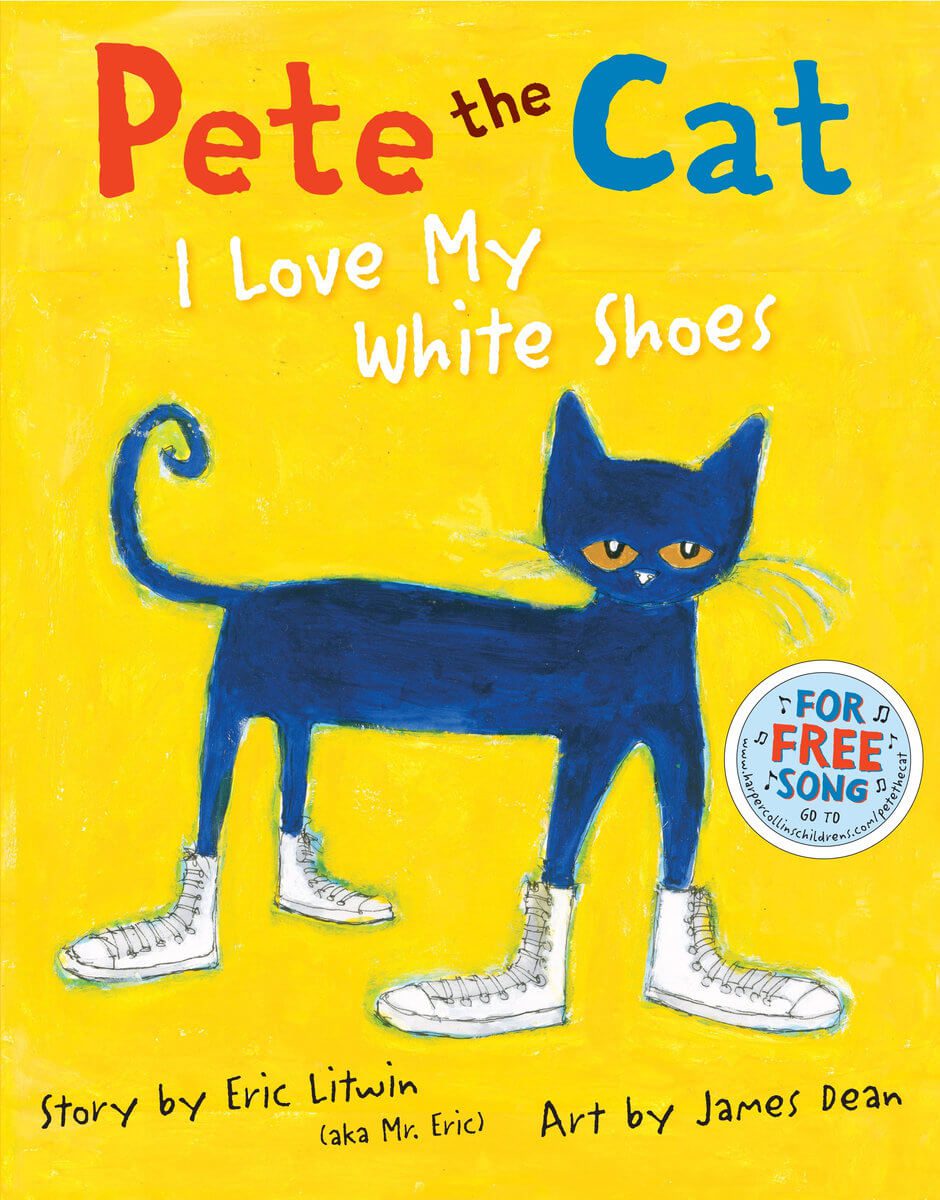
[vc_row][vc_column][vc_column_text]We love children’s books. Also – and this should be no surprise – we love children’s books that get people singing. Oh! One more thing! If that children’s book teaches some really fantastic aspect of childhood development, well, that’s a home run. Dr. Boyle takes a peek at Pete the Cat – I Love my White Shoes, by author Eric Litwin with illustrations by James Dean (no, not that James Dean).


[/vc_column_text][/vc_column][/vc_row][vc_row][vc_column][vc_column_text]

One Cool Cat

Pete the Cat
Pete the Cat, in all his calm, cool wonderment


Meet Pete the Cat. If you don’t know him, you should. He’s the feline equivalent of the proverbial duck that let everything roll off its back. In 2008, he pounced out of the minds of Eric Litwin and James Dean into a self-published book. Within 10 months, the book was picked up by Harper Collins and has enjoyed a great deal of success in a rather crowded market. In my estimation, Pete’s a standout. Several books featuring this easy going blue furball have followed, and we’ll probably review a couple of them in the future. Today…is all about white shoes, singing, and executive function and self-regulation. Stay with me; this children’s book gets the concepts across beautifully.[/vc_column_text][/vc_column][/vc_row][vc_row][vc_column][vc_column_text]

White, Red, Blue, Brown…Just Change the Song

Pete admires some hanging shoes


As Pete takes a stroll on a beautiful day, he wears his beloved white shoes. He loves them so much he sings a song about them – “I love my white shoes, I love my white shoes, I love my white shoes.” If you read this book, you have to sing that part. You know that, right? It’s a law – and the beautiful part is that there is absolutely no wrong way to sing it. You can sing it differently every time you read the book. You can make up a tune, or sing it to an existing melody. If you want to, you can download the song that Eric Litwin created – but I think it’s much more fun to make up your own silly tune. Litwin, James Dean, and friends in a live reading, complete with his White Shoes song![/vc_column_text][/vc_column][/vc_row][vc_row][vc_column][vc_video link=”https://www.youtube.com/watch?v=nUubMSfIs-U”][/vc_column][/vc_row][vc_row][vc_column][vc_column_text]As Pete continues his walk, the first dramatic turn occurs. He steps in a mound of strawberries. His pristine white shoes, the source of his musical joy, are ruined! What’s a singing cat to do when faced with such frustration, such unexpected CATastrophe (these are the jokes, people)? Scream? Cry? Take his shoes off and throw them in the air?

Nope. Pete does none of that. He keeps his cool and just changes the words to his song.[/vc_column_text][vc_column_text]

red shoes
Pete just keeps on plugging away with new words

[/vc_column_text][/vc_column][/vc_row][vc_row][vc_column][vc_column_text]

A Cat who Gets Executive Function

So, now we see Pete for who he is: a cool cat with an understanding of executive function and self-regulation. How about some help from the folks at Harvard:

In the brain, the ability to hold onto and work with information, focus thinking, filter distractions, and switch gears is like an airport having a highly effective air traffic control system to manage the arrivals and departures of dozens of planes on multiple runways. Scientists refer to these capacities as executive function and self-regulation — a set of skills that relies on three types of brain function: working memory, mental flexibility, and self-control. Children aren’t born with these skills—they are born with the potential to develop them.

– InBrief: Executive FunctionCenter on the Developing Child: Harvard University

What do we see Pete do when faced with apparent disaster? He shifts gears and shifts his song, singing about the newly acquired color. This is a prime example of both executive function and self-regulation. He experiences, processes, and chooses to celebrate a new experience rather than mourn the loss of the old one.

This happens several times throughout Pete’s journey. He’s resilient, that one. And let’s be honest, you don’t have to be a kid to relate to this story. We’ve all been there. So – as you share Pete’s adventure to your kids, they’ll see a cat remaining calm in the face of adversity who comes out on top, making the choice to keep his composure and sing a new song. They’ll get it, they’ll relate, and it will help them develop those skills in their own developing self.[/vc_column_text][/vc_column][/vc_row][vc_row][vc_column][vc_column_text]Pete the Cat – I Love My White Shoes is a book that gives more to the reader than a cute story with beautiful illustrations. It gets us singing and thinking about how we respond to life’s giant piles of strawberries and puddles of mud. Plus, it’ll leave a smile on your face. You can get it through your favorite bookseller or online, and in several formats – hardback, paperback, and digital editions.

After reading this book, your little one might just ask herself, “What would Pete do?” the next time drama creeps into her life. I know that I already have.[/vc_column_text][/vc_column][/vc_row][vc_row][vc_column][vc_column_text][/vc_column_text][/vc_column][/vc_row]

4 Musical Ways to Help Keep Those New Year’s Resolutions

Resolutions

[vc_row][vc_column][vc_column_text]Happy New Year from your friends at Kindermusik! We’re always looking for ways to incorporate music into daily life because, let’s face it – music makes everything better! Our last post talked about musical resolutions for 2017. In this post, we’ll explore four ways to use music to help keep some of the most common resolutions. We all have access to just about any piece of music, anytime and anywhere. Let’s take advantage of technology and make our lives more musical!


[/vc_column_text][/vc_column][/vc_row][vc_row][vc_column][vc_column_text]

1. Timing

Let’s go back to 1991 and a fun little movie called Hudson Hawk. The film starred Bruce Willis and Andie MacDowell. Willis played an adept cat burglar who uses standard songs like Swinging on a Star and Side by Side to time his heists. Now – please don’t think we are condoning breaking and entering or stealing iconic pieces of art, but using music to time aspects of your life to help keep you on track isn’t a bad idea.

So what can you time? Well – just about anything. And frankly, music will make anything go by faster. I know that listening to the first movement of Bach’s Cantata 140 – Wachet auf ruft uns die Stimme is roughly 30 minutes – how long I want to walk the dog (remember – I’m a choral conductor – I listen to A LOT of Bach!). Using Bach’s music to time my dog walking activities works very well. And I can change it up with other pieces or play lists that run for the amount of time I want to walk our ball of energy.[/vc_column_text][/vc_column][/vc_row][vc_row][vc_column][vc_column_text]

2. Workouts

We touched on this in the last post – but I wanted to share a story. While in graduate school preparing for my master’s conducting recital, I’d go to the gym three times a week before the boys were awake. I’d take recordings and scores of the music on which I was working to be efficient with my time. Riding a stationary bike, I’d listen to my conducting rep, review the scores, and even practice my gestures.

Fast-forward to rehearsals…whenever I stood in front of the ensemble to rehearse my repertoire, my heart rate would increase and I’d sweat like a race horse! Listening and practicing my rep while working out had conditioned my body to respond to the music as if I was working out – even when I wasn’t! It was fascinating.

The right music during a workout can keep us focused and driven. The right playlist can form an arc that supports the arc of your physical exertion. Workoutmusic.com posted this informative chart that lists tempos which match various activity. Couple this info with songbm.com, a site that will tell you the bpm (beats per minute) if any song, and you can create a custom playlist for your activity.

Resolutions[/vc_column_text][/vc_column][/vc_row][vc_row][vc_column][vc_column_text]

3. That New Hobby – Music!

I’ve known several people who have made resolutions to learn a musical instrument or take voice lessons. Do it! Buy a guitar! Get a keyboard or piano! How about a drum set? It is never too late to learn about music. Making music does so much good for the mind, body, and spirit at any age. If your kids happen to go to Kindermusik classes, learn the songs and sing with them in class and at home. You know they’re catchy.

Want to keep your brain young? Make music. Listen to music. Here’s some great advice from the folks at Johns Hopkins:

Jump-start your creativity.

Listen to what your kids or grandkids listen to, experts suggest. Often we continue to listen to the same songs and genre of music that we did during our teens and 20s, and we generally avoid listening to anything that’s not from that era.

New music challenges the brain in a way that old music doesn’t. It might not feel pleasurable at first, but that unfamiliarity forces the brain to struggle to understand the new sound.

Recall a memory from long ago.

Reach for familiar music, especially if it stems from the same time period that you are trying to recall. Listening to the Beatles might bring you back to the first moment you laid eyes on your spouse, for instance.

Listen to your body.

Pay attention to how you react to different forms of music, and pick the kind that works for you. What helps one person concentrate might be distracting to someone else, and what helps one person unwind might make another person jumpy.

[/vc_column_text][vc_column_text]Resolutions[/vc_column_text][/vc_column][/vc_row][vc_row][vc_column][vc_column_text]

4. Gift Giving

Taking the time to remind how much those we care about with a gift always makes us feel good. Making a habit of gift giving keeps that feeling present and makes others smile as well! And the gifts don’t have to be extravagant – just thoughtful. Why not make it a musical gift? Find out what music your friend, family member, or co-worker likes and pick up a CD or send a digital album. Do you know them really well? How about picking something new for them to experience?

The act of simple gift giving, especially for no specific reason other than to let someone know you care, builds relationships and is actually good for our health. That good feeling? Turns out it’s mentally and physically beneficial. So – why not give music?[/vc_column_text][vc_separator][/vc_column][/vc_row][vc_row][vc_column][vc_column_text]Good luck with your resolutions! I’m keeping mine secret; we’ll see how I do. But rest assured, my year will be filled to the brim with music. I wouldn’t have it any other way. Kindermusik wishes you a happy and healthy 2017. May YOU experience lots of music as well![/vc_column_text][/vc_column][/vc_row]

The Gift of a New Year

The Gift of a New Year

[vc_row][vc_column][vc_column_text]The New Year is upon us! Over the past month many of us have been dwelling on resolutions. What can I do in 2017 that will make me a better version of myself? What can I change? What can I add? What can I take away? We all do it to some degree. Well friends – you’re reading a music blog. Hopefully it won’t be overly surprising that we make some music-based  suggestions that can hopefully have a positive impact on your new year.[/vc_column_text][vc_separator][/vc_column][/vc_row][vc_row][vc_column][vc_column_text]

It Starts with Music

There’s a rather old tradition in many English speaking countries in the world. The song, Auld Lang Syne is sung. As a musician, I love that important moments of our collective life on this planet are marked with music. It’s a ritual – something that carries special meaning and is repeated time and time again. That song looks back across the previous year and reminds us that as we look forward, to not forget all the good times of the past – those close connections with friends and family, time spent together enjoying each other’s company.

As this new year starts, what new traditions might you start? What memories will you create – memories so strong and moving that they will be the memories you think of when singing Auld Lang Syne at the end of 2017? And…how might they be musical memories?[/vc_column_text][/vc_column][/vc_row][vc_row][vc_column][vc_column_text]

Outside Your Regular Routine

Experience something new! I’m a classically trained musician who never had much time for popular music. It was never that I didn’t like pop music. It was an “only so many hours in the day” kind of thing. So…I am going to experience a concert in 2017, something I’d never go to normally. I’ve already started looking.

Check your area’s concert listings. Is there a bluegrass band that looks interesting and you’ve never experienced bluegrass? Maybe a symphony performance? Try something new and expand your musical horizons. Get a group of friends together, or find something family friendly that works for the kids.

Perhaps your town or city has an annual New Year’s event that involves live music. Go! Experience life – and do it in real time with your eyes. Limit how much you experience the world through a five inch screen. Take a few pictures and then be in the moment with friends and family. See smiles first hand. Make memories in the original hard drive – your brain! And get this, when you make new memories and music is included, hearing that music again brings back those memories with greater richness.[/vc_column_text][vc_column_text]This suggestion makes me thing of the group, Postmodern Jukebox. This is a fantastic collective group founded and lead by Scott Bradlee. They take some iconic songs and reimagine them, quiet amazingly, in completely different styles. Musical theatre as 70s soul…pop as 40s jazz – what this group does is incredibly creative. Old favorites can be experienced in a new way. Here’s the group performing Madonna’s pop anthem, Material Girl, as a Roaring 20’s number, featuring Gunhild Carling singing, rocking it on trombone, and tap dancing![/vc_column_text][vc_video link=”https://youtu.be/RUuQ4hoXsCM”][/vc_column][/vc_row][vc_row][vc_column][vc_column_text]

Music + Movement = Magic

Trust me on this – I’m a doctor! Well…a music doctor. And we are experts at music and movement. Like so many of us, I am going to try my best to get in better shape in 2017. And now I’ve announced this to all of you…so keep me honest!

The right music can positively affect physical activity. Samantha Lafave over at Fitness Magazine wrote a great article on selecting the right playlist for your workout. Here are the basics:

  1. That first piece on the playlist sets the pace and the tone. Go high energy!
  2. Variety is key: having lots of music to choose from.
  3. Pay attention to the lyrics. Samantha tells us:

There’s a reason T-Swift’s “Shake It Off” is so popular—the song is catchy, feel-good and relatable. Cook deems it the perfect mid-workout song. When you’re ready to give up, it can literally help you “shake off” negative thoughts, she says. Same goes for Gloria Gaynor’s “I Will Survive” and Kelly Clarkson’s “What Doesn’t Kill You (Makes You Stronger).” Tune in to the empowering words next time you’ve hit struggle city to power through.

 – Samantha Lafave, Fitness Magazine

Don’t forget to pick music to which you might have a personal connection. It makes the experience more meaningful. And don’t forget cool down music!

[/vc_column_text][/vc_column][/vc_row][vc_row][vc_column][vc_column_text]

Fill the New Year with Music!

It’s a solid prescription. Exercise – with music. When you’re with friends and family – let that time be filled with music. Try something “musically new” this year. And as far as your kids? Well…the earlier you expose them to musical activity, the more they will appreciate it as they get older. It will just be part of their story. Beyond all the developmental benefits music impacts as they grow, music will bring joy into their lives – yours, too! Get them moving and grooving, singing and playing this year. We are waiting for you with life changing Kindermusik experiences.

Happy New Year from all of us at Kindermusik International![/vc_column_text][/vc_column][/vc_row]

Science Center Stage: Music Improves Brain Development in Children

Brain

[vc_row][vc_column][vc_column_text]We talk often about how music impacts our lives in countless ways. With our little ones, we focus on the positive effects of music as children grow – specifically development in the language, social, emotional, fine and gross motor, and cognitive domains. All of these domains are controlled by that mysterious organ – the human brain. Science tells us that the brain LOVES music and responds in wonderful ways. Dr. Boyle shares recent research on the topic in today’s post. 


[/vc_column_text][/vc_column][/vc_row][vc_row][vc_column][vc_column_text]Music is like an intangible vitamin for the brain. It’s not just listening to music that’s key; participation in musical activity unlocks accelerated brain development. When adding movement to the equation, benefits increase.

Movement + Music

As we move and increase our heart rate, the brain receives more oxygen. Research indicates that improved oxygenation of the brain improves cognition. Adding music into the equation lights up important areas of the brain, which have already been primed with physical activity. While listening to music, parts of the brain responsible for motor skills, emotions, and creativity glow when viewed with magnetic resonance imaging.

[/vc_column_text][/vc_column][/vc_row][vc_row][vc_column][vc_column_text]

What’s Going on in There?

Think of it this way – taking part in musical activities is like a “work out” for the brain. Here’s what’s going on:

  • The visual, motor, and auditory cortices are activated.
    • When these areas are activated regularly through music, they are strengthened. That strength can be applied to other tasks.
  • Increased activity in the corpus callosum – the pathway between the brains two hemispheres.
    • This allows for information to travel throughout the brain more efficiently.

All of this can lead to greater executive function and problem solving skills. While recent research in neuroplasticity tells us it’s never too late to change established brain function and learn new things, it certainly is highly beneficial to start musical activities early. Birth to age seven is such an important period in brain development; music’s benefits on the brain are particularly impactful during this time.[/vc_column_text][/vc_column][/vc_row][vc_row][vc_column][vc_column_text]Oliver Sacks, author and neurologist, wrote extensively about the impact of music on the brain. In this video, Dr. Sack’s became the subject of his own research. He had himself scanned while listening to different music – specifically to see if his love of Bach’s music would show up on MRI scans. His emotional response to Bach was actually observed on the screen![/vc_column_text][vc_video link=”https://youtu.be/AUT9UTVrwp8?t=10s”][vc_separator][/vc_column][/vc_row][vc_row][vc_column][vc_column_text]So…don’t wait! The brain knows what it wants…music music music! Get your young ones started early. Listening is wonderful. Partaking in musical activities is better. Involving the body and having a parent join in on the fun is the best! Find a Kindermusik class near you and start building those neural connections today![/vc_column_text][/vc_column][/vc_row]

Kindermusik Reviews: The Book With No Pictures

The Book With No Pictures

[vc_row][vc_column][vc_column_text]Many of us know B. J. Novak from the hit mockumentary comedy show, The Office. He played Ryan the temp, a character that had quite a rise and fall over the course of the series. A year after The Office ended, Novak stretched his literary wings with The Book With No Pictures, a children’s book devoid of, as the title tells us, pictures. At first, I was skeptical. Then I read it. And read it again. And read it to my 13 and 10 year old sons. And to my 4 and 6 year old nephews. This book is gold. [/vc_column_text][blockquote cite=”Dr. Boyle”]”Any book that mentions a hippo named Boo Boo Butt will be a hit…with just about everybody.”[/blockquote][/vc_column][/vc_row][vc_row][vc_column][vc_column_text]The book is genius…really. I actually found myself saying out loud, “Why hasn’t anyone done this before?” In a very direct and simple way, Mr. Novak has underscored the power and importance of words. He does this in an entirely creative and entertaining way. This is a book meant to be read to kids by adults and reminds us of the jurisdiction an author has over a reader. In fact, the book comes with a very clever warning on the back cover:

The Book with No Pictures warning
B.J. Novak’s warning to adults being asked to read The Book With No Pictures

[/vc_column_text][/vc_column][/vc_row][vc_row][vc_column][vc_column_text]

Why We Love It…

Each time I read the book, I found myself laughing out loud. My wife laughed out loud. My oldest son – now in the throes of teenage angst – his outer shell of indifference fell away and he laughed out loud. My young nephews couldn’t control themselves. Novak does this with words and words only. The magic here is that we walk away knowing that words are important and can impact us. In this case, the silliness is almost overwhelming, but in an entirely entertaining way. An adult reader can really play up the notion that they aren’t in control and must read every word as printed. Kids love this aspect of the book. Part of this is the sheer goofiness of Novak’s text, but more importantly, it puts kids in the driver’s seat. The book is their proxy. It acts on their behalf, making the reader say crazy things they never would ordinarily say. To a child, seeing an adult be silly, seemingly against their will, it priceless entertainment. And let’s face it, any book that mentions a hippo named Boo Boo Butt will be a hit…with just about everybody.

I’d be remiss if I didn’t mention that the book also requires the reader to sing – and not just sing, but to make up a tune to go with the words, “Glug, glug glug…my face is a bug…I eat ants for breakfast right off the ruuuuuuug!” Any book that gets people singing gets extra points from us. You should probably start working your melody now.[/vc_column_text][/vc_column][/vc_row][vc_row][vc_column][vc_video link=”https://youtu.be/SiiS2NDkfI4?t=2m53s” title=”B.J. Novak reads sections of his book, The Book With No Pictures”][/vc_column][/vc_row][vc_row][vc_column][vc_column_text]The Book With No Pictures is a refreshing entry into the children’s book world. It hits all the right notes – it gets everyone laughing and cleverly displays the power of the written word, demonstrating to kids that words can take us places and make us experience emotions all by themselves. Now, this book certainly had help from some fantastic designers who chose spot on typefaces and colors for the words found within. These choices don’t simply entertain visually, but actually help the reader play the part of the “out of control” narrator. Statements meant to be blurted out are in large fonts and the tormented inner monologue are much smaller. This emboldens the reader to say these as asides, almost under the breath.

monkey
Brilliant typeface choices encourage the reader to play the part

[/vc_column_text][/vc_column][/vc_row][vc_row][vc_column][vc_column_text]The Book With No Pictures delights all who come in contact with it – readers and audiences alike. It gets kids excited about reading and even gets the reader singing. B.J. Novak has hit a home run with his first children’s book and we can only hope there will be more.[/vc_column_text][/vc_column][/vc_row]
The Gift of Love: A Parent’s Perspective of Kindermusik

Gift of Love

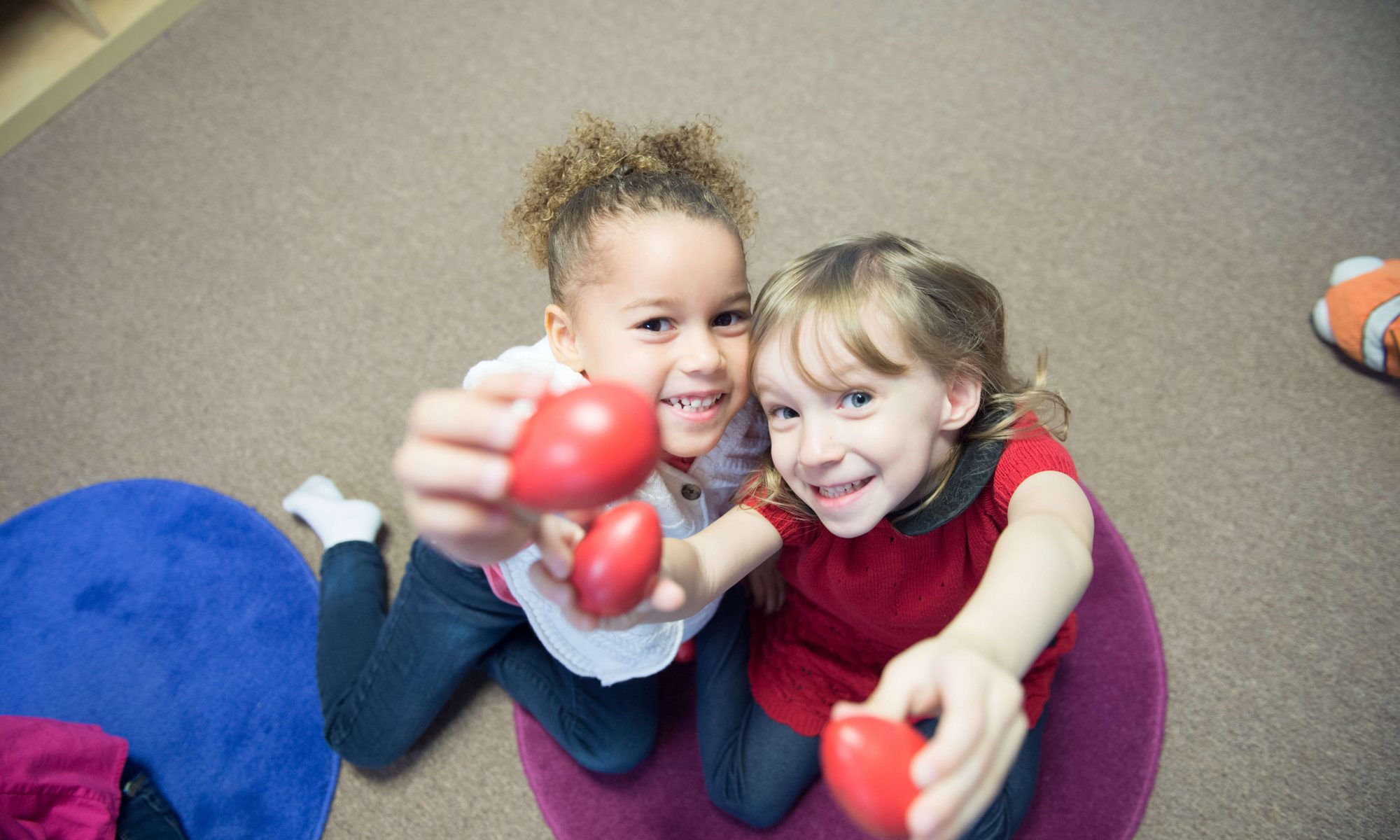
[vc_row][vc_column][vc_column_text]As a Kindermusik teacher, I am always observing as I am teaching – mostly observing the children so I can adjust and adapt to them, but also actively working to “see” things through the parents’ eyes too. When I look through the eyes of a Kindermusik parent, there are some of the really precious things that I get to celebrate, acknowledge, and even just hold in my own heart.[/vc_column_text][blockquote cite=”Theresa Case”]”I melt at the pure and absolute delight on a parent’s face in the closeness and sharing that happen in every class.”[/blockquote][/vc_column][/vc_row][vc_row][vc_column][vc_column_text]I share the feeling of pride that glows on a parent’s face when their child starts tap-tap-tapping with his own shaker, gets completely absorbed in Story Time, or quietly starts singing a few words here and there.

I melt at the pure and absolute delight on a parent’s face in the closeness and sharing that happen in every class.[/vc_column_text][/vc_column][/vc_row][vc_row][vc_column][vc_column_text]I smile at the humor on a parent’s face when her child suddenly starts singing very loudly or urgently begins sharing a very important, but very unrelated, story to share with me.

I gently nod my head as a parent and I make eye contact during Quiet Time, acknowledging that the snuggles and cuddles in the little years go by all too quickly.

I hug the parent with happy tears in her eyes who is absolutely overjoyed at how her child who has been in multiple different kinds of therapy is now comfortable in class, engaging in activities, and making friends with the other children in class.[/vc_column_text][vc_column_text]parent's perspective[/vc_column_text][/vc_column][/vc_row][vc_row][vc_column][vc_column_text]I clap and celebrate right alongside my families; with full hearts we share the bittersweet moment of watching our Kindermusik “babies” proudly march across the stage as Kindermusik graduates.

I am a Kindermusik educator, and these are only some of the amazing things I am privileged to glimpse through a parent’s eyes because of the power of Kindermusik and the difference it makes not just in the life of a child, but also in the heart of a parent.[/vc_column_text][vc_separator][/vc_column][/vc_row][vc_row][vc_column][vc_column_text]Shared by Theresa Case, who has been sharing the joy of Kindermusik with children and families at Piano Central Studios in Greenville, South Carolina for over 20 years now[/vc_column_text][/vc_column][/vc_row]
Kindermusik’s Gift Guide

gift drum

[vc_row][vc_column][vc_column_text]What’s on your gift list for the sweet kiddos under the age of 7 years old? (Besides Kindermusik classes, of course!) Maybe you’re actually feeling a little stumped or even overwhelmed. It happens to the best of us this time of year when it comes to gift giving, especially when choosing gifts for kids.

As Kindermusik educators, we happen to know a little something about what makes kids tick and best of all, what makes their faces light up! Here are a few of our favorite recommendations in the “Instruments and Props” categories that are sure to bring a huge smile to that special little someone’s face.[/vc_column_text][vc_separator][/vc_column][/vc_row][vc_row][vc_column][vc_column_text]

Inspiring Instruments

We love the Remo Floor Tom for all ages.  It’s colorful, durable, and not too hard on the ears.

Older kids will love exploring lots of sounds and rhythms on this unique Wood Tone/Slit Drum.

The Baby Band Instrument Set is a fun 4-piece set that will have your little one tapping and jingling away!

This Mini Orchestra set is so adorable, you’ll want to sit on the floor and play-along with your child’s favorite Kindermusik songs too!

For your older creative genius, how about this Saxo-Flute?  They build it then play it… and then take it apart all over again!

Who wouldn’t be impressed with this kid-friendly, eco-friendly Musical Band sized just perfectly for your pint-sized drummer?![/vc_column_text][/vc_column][/vc_row][vc_row][vc_column][vc_column_text]scarves[/vc_column_text][vc_column_text]

Playful Props

Any kid will go crazy over a Bilibo!  (And yes, they can double as a sled in the winter and a beach toy in the summer.)

Kids of all ages love the sound and endless creative possibilities of a classic kids’ toy, pop beads.

Gertie Balls are great for happy, squishy indoor play too that usually doesn’t do too much damage if it gets hurled in the living room.

Sensory Balls are perfect for rolling, bouncing, exploring, and yes, slobbering on especially if you’re under the age of 1 and still working on cutting those teeth.

Kindermusik’s light and floaty scarves make great gift wrap and once unwrapped, also foster a delightful game of peek-a-boo or magical scarf dancing.

parachute

Fun for the whole family!  This colorful, 6-foot parachute brings everyone in on the movement, play, circle dancing, oversized peek-a-boo, and more.  (A smaller version of what your Kindermusik educator might use in her classes!)

Happy shopping, gifting, and enjoying the smiles![/vc_column_text][vc_separator][/vc_column][/vc_row][vc_row][vc_column][vc_column_text]Shared by Theresa Case who has an award-winning Kindermusik program at Piano Central Studios in Greenville, South Carolina.[/vc_column_text][/vc_column][/vc_row]

Educator Spotlight: Jessica Hanson

Educator Spotlight

[vc_row][vc_column][vc_column_text]Jessica Hanson opened Take Note Studio in 2006, the same year that she became a licensed Kindermusik educator.  Since 2006, Jessica’s studio has grown to include offering Kindermusik, music theatre, and private music instruction.  A busy mom of five, Jessica’s heart for children, families, and the difference that music can make in their lives shines through in everything she does.


[/vc_column_text][/vc_column][/vc_row][vc_row][vc_column][vc_column_text]TC: What do you feel has made your studio business a success?

JH: Building relationships with students’ families and creating systems to provide great communication.

TC: What makes your studio such a special place?

JH: I was taking a video of my Young Child 3 class acting out “Little Feather” the other day, and was standing by the door.  I didn’t notice until I watched the video later all the background noise of all the parents talking and laughing in our waiting room.  It was so affirming to hear relationships being formed not only with the kids but with the parents.  We are definitely a place where friendships and connections happen, and we highly value the support and kindness we give each other.

TC: What do your Kindermusik kids call you?

JH: Ms. Jessica[/vc_column_text][vc_video link=”https://vimeo.com/194815177″][/vc_column][/vc_row][vc_row][vc_column][vc_column_text]TC: How do your Kindermusik kids (or families) describe you?

JH: I think families would describe me as a confident and calming presence in the classroom.  One mom said the other night, “You are so patient yet prepared and equipped!”  That is what I want for all my parents – to be enabled to handle any situation in a loving and effective way.

TC: What’s your favorite part of teaching Kindermusik?

JH:  So hard to choose!  I love fostering parent/child connections and providing an environment for parents to be completely present in our fast paced, busy world.  It’s so satisfying to empower parents with tools to be the best parents they can be – teaching them to love their children authentically and feel successful in this challenging and so important job of parenting.

TC: What’s your favorite Kindermusik song to sing?

JH: I especially love the ones I can change the words to for use in any context.  I use “Rise, Sugar, Rise” a lot, especially when we’re working on patience… “waiting here together two by two”.  But we change the verb up a lot!  I also love the silliness of “Hey, Lolly”.  I ALWAYS have a Kindermusik song running through my head, day and night! 

TC: What’s your favorite Kindermusik dance to lead?

JH: Hands down, Tants Tants.  We call it the “Tuba song”.  Both parents and kids love it and it is so fun to see 2 year olds doing deep knee bends and saying “Tuba” in their low voices during the Tuba section!

TC: If you had to name just one secret to success in the Kindermusik classroom, what would it be?

JH: Becoming a better observer and learning how to be more “present” myself.  Learning how to relax and gauge the dynamic of the classroom at the moment.[/vc_column_text][vc_column_text]

Jessica Hanson
Ms. Jessica gets her kids moving!

[/vc_column_text][/vc_column][/vc_row][vc_row][vc_column][blockquote cite=”Cheryl Lavender”]“The fact that children can make beautiful music is less significant than the fact that music makes beautiful children.”[/blockquote][vc_column_text]TC: Describe a teaching experience that has impacted you as a teacher.

JH: It’s too hard for me to pick just one.  I am weekly impacted by the power of music and its effect on the whole child.  First words, first steps, first songs, and new skills happen in the classroom a lot.  But I am even more impacted by the stories of parents who come in and report how music has helped their daily life and family connectedness throughout the week.

TC: If you could share one tip with a new Kindermusik educator, what would it be?

JH: The Kindermusik curricula is AMAZING – utilize and learn every bit of it and then as time goes on learn how to adapt, lengthen, and customize each lesson plan as you learn each child and family.

TC: What are some of the goals you have for your studio business?

JH: I am increasingly learning about what energizes me most. The top three are training excellent teachers; providing parenting workshops to support and empower parents; and mobilizing our outreach initiatives both locally and globally.

TC: What’s something new and exciting that’s happening with your business?

JH: We are very excited about our growing teaching staff!  We are training two more Kindermusik teachers now to add to our team of four already.  We are also looking forward to offering classes at a nursing home this winter, and are preparing for our annual fundraiser for scholarships and outreach.

TC: What is your favorite inspirational quote?

JH: From Cheryl Lavender, “The fact that children can make beautiful music is less significant than the fact that music makes beautiful children.”[/vc_column_text][vc_separator][/vc_column][/vc_row][vc_row][vc_column][vc_column_text]Take Note Studio in Wisconsin has studio locations in Manitowoc, Kohler, and Sheboygan Falls. Regular Blogger and Kindermusik Educator Theresa Case brings us our monthly Educator Spotlight feature. [/vc_column_text][/vc_column][/vc_row][vc_row][vc_column][/vc_column][/vc_row]

The Gift of Health: Music Boosts the Immune System

Immune System

[vc_row][vc_column][vc_column_text]It’s science! While those of us “in the know” – musicians of all types – have always understood that music has positive health benefits for us, it’s not common knowledge. Dr. Boyle shares research with us that explains how the magical art of music has a scientific effect on our minds and bodies – just in time for one of the busiest months of the year!


[/vc_column_text][/vc_column][/vc_row][vc_row][vc_column][blockquote cite=”Jonathan Weiss, Medical Daily”]”A large scale review covering over 400 scientific papers on the topic of the neurochemistry of music has found that music may be better than prescription medications for some issues and has broad benefits for the body and mind.”[/blockquote][vc_column_text]First, let’s remember that there is an entire field that uses music to impact well being – Music Therapy. Though it’s been around for over 70 years in the United States, many people are surprised to learn that it exists. Music Therapists use a variety of musical methods with clients to benefit physical and mental health. Beyond this formal therapeutic use of music (which, no surprise to Kindermusik Educators, often pairs music with movement), music can significantly influence health in our everyday lives – particularly boosting our immune system!

Holiday…or Cold and Flu Season?

For many of us in the Northern Hemisphere, the winter months mean colder temperatures and a greater increase in the occurrence of everyday colds. The stronger the immune system, the better we are at fending off the sniffles and sneezes of the season. Couple weather shifts with an increase in stress levels (for a variety of reasons), many of us will be susceptible to annoying coughs and stuffy noses. So, what can music do for us?

According to Dr. Daniel J. Levitin, a neuroscientist (and in interest of full disclosure – a musician), science is able to explain how music shapes actual neurochemical events in the body that may lead to a stronger immune system. It’s fairly common knowledge that stress impacts our ability to fight off germs. Music reduces negative stress in the body, thereby increasing our own body’s natural defenses. This magical art actually lowers the presence of stress hormones.[/vc_column_text][/vc_column][/vc_row][vc_row][vc_column][vc_column_text]

Photographed by Thomas | © 2016 TK Photography
© 2016 TK Photography

[/vc_column_text][vc_column_text]

Cortisal Down…Immunoglobin A Up

Music is intangible – you can’t touch it. It floats through the air and arrives at our ears…and simply changes us. As far as the immune system is concerned, and according to the work of neurocognition expert, Dr. Ronny Enk, music specifically lowers levels of cortisal, the stress hormone, and increases levels of immunoglobin A, an antibody that supports positive immune function. Dr. Enk and his team played joyful, dance music for one group, and random tones for his control group. The folks that listened to music experienced the benefit described above. This is a real, physical response to music. This is measurable…quantifiable.[/vc_column_text][/vc_column][/vc_row][vc_row][vc_column][vc_column_text]

More Music = More Health

So…what does this mean for us? During this holiday season, there are so many opportunities to experience music. Church, concerts, even listening to music around the house – think of these contacts with music as “aural vitamins” for your immune system. Reducing our levels of stress by taking part in music making is even more beneficial. Singing can regulate your heart rate and breathing. Making music with others increases social bonding, which is one of the things we need as human beings.

These benefits are for all of us – young and old alike. In fact, the benefits are incredibly important for those at the extreme ends of life’s journey – infants and our seniors. Sing to your kids! Invite the grandparents to a concert – or visit them and make music together. It will have an impact on the quality of their well being.[/vc_column_text][vc_separator][/vc_column][/vc_row][vc_row][vc_column][vc_column_text]Want to experience the health benefits of music first hand for both you and your little one? Find a Kindermusik class near you and try a class on us![/vc_column_text][/vc_column][/vc_row]

The Gift of Time: Holiday Activities for the Whole Family

time together

There is no better gift than the gift of time, but with our busy lives and constant demands, it can also be one of the hardest gifts to give – especially during the holidays.

It’s during the holiday season that we long for the gift of time the most – time together, time to make memories, time to slow down a bit. Here are some ideas for making that holiday wish come true!


Make a simple craft together

These crafts could even turn into Christmas gifts for grandparents and neighbors. Here are some simple hand craft ideas from Kindermusik – crafts using your kids own hands. Or enjoy letting your little drummer make his or her own Coffee Can Drum. We also highly recommend The Artful Parent website as another fabulous kid-friendly resource for crafts.

Hand Crafts
Check out our craft activities!

Get in the kitchen together

How about breakfast for dinner? Or a “make-your-own-pizza” night? Or a make-it, bake-it, gift-it night? Even young children can enjoy contributing as you prepare an easy meal together or make some brownies for an elderly neighbor down the street. Making and sharing a meal together is a relationship builder!

Commit to a “device free” evening together

Pop some popcorn. Play charades. Tell jokes. Put a puzzle or two together. Talk and share some childhood memories. Listen to music as you create some holiday cards to mail out. Set aside time to engage with each other rather than screens. Those glowing wonders will still be there when your done!

Schedule a family game night

Put it on the calendar, circle it in red, and make it non-negotiable. Teach your children your favorite game from when you were a kid (Uno or Candy Land, anyone?!), and then let them teach you one of their favorite games.

Attend a carol sing or concert together

Nothing creates a memorable shared experience like attending a concert. This time of year especially there are often many free and kid-friendly concerts that the whole family can enjoy.

Drive around and look at holiday lights

You know those neighborhoods where everyone goes all out. Make this extra fun by getting everyone in their pajamas, loading up in the car, and oohing and ahhing over all of the lights. And don’t forget to go through the drive-through for hot chocolate on the way home.

This display probably took a serious amount of time to produce!

Week in and week out, Kindermusik gives you the gift of time together with your child – singing, dancing, playing, learning, and making music. Consider giving the gift of time by enrolling your child in Kindermusik. You’ll savor the moments, the laughter, the memories, and the music you’ll share!


Shared by Theresa Case, whose award-winning Kindermusik program at Piano Central Studios has been giving families in upstate South Carolina the gift of music and the gift of time together for over 20 years now.