
FOL Fridays: Benefits of Reading Aloud

Reading to Toddlers

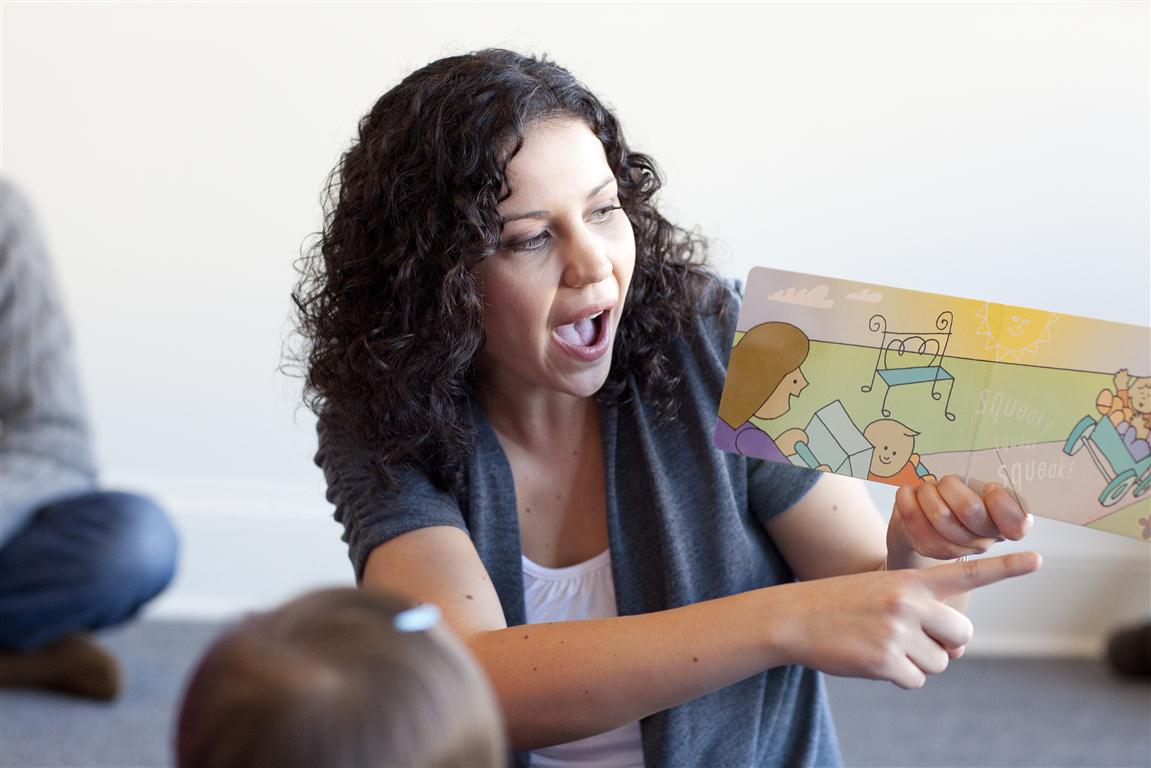
Reading to ToddlersReading to a child on a regular basis benefits him in several key ways. Reading increases his knowledge of the world, his vocabulary, his familiarity with the written language, and his interest in becoming literate. In fact, the larger the variety of fluent readers a child hears, the better.

Ideas for parents: Even if other special adults in your child’s life do not live nearby, it’s still possible for your child to hear them reading aloud. Hallmark has recordable books. Skype offers free video calls. And MailVU makes it possible to record and send a video email. The possibilities are endless!

– Contributed by Theresa Case, whose Greenville, SC program, Kindermusik at Piano Central Studios, is proudly among the top 1% of Kindermusik programs worldwide.
Kindermusik and Your Child: The Development of the Singer

Because they are experiencing an explosion of language, many preschool children tend to respond first to the words in a song rather than the rhythm or melody. Once they have heard the whole song and understand the song’s "story," they are most likely to then be able to concentrate on the melodic line. Children are most successful when singing songs that have a limited range, common rhythmic and melodic patterns, simple words, and plenty of repetition. That’s why Kindermusik songs are so catchy!

Joanne Rutowski, an expert on the child’s voice, describes the stages of vocal, or singing, development:

The Pre-Singer
Speaks rather than sings; uses little vocal inflection
The Speaking Range Singer
Talk-sings in a limited speaking range, with little vocal inflection
The Limited Range Singer
Sings in a range that is a bit higher than the speaking range but still limited
The Singer
Sings in a wide range; uses much vocal inflection when speaking

So what can you do to foster your child’s singing development?

  • Children love singing when they are singing songs they know. Download the tracks from your Home CD onto your iPod at http://play.kindermusik.com and keep your Home CD in the car so that your child can become familiar with the music from this semester.
  • Encourage your child to sing in a light head voice.
  • Surround your child with a rich listening environment.
  • Sing with your child. Love and enjoyment of singing is contagious!

When children are happily singing, they are stimulating all developmental domains: physical, emotional, language, and cognitive. Particularly

significant is the reinforcement singing provides in abilities relating to sequences, patterns, memory, and language.

Compiled by Theresa Case, whose Kindermusik program at Piano Central Studios in Greenville, SC, is proudly among the top 1% of Kindermusik programs worldwide.

Around the World: Native American Flute

The Native American flute has achieved some measure of fame for its distinctive sound and the instrument was originally very personal. Its music was played without accompaniment in courtship, healing, meditation, and spiritual rituals.

There are many stories about how different Native American peoples discovered the flute. A common character in these stories is the woodpecker, who put holes in hollow branches while searching for termites. The wind would blow around these branches, creating sounds that the people noticed and eventually sought to recreate.

[youtube]http://www.youtube.com/watch?v=Sqq3U_mydv0&feature=related&w=400&h=300[/youtube]

FOL Fridays: Reading Time and Children

Reading to young children is such a valuable tool, not to mention a delightful activity with all kinds of benefits. Research shows that children who are read to do better in school, and that reading is also a calming, wonderful way for parents to bond with their children. Reading provides the experience of different types of language, rhythms, and sounds, as well as teaching about many topics that might not come up naturally in conversation.

Ideas for parents: Why not establish a “Reading Ritual” with your child? Make the ritual even more special by designating a reading chair, by setting aside a specific time each day to read, and by having a basket of favorite “read-aloud” books from which to choose. Even a few minutes a day spent reading to your child will have a lasting effect on your child’s emotional well-being and potential for academic success.

– Contributed by Theresa Case, whose Greenville, SC program, Kindermusik at Piano Central Studios, is proudly among the top 1% of Kindermusik programs worldwide.
Activities for Babies 6 – 12 Months :: Elevator Ride

Elevator Ride with your Baby

Lie on your back, bring your knees toward your chest, and place your baby tummy-down on your lower legs. Raise your lower legs up and down, letting your baby take an “elevator ride.” Be careful not to arch your back while doing this movement. During the ride, let your voice rise as you chant “up,

up, up” and let your voice go lower as you chant “down, down, down.” Your baby will begin to learn the concepts of up and down through this multi-sensory activity.

A Parent’s Introduction to the Glockenspiel

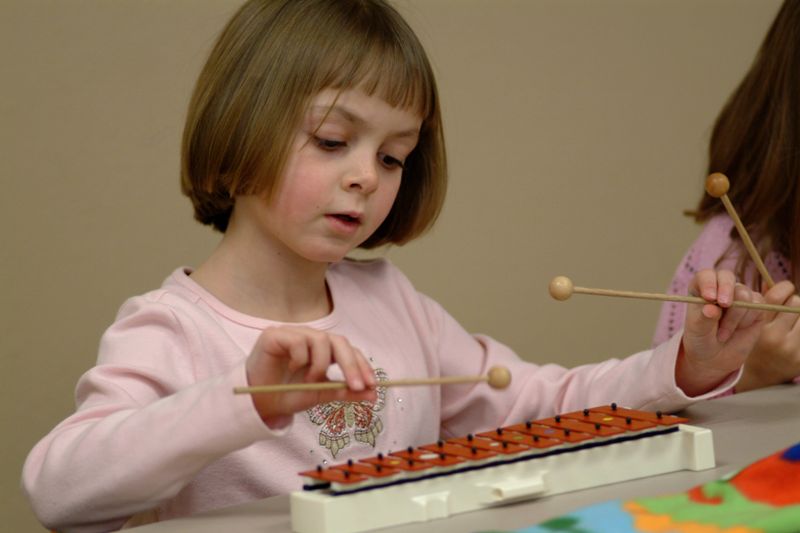
A Kindermusik Young Child student playing the glockenspiel.

At about the age of five, many children are ready for first experiences with a melodic instrument. Eye-hand coordination is improving, melodic memory is stronger, and the child has a keen interest in re-creating the melodies he or she sings and hears. Because of its size and delightful sound quality, the glockenspiel is an ideal first melodic instrument for young children and will be used throughout all four semesters of the program. However, the child’s success with this instrument is very much dependent upon careful preparation, a highly sequential approach to its use, and encouraging reinforcement at home.

A Kindermusik Young Child student playing the glockenspiel.

In Semester 1 of the Young Child curriculum, long before the glockenspiels go home with the children, there are many experiences that nurture a level of beat competency and basic melodic memory that help to ensure success for each child at the glockenspiel. Of utmost importance in this process is the notion that children play from musical memory rather than by simultaneous reading and playing. This is not to say that children do not learn to read musical notation. On the contrary, children learn to read notation vocally and to commit to memory what they have read and heard many times. From this musical memory, the child approaches the glockenspiel with patterns so familiar that full concentration can be placed on the actual manipulation of the instrument.

Of course, learning to read and play simultaneously is a skill all musicians need to develop.

“He was just a little bit excited about getting his glockenspiel today… =)” – Brady’s mom

However, very few children at this stage of development are ready for this highly integrated skill. This skill will develop naturally in most children as the processes of sensory integration are refined, but this rarely happens before the age of seven or eight.

The preparation for glockenspiel playing takes place over the first thirteen weeks of Semester 1. Steady beat activities, simple ensembles, and a repertoire of songs provide the foundation for successful first experiences in Lesson 13. From Lesson 13 until the end of the second semester, glockenspiels will be used in each lesson.

Things to consider when working with the glockenspiel: Continue reading “A Parent’s Introduction to the Glockenspiel”

The Top 5 Best Toys of All Time

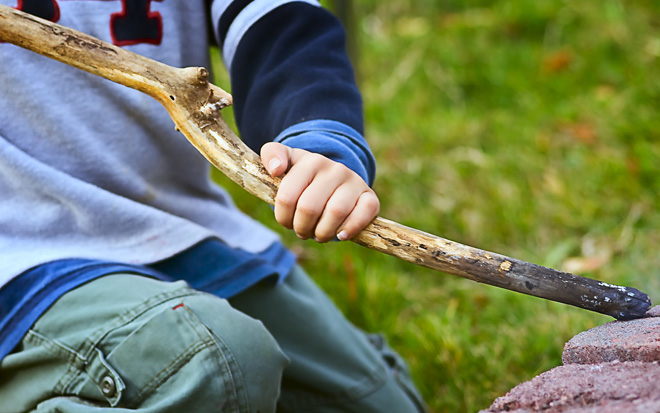
Stick, Best Kids Toys

Any normal Mom can be driven quickly insane by the annual Christmas toy craze. If I hear my 5 year old exclaim, "I want that!" during another toy commercial, well, it just might throw me over the edge. I came across an article on Facebook titled: "The 5 Best Toys of All Time" and noticed it had been shared by a number of my friends, including some of our top Kindermusik educators. I figured this article must include some great toys that are educational, musical, imaginative and would help me finish my Christmas shopping. What I found was even better… Continue reading “The Top 5 Best Toys of All Time”

Kindermusik's Favorite Road Trip Playlist

“Are we there yet?!?!?!”
Sound familiar? We all know road trips can be tough with little ones. So, considering we have entered the heaviest traveled season of the year, it’s time to gather up some songs, toys, and games for those long car rides. We at Kindermusik have a few ideas to help make a long car trip just a little more fun & musical for your child, which means travel gets just a little easier for you!
We asked our community to tell us their favorite Kindermusik song that they listen to in the car. Below is the Kindermusik Road Trip Playlist, which we compiled out of your favorites. You can download the below kids songs right off play.kindermusik.com to build your own portable road trip playlist.
The Kindermusik Road Trip Playlist

  1. Wishy-Washy
  2. Skinnamarink
  3. Rig-a-Jig-Jig
  4. Ram Sam Sam
  5. Clapping Land
  6. Lukey’s Boat
  7. Walk Along, Rover
  8. Peep Squirrel/Whisky Frisky
  9. Old MacDonald
  10. Usagi, Usagi (Rabbit, Rabbit)
  11. My Bonnie
  12. Yankee Doodle
  13. Lucy Locket
  14. Baby-O

Give your child the gift of music by adding in holiday song downloads for your holiday playlist!
We also built an interactive Kindermusik Kids Music Radio mobile application to try to bring the benefits of Kindermusik to your home and car. You can download this to your iPhone, iPod, or iPad. There are multiple radio stations, over 100 Kindermusik songs, and interactive instrument buttons within the app to allow your little one to practice their steady beat!
Safe travels!

Activities for Toddlers: "Daddy/Mommy Says"

This activity for toddlers 12 to 18 months is a great one for the child who LOVES to mimic! At this age, your little one loves to imitate you. Daddy Says (or Mommy Says) is like the well-known game “Simon Says.” But, it’s better because it’s led by Daddy or Mommy! Encourage your child to imitate you as you wiggle your fingers, stomp your feet, wave your hands, flap your arms, or shake your head. Toddlers learn by doing! Engaging games that link movement and words help your toddler learn words faster.
Kindermusik music classes are another great ways for parents to bond with their children. Find out how to be a part of the world’s largest & most researched musical learning program or sign up for a free class, a no commitment, fun activity to do with your toddler anytime!

Activities for Babies: I Love You!

Here’s a little activity from Kindermusik that you can do to bond with your baby and help with baby’s digestion, circulation, and even mood!
Position your baby on his back. Beginning with your hands at the top of your baby’s chest, slowly move your hands outward and down, in the shape of a  heart, to gently warm up his mid-body. Sing or hum Twinkle, Twinkle Little Star or another favorite lullaby as you continue to move your hands slowly outward and down. This type of loving touch stimulates healthy levels of stress hormone in your baby’s brain and aids his digestion and circulation.
More activities for babies, toddlers, and kids to come!