We Love Kindermusik Photo Slideshow:


Minds On Music – The Kindermusik Blog
For three generations, Kindermusik has helped millions of children around the world build a strong foundation for a lifetime of learning.
Celebrate We Love Kindermusik week with all Kindermusik educators & children. See some of our community below!
[youtube]http://www.youtube.com/watch?v=exbOByiFtMo&context=C3229ac6ADOEgsToPDskKlO2Eiy4jnX15O78vWuD8w&h=320&w=480[/youtube]
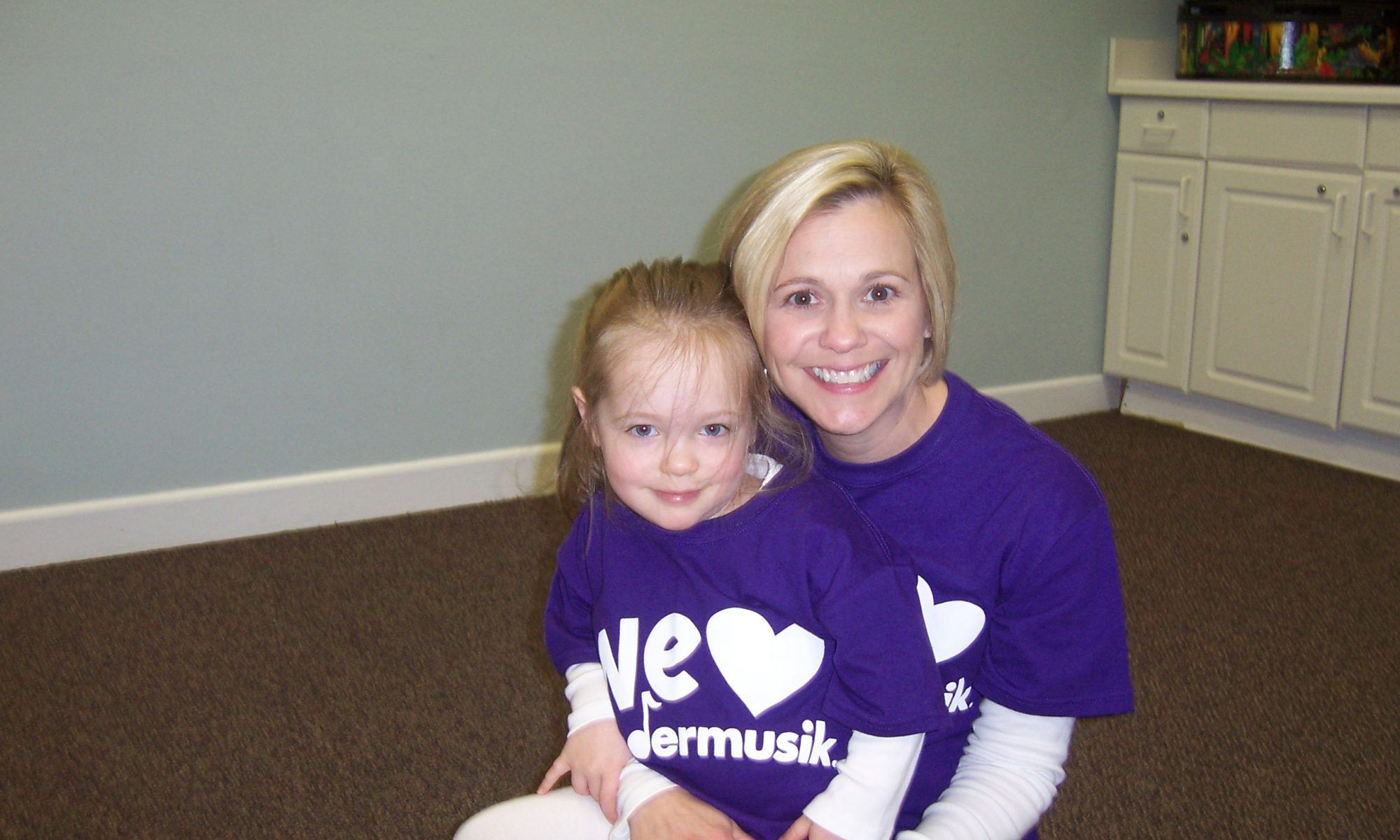
 There’s no doubt about it – today’s technology has made many aspects of our lives much easier, especially our ability to share experiences. From Instagram to Facebook to Skype, you can share nearly anything online.
This month Kindermusik educators all around the world will celebrate “We Love Kindermusik Week” from February 10 – 16.
All Kindermusik kids and their parents have to do to enter is share why they love their Kindermusik educator and experience! The contest is open February 3-16, 2013 (midnight EST). Winner will be selected at random.
The lucky winning Kindermusik kid and their parent will receive:
When you win, your Kindermusik Educator also wins!

Fine print: We will randomly select one valid entry as the winner, and that entrant’s educator will win the educator Grand Prize. If the entrant has an inactive educator, or for any other reason is not associated with an educator, we will do a random drawing for the educator prize using the currently active list of licensed educators.
"Inspired by musician and eco-philosopher David Rothenberg’s book of the same title, this documentary explores the intriguing, charming, complex and often conflicting theories on why birds sing like they do and why humans are so attracted to the sound.
"The film features contributions from musicians including Laurie Anderson, Jarvis Cocker and Beth Orton; enlightening and often startling analysis from some of the world’s most eminent birdsong scientists; a literary guide
to birdsong in poetry; a bizarre birdsong-themed art ‘happening’; the creation of a new musical composition from the Afro-Celt Sound System, entirely made up of manipulated birdsongs; and a strange musical duet at New York’s Bronx Aviary, featuring humans and birds.
"Filmed in the forests, aviaries, studios and laboratories of England, Germany and the USA, this is a colourful, entertaining, informative and occasionally weird journey through the songs of nature that have enchanted and perplexed humans for thousands of years."
Do you love to sing? Ask today about using Kindermusik to help more families sing together – for the joy of it.
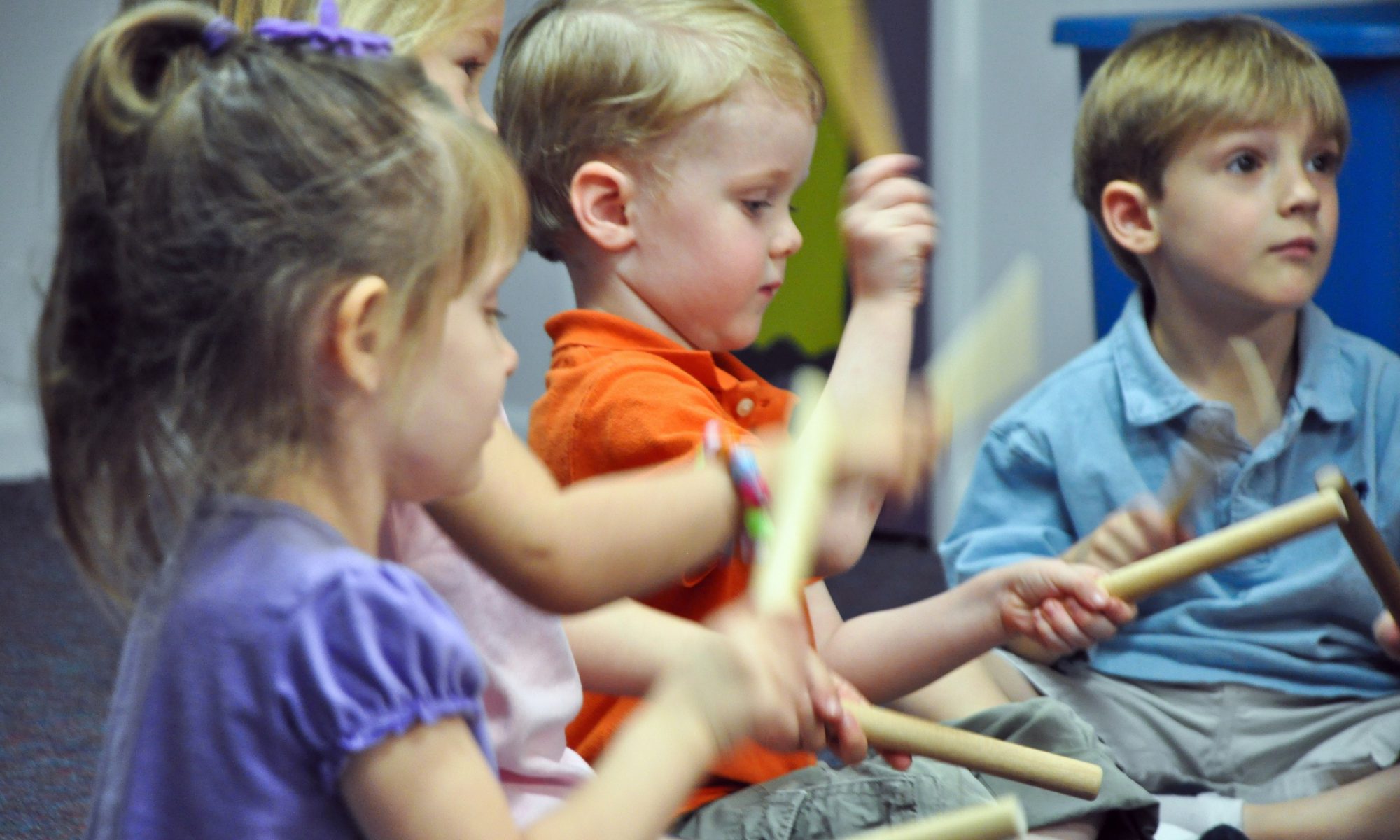
If Shakespeare had developed daycare or preschool curriculum instead of sonnets and plays, he may have rewritten one of his most famous lines: “If music be the food of love literacy, play on.” Research continues to prove this sentiment, including a new University of Buffalo study published earlier this month.
 Before conducting this study, professors from the University of Buffalo knew what the research said about music’s ability to greatly impact a child’s early literacy and language abilities. With their study, however, they specifically wanted to see if early childhood teachers, with little to no music background, could be trained to use music in developmentally appropriate ways to boost early literacy development.
Led by Maria Runfola, PhD, and Elisabeth Etopio, PhD, the team recruited 165 preschoolers to participate in music activities led by 11 daycare teachers. As part of the daycare curriculum, the preschool educators leading the music classes received training in musicianship skills and specific strategies for leading preschoolers’ music development. Prior to this early literacy study, these preschool teachers did not have any music training. The researchers found that participating preschoolers experienced a boost in oral vocabulary and understanding of grammar compared to students not enrolled in the preschool curriculum. Plus, children with lower initial literacy skills saw the biggest positive impact.
“First, we found that the musicianship of the early childhood teachers improved as did their ability to guide music activities in ways that enhanced student music development,” explained Runfola in a press release, Study Finds Link Between Music and Preschoolers Reading Readiness.
Since the preschool teachers did not come from a musical background, it was not surprising that participating children did not experience a significant boost to musicality, such as rhythm-pattern achievement. However, the researchers concluded that early childhood teachers without a music background could be trained to teach a daycare curriculum that uses music as a vehicle for early literacy and language development.
“Administrators need to better understand the importance of the arts to children’s development,” Runfola concluded in the press release. “We hope this research will help music educators and childhood educators support their requests for music time for the youngest of our students. Children need daily appropriate music activity to stimulate their neural activity to develop tonal and rhythm audiation that in turn appears to help their emergent literacy skill.”
If music be the food of literacy, then play on indeed!
Created by Kindermusik International, ABC Music & Me is a daycare curriculum that uses music and movement activities to boost early literacy and language skills while also cultivating turn-taking and sharing, improving coordination, enhancing creativity, and more.
Through a robust classroom kit that includes Digital Teacher Guides, ABC Music & Me provides step-by-step planned out lessons so even educators with no musical experience can begin teaching this daycare curriculum immediately.
This video demonstrates the Total Physical Response approach to second language learning and shows a parent and child at home using one of the recorded activities from ABC English & Me.
It all started with movement. When James Asher, a professor of psychology at San Jose State University in California, started asking why young children were dropping out of school, he found a link to second language acquisition:
“The most difficult learning task for both children and adults may be the attempt to acquire a second language in school. A number of studies have shown that few students – often less than 5% who start in a second language – continue to proficiency. This lack of success is striking when compared to the language achievement of most six-year-olds, who without schooling have mastered all the essential parts of the individual’s native language.”
Searching for a solution, Asher started looking at why some young learners developed a second language skill and why others didn’t. The link was movement. What he found is that children who could hear a movement word, and demonstrate comprehension of that movement word by doing it – such as jump, dance, or run – were better able to learn and retain the new information over a period of time.
He developed a method for second language learning centered on movement and wrote a book about it, Learning Another Language Through Actions: The Complete Teacher’s Guidebook.
Asher called this physical approach to teaching a second language: total physical response or TPR.
In study after study for 25 years, laboratory experiments and classroom observations have demonstrated results that were extremely positive. When the instructor skillfully uses the target language to direct the student’s behavior, understanding of the utterance is transparent, often in only one exposure. Also, the understanding is achieved without stress and then retained for weeks, months, and even years. Language-body communications is a fascinating and powerful principle of learning. It seems to be a universal principle that holds true for language including sign language for the deaf. It seems to hold true for an age group that has been studied from children to senior citizens.
This approach is an essential part of the ABC English & Me program. And we were so delighted to watch a parent and child share the joy of learning – and moving – at home.
It’s the kind of learning that makes you jump for joy.


One of my favorite bloggers is former Kindermusik Educator Mollie Greene. She posts pictures, adores coffee, and in the summer, complains about the heat like a paper daisy wilting in the sun. My favorite posts are the lists, like this one: “2013 things to do in 2013.”
say no to guilt
say yes to long walks
buy large houseplants and keep them alive
play goldberg variations
play gin rummy
make the dog behave

Her carefully crafted sentences and lists drop and gently spin like her carefully crafted paper mobile artworks. In addition to writing, Greene also creates and makes paper art, available on her Etsy shop, Royal Buffet.
Hey Mollie. Add this one to the list: Publish that new paper craft book.
The former Kindermusik educator, musician, writer, blogger, crafter, and mother of four is about to add “published author” to her list of accomplishments. In July, Greene and California publisher Chronicle Books will release Sweet Paper Crafts, 25 Simple Projects to Brighten Your Life. You can pre-order it now on amazon.com
Greene created the book with photographer (and her husband) Aaron Greene. Her paper work has also been featured on numerous Web sites and blogs including Martha Stewart Weddings, Free People, Design Sponge, and Decor 8. In print, her work has appeared in Southern Living Magazine and the craft book Playing with Books.
Her first paper-craft book was a self-published project with Aaron, Make & Do Paper Fascinations for Every Lovely Occasion.
We recently caught up with a properly caffeinated Mollie Greene to say congratulations, and to ask, “how’d you do it?”

Name: Mollie Greene
Location: Greenville, SC
Kindermusik Educator: 2001-07 at Piano Central Studios. The studio’s founder and owner, Theresa Case, is also author for this blog’s Foundations of Learning posts.
Why did you start teaching Kindermusik?
In college (for Piano Performance at Bob Jones University) I had to observe a Kindermusik class, and I was impressed with the storytelling aspect of the class, and the themes, and dancing, and using music to work with kids is always fun. I just thought it was a whole lot of fun, and I thought it would be a fun way to make a living for a little while.
Why did you stop teaching Kindermusik?
After I had my third baby it was just too crazy. I have four children now. Henry is 10, Jude is 8, Lola is 5, and Dot is 5 months.
The new book is different from your first self-published book. How so?
In the self-published book we did about 10 tutorials. They were mostly things that people had asked me about. We thought about putting the tutorials in a blog format but, because there were so many, we just did it as a book.
The new book with Chronicle has 25 projects and the crafts are all different, there’s much more variety.
Some activities are things that I’ve sold in my Etsy shop. Most are new projects that I’ve been working on with my editor so there would be more variety – in the kind of paper you would use and the variety of projects – so there wouldn’t be 25 butterfly projects. They all needed to be different so there will be more appeal to more people across the entire book.
Some were things I haven’t made in years, made when I was a kid, for a more modern, grown up way to make it.

Are the crafts for kids or adults?
The book targets adults. Most of the projects take a little more time or skill with scissors, but most of the projects could be adapted for kids. Otherwise, most of the crafts are good for kids around middle school and up.
How did you get the book published?
Chronicle Books is a great source for art books, books about the arts – especially crafting books. I sent them a copy of the self-published book because we didn’t know if they’d be interested in picking that one up; and because it was a good sample of the work.
The editor I sent it to liked it and she helped us get it started.
How long did it take for Chronicle to respond to you and and pick up the book?
We sent the first book in October and heard back in November, 2011. We started working on it in February and it was only a few months before we had to get the ball rolling and start writing.
On your blog, you said this project started last spring, “when I was morning sick and in the midst of a big household move.” Why in the world would you do that?
It all kind of came at once. I’d just found out I was pregnant with Dot and we were moving across town, and they just wanted to get started so we could publish it by this summer. So we had to get it all done by last summer.
And I just thought, you know, you have more time than you think you have. If you can get organized, you can do more than you think you can. Which is not my typical way of living.
You can find Mollie’s writing online at molliegreene.com.
And if, like Mollie, you’re looking for a fun, creative way to make a living, ask us today about becoming a Kindermusik Educator.
 Announcing the first ever
We are excited to give voice to that light in a child’s eye, that song in her heart, that little person just waiting to blossom – to acknowledge all those precious, miraculous moments we in the Kindermusik community are privileged to nurture and celebrate each and every week.

When the Kindermusik kids and parents win, their Kindermusik Educator also wins!
We encourage everyone to share their love for Kindermusik, spread the joy, and enter the 2013 We Love Kindermusik Contest for an awesome grand prize.
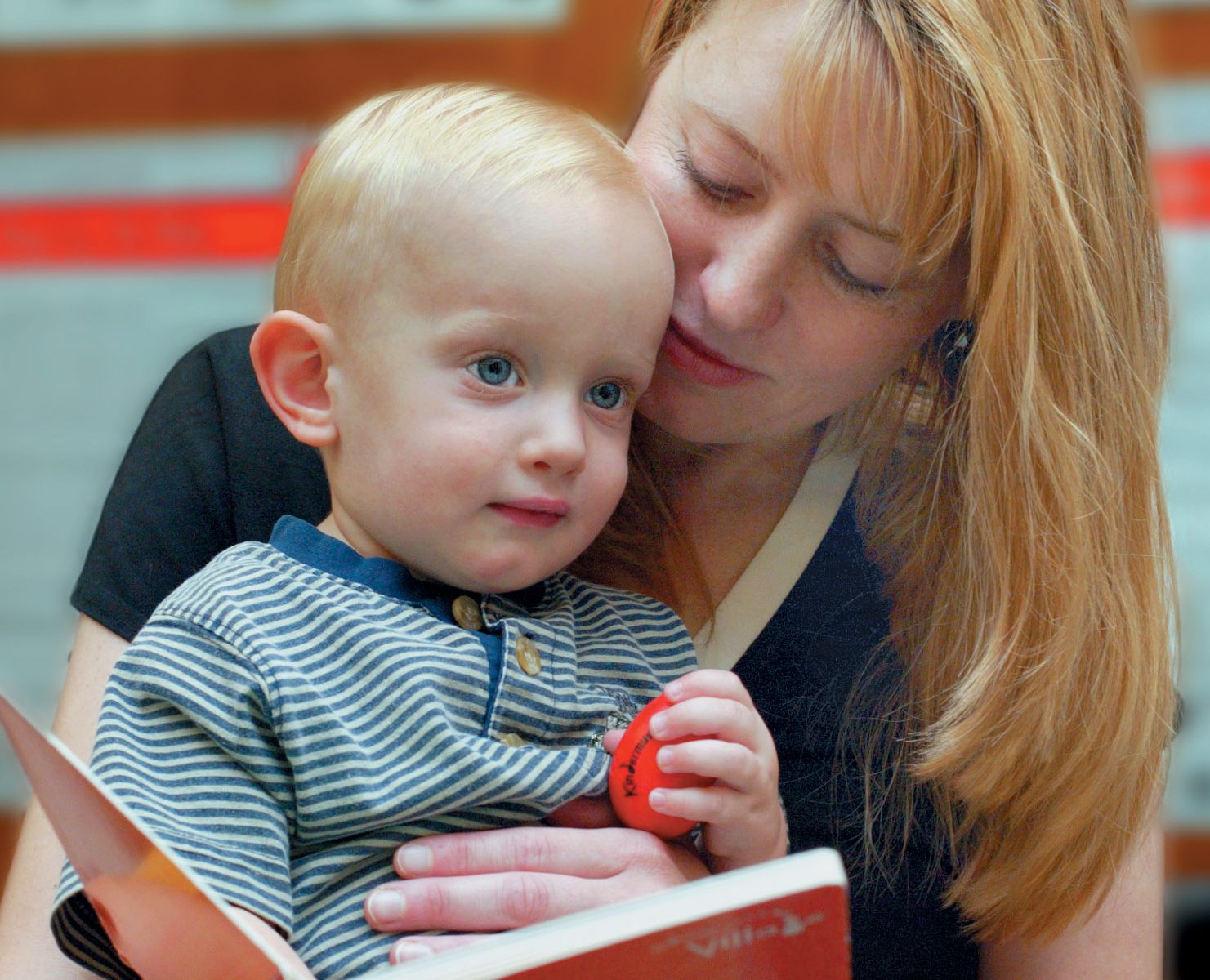
As an addendum to Thursday’s pointers for engaging your preschooler readers, we’re thrilled to have stumbled upon the Nature Generation’s list of “Green Earth Award” winning books for children and young adult’s literature. Recognized by the Audubon Society, these books were chosen (according to Next Generation’s founder) for  their ability to “inspire a child to grow a deeper appreciation, respect, and responsibility for his or her natural environment.” Below are our personal favorites from the list of 48 selected titles. How many of these books has your family or classroom read?
10 Things I Can Do to Help My World, written and illustrated by Melanie Walsh
A Place for Birds, written by Melissa Stewart and illustrated by Higgins Bond
A Summer of Silk Moths, written by Margaret Willey
Abigale the Happy Whale written by Peter Farrelly and illustrated by Jamie Rama
All the Way to the Ocean written by Joel Harper and illustrated by Marq Spusta
Ancient, Strange and Lovely, written by Susan Fletcher
Extraordinary Endangered Animals, written by Sandrine Silhol and Gaëlle Guérive and illustrated by Marie Doucedame
Garbage Helps Our Garden Grow: A Compost Story, written by Linda Glaser and photography by Shelley Rotner
Garden of the Spirit Bear written by Dorothy Hinshaw Patent and illustrated by Deborah Milton
Generation Green: The Ultimate Teen Guide to Living an Eco-Friendly Life, written by Linda Siversten and Tosh Siversten
Get Real: What Kind of World Are You Buying, written by Mara Rockliff
Let the River Run Silver Again! written by Sandy Burk
Let’s Save the Animals, written and illustrated by Frances Barry
Luz Sees The Light, written and illustrated by Claudia Davila
Quest for the Tree Kangaroo written by Sy Montgomery and illustrated by Nic Bishop
Redwoods, written and illustrated by Jason Chin
Riparia’s River, written by Michael J. Caduto and illustrated by Olga Pastuchiv
Saving the Buffalo written by Albert Marrin
Secrets of the Sirens, written by Julia Golding
Ship Breaker, written by Paolo Bacigalupi
The Curious Garden, written and illustrated by Peter Brown
The Last Wild Place, written by Rosa Jordan
The Sorta Sisters, written by Adrian Fogelin
Whirlwind, written by David Klass
A big thanks again to the Nature Generation for sharing this inspiring list!


“Music class is the best part of being a kid.” ~ Marcus
“I love to play my glockenspiel.” ~ Olivia“I love Ms. Karen and to play all the instruments.” ~ Jake
“It makes my brain bigger.” ~John
“All my friends are there :)” ~ Alicia
“I like all the things we do. I like everything at Kindermusik” ~ Morgan
“We love Kindermusik because it gives us a chance to bond together while learning. It helps expose my little one to all styles of music and gives him the chance to learn, play and participate in a group setting that is safe and comfortable.” ~ Charity and Schroeder Campbell
“We love Kindermusik because it helps our budding musician to bloom.” ~ Erica V.
“Kindermusik is our favourite quality family time. We do not love it, we adore it!!!!” ~ Catherine’s Mom Continue reading “Kids & Parents Love Kindermusik Because…”