
How Kindermusik Prepares Your Child for School

Why Kindermusik

Early childhood education is important, and at Kindermusik, we believe that you – the parent – are your child’s first and best teacher. But what to do with your child until he is 7 years old? Our classes are the answer!

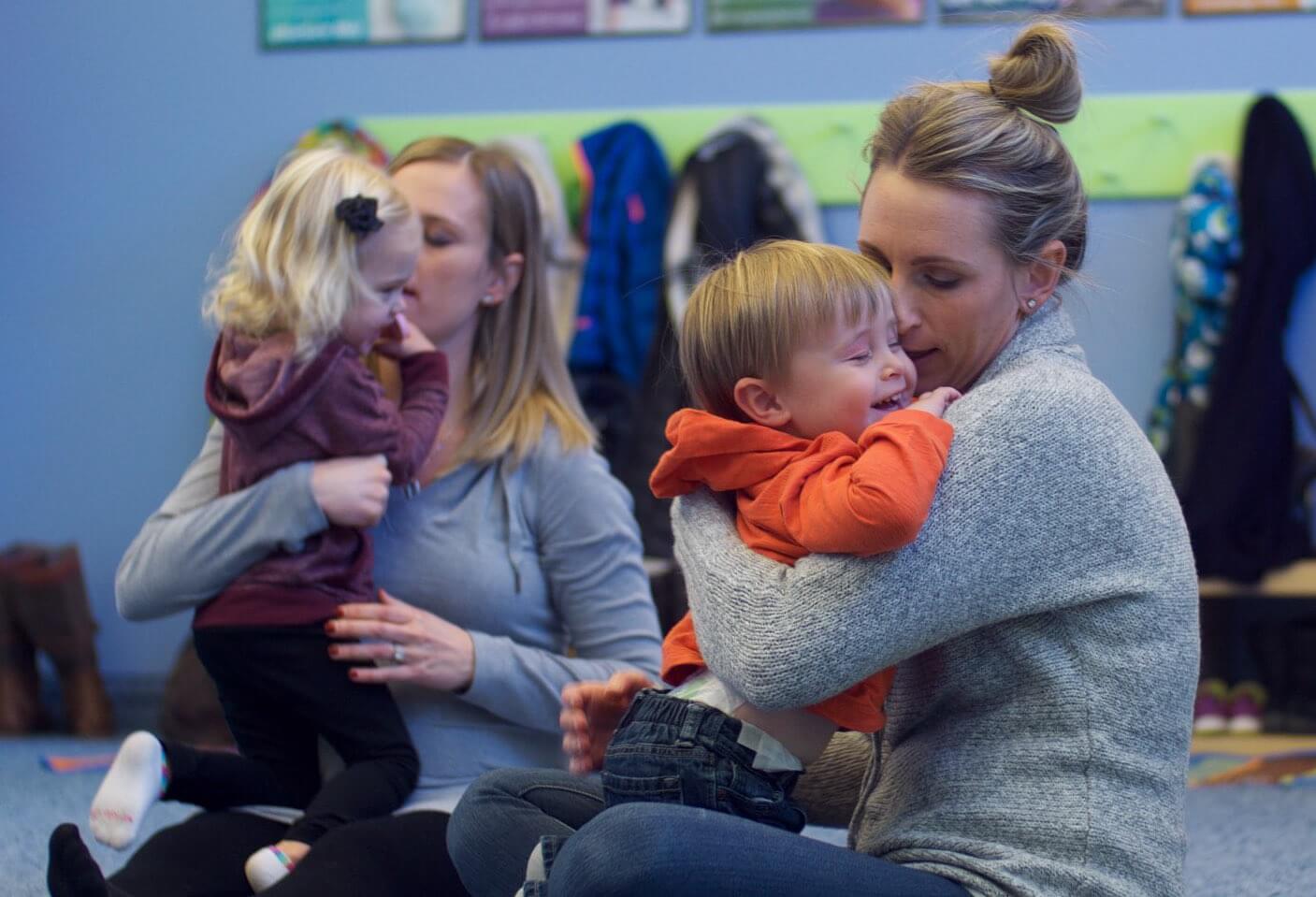
Parent involvement

Music classes in the early years that include parental involvement and focus on learning in a fun, developmentally appropriate way inspire a lifelong love for learning.

Music classes give your child a place to practice those all-important social skills, like cooperatively play, sharing, and following directions. The best music classes will encourage your child to think creatively, developing critical thinking skills and the ability to problem-solve.

In an environment where process, not performance, is stressed, music classes build self-confidence and a willingness to try new things.

Group Play

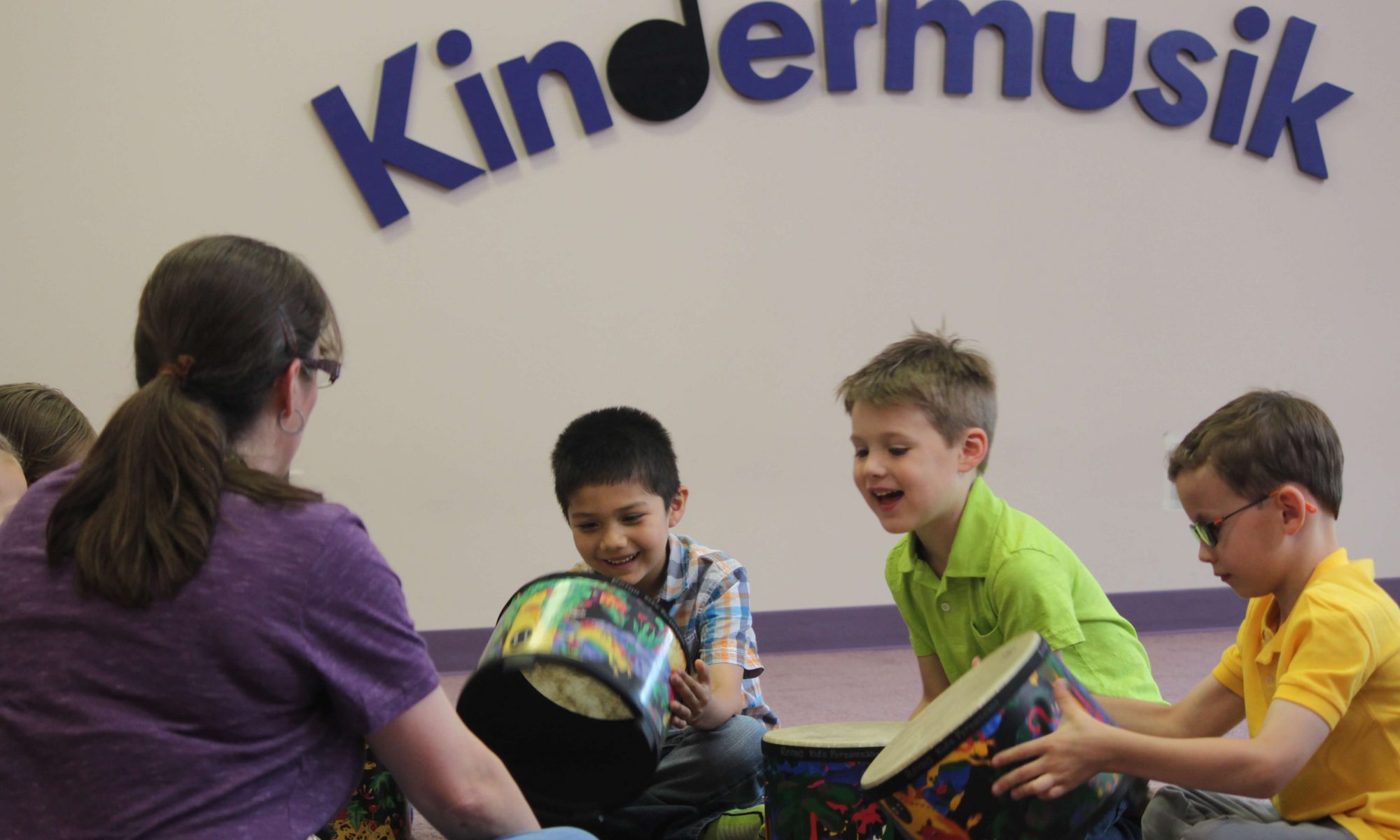
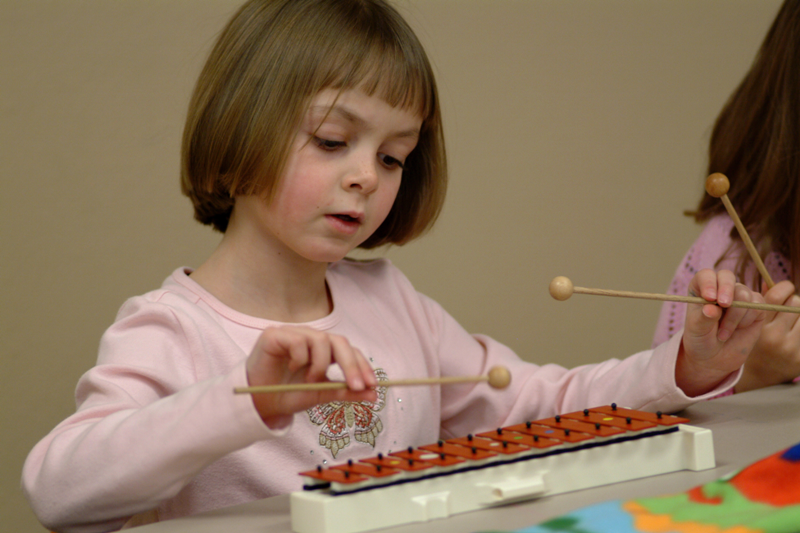
Practice with steady beat, enjoying movement activities, and playing instruments help develop coordination and motor skills necessary for cutting with scissors, holding a pencil, or kicking a ball, for example.

Music classes that are teaching children rhymes and then later, the basics of beginning to read music pave the way to literacy.

Music classes that gradually increase a child’s independence at the class help the child more successfully transition to the school classroom.

In these classes, children have the opportunity to bond and interact with their teacher, learning to listen and respond to someone other than the special adults who surround them at home. Science and research have proven time and time again that music positively impacts a child in all areas of development – social/emotional, language, cognitive, physical, and literacy.

Check out this TEDTalk by John Iversen on how music impacts our brains – particularly young brains.

From music skills to life skills, it’s all there in Kindermusik, where music and learning play! Try a class today!

Musical Activities for Halloween!

Halloween Activities

The holidays are always a special time to enjoy special activities together. Here are a few simple kid-friendly, giggle-approved suggestions for spending some quality time together making memories with activities inspired by music and powered by imagination.

Play Dress-Up

Pull out all of the dress-up clothes and props.  And in the spirit of Halloween, maybe add a little face painting.  Nothing inspires imagination and pretend play like playing dress up, especially if siblings or parents join in the fun too.

Sing New Words to Familiar Favorites

Instead of “Do You Know the Muffin Man,” how about “Do You Know the Pumpkin Man”?  This works with so many favorites! Here’s another one…”Did you ever see a ghost, way up close, down by the bay…”

Download the free Kindermusik App to stream “Do You Know the Muffin Man,” “Down By the Bay,” and other adaptable tunes.

Make Pumpkin Spiders, Egg Carton Caterpillars, and More!

Check out this video playlist of craft activities, leading off with an adorably spooky pumpkin spider!

Make a Paper Plate MaskPaper plate masks

This super simple craft is sure to foster lots of fun creativity and delightful pretend play. Here’s how to make the masks, brought to us by the folks at Artful Parent. Consider making several different masks to add to the choices for dress-up play.  Oh, and don’t forget to turn on some music during craft time.

Enjoy a Little Vocal Play 

Have fun with a little back-and-forth vocal play with all of your favorite Halloween words, either singing or speaking.  Vocal play is great for developing a sense of rhythm and enhancing language development.

Read, Read, Read

Reading literacy and musical literacy go hand-in-hand.  Search “Halloween books for preschoolers” and you’ll find lots of book lists, including Halloween-themed books from some of your favorite literary characters like Peppa the Pig.

Be Safe

We want you to have fun this Halloween, but we also want you to be safe. Here’s a link to a list of great safety tips for the day found over at Safe Kids Worldwide. And these aren’t just for the kids! Adults should be extra careful driving around when your community is trick-or-treating. Keep your eyes peeled for little ones trying to fill their candy bags.

Have fun out there and be safe!

Book Review: The Gardener and the Carpenter

The Gardner and the Carpenter

[vc_row][vc_column][vc_column_text]Oxford University educated developmental psychologist Dr. Alison Gopnik brings us an excellent parenting book in The Gardener and the Carpenter: What the New Science of Child Development Tells Us About the Relationship Between Parents and Children. In the field of childhood learning and development, Dr. Gopnik is a respected voice and frequent author. The Gardener and The Carpenter is her latest effort.


[/vc_column_text][/vc_column][/vc_row][vc_row][vc_column][vc_column_text]

“Drawing on the study of human evolution and on her own cutting-edge scientific research into how children learn, Gopnik shows that although caring for children is immensely important, the goal shouldn’t be to shape them so they turn out a certain way. Children are designed to be messy and unpredictable, playful and imaginative, and very different both from their parents and from one another. The variability and flexibility of childhood allow them to innovate, create, and survive in an unpredictable world. “Parenting” won’t make children learn – rather, caring parents let children learn by creating a secure, loving environment.”

– Jacket Flap, The Gardener and the Carpenter

Dr. Gopnik provides clear and research based parenting strategies for the parent of the new millennium. Common pitfalls are explored and perhaps the main takeaway from the book is this: while we seek to provide a safe, structured environment for our children in which the can grow physically, socially, mentally, and emotionally, we need to step back and let our kids be kids. Oddly, I am going to quote the conclusion of this book right here at the beginning of this review:[/vc_column_text][/vc_column][/vc_row][vc_row][vc_column][blockquote cite=”Dr. Alison Gopnik, The Gardener and the Carpenter”]”Being a parent isn’t worthwhile because it will lead to some particular outcome in the future, because it will create a particular kind of valuable adult. Instead, being a parent allows a new kind of human being to come into the world, both literally and figuratively. Each new child is entirely unprecedented and unique – the result of a new complicated combination of genes and experience, culture and luck.”[/blockquote][/vc_column][/vc_row][vc_row][vc_column][vc_column_text]This mindset reminds me of the motto of Paul McCartney’s grammar school in Liverpool – Not for ourselves, but for the whole world were we born. It’s a beautiful sentiment, but the pressure! The title of the New York Times review captures this concept beautifully: Memo to Parents: Back Off, and Children Learn More. 

One area Dr. Gopnik addresses is a truth all parents know – kids are messy. It’s just a universal truth. Human children are not born into the world ready to clean up after themselves. And while we try our best as parents to bring order to disorder, Dr. Gopnik reminds us that our 19th century forebears had a different view than the ancient Greeks when it came to chaos and disorder (so did Willy Wonka – a little nonsense now and then…). Disorder and chaos can be the catalyst for “innovation and creativity.”[/vc_column_text][/vc_column][/vc_row][vc_row][vc_column][blockquote cite=”Dr. Alison Gopnik, The Gardener and the Carpenter”]”Mess has merits.”[/blockquote][/vc_column][/vc_row][vc_row][vc_column][vc_column_text]

Learning Through Looking

Through this chapter title, Dr. Gopnik reminds us that our kids are always learning, even when we aren’t actively teaching them. They are opportunistic and indiscriminate when it comes to subject or content. Everything is fair game for the developing mind. The extended period of learning afforded by our way of life is a huge benefit. Through this journey, Gopnik states “children are equipped with particularly powerful devices for learning both from their own experiences and from other people.”

As it turns out, Dr. Gopnik suggests that children may be better than adults [in certain situations) at synthesis – putting it all together – processing what they see other do and attempting to understand why they do what the child observes. The natural conclusion being this: allow for a variety of experiences – it will have a positive impact on your child’s development.[/vc_column_text][/vc_column][/vc_row][vc_row][vc_column][blockquote cite=”Dr. Alison Gopnik, The Gardener and the Carpenter”]”In some ways, at least, your children may actually know more about you than you do yourself”[/blockquote][/vc_column][/vc_row][vc_row][vc_column][vc_column_text]The title of this book, and it’s allegorical implications, perfectly relay what is found inside. Two basic, overarching modes of parenting are presented. Throughout the book, Dr. Gopnik makes a strong case for the gardener – providing a nurturing, loving, tended space in which our children can grow in the sun, experience the world around them, and become the unique individual their magical assortment of genes and cultural trellis encourages them to be. It’s a beautiful framework, with fewer codified instructions, something on which the carpenter relies heavily. It’s somewhat of a paradox, and Gopnik deals with several at the outset of the book. Rather than thinking of things like “free range,” other named philosophies, and overly concerning ourselves with outcomes, we focus on love. We focus on providing a framework in which our kids can discover who they are and we worry less about who they are going to be. Focus on the now and the later takes care of itself.[/vc_column_text][/vc_column][/vc_row][vc_row][vc_column][vc_column_text]Dr. Gopnik has several other books on child development, including The Philosophical Baby and The Scientist in the Crib. You may watch her TEDTalk, titled “What Do Babies Think?”, here.[/vc_column_text][/vc_column][/vc_row]

Educator Spotlight: Cathy Huser, Owner and Director of Kindermusik of Cleveland

Educator Spotlight

[vc_row][vc_column][vc_column_text] For Cathy, the magic of teaching Kindermusik is about bringing music into the hearts of children and helping educate parents about the incredible, rich, developmental and musical benefits of music. Her Kindermusik kids lovingly call her Miss Cathy or Aunt Cathy, and one time she was “Miss Poffy.”

With over 20 years experience and an award-winning Maestro program, Cathy has helped make a difference in the lives of thousands of Cleveland-area families, and she has even bigger plans to expand her reach by establishing an Arts Center this coming year.


[/vc_column_text][/vc_column][/vc_row][vc_row][vc_column][vc_column_text]TC: How long have you been teaching Kindermusik and operating Kindermusik of Cleveland?

CH: Since 1996. Heading into my 21st year!

TC: What are some of your hobbies?

CH: I love to read, but lament that I don’t read enough. My husband and I like to garden – I point and he plants. It’s a good combination.  My dream is to take photography classes and French lessons. Some day…

TC: What is your favorite inspirational quote?

CH: I read so many that come through on Social Media and they touch me depending on my day. Too many to pick just one. Of course after reading the Art of Possibility, being able to say “How Fascinating” in response to a problem has really helped me get through some negative energy days. Not sure that’s truly an inspirational quote but it’s been a big help!

TC: What’s your favorite Kindermusik song to sing?

CH: With each new unit, I have a new favorite. Of course I love singing the lullabies.

TC: What’s your favorite Kindermusik dance to lead?

CH: Probably Tants Tants Yidelekh from Dream Pillow, but really any dance where we can come into the center and back out, because those giggling, smiling faces are the best.

.[/vc_column_text][/vc_column][/vc_row][vc_row][vc_column][vc_video link=”https://vimeo.com/186258165″][/vc_column][/vc_row][vc_row][vc_column][vc_column_text]TC: What’s your favorite part of teaching Kindermusik?

CH: Several weeks into a new session you hit a point where the magic happens. All of a sudden you see those “aha” moments on the adult’s and many times the child’s faces. They get what you’ve been saying from the beginning and realize that what we’re doing is making a difference. My favorite “feeling” of teaching Kindermusik is what I call being “in the zone” – all are present and engaged, and learning, and singing, and exploring, and soaking it all in, and of course loving it.

TC: If you had to name just one secret to success in the Kindermusik classroom, what would it be?

CH: Be prepared enough with your lesson and music, so you can focus on NOTICING without judging. Who is not engaged? Who might not be comfortable enough to make new friends? Why might a child be crying? The more you can notice without judging, the better you can understand how to help.

TC: How do your Kindermusik kids (or families) describe you?

CH: The words I hear most from parents are patient, helpful, understanding, fun.  I hear that some of the kids talk about me at home all week long. I’m not able to decipher their lingo just yet.

TC: What’s the most touching thing that’s ever happened to you as a Kindermusik teacher?

CH: Back in the early years, I had a special needs student, Alex, with Downs Syndrome. She had been with us for over a year and was still not walking at 31/2 yrs. We were doing a circle dance in Our Time, walking around to the right. She let go of Dad’s hand and started walking with us. The entire class had tears in their eyes, watching how proud she was of her big accomplishment. I will always remember that.[/vc_column_text][/vc_column][/vc_row][vc_row][vc_column][vc_column_text]TC: What do you feel has made your studio business a success?

CH: I have a business background which helped me from the beginning. I also am able to separate head-making decisions from heart-making decisions. I’ve learned not to take anything personally. I’m also able to see the big picture, rather than allow something little to affect my decision making. The two biggest positive impacts on my business have been 1) taking a week-long course with Dr. Becky Bailey, author of Conscious Discipline, and 2) joining Studio Expansion Program and then becoming a private client of Chantelle Bruinsma Duffield.

TC: What are some of the new and exciting things ahead for your business?

CH: My husband and I are now business partners and we’re opening up a full Arts Center in January. My ultimate goal is to keep the Kindermusik kids longer and have them age into our offerings: music lessons, dance, theatre, visual arts. Hoping this builds our older KM programs as an added benefit!

TC: What makes your studio such a special place?

CH: I think families love being there. I hear from parents that their child’s face lights up when they pull in to the parking lot. It’s the totality of everything you do, from having an amazing staff that are treated well and trained well, to the experience you give your families from the moment they walk in to when they leave and how you communicate with them during the week.[/vc_column_text][vc_separator][vc_column_text]Cathy Huser is the owner and director of Kindermusik of Cleveland, a Maestro program serving the Cleveland, Ohio area. 

Are you interested in Kindermusik? Find a class near you![/vc_column_text][/vc_column][/vc_row][vc_row][vc_column][class_finder_form css=”.vc_custom_1476103011117{padding-top: 20px !important;padding-right: 20px !important;padding-bottom: 20px !important;padding-left: 20px !important;}”][/vc_column][/vc_row]

Preview: PBS’s Steve Roslonek of SteveSongs

Steve of SteveSongs

[vc_row][vc_column][vc_column_text]Hey Kindermusik friends – do we have a great interview for you! Soon, we will feature an exclusive conversation with Steve Roslonek of SteveSongs. For the past 15 years, Steve has been delighting children with his live music all across the country. In 2008, he began a relationship with PBS as Mr. Steve, co-host of PBS KIDS preschool destination.

His live shows are filled with joy, laughter, and love. Beyond that, kids might also learn a thing or two! Stay tuned for this exciting interview![/vc_column_text][vc_video link=”https://www.youtube.com/watch?v=8OVHhkqpZf8″][/vc_column][/vc_row]

Science Center Stage: The Imaginary Friend

Brain

[vc_row][vc_column][vc_column_text]I’ll admit it: I had an imaginary friend when I was a little kid. His name is lost to time now, but I certainly remember playing with him when no one was around. These types of “friends” can take many shapes, from fantastical representations of a beloved stuffed animal (Calvin and Hobbes, anyone?) to simple human forms. And guess what? It would appear that by age seven, nearly two thirds of children have imaginary friends, so you aren’t alone. Having an imaginary friend can be good for your child. Let’s find out how…[/vc_column_text][/vc_column][/vc_row][vc_row][vc_column][vc_column_text]

Imaginary
Hmm..where’d that pink elephant go? I wanted to play!

[/vc_column_text][vc_column_text]

Imaginary Friend, Real Benefits

So what are the benefits? Recent research indicates that imaginary friends allow kids to do work out whether a decision is acceptable to a parent. They transfer the behavior to the friend and have a conversation that goes something like this:

“Mommy? Fuzzy Francis wanted to go for a walk in the woods.”

“Well…the woods certainly is a fun place, but you can’t go there by yourself…even if Fuzzy Francis wants to. You need Mommy or Daddy with you, okay?”

This allows a young child to distance themselves from a choice and try it out without feeling anxious about being corrected. The answer is hopefully filed away under “appropriate activity” and learning takes place.

Sociability

Many parents worry that imaginary friends might curtail making actual friends. Research indicates that this is not the case at all. There is no numerical correlation between imaginary friends and real friends, however, children with imaginary friends, according to pediatrician, Dr. Claire McCarthy, tend “to be very sociable and have better “social understanding,” or the ability to see the world through someone else’s eyes.” In other words, having an imaginary friend can aid in developing empathy.

And what about understanding what’s real and imaginary? Well, it seems kids get it. From Dr. McCarthy’s article:[/vc_column_text][blockquote cite=”Dr. Claire McCarthy”]”Parents also worry that having an imaginary friend means that children are confused about what is real and what is not. This isn’t true either. Children know the difference between real and imaginary friends. In fact, children in the study often stopped researchers in the midst of their questions to make sure that the researchers understood that the friends weren’t real!”[/blockquote][vc_video link=”https://www.youtube.com/watch?v=74Nhhc-LxqY”][/vc_column][/vc_row][vc_row][vc_column][vc_column_text]

Processing Emotion

What about processing difficult life events, such as moving to a new home or school, or the loss of a loved one? Often times, children will have discussions with their imaginary friends about difficult issues, then relay these discussions to Mom and Dad. Again, a child might transfer complex emotional reaction onto the imaginary friends, as in the example above, which frees them to discuss an issue when, otherwise, they might not.

“Daddy, Fuzzy Francis really doesn’t want to move. He’s really sad about leaving this neighborhood.”

“I know, kiddo. It’s tough to leave a place you love for something new. But it’s exciting, too! And guess what? Just like you have us to help you when you are feeling down, Fuzzy Francis is sure lucky to have you to cheer him up!”

In this little scene, the parent acknowledges the emotion (thereby indicating it’s okay to have those feelings), the imaginary friend, and lifts the child up, praising her and her role as supportive friend, all while reminding the child that Mom and Dad are their for her – all if this because the child shared some information about her imaginary friend.[/vc_column_text][/vc_column][/vc_row][vc_row][vc_column][vc_column_text]

Problem Solving Skills

Another recent study tells us that children with imaginary playmates develop better problem solving abilities. How, you ask? Well, as it turns out, they are doing what most of us do – talking things through. How many of us talk to ourselves when working out the details of a task or fleshing out the solution to a challenging problem? I bet that percentage is pretty high! Kids who engage in imaginary play of this type are developing the ability to think through cognitive tasks when talking with those invisible play partners. And that’s a good thing.[/vc_column_text][/vc_column][/vc_row][vc_row][vc_column][vc_column_text]These benefits can have a tremendously positive impact on the development of young children. Engage with your kids. Ask them about their imaginary friends. In the process you will help them learn about the world and you will learn more about them.

For more reading on imaginary friends, check out Dr. Marjorie Taylor’s book, Imaginary Companions and the Children who Create Them, published by Oxford University Press.

Taylor Imaginary Companions[/vc_column_text][/vc_column][/vc_row]
Parent Perspective: Why We Love Kindermusik

Parent Perspective

[vc_row][vc_column][vc_column_text]For the Thornton’s, DeMartino’s, and Carlson’s, Kindermusik is a family event since it’s often Grandma who brings the grandchildren (who are cousins) to class at Kindermusik of the Valley. Kindermusik of the Valley is located in Burnsville, MN, and is an award-winning Kindermusik program owned by the fabulous Helen Peterson. Here’s a peek into their Kindermusik story and why Kindermusik is so special to them, as told by Kristin DeMartino. [/vc_column_text][vc_separator][/vc_column][/vc_row][vc_row][vc_column][vc_video link=”https://vimeo.com/183819433″][vc_column_text]

Every song, every dance, every beat…

We were first introduced to Kindermusik when my oldest, now almost 5 years old, was only six months old. He attended a class with my mom and they were immediately hooked, which has resulted in each of my children, as well as my sister’s, beginning Kindermusik at a very young age.

I find it hard to put into words what this program has meant to us, but I will start by saying that our educators at Kindermusik of the Valley are phenomenal. This honestly seems like an understatement, and I really cannot say enough to truly represent how they have impacted each of my children. They are genuine, caring and have a way of bringing out a confidence and pride in each and every child they interact with. Every song, every dance, every beat of an instrument, and every idea is praised and encouraged. Creativity is endless, and I love the confidence that Kindermusik has instilled into my kids.
.[/vc_column_text][blockquote cite=”Kristin DeMartino”]”They…have a way of bringing out a confidence and pride in each and every child they interact with.”[/blockquote][/vc_column][/vc_row][vc_row][vc_column][vc_column_text]

Parent Perspective
Have you ever seen pure joy in an educator’s face? Here’s your reference.

[/vc_column_text][vc_column_text]

Those Special Connections

As a parent, I have also appreciated the connection Kindermusik encourages between music, body movements, and emotion. Each week the kids are encouraged to experiment, whether it be through movements or instruments, with a variety of music. It is so fun to watch them express themselves and their emotions in such a therapeutic way.

In connection with that, I have also appreciated the ease at which the majority of what we do within the class can be carried over to home. My kids love having “kitchen commotions”, “skating on paper plates”, moving with scarves, and just making music with a variety of everyday items.[/vc_column_text][vc_column_text]

Parent Perspective
We love to sing praises to music, too, young lady.

[/vc_column_text][/vc_column][/vc_row][vc_row][vc_column][vc_column_text]Overall, I just really cannot say enough about what Kindermusik means to us. We look forward to it each and every week![/vc_column_text][/vc_column][/vc_row]

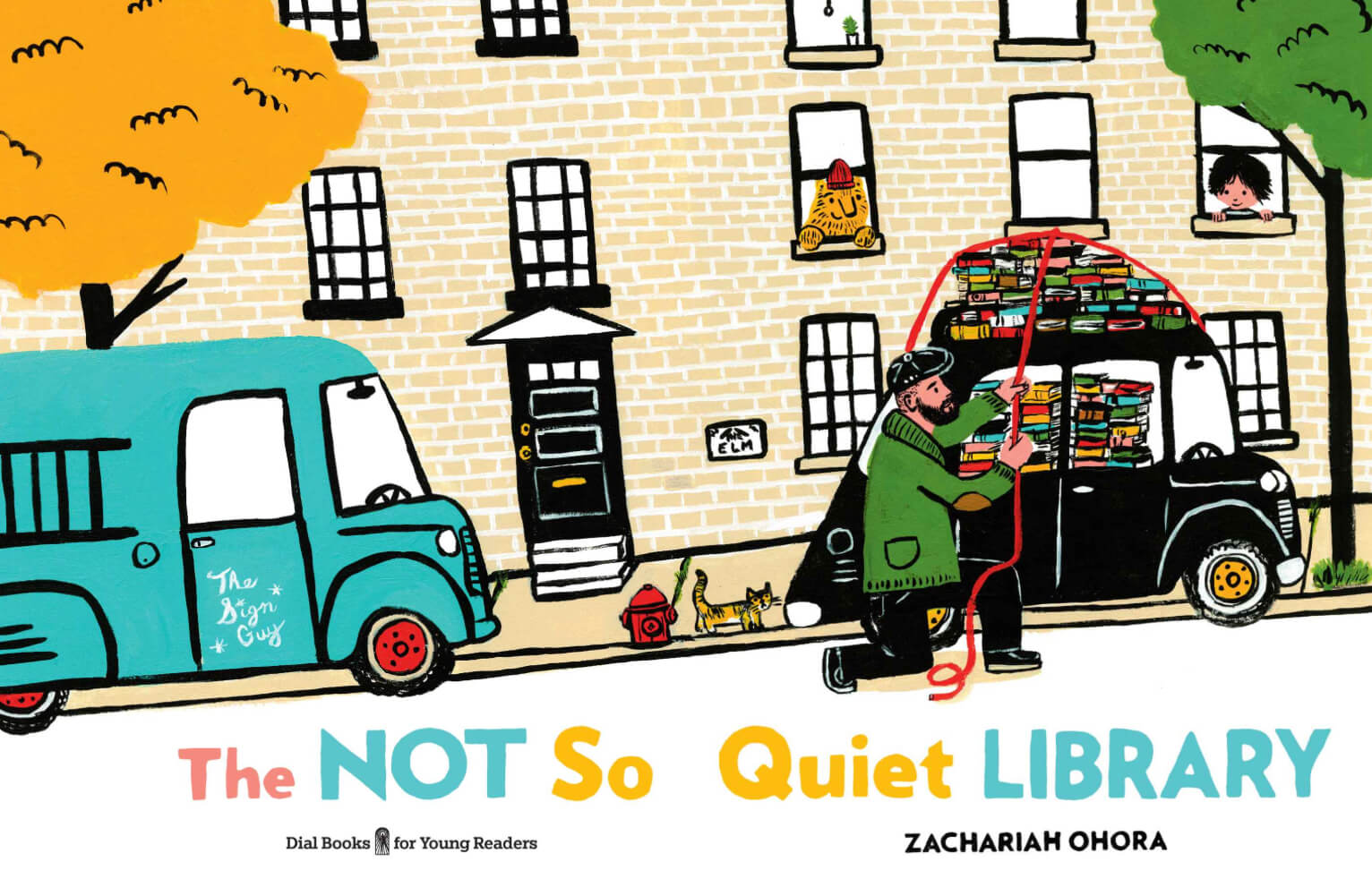
“Grab the Sprinkles, Winston!” – Kindermusik Reviews: The Not So Quiet Library

The Not So Quiet Library

[vc_row][vc_column][vc_column_text]Join us for a new regular feature: Kindermusik Reviews. We’ll be looking at various books, but most importantly, children’s books and books on parenting. First up, Zachariah Ohora’s delightful romp through the neighborhood book repository, The Not So Quiet Library.[/vc_column_text][vc_separator][/vc_column][/vc_row][vc_row][vc_column][vc_column_text]There’s a monster in the library! Kids will love Ohora’s humorous tale of Oskar and his furry brother, Theodore, and their trip to the local library. Frankly, there’s lots to love about this book if you are an adult, too. The book reinforces many things parents teach their children: brushing your teeth is a great way to start the day, the importance of reading itself, and understanding that there’s a time and a place for just about every behavior (even hungry monsters have to learn self-regulation!).[/vc_column_text][/vc_column][/vc_row][vc_row][vc_column][vc_column_text]Ohoro’s illustrations are a delight to the eye – colorful and full of whimsy, with a great sense of scale. The five-headed, book-eating monster (each head possessing a comically un-monster-like name, like Winston and Seymour) towers over our protagonists at the outset, which quickly shifts as Oskar and Theodore may headway in explaining that books are not, in fact, for eating – but for reading. They had an appetite for books – just the wrong kind. After this news, the head named Chuck decides that they’ll just have to eat Oskar and Theodore – with sprinkles!

But don’t worry. The librarian comes to the rescue.[/vc_column_text][/vc_column][/vc_row][vc_row][vc_column][vc_column_text]

Bob is surprised when Oskar calmly informs him that "books are for reading," while Theodore assesses the situation from a safe distance.
Bob is surprised when Oskar calmly informs him that “books are for reading,” while Theodore assesses the situation from a safe distance.

[/vc_column_text][/vc_column][/vc_row][vc_row][vc_column][vc_column_text]

Why We Like This Book

Well – who doesn’t like a book that promotes reading? We’ve said it before: kids who are exposed to music at a young age tend to be better readers as they get older. And Ohoro’s diverse characters are refreshing.

The Not So Quiet Library presents string kids who go out with their Dad, read on their own, deal directly with a book-hungry monster (who eventually promises to clean up the mess in the library), and come out smiling.

The story gives us lots to talk about with our kids, too…visiting the library, facing our fears, self and situational awareness…and donuts. We can’t forget the donuts.

Ohoro is an active, award-winning author and illustrator. The Not So Quiet Library is his newest book. Check him out over at FuzzyTown![/vc_column_text][/vc_column][/vc_row]

Educator Spotlight: Helen Peterson – Kindermusik of the Valley

Educator Spotlight

[vc_row][vc_column][vc_column_text]Regular Blogger Theresa Case brings us our monthly feature, the Educator Spotlight. This month, we introduce Helen Peterson, director of Kindermusik of the Valley in Burnsville, Minnesota. Helen lives near the area of the state known as the Land of 1000 Lakes, but from what we hear of Miss Helen’s Kindermusik kids, it should be called Land of 1000 Smiles!
[/vc_column_text][/vc_column][/vc_row][vc_row][vc_column][vc_column_text]TC: How long have you been teaching Kindermusik?

HP: 25 years

TC: What do your Kindermusik kids call you?

HP: Miss Helen

TC: How do your Kindermusik kids (or families) describe you?

HP: I think as loving, welcoming, cheerful, understanding, and knowledgeable.

TC: What year did you first open your business?

1991

TC: What do you feel has made your studio business a success?

HP: As most businesses that have been around this long, we have had ups and downs – no matter where we are, it is excellent teaching, a great understanding and acceptance of children, loving the community, and really just a lot of hard work!

TC: What are some of the goals you have for your business?

HP: I am looking at a 3 year plan right now to take Kindermusik on a growth trajectory back to 300 students. I am also stepping into the Kindermusik@Schools market with increased energy. Too many kids at daycare are missing out – we want to serve them![/vc_column_text][vc_video link=”https://vimeo.com/182839856″][/vc_column][/vc_row][vc_row][vc_column][vc_column_text]

Helen Peterson
Helen Peterson

[/vc_column_text][vc_column_text]TC: What makes Kindermusik of the Valley such a special place?

HP: Our teachers! I am so blessed to partner with such a special, committed, brilliant and loving educators. They do amazing work and love, love, LOVE our families every day! Much gratitude to our wonderful Kindermusik of the Valley educators – Robin Lamoreaux, Tina Egli, Merry Sawdey, and Summer Jothen!

TC: What’s your favorite Kindermusik song to sing?

HP: Parrot Talk

TC: What’s your favorite Kindermusik dance to lead?

HP: Oh so many! Tants Tants, Pirates Treasure Dance (formerly Sailors Hornpipe), Dance Little Baby, Up Up in the Sky, Bingo – any dance that goes into the middle and comes back out.

TC: Describe a teaching experience or favorite Kindermusik family that has impacted you as a teacher.

HP: There are so many beautiful families who have come to Kindermusik of the Valley studio over the years but have to say the experience that has been the most impactful for me as a teacher was the work Sherry Grimsby and I shared for 20 years teaching Kindermusik to the underserved and economically challenged families in North Minneapolis. We started there before Kindermusik school programs had been created so we adapted Beginnings and Growing with Kindermusik for the students. It was here where I first understood the power of Kindermusik as a therapy. The incredible value of giving children in crisis the ability to calm themselves using music, that playing musical stop and go games with children who had not developed any inhibitory control because of their circumstances would be something that could save them one day. Even though the teaching was incredibly hard, loving the children, singing with them, rocking with them, playing and giving them so many choices and chances taught us so much and really made me the teacher I am today.[/vc_column_text][/vc_column][/vc_row][vc_row][vc_column][vc_column_text]TC: If you could share one tip with a new Kindermusik educator, what would it be?

HP: Focus on knowing and loving the parents of your students. Be knocked out by how much they love their children and what they are providing for them. Not every parent does it, those that come to Kindermusik are something special.

TC: If you had to name just one secret to success in the Kindermusik classroom, what would it be?

HP: Falling in love with every parent and student in the room.

TC: What’s the most touching thing that’s ever happened to you as a Kindermusik teacher?

HP: It is when a parent who had missed class earlier in the day because of an emergency that was very upsetting, came by later in the afternoon saying that she knew if she could just be in the Kindermusik room with me for a few minutes she would feel better.

TC: What’s your favorite part of teaching Kindermusik?

HP: Oh! It is definitely when I catch glimpses of pride from parents for their children, when they are surprised by how much their child has understood and been creative with the activities. AND – when I see children feeling proud of themselves as they concentrate, listen, create, and make beautiful music.[/vc_column_text][vc_separator][/vc_column][/vc_row][vc_row][vc_column][vc_column_text]Helen Peterson holds a BS degree in Music Education from the University of Minnesota. Helen taught elementary and high school band before starting a family and her Kindermusik business. Helen has served on the Kindermusik Educators Association national board from 1999 to 2003 and has continued to serve on the international conference committee.


– Photo credits: Aaron Sawdey[/vc_column_text][/vc_column][/vc_row][vc_row][vc_column][vc_column_text]

Save[/vc_column_text][/vc_column][/vc_row]