

Happy Chinese New Year!

Chinese New Year

[vc_row][vc_column][vc_column_text]We have Kindermusik Educators all over the globe, including China! This weekend, many in the East will be celebrating the Chinese New Year. The celebration is full of fireworks, music, and lots of family time. On New Year’s Eve…today…families often gather for the “reunion dinner”, considered one of the most important family gatherings of the year.

The successes of the previous year are celebrated and wishes for a fortunate upcoming year are expressed. Just about every single building, home, and street is decked out in red, a most favorable color in Chinese culture. Lion dances, dragon dances, and various other performances honor the festival.

This year is a rooster year – the fire rooster to be exact. In the spirit of the fire rooster, enjoy this charming video from us! Happy Chinese New Year![/vc_column_text][/vc_column][/vc_row][vc_row][vc_column][vc_video link=”https://www.youtube.com/watch?v=25-AdiyxDjk”][/vc_column][/vc_row]

Amazing Musical Moments: #3 Will Have you Sobbing

Power of Music

[vc_row][vc_column][vc_column_text]Kindermusik educators have the immeasurable joy of seeing amazing musical moments in nearly every Kindermusik class – a baby shaking a bell for the first time, a toddler belting out parts of the hello song, a preschooler who proudly contributes his movement idea in class, or the big kid who plays her first song on the glockenspiel.  These moments are so special because they are the result of the beautiful process and incredible curriculum that is Kindermusik.

But we love highlighting musical moments outside of Kindermusik class, because that’s where the magic truly happens – in the routine of the days at home in between class, and as a child carries a love for music into adulthood.  Unlike many other activities and experiences, it’s MUSIC that stays with us, in our minds and hearts, for all our lives.

These five amazing, feel-good musical moments will remind you of the power of music… and have you reaching for a tissue too!


[/vc_column_text][/vc_column][/vc_row][vc_row][vc_column][vc_column_text]

The Toddler Who was Moved by Beethoven

You don’t need a music degree to experience the emotional power of music. Beethoven’s Moonlight Sonata has a way of getting into the mind and stirring up those emotional neurons…and maturity isn’t a requirement. Two-year-old Tyler Noftz wept as his older sister performed Ludwig’s masterpiece. Watch him become visibly moved by the music.[/vc_column_text][vc_video link=”https://www.youtube.com/watch?v=DHUnLY1_PvM”][/vc_column][/vc_row][vc_row][vc_column][vc_column_text]

Music Unlocks the Mind

If you aren’t aware of the Music and Memory Project, check it out here. But before you do, check out how Henry, a man with Dementia, responds when he hears the music of his youth. As a bonus, you get to sea Dr. Oliver Sacks explain what’s happening.[/vc_column_text][vc_video link=”https://www.youtube.com/watch?v=NKDXuCE7LeQ”][/vc_column][/vc_row][vc_row][vc_column][vc_column_text]

Music Stops a Bullet

Col. Jack Leroy Tueller tells the tale of a German sniper, an American GI, and the heart-squeezing power of music. Take time and hear his story.[/vc_column_text][vc_video link=”https://www.youtube.com/watch?v=aQzRxGuBn0k”][/vc_column][/vc_row][vc_row][vc_column][vc_column_text]

Music Provides a Purpose

Isabel Song, a senior at University of California, Berkley found her purpose – studying pediatric oncology – through a song.

It started with a song. “Ronan.” When Taylor released that heartbreaking song about a boy who died of cancer before he could even turn four, when she sang that song live for Stand Up to Cancer, I cried. Taylor cried. Everybody cried. After listening to the song a few times, I realized I couldn’t just let this go. I had to learn Ronan’s story.

I cried throughout the whole weekend reading the blog posts his mom wrote. It wasn’t just small, controlled tears. It was full on ugly crying, with a waterfall draining out of puffy, red eyes. As I learned his story, his family’s story, I kept looking at pictures of that beautiful little boy with the most gorgeous blue eyes I’ve ever seen. My heart broke tenfold.

– Isabel Song

Read the rest over at HuffPost.[/vc_column_text][/vc_column][/vc_row][vc_row][vc_column][vc_column_text]

Music Saves a Life

Barbara Dunn, a music and psychotherapist in Washington tells the story of bringing a woman back from the edge of life with song.

Barbara[/vc_column_text][vc_separator][/vc_column][/vc_row][vc_row][vc_column][vc_column_text]These are dramatic examples of the power of music, but we believe in the power of music because we see it every week in our Kindermusik classes – with every smile, every song, every hug, and every dance.[/vc_column_text][/vc_column][/vc_row]

The Box vs. The Toy that Came In It: Why the Box Wins

Box

How often does this scene play out in your home? You get that toy your little one has been eyeing for the past two months – you know the one. Every time the commercial popped up on the TV everything stopped. “Mommy! Daddy! That’s it!! That’s it!!”

It seemed like a great choice. Well reviewed. Educational. It even had some research proving it did x and y, and it would help your child grow up to be Grace Hopper (if you don’t know who Grace Hopper is, check her out). 

You buy it, wrap it, and gift it. Those little hands tear apart your carefully swathed package. She’s thrilled! Shrieks of “thank you!” and “you’re the best Mom and Dad ever!” fill the room.

Then it happens.

After tens of minutes, the toy is in the corner, your child has drawn buttons on the box in which it came, and is pretending the box is a space ship. 

Let’s explore the “why” behind this oft repeated occurrence. 


Children are Wired to Learn and Explore

First – this is normal behavior – particularly for those younger kids. You’ve heard it before – they are sponges, taking it all in. When the opportunity arises to apply some of that newly acquired knowledge, particularly in imaginary play, they will normally grab that brass ring. Dr. Tim Jordan, a leading expert on parenting girls, puts it this way:

Kids of all ages LOVE big boxes; you know, the kind that comes from that new refrigerator or appliance.  It allows their creativity to go wild. They can build whatever their hearts desire, using their own imaginations. They will make up games and scenarios that they play out; again, it’s about having the freedom and autonomy to pursue their own interests. It’s the same reason kids love a box of grandmas old clothes to play dress-up games.

– Dr. Tim Jordan

With infants exploring the world, it’s often about texture, sound, and sight. Crunching that wrapping paper, playing with a shiny bow, and banging on an empty box is just as rewarding as squeezing the new stuffed animal. In reality, the box, wrapping paper, and bow engage her developing senses in ways the stuffed animal just can’t. The infatuation with the packaging is a result of normal childhood development.

Check out these two cuties having a ball with their carrier boxes – basically ignoring the little stuffed animal.

Build a Scaffold for Play

With older kids, playing with the box can be an opportunity for scaffolded play time. Consider:

  • The box is perhaps an unplanned (though we know it will probably happen) material for play.
    • It’s open-ended and flexible.
    • It can be anything the child imagines.
  • Give them time to explore, to experiment with the box.
  • Encourage that experimentation and exploration
  • Ensure a safe space for the activity.
  • When play is over, help the child tidy up.

Don’t fight it. The box will always retain its allure. I have a hard time not wanting to make the refrigerator box in the basement into a time machine, and I’m 43. Remember this: the box may have contained a really awesome toy, but your child’s brain contains limitless imagination – and that box is a blank canvas for its application.

You can join in, too. It’s okay. If you need me, I’ll be in my time machine.

Educator Spotlight: Katherine Knight

Educator Spotlight

[vc_row][vc_column][vc_column_text]As a licensed Kindermusik educator for nearly 14 years now, Katherine Knight is a rising star in the Kindermusik studio owner community. We admire her not only for her vision, her business savvy, and her creativity in the classroom, but also for her determination, courage, and never-quit attitude. She has a heart for others, demonstrated in part by her service on the Partnership of Kindermusik Educators Board. It is a delight to introduce you to Katherine and her business, Melody Magic Music Studio, which has been making music and magic for children and families in the Richmond, Virginia area since 2003.


[/vc_column_text][vc_column_text]

Educator Spotlight
One of Katherine’s Kindermusik families – they look happy to us!

[/vc_column_text][/vc_column][/vc_row][vc_row][vc_column][vc_column_text]TC: What do your Kindermusik kids call you?

KK: Ms. Katherine

TC: Tell us a little about yourself.  What are some of your hobbies?

KK: Outside of Kindermusik, my world is my family. I have a wonderfully supportive husband and four amazing children. I love that my job allows me to be passionate about my work AND have time with my family – from basketball and soccer games to musical theater performances to family game night. I’m there for all of it.

TC: What do you love most about being a Kindermusik educator?

KK: Oh where to start! There are so many things I love about teaching Kindermusik. First and foremost, I love bringing a smile to the faces of my students. Their joy brings me joy. I love being part of their lives, helping them explore and develop into creative, confident, happy little humans! And I love facilitating their growth and learning. The power of music is endless, and Kindermusik classes bring it all together. It’s quality bonding time between a parent (or grandparent!) and child, opportunities to play and learn (at the same time!), and endless experiences that elicit delight! What could be better? That’s why I love it.[/vc_column_text][vc_video link=”https://vimeo.com/199099668″][blockquote cite=”- Katherine Knight”]”It’s much more than “just a class” – it’s more to me, and it’s more to them. It’s part of who I am, and my families can feel that.”
[/blockquote][/vc_column][/vc_row][vc_row][vc_column][vc_column_text]TC: What’s your favorite Kindermusik dance to lead?

KK: I love leading all circle dances. The social interaction that happens during a circle dance is just amazing. You can see it written all over the faces of the children. They feel part of something, part of a group that is making the dance happen! We try to do a circle dance in just about every class because of the impact it has – even on the babies! Babies love to look around at their little group of friends while being held by their grown-up. And then you fast forward to the toddler classes, where the kids are experiencing patterns and sequencing, at the same time that they are engaged in a social activity. It’s just an amazing process that has so much to offer.

TC: If you had to name just one secret to success in the Kindermusik classroom, what would it be?

KK: Acceptance. Just like adults, every child is different. And in my classroom, every child is accepted, appreciated, and LOVED. Every. Single. One. My students know they are loved. And when a child knows they are loved, magic can happen!

TC: What inspired you to start Melody Magic Music Studio?

KK: I wanted to combine my two loves – music and children! Before Kindermusik I taught music in the elementary schools. Upon the birth of my first child, I left the school system, but really wanted to continue bringing music to young children. Kindermusik is the perfect fit for me.

TC: What do you feel has made your studio business a success?

KK: I have been very intentional about growing my studio and making it a success. I have “studied”, learning how to reach new students as well as learning how to communicate my studio values to my current students. It’s a lot of things to keep track of, and you have to be very organized. I have tried new things, kept good records about what works (and what doesn’t!), and kept my eye on my goals. You can’t be afraid to reach for your goals.[/vc_column_text][/vc_column][/vc_row][vc_row][vc_column][vc_column_text]

Educator Spotlight
Ms. Katherine gets her kids going!

[/vc_column_text][vc_column_text]TC: What are some of the goals you have for your business?

KK: I would love to reach more children and expand what we offer. My studio has grown with my family. It started with the birth of my first child, and now I have four wonderful children. And my studio has grown from a small studio to a Maestro studio. I have always taught Kindermusik, and last year we added piano, and this year we actually added some children’s yoga! I would love to move to a bigger space that can handle an expanded schedule and that has a few key features that I know my Kindermusik families would love, such as an open play area and a dedicated space to relax while connecting with other families. Basically… a home away from home! J

TC: If you could share one tip with a new Kindermusik educator, what would it be?

KK: I think the key to teaching Kindermusik is to be prepared. Know your lesson plan in and out. Know the songs by heart. Think about how you will transition from one activity to the next. If you put in the efforts to be as prepared as possible, you mind and heart are “free” to connect with the children and families in front of you, helping them get the most out of the experience.

TC: What’s the most touching thing that’s ever happened to you as a Kindermusik teacher?

KK: I work very hard to bring the best possible program I can to my students. And when a parent lets me know what an impact I have had on their child, it melts my heart. It makes me realize I am doing what I am supposed to be doing. I got a note from a parent recently that said, “I am so lucky that I found you and your studio after my child was born. It has been the best thing for our whole family. I am proud that he has grown up in your studio and learned so much from participating there. Our house would be much different without you and it! You are a huge influence in our house.” That’s why I do what I do and give it my all.[/vc_column_text][/vc_column][/vc_row][vc_row][vc_column][vc_column_text]TC: What makes your studio such a special place?

KK: My studio is a special place because everyone is family. We are a community. Friends are made during classes. I, too, make friends during our classes! I know our families. And they know me! When families walk in the door, they are comfortable. They can relax. They are among friends. It’s much more than “just a class” – it’s more to me, and it’s more to them. It’s part of who I am, and my families can feel that.


Shared by Theresa Case who has an award-winning Kindermusik program at Piano Central Studios in Greenville, South Carolina.[/vc_column_text][/vc_column][/vc_row]

STORY TIME! Reading to Kids the Right Way

Story Time

[vc_row][vc_column][vc_column_text]I’m willing to bet that if you read this blog, you take time to read to your kids. I’ll also guess that this time is special, enjoyed by both you and your kids. Perhaps before bedtime, you break out a favorite book, worn from multiple readings, and share a laugh or two. We can use this time a bit more constructively – to engage our children and increase the value of a regular activity. 


[/vc_column_text][/vc_column][/vc_row][vc_row][vc_column][vc_column_text]In a recent article over at Psychology Today, neurobiologist Erin Clabough, Ph.D. (author of Neuroparent, a regular PT blog) shared some wonderful insights on how we might make reading time an opportunity to engage our kids. We can use just about any book, even a book that is not particularly well written, to get children thinking about the story, any conflicts that arise in the narrative, and how they might handle the given situation. Here’s how Dr. Clabough suggests expanding on a story about bullying:

So how do we use books differently? Let’s pull out the conflict. Read through the bullying story until the kids start to be mean to each other. And instead of inwardly wincing and reading faster, press pause and close the book. Ask your child what they would do if they were in the character’s position. Brainstorm, and then open the book back up and allow the author to lead you through to the end.

Dr. Erin Clabough, Psychology Today

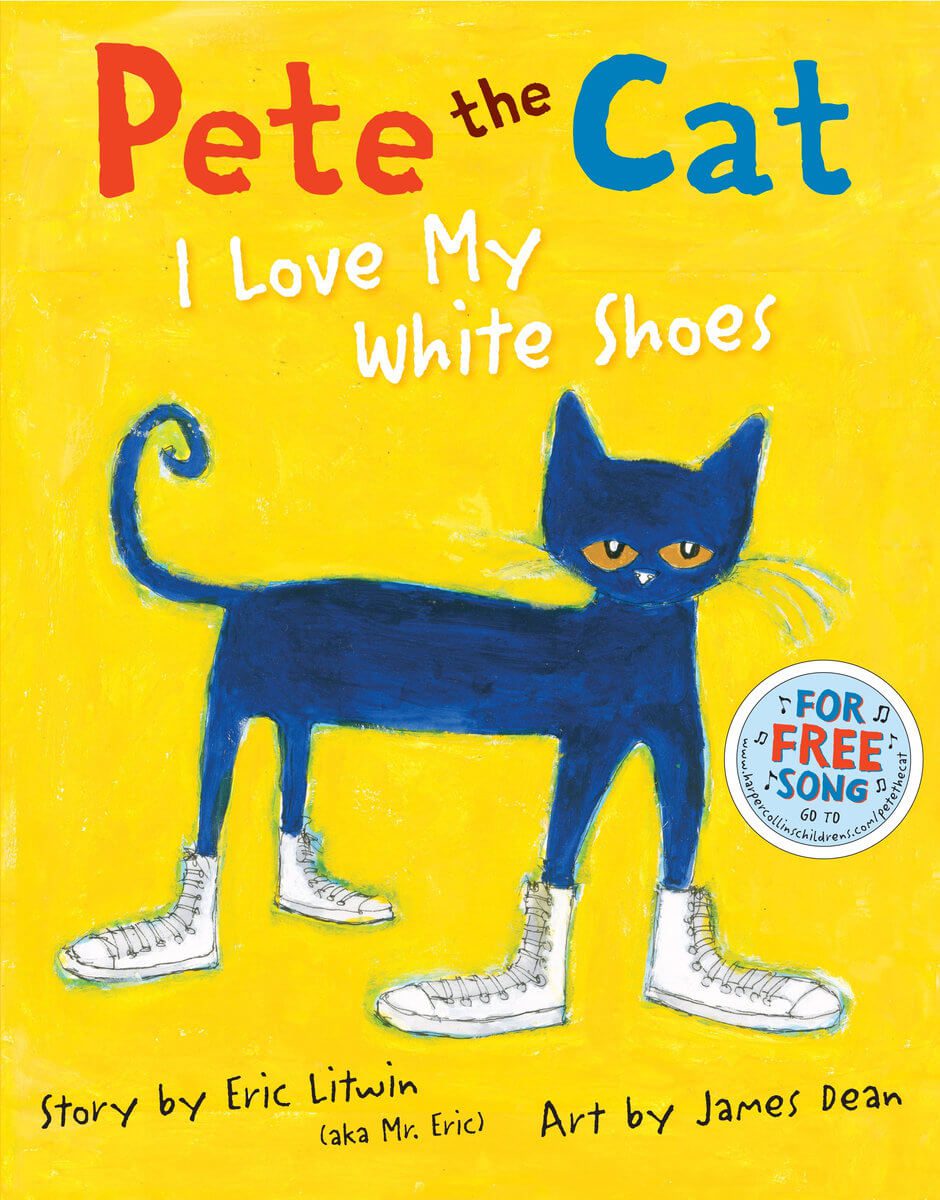
[/vc_column_text][/vc_column][/vc_row][vc_row][vc_column][vc_column_text]This is a wonderful way to engage a child through reading. Let’s use Pete the Cat – I Love my White Shoes as an example. As we mentioned in our last post, this book does a wonderful job relating executive function and self-regulation skills. How, as Dr. Clabough suggests, do we “press pause” and engage?

If you recall, Pete the Cat accidentally stepped in a huge mound of strawberries, effectively ruining his favorite footwear. This moment is depicted in beautiful double page rendering by illustrator, James Dean.

Reading and engaging[/vc_column_text][vc_column_text]This is the moment to use Dr. Clabough’s pause technique. Close the book and ask the questions:
What do you think Pete will do?

What do you think you might do if this happened to you?

This is a golden opportunity to build executive function and self-regulation skills. When engaging a child in this way, particularly with preschool kids – keep the side discussion short and sweet. Most young kids possess a relatively abridged attention span. If you push it too far, the benefits might be lost. You know your kids best and will be able to judge how much time you can devote to this technique.[/vc_column_text][/vc_column][/vc_row][vc_row][vc_column][vc_column_text]Once your child answers, you might be able to ask further questions before the reveal. On the next page, Pete shifts gears and celebrates his newly colored red shoes. We see him thinking, “Everything is cool.” Now you can compare Pete’s reaction with your child’s prediction – and even their own predicted reaction.

engagement
Pete’s cool and so are you!

[/vc_column_text][/vc_column][/vc_row][vc_row][vc_column][vc_column_text]This technique can be applied to any book. We can find moments that allow us to ask questions, that get our kids thinking about choices facing the story’s characters. In those moments, we can all reflect on the choices and how they might apply to our lives. You don’t have to do this constantly. Pick your book and pick your moments. Those moments that go beyond the story will add value to the experience.[/vc_column_text][/vc_column][/vc_row]
Book Review: Pete the Cat – I Love my White Shoes

Pete the Cat

[vc_row][vc_column][vc_column_text]We love children’s books. Also – and this should be no surprise – we love children’s books that get people singing. Oh! One more thing! If that children’s book teaches some really fantastic aspect of childhood development, well, that’s a home run. Dr. Boyle takes a peek at Pete the Cat – I Love my White Shoes, by author Eric Litwin with illustrations by James Dean (no, not that James Dean).


[/vc_column_text][/vc_column][/vc_row][vc_row][vc_column][vc_column_text]
One Cool Cat

Pete the Cat
Pete the Cat, in all his calm, cool wonderment


Meet Pete the Cat. If you don’t know him, you should. He’s the feline equivalent of the proverbial duck that let everything roll off its back. In 2008, he pounced out of the minds of Eric Litwin and James Dean into a self-published book. Within 10 months, the book was picked up by Harper Collins and has enjoyed a great deal of success in a rather crowded market. In my estimation, Pete’s a standout. Several books featuring this easy going blue furball have followed, and we’ll probably review a couple of them in the future. Today…is all about white shoes, singing, and executive function and self-regulation. Stay with me; this children’s book gets the concepts across beautifully.[/vc_column_text][/vc_column][/vc_row][vc_row][vc_column][vc_column_text]

White, Red, Blue, Brown…Just Change the Song

Pete admires some hanging shoes


As Pete takes a stroll on a beautiful day, he wears his beloved white shoes. He loves them so much he sings a song about them – “I love my white shoes, I love my white shoes, I love my white shoes.” If you read this book, you have to sing that part. You know that, right? It’s a law – and the beautiful part is that there is absolutely no wrong way to sing it. You can sing it differently every time you read the book. You can make up a tune, or sing it to an existing melody. If you want to, you can download the song that Eric Litwin created – but I think it’s much more fun to make up your own silly tune. Litwin, James Dean, and friends in a live reading, complete with his White Shoes song![/vc_column_text][/vc_column][/vc_row][vc_row][vc_column][vc_video link=”https://www.youtube.com/watch?v=nUubMSfIs-U”][/vc_column][/vc_row][vc_row][vc_column][vc_column_text]As Pete continues his walk, the first dramatic turn occurs. He steps in a mound of strawberries. His pristine white shoes, the source of his musical joy, are ruined! What’s a singing cat to do when faced with such frustration, such unexpected CATastrophe (these are the jokes, people)? Scream? Cry? Take his shoes off and throw them in the air?

Nope. Pete does none of that. He keeps his cool and just changes the words to his song.[/vc_column_text][vc_column_text]

red shoes
Pete just keeps on plugging away with new words

[/vc_column_text][/vc_column][/vc_row][vc_row][vc_column][vc_column_text]

A Cat who Gets Executive Function

So, now we see Pete for who he is: a cool cat with an understanding of executive function and self-regulation. How about some help from the folks at Harvard:

In the brain, the ability to hold onto and work with information, focus thinking, filter distractions, and switch gears is like an airport having a highly effective air traffic control system to manage the arrivals and departures of dozens of planes on multiple runways. Scientists refer to these capacities as executive function and self-regulation — a set of skills that relies on three types of brain function: working memory, mental flexibility, and self-control. Children aren’t born with these skills—they are born with the potential to develop them.

– InBrief: Executive FunctionCenter on the Developing Child: Harvard University

What do we see Pete do when faced with apparent disaster? He shifts gears and shifts his song, singing about the newly acquired color. This is a prime example of both executive function and self-regulation. He experiences, processes, and chooses to celebrate a new experience rather than mourn the loss of the old one.

This happens several times throughout Pete’s journey. He’s resilient, that one. And let’s be honest, you don’t have to be a kid to relate to this story. We’ve all been there. So – as you share Pete’s adventure to your kids, they’ll see a cat remaining calm in the face of adversity who comes out on top, making the choice to keep his composure and sing a new song. They’ll get it, they’ll relate, and it will help them develop those skills in their own developing self.[/vc_column_text][/vc_column][/vc_row][vc_row][vc_column][vc_column_text]Pete the Cat – I Love My White Shoes is a book that gives more to the reader than a cute story with beautiful illustrations. It gets us singing and thinking about how we respond to life’s giant piles of strawberries and puddles of mud. Plus, it’ll leave a smile on your face. You can get it through your favorite bookseller or online, and in several formats – hardback, paperback, and digital editions.

After reading this book, your little one might just ask herself, “What would Pete do?” the next time drama creeps into her life. I know that I already have.[/vc_column_text][/vc_column][/vc_row][vc_row][vc_column][vc_column_text][/vc_column_text][/vc_column][/vc_row]

4 Musical Ways to Help Keep Those New Year’s Resolutions

Resolutions

[vc_row][vc_column][vc_column_text]Happy New Year from your friends at Kindermusik! We’re always looking for ways to incorporate music into daily life because, let’s face it – music makes everything better! Our last post talked about musical resolutions for 2017. In this post, we’ll explore four ways to use music to help keep some of the most common resolutions. We all have access to just about any piece of music, anytime and anywhere. Let’s take advantage of technology and make our lives more musical!


[/vc_column_text][/vc_column][/vc_row][vc_row][vc_column][vc_column_text]

1. Timing

Let’s go back to 1991 and a fun little movie called Hudson Hawk. The film starred Bruce Willis and Andie MacDowell. Willis played an adept cat burglar who uses standard songs like Swinging on a Star and Side by Side to time his heists. Now – please don’t think we are condoning breaking and entering or stealing iconic pieces of art, but using music to time aspects of your life to help keep you on track isn’t a bad idea.

So what can you time? Well – just about anything. And frankly, music will make anything go by faster. I know that listening to the first movement of Bach’s Cantata 140 – Wachet auf ruft uns die Stimme is roughly 30 minutes – how long I want to walk the dog (remember – I’m a choral conductor – I listen to A LOT of Bach!). Using Bach’s music to time my dog walking activities works very well. And I can change it up with other pieces or play lists that run for the amount of time I want to walk our ball of energy.[/vc_column_text][/vc_column][/vc_row][vc_row][vc_column][vc_column_text]

2. Workouts

We touched on this in the last post – but I wanted to share a story. While in graduate school preparing for my master’s conducting recital, I’d go to the gym three times a week before the boys were awake. I’d take recordings and scores of the music on which I was working to be efficient with my time. Riding a stationary bike, I’d listen to my conducting rep, review the scores, and even practice my gestures.

Fast-forward to rehearsals…whenever I stood in front of the ensemble to rehearse my repertoire, my heart rate would increase and I’d sweat like a race horse! Listening and practicing my rep while working out had conditioned my body to respond to the music as if I was working out – even when I wasn’t! It was fascinating.

The right music during a workout can keep us focused and driven. The right playlist can form an arc that supports the arc of your physical exertion. Workoutmusic.com posted this informative chart that lists tempos which match various activity. Couple this info with songbm.com, a site that will tell you the bpm (beats per minute) if any song, and you can create a custom playlist for your activity.

Resolutions[/vc_column_text][/vc_column][/vc_row][vc_row][vc_column][vc_column_text]

3. That New Hobby – Music!

I’ve known several people who have made resolutions to learn a musical instrument or take voice lessons. Do it! Buy a guitar! Get a keyboard or piano! How about a drum set? It is never too late to learn about music. Making music does so much good for the mind, body, and spirit at any age. If your kids happen to go to Kindermusik classes, learn the songs and sing with them in class and at home. You know they’re catchy.

Want to keep your brain young? Make music. Listen to music. Here’s some great advice from the folks at Johns Hopkins:

Jump-start your creativity.

Listen to what your kids or grandkids listen to, experts suggest. Often we continue to listen to the same songs and genre of music that we did during our teens and 20s, and we generally avoid listening to anything that’s not from that era.

New music challenges the brain in a way that old music doesn’t. It might not feel pleasurable at first, but that unfamiliarity forces the brain to struggle to understand the new sound.

Recall a memory from long ago.

Reach for familiar music, especially if it stems from the same time period that you are trying to recall. Listening to the Beatles might bring you back to the first moment you laid eyes on your spouse, for instance.

Listen to your body.

Pay attention to how you react to different forms of music, and pick the kind that works for you. What helps one person concentrate might be distracting to someone else, and what helps one person unwind might make another person jumpy.

[/vc_column_text][vc_column_text]Resolutions[/vc_column_text][/vc_column][/vc_row][vc_row][vc_column][vc_column_text]

4. Gift Giving

Taking the time to remind how much those we care about with a gift always makes us feel good. Making a habit of gift giving keeps that feeling present and makes others smile as well! And the gifts don’t have to be extravagant – just thoughtful. Why not make it a musical gift? Find out what music your friend, family member, or co-worker likes and pick up a CD or send a digital album. Do you know them really well? How about picking something new for them to experience?

The act of simple gift giving, especially for no specific reason other than to let someone know you care, builds relationships and is actually good for our health. That good feeling? Turns out it’s mentally and physically beneficial. So – why not give music?[/vc_column_text][vc_separator][/vc_column][/vc_row][vc_row][vc_column][vc_column_text]Good luck with your resolutions! I’m keeping mine secret; we’ll see how I do. But rest assured, my year will be filled to the brim with music. I wouldn’t have it any other way. Kindermusik wishes you a happy and healthy 2017. May YOU experience lots of music as well![/vc_column_text][/vc_column][/vc_row]

The Gift of a New Year

The Gift of a New Year

[vc_row][vc_column][vc_column_text]The New Year is upon us! Over the past month many of us have been dwelling on resolutions. What can I do in 2017 that will make me a better version of myself? What can I change? What can I add? What can I take away? We all do it to some degree. Well friends – you’re reading a music blog. Hopefully it won’t be overly surprising that we make some music-based  suggestions that can hopefully have a positive impact on your new year.[/vc_column_text][vc_separator][/vc_column][/vc_row][vc_row][vc_column][vc_column_text]

It Starts with Music

There’s a rather old tradition in many English speaking countries in the world. The song, Auld Lang Syne is sung. As a musician, I love that important moments of our collective life on this planet are marked with music. It’s a ritual – something that carries special meaning and is repeated time and time again. That song looks back across the previous year and reminds us that as we look forward, to not forget all the good times of the past – those close connections with friends and family, time spent together enjoying each other’s company.

As this new year starts, what new traditions might you start? What memories will you create – memories so strong and moving that they will be the memories you think of when singing Auld Lang Syne at the end of 2017? And…how might they be musical memories?[/vc_column_text][/vc_column][/vc_row][vc_row][vc_column][vc_column_text]

Outside Your Regular Routine

Experience something new! I’m a classically trained musician who never had much time for popular music. It was never that I didn’t like pop music. It was an “only so many hours in the day” kind of thing. So…I am going to experience a concert in 2017, something I’d never go to normally. I’ve already started looking.

Check your area’s concert listings. Is there a bluegrass band that looks interesting and you’ve never experienced bluegrass? Maybe a symphony performance? Try something new and expand your musical horizons. Get a group of friends together, or find something family friendly that works for the kids.

Perhaps your town or city has an annual New Year’s event that involves live music. Go! Experience life – and do it in real time with your eyes. Limit how much you experience the world through a five inch screen. Take a few pictures and then be in the moment with friends and family. See smiles first hand. Make memories in the original hard drive – your brain! And get this, when you make new memories and music is included, hearing that music again brings back those memories with greater richness.[/vc_column_text][vc_column_text]This suggestion makes me thing of the group, Postmodern Jukebox. This is a fantastic collective group founded and lead by Scott Bradlee. They take some iconic songs and reimagine them, quiet amazingly, in completely different styles. Musical theatre as 70s soul…pop as 40s jazz – what this group does is incredibly creative. Old favorites can be experienced in a new way. Here’s the group performing Madonna’s pop anthem, Material Girl, as a Roaring 20’s number, featuring Gunhild Carling singing, rocking it on trombone, and tap dancing![/vc_column_text][vc_video link=”https://youtu.be/RUuQ4hoXsCM”][/vc_column][/vc_row][vc_row][vc_column][vc_column_text]

Music + Movement = Magic

Trust me on this – I’m a doctor! Well…a music doctor. And we are experts at music and movement. Like so many of us, I am going to try my best to get in better shape in 2017. And now I’ve announced this to all of you…so keep me honest!

The right music can positively affect physical activity. Samantha Lafave over at Fitness Magazine wrote a great article on selecting the right playlist for your workout. Here are the basics:

  1. That first piece on the playlist sets the pace and the tone. Go high energy!
  2. Variety is key: having lots of music to choose from.
  3. Pay attention to the lyrics. Samantha tells us:

There’s a reason T-Swift’s “Shake It Off” is so popular—the song is catchy, feel-good and relatable. Cook deems it the perfect mid-workout song. When you’re ready to give up, it can literally help you “shake off” negative thoughts, she says. Same goes for Gloria Gaynor’s “I Will Survive” and Kelly Clarkson’s “What Doesn’t Kill You (Makes You Stronger).” Tune in to the empowering words next time you’ve hit struggle city to power through.

 – Samantha Lafave, Fitness Magazine

Don’t forget to pick music to which you might have a personal connection. It makes the experience more meaningful. And don’t forget cool down music!

[/vc_column_text][/vc_column][/vc_row][vc_row][vc_column][vc_column_text]

Fill the New Year with Music!

It’s a solid prescription. Exercise – with music. When you’re with friends and family – let that time be filled with music. Try something “musically new” this year. And as far as your kids? Well…the earlier you expose them to musical activity, the more they will appreciate it as they get older. It will just be part of their story. Beyond all the developmental benefits music impacts as they grow, music will bring joy into their lives – yours, too! Get them moving and grooving, singing and playing this year. We are waiting for you with life changing Kindermusik experiences.

Happy New Year from all of us at Kindermusik International![/vc_column_text][/vc_column][/vc_row]

Science Center Stage: Music Improves Brain Development in Children

Brain

[vc_row][vc_column][vc_column_text]We talk often about how music impacts our lives in countless ways. With our little ones, we focus on the positive effects of music as children grow – specifically development in the language, social, emotional, fine and gross motor, and cognitive domains. All of these domains are controlled by that mysterious organ – the human brain. Science tells us that the brain LOVES music and responds in wonderful ways. Dr. Boyle shares recent research on the topic in today’s post. 


[/vc_column_text][/vc_column][/vc_row][vc_row][vc_column][vc_column_text]Music is like an intangible vitamin for the brain. It’s not just listening to music that’s key; participation in musical activity unlocks accelerated brain development. When adding movement to the equation, benefits increase.

Movement + Music

As we move and increase our heart rate, the brain receives more oxygen. Research indicates that improved oxygenation of the brain improves cognition. Adding music into the equation lights up important areas of the brain, which have already been primed with physical activity. While listening to music, parts of the brain responsible for motor skills, emotions, and creativity glow when viewed with magnetic resonance imaging.

[/vc_column_text][/vc_column][/vc_row][vc_row][vc_column][vc_column_text]

What’s Going on in There?

Think of it this way – taking part in musical activities is like a “work out” for the brain. Here’s what’s going on:

  • The visual, motor, and auditory cortices are activated.
    • When these areas are activated regularly through music, they are strengthened. That strength can be applied to other tasks.
  • Increased activity in the corpus callosum – the pathway between the brains two hemispheres.
    • This allows for information to travel throughout the brain more efficiently.

All of this can lead to greater executive function and problem solving skills. While recent research in neuroplasticity tells us it’s never too late to change established brain function and learn new things, it certainly is highly beneficial to start musical activities early. Birth to age seven is such an important period in brain development; music’s benefits on the brain are particularly impactful during this time.[/vc_column_text][/vc_column][/vc_row][vc_row][vc_column][vc_column_text]Oliver Sacks, author and neurologist, wrote extensively about the impact of music on the brain. In this video, Dr. Sack’s became the subject of his own research. He had himself scanned while listening to different music – specifically to see if his love of Bach’s music would show up on MRI scans. His emotional response to Bach was actually observed on the screen![/vc_column_text][vc_video link=”https://youtu.be/AUT9UTVrwp8?t=10s”][vc_separator][/vc_column][/vc_row][vc_row][vc_column][vc_column_text]So…don’t wait! The brain knows what it wants…music music music! Get your young ones started early. Listening is wonderful. Partaking in musical activities is better. Involving the body and having a parent join in on the fun is the best! Find a Kindermusik class near you and start building those neural connections today![/vc_column_text][/vc_column][/vc_row]

Kindermusik Reviews: The Book With No Pictures

The Book With No Pictures

[vc_row][vc_column][vc_column_text]Many of us know B. J. Novak from the hit mockumentary comedy show, The Office. He played Ryan the temp, a character that had quite a rise and fall over the course of the series. A year after The Office ended, Novak stretched his literary wings with The Book With No Pictures, a children’s book devoid of, as the title tells us, pictures. At first, I was skeptical. Then I read it. And read it again. And read it to my 13 and 10 year old sons. And to my 4 and 6 year old nephews. This book is gold. [/vc_column_text][blockquote cite=”Dr. Boyle”]”Any book that mentions a hippo named Boo Boo Butt will be a hit…with just about everybody.”[/blockquote][/vc_column][/vc_row][vc_row][vc_column][vc_column_text]The book is genius…really. I actually found myself saying out loud, “Why hasn’t anyone done this before?” In a very direct and simple way, Mr. Novak has underscored the power and importance of words. He does this in an entirely creative and entertaining way. This is a book meant to be read to kids by adults and reminds us of the jurisdiction an author has over a reader. In fact, the book comes with a very clever warning on the back cover:

The Book with No Pictures warning
B.J. Novak’s warning to adults being asked to read The Book With No Pictures

[/vc_column_text][/vc_column][/vc_row][vc_row][vc_column][vc_column_text]

Why We Love It…

Each time I read the book, I found myself laughing out loud. My wife laughed out loud. My oldest son – now in the throes of teenage angst – his outer shell of indifference fell away and he laughed out loud. My young nephews couldn’t control themselves. Novak does this with words and words only. The magic here is that we walk away knowing that words are important and can impact us. In this case, the silliness is almost overwhelming, but in an entirely entertaining way. An adult reader can really play up the notion that they aren’t in control and must read every word as printed. Kids love this aspect of the book. Part of this is the sheer goofiness of Novak’s text, but more importantly, it puts kids in the driver’s seat. The book is their proxy. It acts on their behalf, making the reader say crazy things they never would ordinarily say. To a child, seeing an adult be silly, seemingly against their will, it priceless entertainment. And let’s face it, any book that mentions a hippo named Boo Boo Butt will be a hit…with just about everybody.

I’d be remiss if I didn’t mention that the book also requires the reader to sing – and not just sing, but to make up a tune to go with the words, “Glug, glug glug…my face is a bug…I eat ants for breakfast right off the ruuuuuuug!” Any book that gets people singing gets extra points from us. You should probably start working your melody now.[/vc_column_text][/vc_column][/vc_row][vc_row][vc_column][vc_video link=”https://youtu.be/SiiS2NDkfI4?t=2m53s” title=”B.J. Novak reads sections of his book, The Book With No Pictures”][/vc_column][/vc_row][vc_row][vc_column][vc_column_text]The Book With No Pictures is a refreshing entry into the children’s book world. It hits all the right notes – it gets everyone laughing and cleverly displays the power of the written word, demonstrating to kids that words can take us places and make us experience emotions all by themselves. Now, this book certainly had help from some fantastic designers who chose spot on typefaces and colors for the words found within. These choices don’t simply entertain visually, but actually help the reader play the part of the “out of control” narrator. Statements meant to be blurted out are in large fonts and the tormented inner monologue are much smaller. This emboldens the reader to say these as asides, almost under the breath.

monkey
Brilliant typeface choices encourage the reader to play the part

[/vc_column_text][/vc_column][/vc_row][vc_row][vc_column][vc_column_text]The Book With No Pictures delights all who come in contact with it – readers and audiences alike. It gets kids excited about reading and even gets the reader singing. B.J. Novak has hit a home run with his first children’s book and we can only hope there will be more.[/vc_column_text][/vc_column][/vc_row]