
7 Things: Harvard Psychologists Identify Positive Parenting Points

Positive Parenting

Recently, psychologists from Harvard’s Making Caring Common Project (MCC) produced a list of seven concepts successful parents tend to consider when raising caring, compassionate, ethical children. The MCC exists to:

..help educators, parents, and communities raise children who are caring, responsible to their communities, and committed to justice.

It’s a pretty wonderful group of folks who truly want to see our kids be the best versions of themselves they can be. Both scientists and parents partner together to foster kindness and a commitment to the greater good. Let’s take a look at their seven research supported “guideposts” for positive parenting.


1. Work to develop caring, loving relationships with your kids

Sounds obvious, but it’s important. If we want to pass on important concepts to our kids, they need to trust us. The more you express love and demonstrate that you care tremendously about them, they will feel closer to us. In turn, they will be more receptive to learning what we have to teach them.

How can we do this? The folks at MCC suggest planned, regular time together that includes meaningful conversation. Ask questions! The can be basic and simple, but in the end, these questions signal to our kids that we are interested in them and care about them. Try these on for size:

  • What was your favorite part of the day?
  • What was the hardest part? Why?
  • What did you learn today?
  • What is something nice someone did for you today?
Modeling love and care is so important.

2. Be a strong moral role model and mentor

We will be our kid’s first super hero. Before they learn about Wonder Woman and Superman, we will fill those roles. They will look to us, especially as we live into the first guidepost, to discern what is right and wrong, what is moral and amoral. We will be their moral hero. They will copy what we say and what we do. We’ll see them try out the faces we make, our body language, and our manner of speaking. Their eyes will always be on us. We must try to give them something positive to emulate.

How can we do this? Reflect on how we speak, how we treat others, and the model we are building for our kids. MCC advocates the following:

Pay close attention to whether you are practicing honesty, fairness, and caring yourself and modeling skills like solving conflicts peacefully and managing anger and other difficult emotions effectively.

Obviously we aren’t angels 24 hours a day. We make mistakes, but these can occasionally be used as teaching moments, too (depending on the subject at hand). Here are some suggestions from MCC:

  • Engage in community service and include your little ones when appropriate.
  • Be honest – Talk with your child when you make a mistake that affects them
    about why you think you made it, apologize for the mistake, and explain how you plan to
    avoid making the mistake next time.
  • Talk things through with friends – do you have someone with whom you can talk with when things may prove challenging? It’s great to be able to have a dialogue with a fellow parent who might be able to provide a different perspective.

3. Make caring for others a priority and set high ethical expectations

We live in communities. Life on our planet is really about interacting with others. We are, by and large, social creatures. Learning at an early age how to practice empathy and compassion is very important when trying to raise kids that will care about others. With our first two guideposts in place, we are in a good place to help these little ones develop and understanding of these concepts and and put them into practice in their world.

How can we do this? Help our children live into the commitments they make – even the most simple commitments. Making their bed…practicing kindness with a sibling…sharing toys with others…these are all basic commitments we can help them realize.

We can help them stand up for important principles like fairness and justice, and always encourage them to be respectful. Here’s MCC’s list to help with this guidepost:

  • Consider the daily messages you send to children about the importance of caring. For example, instead of saying to children “The most important
    thing is that you’re happy,” you might say “The most important thing is that you’re kind and that you’re happy.”
  • Prioritize caring when you talk with other key adults in your children’s lives. For example, ask teachers and coaches whether your children are good community members in addition to asking about their academic skills, grades, or performance.
  • Encourage kids to “work it out.” Before letting your child quit a sports team, band, or a friendship, ask them to consider their obligations to the group or the friend, and encourage them to work out problems.
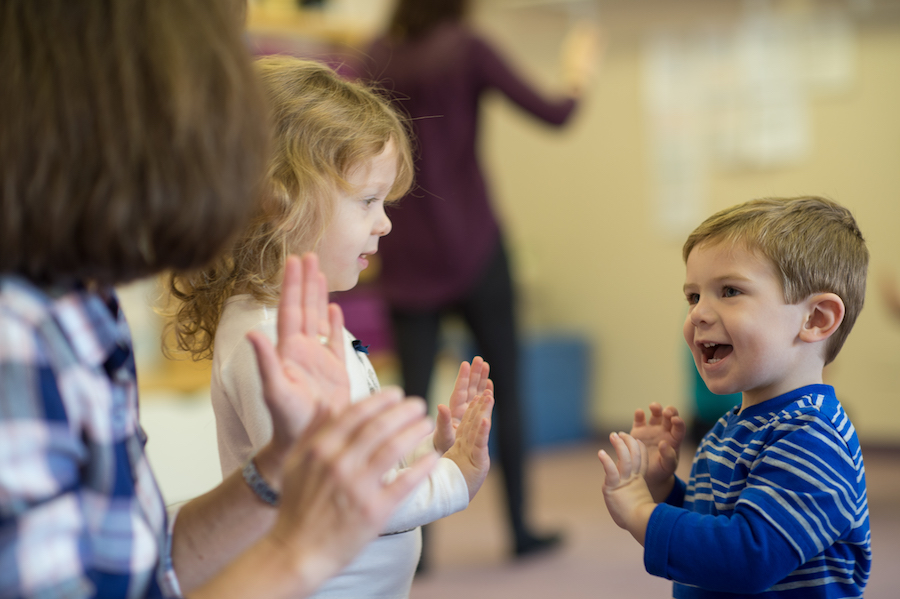
Opportunities to interact with others and practice kindness are great - like a Kindermusik class!
Opportunities to interact with others and practice kindness are great – like a Kindermusik class!

4. Provide opportunities for children to practice caring and gratitude

Have you ever gotten proficient at a skill without opportunity to practice? Most likely…no. And friends, putting these concepts into practice is a skill. Ensuring that our kids have ample opportunity to exercise these skills in the real world and not just as ideas in their head is key. When you are at the store, have your child thank the cashier and the bagger. At a restaurant? Let your little one order, complete with please and thank you. Take every chance to express gratitude, to demonstrate compassion. MCC’s list of suggestions includes:

  • Help with chores around the house. This should become routine. Praise uncommon acts of kindness. Expect routine – these actions will more likely become ingrained.
  • Make caring and justice a focus. Start conversations with children about the caring and uncaring acts they see in their daily lives or on television and about acts of justice and injustice they might witness or hear about in the news, such as a person who stood up for an important cause or an instance of sexism or racism. Ask children how they see these actions and explain why you think these actions are caring or uncaring, just or unjust.
  • Expressing thanks. Consider making expressing gratitude a daily ritual at dinnertime, bedtime, in the car, or on the subway. Encourage children to express appreciation for family members, teachers, or others who contribute to their lives.

5. Expand your child’s circle of concern

It’s a simple concept, really. If we’ve been successful with guideposts one through four, our children will already have a great foundation in compassion, caring, and empathy. Normally though, this readily extends to the close circle of trusted adults – immediate family and close friends. The idea here is to help our kids care about those outside the circle, thereby expanding it. We want our kids to be compassionate and empathetic with the new kid in class or someone that might look different than they do, whether that be, for example, race or ability.

How can we do this? MCC states:

It is important that children learn to zoom in, listening closely and attending to those in their immediate circle, and to zoom out, taking in the big picture and considering the range of people they interact with every day. Children also need to consider how their decisions impact a community. Breaking a school rule, for example, can make it easier for others to break rules. Especially in our more global world, it’s important, too, for children to develop concern for people who live in other cultures and communities.

Here are some specifics from MCC:

  • Encourage children to consider the perspectives and feelings of those who may be vulnerable, such as a new child at school or a child experiencing some family trouble. Give children some simple ideas for taking action, like comforting a classmate who was teased or reaching out to a new student.
  • Use newspaper or TV stories to start conversations with children about other people’s hardships and challenges, or simply the different experiences of children in another country or community.
  • Emphasize with your child the importance of really listening to others, especially those people who may seem unfamiliar and who may be harder to immediately understand.

6. Promote children’s ability to be ethical thinkers and positive change-makers in their
communities

Kids care about ethics. They might not know the term, but ethics enters into their lives pretty early one. How often have you heard a young child talk about what is fair and not fair? Have you had a discussion with your own child about how they might have been mistreated by another child? What about telling the truth, even when it’s hard? They know. They want to learn. They have a desire to understand how human interactions work. They quickly understand that their choices have an impact on others. So how can we promote ethical thought in young kids?

We can help them work through the ethical puzzles that occur in their lives. MCC uses this example – talking through a situation in which a child is deciding whether or not to invite a new friend to a party when their best friend might not like the new friend. We can help our kids understand how to handle bullying when it rears its ugly head.

The key here is to use the open channels of communication and moral center we have created by employing the previous guideposts.

7. Help children develop self-control and manage feelings effectively

We’ve talked about this one here at Minds on Music before. Helping our kids develop self-regulation and self-control are key to navigating the journey from toddlerhood all the way to puberty and beyond. If our own challenges can’t be managed successfully, it will be next to impossible to view the world through compassionate eyes. We’ll be overcome by our own ego. If we help our children develop a skill set to manage their own emotions and moderate their interactions with the world, they will more readily understand their place in it. We can aid them as the move through Piaget’s Preoperational Stage, characterized by the struggle to see things from perspectives other than their own.

How can we help them? By teaching our kids to label their feelings, to talk about them. It’s so important that kids learn that feelings, even feelings like anger and sadness are okay. The challenge is in how we express those feelings, how we process them. Some ways are much better than others. From the MCC:

A simple way to help children to manage their feelings is to practice three easy steps together: stop, take a deep breath through the nose and exhale through the mouth, and count to five. Try it when your child is calm. Then, when you see her getting upset, remind her about the steps and do them together.

Practice with your child how to resolve conflicts. Consider a conflict you or your child witnessed or experienced that turned out badly, and role play different ways of responding. Try to achieve mutual understanding—listening to and paraphrasing each other’s feelings until both people feel understood. If your child observes you experiencing a difficult feeling and is concerned, talk to your child about how you are handling it.

Positive Parenting at its Best

This is proactive, positive parenting. It takes time to employ, but the benefits are long-lasting. I have often told our kids that my main goal is to make sure they make it to adulthood alive. My 14 year-old likes to jokingly quip back when i ask him to do simple things (like turning out a light), “Don’t tell me how to live my life!” I return with, “That’s literally have my job.”

“What’s the other half?” he’ll ask.

“Telling your brother how to live his.”

We laugh. We’re lucky to have a positive relationship. But really, whether our sons realize it or not (and I’m pretty sure they do), what we do as parents goes far beyond making sure they make it to adulthood alive or simply telling them how to live. We try our best to be positive models. We have tried to help them develop a sense of right and wrong, of compassion and empathy. We have had and continue to have discussions over dinner about ethical issues and how to treat others. Hypothetical situations are great conversation starters. Sure, the content of the discussions has increased in complexity as they have gotten older, but we did our best to have age appropriate talks at every point in their lives. When we take the time to practice these guideposts, our kids have the potential to develop as caring, compassionate individuals. And that’s the MCC’s goal, to make caring common. It’s a pretty good goal for all of us.

For more from the MCC, click here.

Reunited: A Short Film About Music and the Human Spirit

spirit

[vc_row][vc_column][vc_column_text]Friends, I’ve said it many times before, and I’ll continue to say it: music is magic. Below, you’ll find a short, five-minute film about Edward Hardy, a retiree in Somerset, England, and Sam Kinsella, a young man looking for a few extra bucks. Sam’s search lead him to Mellifont Abbey, a residential care facility in Somerset and the position of activities coordinator. What happened next was nothing short of amazing, a word that gets tossed around a bit too casually for my taste. But for Sam and Mr. Hardy, no other word will do. Together, they discovered how music can heal the spirit.

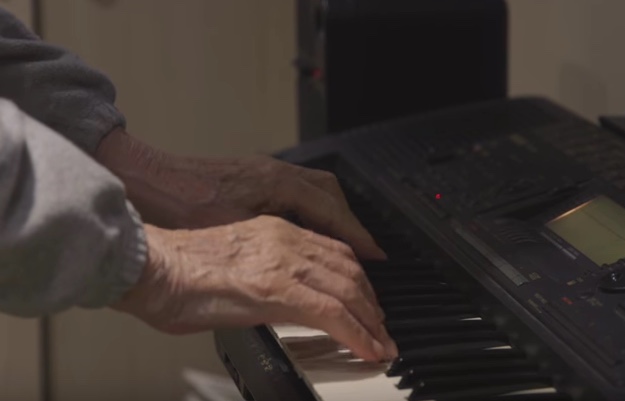
Mr. Hardy had been suffering from dementia for some time. He would pound on the floor and call for help for no reason. His interaction with others was limited and strained. He was depressed and detached.

Sam eventually disclosed to Mr. Hardy that he was part of a band in Somerset. This bit of information seemed to pique Mr. Hardy’s interest. He told Sam that he played piano for years.

This gave Sam an idea. He had a keyboard brought in for Mr. Hardy. This was the beginning of a new light in the 93 year-old’s life. To everyone’s surprise, Mr. Hardy came out of his shell and played for everyone.

But Sam wasn’t done.[/vc_column_text][/vc_column][/vc_row][vc_row][vc_column][vc_column_text]

Spirit
Mr. Hardy plays with former bandmates.

[/vc_column_text][vc_column_text]

We’re Getting the Band Back Together!

Sam decided to seek out some local musicians so Mr. Hardy could make music with a group again. People came out of the woodwork to make music with Mr. Hardy. To Sam’s surprise, among them were some of the original members of Mr. Hardy’s band. They gladly came out to Mellifont Abbey for a jam session. You’ll see Mr. Hardy make music with them in the film, and the obvious joy on his face when he does.

This lead to the idea of having the newly reformed group give a concert at Mellifont. This not only brought joy to Mr. Hardy, but to the other residents as well.

Mr. Hardy’s story was featured on the BBC and other news sites across the UK. Music, that magical art form, is now a more regular part of life at Mellifont Abbey. And Mr. Hardy, he found a little bit of himself that was lost.[/vc_column_text][/vc_column][/vc_row][vc_row][vc_column][vc_video link=”https://youtu.be/Tp6c_oG1SBk”][/vc_column][/vc_row][vc_row][vc_column][class_finder_form css=”.vc_custom_1500644816485{padding-top: 20px !important;padding-right: 20px !important;padding-bottom: 20px !important;padding-left: 20px !important;}”][/vc_column][/vc_row]

Ben Folds, the National Symphony Orchestra, and Magic: Improvisation Unpacked

Improvisation

[vc_row][vc_column][vc_column_text]You may have recently watched a viral video of Ben Folds improvising a work with the National Symphony Orchestra. It’s rather impressive and demonstrates a host of skill sets, not just by Ben, but by the entire orchestra. To create something new on the  spot like this takes knowledge and talent. While Ben is calling the shots, it’s a team effort. These musicians have put in a lifetime of practice to get to this level. Let’s unpack what you are seeing in this short video; there is A LOT going on.


[/vc_column_text][/vc_column][/vc_row][vc_row][vc_column][vc_column_text]

Improvisation
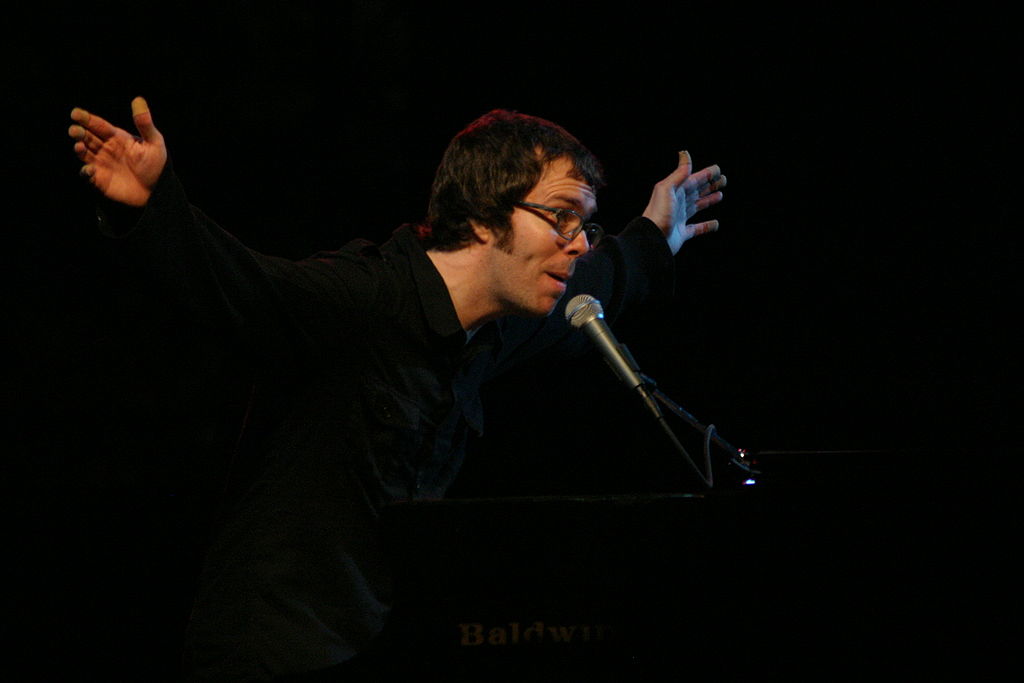
Ben Folds doing what he does best – singing his head off!

[/vc_column_text][vc_column_text]

 Selecting Home Base

The very first thing that is selected is a key center. This is basically picking the musical neighborhood in which all the musicians will play. All basic, western musical keys consist of a set of seven notes. You might be familiar with the song from The Sound of Music, Do Re Mi” in which Julie Andrews lays out the pattern for a major scale – Do Re Mi Fa Sol La Ti and Do is repeated at the top. You can start on any note on the piano and sing this pattern. The easiest way to find it on the piano is to play C to C on all white notes – that’s the key of C Major. The audience selects a minor. Minor keys are a slightly different pattern. If you were to play A to A on the piano using all white notes, you’d get the a minor scale. With the key selected, the musicians know to hang out in the musical neighborhood of a minor. If they were artists, they might agree upon the same color palette.[/vc_column_text][/vc_column][/vc_row][vc_row][vc_column][vc_column_text]

Tempo

The next choice the audience makes for Ben and the NSO is the general tempo. Tempo can really affect the mood of a piece of music. Give the choice of a ballad (generally slow) or something upbeat, the audience (nearly unanimously) selects upbeat, indicating a faster speed.

[/vc_column_text][/vc_column][/vc_row][vc_row][vc_column][vc_column_text]

Text

Ben is a song writer, so they needed a text. The audience is asked to find an interesting bit of text from the evening’s program booklet.

The key, tempo, and text selections can be seen below.[/vc_column_text][vc_video link=”https://vimeo.com/226328589″][/vc_column][/vc_row][vc_row][vc_column][vc_column_text]

The Magic Starts – with a Joke

Ben sits at the keyboard and readies himself to create something entirely new. This is amazing when it happens by yourself as a composer – when you find that right sound and jot it down on staff paper or on the computer. It’s another level of awesomeness when you do it with 50 other people in real time. Be fore he gets started, he makes a wonderful musical joke, invoking Beethoven. He asks, “It has to be something completely new, right?” Without missing a beat, he mimics (although incorrectly – but we’ll forgive him) the main motive of Beethoven’s Symphony No. 5.

After creating a grove, Ben moves on to a basic melody with the text. He then starts assigning parts to the various sections of the orchestra, starting with the cellos. He instructs them to play “arco,” or with the bow rather than plucking the strings with the fingers. He plays a pattern using the notes A, E, and the next octave B. Without telling the cellos what the notes are, or writing out the rhythms, the cellos nail it. This is exactly what happens in a Kindermusik class when children learn new songs by ear. He further instructs them to alter the pattern on the second iteration. “Just one on the second one.” He then asks for the same pattern at a different pitch level, creating a different harmony. He then asks for a low C and a then a low E, both held for four counts. Note that everyone knows what time signature he’s in just by listening – four beats to the measure. Here’s the creation of he cello line:[/vc_column_text][vc_video link=”https://vimeo.com/226342028″][blockquote cite=”Ben Folds”]”It takes a second to create a whole song.”[/blockquote][/vc_column][/vc_row][vc_row][vc_column][vc_column_text]

Winds – Flutes, Oboes, Clarinets, and Basson

Next, Ben moves on to the reed section and suggests a “one size fits all” accompaniment figure for them. he then, like composers do ALL THE TIME while composing (one of my teachers used to say that there is no good writing, only good rewriting), decides to just give a harmony figure to the clarinets. You’ll note he uses the term “concert” G and E. This is too complicated to explain in detail, but some instruments, clarinets among them, transpose. This means that they might play a written A, but it sounds a “concert” G. Don’t worry about it too much!

So – he asks the clarinets to pick a pitch – E or G – and rock back and forth to that pitches lower neighbor on fast moving notes. It sound like a little flutter. He puts it together with the cellos and decides to make a small change – joking with the audience that it “takes a second to create a whole song.” On the fly, Ben is fitting the pieces together as he creates them. Take a listen:[/vc_column_text][vc_video link=”https://vimeo.com/226345129″][/vc_column][/vc_row][vc_row][vc_column][vc_column_text]

Violins,Violas, and the Rest

Moving on to the rest of strings, he improvises parts for both the first and second violins – slow moving notes in harmony. Not wanting to leave the violas out in the rain, he gives them what he calls a “little timing shizzle.” He gives them what is best described as a rhythmic ostinato – a pattern that repeats over and over. It’s also syncopated, meaning it happens on the off beat. You’ll feel it.

He then turns to the double basses and says “You know what you must do.” Their repeated quarter note figures on the lowest note of the harmony are sort of a bass line trope and why the audience (and the basses) laugh.

Ben then asks the drummer to do his thing, relying on his musical instinct. He asks for a trumpet solo and…ta-da…the under pinnings of a new song are created.[/vc_column_text][vc_video link=”https://vimeo.com/226350128″][/vc_column][/vc_row][vc_row][vc_column][vc_column_text]

The Final Product

And with that, away they go. You’ll note in the final video that some instruments Ben never mentioned play – the horns in F are an example. These are top shelf artists. They know how to join the fun with the information Ben has provided.

He set out to create something new in ten minutes, and that’s exactly what he did. Just shy of the ten minute mark he completes his instructions and the conductor counts everyone in. Ben riffs a melody on text from the program book and eventually gets to the selected text. The act of creation isn’t complete until the music is delivered to an audience. The fun part about this compositional process? The audience was there to see it unfold before hearing the final product. That mad it even more special.

Listen to the end result – its a lot of fun to experience the new song after watching it be built from nothing by a room full of classical musicians, lead by one of the most talented singer-songwriters of our time.

[/vc_column_text][vc_video link=”https://vimeo.com/226351404″][/vc_column][/vc_row][vc_row][vc_column][vc_column_text]Ben demonstrates the joys of creating original music and improvisation, and he does so with four chords, a room full of incredibly talented orchestral players, and the words from a program book. The truth is, with just a little bit of knowledge, anyone can write a song, and it expresses who you are in a way that mere words just can’t. I’ve taught lots of students over the years, and one of my most special memories is teaching a brother and sister (ages 8 and 11) how to write a song during a summer program. We had so much fun coming up with words and a melody. It was rewarding for all of us.

Writing music is similar to building a house. In the end, you’ve created something. But things crumble. A song lasts forever as long as there’s someone around to sing it.[/vc_column_text][/vc_column][/vc_row]
Educator Conference Recap

[vc_row][vc_column][vc_column_text]Stay tuned for a conference recap by our own Niki Dominguez, Director of Global Marketing![/vc_column_text][/vc_column][/vc_row]
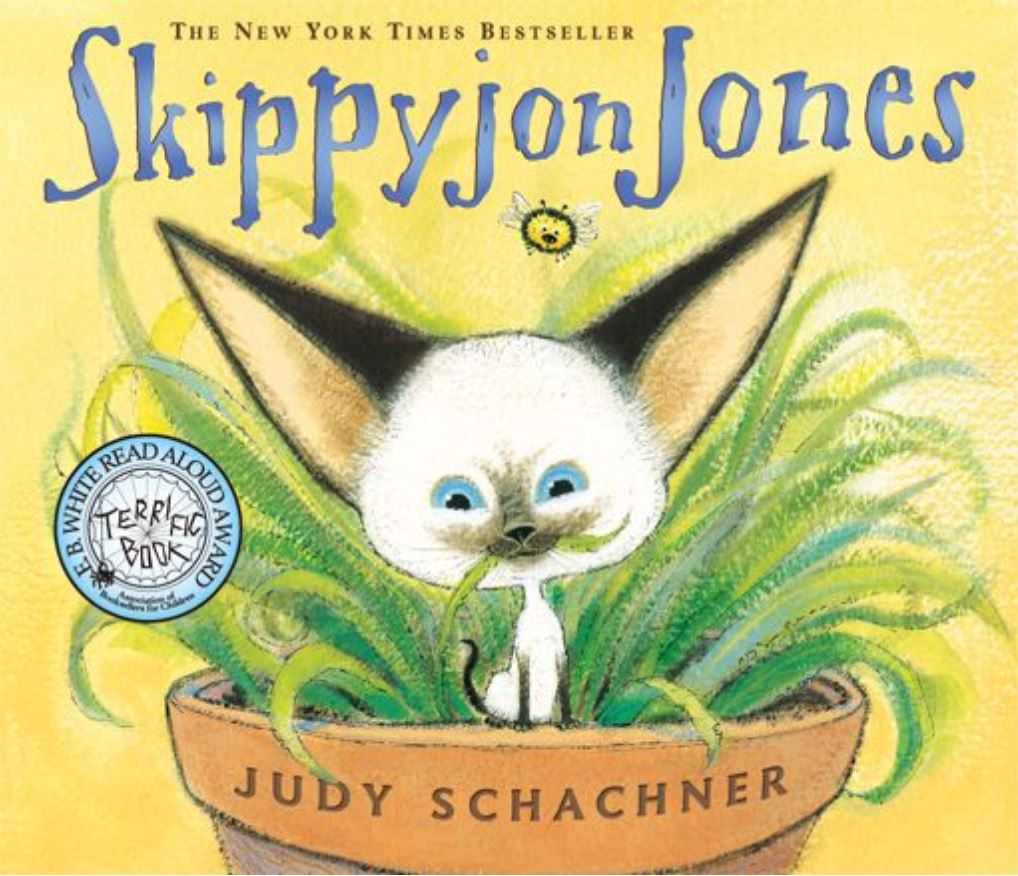
Book Review: Skippyjon Jones by Judy Schnachner

Book Review

[vc_row][vc_column][vc_column_text]How could you not love a book with a title character named Skippyjon Jones?! The adventures of Skippyjon Jones are a delightful series of books based on author Judy Schachner’s real-life Siamese cat.

Apparently, Skippyjon Jones is no ordinary pet. Because Skippyjon Jones is certainly no ordinary cat. And that’s precisely what makes the hilarious adventures of Skippyjon Jones so appealing and yet so relatable to adults and kids alike.

“Oh, I’m Skippyjonjones,
With a mind of my own,
And I’ll bounce on my bed for hours.
I know I’m a cat,
But forget about that…”[/vc_column_text][/vc_column][/vc_row][vc_row][vc_column][vc_column_text]Book Review[/vc_column_text][vc_column_text]The original story in the series, simply entitled Skippyjon Jones, introduces us to this uniquely lovable cat who has exasperated his mother who has to wake up Skippyjon Jones not in his bed, but in a bird nest outside. We immediately know we’re in for a lot of laughs as Mama Junebug Jones fusses at her little darling.

“No self-respecting cat ever slept with a flock of birds,” she scolded. “Or ate worms, or flew, or did his laundry in Mrs. Doohiggy’s birdbath.”

This is one of those rollicking read-aloud’s that draws you in from the very first page, keeps your attention all the way to end, and then makes you want to keep reading the next story in the series![/vc_column_text][/vc_column][/vc_row][vc_row][vc_column][vc_column_text]Skippyjon Jones waking up with the birds[/vc_column_text][vc_column_text]From the way the words are laid out on each page to the colorful and whimsical illustrations, this book just makes you feel like becoming Skippyjon Jones as you read. You just can’t resist reading this book with drama, flair, and even adding in a song or two.

Preschoolers and big kids will especially love this story, and the others in the series because of the way the author invites you into Skippyjon Jones’s huge imagination, and the reader is delighted to discover a story within the story.

“With a walk into his closet, his thoughts took him down a lonesome desert road, far, far away in old Mexico…”

Oh, did I mention that the old Mexico part of the story line becomes possible because Skippyjon Jones is banished to his room after the incident with the birds?!

Skippyjon Jones embodies personality with a capital “P” – much like some of our own children. This story is not just fun for kids, it also helps adults discover all that there can be to appreciate and enjoy in a childhood filled with big imagination and creative play. It’s no wonder the book has won the E.B. White Read Aloud Award and why we wholeheartedly give it a two thumbs up.

Skippyjon Jones, written and illustrated by Judy Schachner and published by Puffin Books, may be purchased at your local bookseller or online at Amazon.com in Kindle, paperback, and hardcover formats.[/vc_column_text][vc_separator][/vc_column][/vc_row][vc_row][vc_column][vc_column_text]Shared by Theresa Case who has an award-winning Kindermusik program at Piano Central Studios in Greenville, South Carolina[/vc_column_text][/vc_column][/vc_row]

Everyone Can Sing

A recent article, written by Northwestern music education professor, Steven M. Demorest, over at The Conversation, an “independent source of news and views from the academic and research community, delivered direct to the public,” explored the idea of musical talent.

The most telling fact, one that I have been aware of for most of my career as a choral conductor, is that adults who consider themselves unmusical were often told that they couldn’t sing as children. Prof. Demorest relates part of the story of Sing, an Oscar-winning short film from Hungary about a girl named Zsófi.

Sing tells the story of young Zsófi, who joins a renowned children’s choir at her elementary school where “everyone is welcome.”

Soon after joining, Zsófi is told by her teacher Erika not to sing, but only mouth the words. On the face of it, she accepts her teacher’s request stoically. But later in the movie, her anguish and pain become obvious, when she reluctantly tells her best friend what happened.

Dr. Steven Demorest
Dr. Steven Demorest

Our culture has become obsessed with the idea of “talent.” The concept that making music is reserved for the revered few is promoted by shows like America’s Got Talent and The Voice. I don’t want to take away from the entertainment value of these shows – the people that perform on them are certainly gifted. But the reality is this: every child is born a natural musician. They sing and dance and make music from the very beginning. They are surrounded by music – so – they respond by mimicking what they hear. If this inherent ability is fostered the benefits are life-changing. “…indeed every child has musical ability that can be developed into a satisfying and lifelong relationship with music.” -Dr. Steven Demorest, Northwestern University

Negative feedback can come from many different places, especially peers. Sadly, it can also come from music educators and even parents. This has a lasting effect on self-esteem and the desire to make music, especially singing. Singing is an intensely personal activity. It’s just you – no external instrument. You can’t put the instrument down and ignore it. You carry it with you. When the singing voice is disparaged, it is very difficult to not allowed that disparagement have an impact on the entire self.

Combating the “Talent Mindset” with the “Growth Mindset”

Carol Dweck, psychologist, author, and professor, researches why and how people succeed. Here’s the main point of “Growth Mindset”:

Students who view their success as a result of hard work will persevere through challenges, while students who believe their success lies with some innate ability – like “talent” – are more likely to give up.

Watch Dr. Dweck’s TEDTalk below.

https://vimeo.com/226460812

Encourage, Encourage, Encourage

So what can we do to get kids on board the train destined for a lifelong connection with music? The most important thing we can do is getting them started early. This is one of the reasons Kindermusik classes are open to newborn infants. To be surrounded by music from birth helps set the tone for that lifelong connection. As the child grows, immersed in musical experiences coupled with positive support of their musical activity from parents and educators, their confidence in music making will grow as well – and the host of social, emotional, and cognitive benefits music provides will be part of their life’s journey.

Dr. Demorest tells us that perhaps the most important impact on a child’s desire to continue to make music is having an example of music making in the home.

…if you are a parent, you could sing the music you loved growing up and not worry about how good you sound. Having an adult in the home committed to music and singing without shame may be the most powerful influence on a child. You could sing with your kids from the time they are little, sing with the radio, sing in the car or sing at the dinner table.

Along with Dr. Demorest, I find the Hungarian title of Sing very telling. It’s Mindenki, which is Hungarian for…Everybody. It’s perfect, isn’t it? I firmly believe that music is for everybody, especially singing. And when you sing with others you are more likely to have empathy for them, to listen to them when they share their ideas. You become part of a community.

I always tell my students that the main reason we have a singing voice is to give it away to others. That’s certainly true, but for young children, the singing voice allows them to express their joy in a way words alone cannot. It can heal the spirit and free the mind.

Start ’em young and keep ’em singing. They’ll thank you for it later.

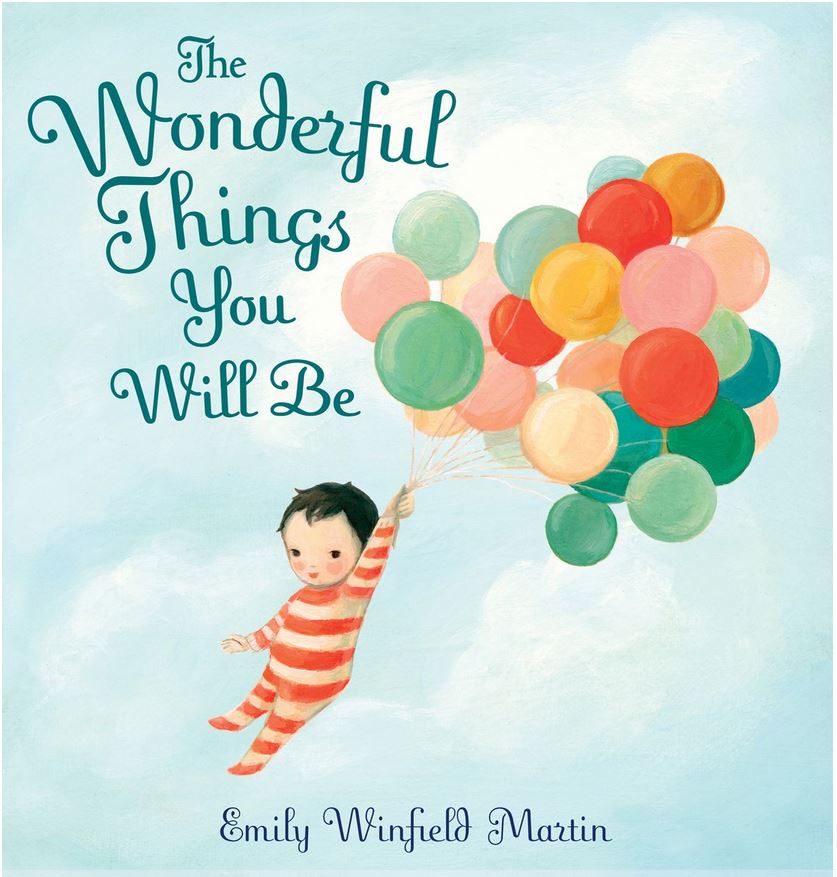
Children’s Book Review: The Wonderful Things You Will Be

Children's Book Review

[vc_row][vc_column][vc_column_text]The Wonderful Things You Will Be is a stunningly gorgeous picture book, both in its sentiment and in its illustrations.  Full of expectant promise and embodying the beauty of the unique potential that is in all of us, the author poignantly voices in lilting rhyme what is in every parent’s heart as they look at their child, whether it’s looking into that sweet tiny newborn face or the eyes of your child grown up too fast and about to graduate.

Written and illustrated by Emily Winfield Martin, The Wonderful Things You Will Be is one of those books that is a delight for both parents and children to read, and one of those beloved books you don’t mind reading over and over and over again.  The story is full of hope, acceptance, and limitless possibility, but is written in such a way that its message deeply resonates in the hearts of young and old alike.
[/vc_column_text][vc_column_text]

Beautiful artwork accompanies the touching sentiments.

[/vc_column_text][/vc_column][/vc_row][vc_row][vc_column][vc_column_text]

“This is the first time
There’s ever been you,
So I wonder what wonderful things
You will do.”

[/vc_column_text][/vc_column][/vc_row][vc_row][vc_column][vc_column_text]With gentle humor and questions throughout the book, the author cleverly creates opportunities for lots of discussion about each person’s special gifts and the unique contribution he or she is meant to make to this world.  But the author also states the loveliest of assumptions and timeless truths such as:[/vc_column_text][vc_column_text]

“I know you’ll be kind…
And clever…
and bold.
And the bigger your heart,
The more it will hold.”

[/vc_column_text][/vc_column][/vc_row][vc_row][vc_column][vc_column_text]The illustrations are absolutely gorgeous, lending to the heart-tugging effect of the book, and with a very creative and surprise gatefold at the end, this is a delightful book to read, share, and gift.  We’re sure it will become one of your favorites, just as it has quickly become one of ours!

The Wonderful Things You Will Be, written and illustrated by Emily Winfield Martin, is available at your local book shop and online at Amazon in both Kindle and hardcover formats.


[/vc_column_text][vc_column_text]Review contributed by Theresa Case who has had the joy of helping children and families begin to discover all of the wonderful things they can be through her award-winning Kindermusik program at Piano Central Studios in Greenville, South Carolina, for over 20 years now.[/vc_column_text][/vc_column][/vc_row]
The Neurosciences and Music VI: Music, Sound, and Health

Neurosciences and Music

[vc_row][vc_column][vc_video link=”https://youtu.be/loX3AH3Rstc”][/vc_column][/vc_row][vc_row][vc_column][vc_column_text]Since 2001, the Mariani Foundation for Child Neurology in Milan, Italy has been promoting conferences focused on neuroscience and music. This past month, the sixth conference took place in Boston, Massachusetts. This year, the Keynote Speaker was Dr. Josef Rauschecker of Georgetown University’s Laboratory of Integrative Neuroscience and Cognition. His keynote dealt with the auditory cortex in primates and how music is processed in the brain.

Neuroscience and Music
Dr. Josef Rauschecker

[/vc_column_text][/vc_column][/vc_row][vc_row][vc_column][vc_column_text]

Selected Presentations

Musical function modification through the use of noninvasive Brain Stimulation
Gottfried Schlaug
Beth Israel Deaconess Medical Center, Harvard Medical School, Boston, USA

Effects of a music therapy intervention for individuals with dementia and their family caregivers
Suzanne B. Hanser
Berklee College of Music, Boston, USA

Developmental trajectories for musical rhythm perception
Erin Hannon
University of Nevada, Las Vegas, USA

Rhythm, synchronization and early social development
Laura Cirelli
University of Toronto Mississauga, Canada

Rhythm in social communication: Evidence from typically-developing infants and toddlers and implications for children with autism
Miriam D. Lense
Vanderbilt University Medical Center

SIMPHONY: Studying the impact music practice has on neurodevelopment in youth
John A. Iversen
University of California, San Diego[/vc_column_text][vc_separator][/vc_column][/vc_row][vc_row][vc_column][vc_column_text]Neurosciences and Music conferences attract some of the most prominent scientists, researchers, and thinkers in the world. John Iverson, an assistant researcher at University of California, San Diego’s Institute for Neural Computation and the last presenter listed above, regularly speaks about music and the brain. Here he is presenting at a TEDxSan Diego.[/vc_column_text][vc_video link=”https://youtu.be/M2sqXbwlaWw”][/vc_column][/vc_row]

Alex and Music’s Magic: A Kindermusik Story

Kindermusik Story

[vc_row][vc_column][vc_column_text]Mark and Kim Elicker and their son Ethan were a wonderful family, but they all had so much more love to give. About six years ago they traveled to China to adopt two year old Alex. This is his story – a story of endless love and musical magic.


[/vc_column_text][/vc_column][/vc_row][vc_row][vc_column][vc_column_text]

Kindermusik for Ethan

Before Alex came home to his family, Kim, an early childhood educator herself, took her son Ethan to Kindermusik from the time he was a baby until he aged out. Lydia Klinger was their Kindermusik educator and really drew the family in. Kim shares why she choose Kindermusik:

Lydia was the reason we started and fell in love with the program. With Ethan I admit I valued the social benefits of being with other Mom’s and families. As an early childhood educator I connected with the developmental appropriateness of the curriculum. Years later when we adopted Alex, I once again became a stay at home mom and I wanted that connection to other families. I chose Kindermusik again with Alex because I loved it so much with Ethan, but I honestly, remember seeking activities that I believed would foster our bond and attachment.

[/vc_column_text][/vc_column][/vc_row][vc_row][vc_column][vc_column_text]

The day Alex legally became a member of the Elicker family!

[/vc_column_text][/vc_column][/vc_row][vc_row][vc_column][vc_column_text]

Alex Comes Home

When Alex came home with the Elickers at age two he wasn’t very verbal. He was a child surrounded by sounds he had never heard. Occasionally, he’d speak a word or two of Mandarin, like mā-ma (mother), bà-ba (father), gē-ge (older brother), and siè-sie (thank you).

Dr. Boyle: When Alex came home with you, how would you describe him?

Kim Elicker: He was quiet and energetic, though when he first came home he didn’t have a lot of stamina. He was curious and resourceful! He could play with a bucket, a box of crayons, and a paper bag. That was just him – he didn’t need anything fancy.

DB: You mentioned he wasn’t very verbal.

KE: He wasn’t. And that’s a typical very typical of children who are adopted into a family who speaks a different language than he was born into.

DB: Right…so what he had been hearing for the first two years of his life, he’s wasn’t hearing that any more and was a completely different environment for him.

KE: Exactly. In our situation, everything changed – what he saw, what he heard, what he smelled, even what touched his skin. It was all very different.

DB: So…you shared with me that on days he was going to Kindermusik, Alex tended to be more verbal.

KE: Yes. In the beginning, receptively he picked up English rather quickly. He was following simple one step directions.

DB: Little kids are sponges.

KE: Yes! But his communication pretty much shut down verbally. We expected that from classes we took before the adoption. His brain was switching gears. We read to him, we talked to him, we engaged him all the time, but he didn’t attempt to speak a lot.

When we started Kindermusik, in the beginning much of it was listening in that particular first program he was in. I noticed his concentration level – his focus – was very intent. He would be very tired those afternoons after Kindermusik in the morning!

By his second set of classes, I started noticing a change. We’d go to Kindermusik, we’d have lunch, and the rest of the day he’d be much more talkative. He’d attempt new words. Anytime he tried new words, it seemed to be on Kindermusik days. Once I noticed the pattern, I really started paying attention to it. It followed this trend for about a year.

DB: And did you take part in the classes with him?

KE: Yes.

DB: That’s great. There’s all this research out there that tells us that because of the way music impacts the brain, when you make music with another person, it builds empathy between you and the other person, it builds trust between you and that other person. You can become more comfortable with that person when you share a musical experience.

KE: That’s an interesting take on my situation. When you are first adopting you need to build trust. That’s part of the attachment process. It’s an interesting thing for me to hear you say – it makes total sense![/vc_column_text][/vc_column][/vc_row][vc_row][vc_column][vc_column_text]

Alex and Ethan
Ethan and Alex having fun in the band room.

[/vc_column_text][vc_column_text]DB: Sounds like Kindermusik was an important part of Alex’s process.

KE: Yes! I remember sharing the news of Alex’s increased verbal activity with Lydia, our Kindermusik educator. She said it just gave her chills! She was excited to get that feedback.

DB: I would imagine! Kindermusik is certainly fun with music and movement, but the mission is really to help kids develop socially and emotionally…getting them to interface with other kids and have positive interactions with adults. It helps them move through those developmental domains.

KE: Certainly. And in our case, it was quite obvious because he wasn’t really verbal at all…it was very easy to pick up on when was happening.

DB: It’s just so cool to hear about this – a very specific situation in which music helped a child affected by a rather involved transition find his voice. That’s music reaching parts of the brain that everyday speech or conversation does not. I would imagine that music coupled with music was helpful.

KE: Yes! That was his other area. According to the typical US standard, he would have been lacking in gross motor. Within six months he had caught up. The movement in the class was beneficial.

DB: That’s great. So how long did Alex do Kindermusik?

KE: He was five, almost six when we stopped. When we love something we stick with it![/vc_column_text][/vc_column][/vc_row][vc_row][vc_column][vc_column_text]

Kindermusik Educator
Lydia Klinger, the Elicker’s Kindermusik Educator, with Ethan, and guest trumpet player Allen Vizzuti.

[/vc_column_text][vc_column_text]Kindermusik was a very important part of the Elickers lives. Ethan, now 15, lives for the trumpet and plays as often as he can. And Alex? He’s going into third grade this fall. He’s taking piano lessons and singing in church. His ultimate goal is to play organ!

Lydia, their Kindermusik Educator, retired after 20 years of serving musical smiles to her community. She now plays with the Harrisburg Symphony. The Elickers still keep in touch with her. Recently, she arranged a meeting with the Symphony’s guest trumpeter, Allen Vizzuti and Ethan.

For the Elickers, participating in Kindermusik classes helped smooth the complex process of an international adoption, helping Alex open up and explore his verbal possibilities in his new language. As an educator, Kim knew exactly what was happening. As a mom, she got to see music work its magic in her son’s young life. Friends, that’s why Kindermusik Educators do what they do. They are in it to change lives.[/vc_column_text][/vc_column][/vc_row][vc_row][vc_column][vc_column_text]

Ethan prepares to play a duet with a friend.
Alex prepares to play a duet with a friend.

[/vc_column_text][/vc_column][/vc_row]

Independence Day and the Music of the USA

Independence Day

[vc_row][vc_column][vc_column_text]Happy Independence Day to those celebrating in the United States! Music has been with us from the beginning. Native peoples had their own music, used for ceremony and celebration. Settlers from Western Europe, mainly from the British Isles, the Netherlands, France, and Spain, brought with them a rich musical tapestry. Folk songs, tavern songs, and religious music from these cultures provided part of basis of an American musical sound. The music of the fields – songs of the slaves – were the bedrock of gospel, jazz, blues, and rock and roll, which were some of the first truly American original musical genres. Let’s learn a bit about American musical heritage!


[/vc_column_text][/vc_column][/vc_row][vc_row][vc_column][vc_column_text]

Folk Songs

Folk music of just about any culture is the musical language of its people. Often times, the rhythms and melodies are related to how people speak – the cadence of their speech patterns. What songs were popular in the late 1700s, right around the date of American independence? Here’s an example…Early One Morning, an English folk song that tells the tale of a young maiden forsaken by a young man.[/vc_column_text][vc_video link=”https://www.youtube.com/watch?v=ZGYdD3M6BH8″][/vc_column][/vc_row][vc_row][vc_column][vc_column_text]Here’s an early video recording of a Scottish folk song, The Four Marys, that found its way to Appalachia. It dates back to the middle of the 1700s. This recording is from 1966.[/vc_column_text][vc_video link=”https://youtu.be/mrPTrkpO6EQ?list=PL7C924A91D47257E1″][/vc_column][/vc_row][vc_row][vc_column][vc_column_text]

Tavern Songs

Our National Anthem actually uses the tune of an English drinking song, To Anacreon in Heaven, a tune written in the mid 1770s by John Stafford Smith for the Anacreon Society in London. Here is an ensemble at the University of Michigan performing the original work.[/vc_column_text][vc_video link=”https://youtu.be/3l-n64NWHS4″][/vc_column][/vc_row][vc_row][vc_column][vc_column_text]

Songs of the Fields

Africans from a tremendously wide variety of ethnic groups were brought to the colonies against their will and were forced into slavery. They brought music with them, rich in polyrhythms (multiple rhythms at once) and syncopated rhythms (think Satisfaction by the Rolling Stones – lots of syncopation there). The percussive nature of this music, coupled with syncopation and call and response formats, would find its way into many popular forms of the late 1800s and the 1900s such as blues, jazz, gospel, and rock. Listen to Roll Jordan, Roll, taken from the movie, 12 Years a Slave. Clapping on the back beat (beats 2 and 4), the syncopation on the word “Jordan,” and the contrast between the solo voice and the full group are all typical of the genre. Most slave songs related stories from the Bible, especially those that dealt with freedom.[/vc_column_text][vc_video link=”https://youtu.be/7oFcFzJT7Tw”][/vc_column][/vc_row][vc_row][vc_column][vc_column_text]

Early American Hymns and the Sacred Harp

In the late 1700s and into the 1800s, early shape note singing was used in New England, and worked its way down to the south and out to the west. In 1844, a collection of tunes called The Sacred Harp was publishedGroups would gather together, without instruments, sit in sections in what is called the hollow square, with a leader in the center who calls the number of the tune to be sung. In recent years, Sacred Harp singing has experienced a resurgence. The tunes are characterized by even rhythms and are often based on the five note pentatonic scale (our normal scale has seven notes). Take a look at this mini-documentary on Sacred Harp singing.

[/vc_column_text][vc_video link=”https://youtu.be/YaLnG7vfVOc”][/vc_column][/vc_row][vc_row][vc_column][vc_column_text]

Blues, Gospel, Jazz, Country, and Rock and Roll

Without the American genres of Rhythm and Blues and Country of the first half of the 20th Century, the American genre of Rock and Roll wouldn’t exist today. The music of African slaves found its way into churches and the folk songs of Europeans morphed into songs of Appalachia and influenced Country music. The melting pot of the United States does more than mix cultures, it also mixes the music of those cultures. We can trace the uniquely American musical genres of today back to the music of those that brought their music here. Here’s an early bluesman, Big Joe Williams, singing and playing Baby Please Don’t Go from 1935.[/vc_column_text][vc_video link=”https://youtu.be/g22l1hnAnlA”][vc_column_text]Now…fast forward 70 years or so and you can hear Aerosmith’s rendition of that original blues tune. Take a listen. Sounds a bit different…but you can hear its roots in Big Joe Williams’ music.[/vc_column_text][vc_video link=”https://youtu.be/9r25eLFBAc4″][/vc_column][/vc_row][vc_row][vc_column][vc_column_text]In the grand scheme of things, we are a young country. England’s been around in one form or another for over 1000 years. China, depending on who you talk to, is over 4000 years old. We’ll hit 250 in just under 10 years. But music…music is timeless. And once that music finds its way into our bones, it becomes part of who we are. You can’t tell the American story without Rock and Roll and R & B, without Country and Hip Hop. So while you’re watching fireworks this year, be sure to listen to some American music! There’s lots to choose from. I’m old fashioned – I’ll settle in with some booming Sousa marches. In fact, that’s what I’ll leave you with – Captain John Philip Sousa’s immortal march, The Invincible Eagle March. Happy 4th of July![/vc_column_text][vc_video link=”https://youtu.be/1hXGZwHsTcM”][/vc_column][/vc_row]