Music As Language

Brain

[vc_row][vc_column][vc_column_text]Oh, the directions we could take this article! Written music is a language. Phrase structure…how a piece of music unfolds section by section can be considered a language. And like any language, the more you experience these aspects of music, the easier they are to understand. When you get used to Bach’s compositional language, you are more likely to spot a piece by Bach you don’t know. The same can be said for Miles Davis’s playing or James Taylor’s style. If you’ve experienced a lot of those artists’ output, you know their “language” when you hear it.

But that’s not what we are talking about today. Our brains actually process music much like our brains process language. Let’s science!!! (Yes…I used science as a verb. It’s okay. Roll with it.)


[/vc_column_text][/vc_column][/vc_row][vc_row][vc_column][vc_column_text]Jazz Improv and Dr. Charles Limb: Otolaryngological Surgeon and Musician

What is improv in jazz? Well, first, it’s music made up on the spot, following agreed-upon rules, like tonal center, meter, and duration. It’s almost like a good debate. One person expresses their views and then another person counters. This happens often in jazz, this dialogue. Dr. Limb decided he wanted to learn more. He wanted to see what was going on in the brain of a performing musician. From The Atlantic:

He and a team of researchers conducted a study that involved putting a musician in a functional MRI machine with a keyboard, and having him play a memorized piece of music and then a made-up piece of music as part of an improvisation with another musician in a control room.

[/vc_column_text][/vc_column][/vc_row][vc_row][vc_column][vc_column_text]

Language
Dr. Charles Limb

[/vc_column_text][/vc_column][/vc_row][vc_row][vc_column][vc_column_text]What did Dr. Limb discover? While taking part in these jazz dialogues, while musicians improvise with other musicians, the parts of the brain that process language light up on the MRI. What’s more important, the area of the brain specifically linked to syntax, the arrangement of words to construct well-formed sentences in a language, also lit up.

Jazz Dialogue is Language – with an Interesting Difference

While the brain’s language areas light up while conversing in jazz, there is a substantial difference that actually makes sense. Syntax areas respond – but semantic areas do not. What does this mean? Semantics has to do with meaning. When speaking or listening to a sentence, the brain will work out structure (syntax) and meaning (semantics). When dealing with improvised jazz, the parts of the brain responsible for meaning are dormant.

Ok. What does that mean? Dr. Lamb explains:

Music communication, we know it means something to the listener, but that meaning can’t really be described,” Limb said. “It doesn’t have propositional elements or specificity of meaning in the same way a word does. So a famous bit of music—Beethoven’s dun dun dun duuuun—we might hear that and think it means something but nobody could agree what it means.

– Dr. Lamb/The Atlantic

 [/vc_column_text][/vc_column][/vc_row][vc_row][vc_column][vc_column_text]Victor Wooten, a bassist, composer, and author, expands on this idea in his TedEd video:[/vc_column_text][/vc_column][/vc_row][vc_row][vc_column][vc_video link=”https://www.youtube.com/watch?time_continue=13&v=3yRMbH36HRE”][/vc_column][/vc_row][vc_row][vc_column][vc_column_text]Dr. Lamb’s TedTalk is pretty interesting. Take a look and see what you think.[/vc_column_text][/vc_column][/vc_row][vc_row][vc_column][vc_video link=”https://www.ted.com/talks/charles_limb_your_brain_on_improv”][/vc_column][/vc_row]

The Surprising Reasons Why Grownups Love Kindermusik Too

Grownups Kindermusik

All you have to do is look around the classroom during a Kindermusik class, and you’ll see why children love Kindermusik so much — from beloved class routines to pint-sized friends to favorite instruments to that teacher they absolutely adore.  Look a little closer, and you’ll notice that the adults are really loving “their” Kindermusik too.  Here are some of the surprising reasons why.


Theresa Case
Theresa Case changing lives!

You’ll Receive Great Parenting Support

This support comes in many different packages.  Sometimes it’s that hug of empathy when your child is having a bit of a rough day.  Sometimes it’s that spontaneous celebratory cheer of delight when your child takes his first steps in class.  Sometimes it’s sharing the joy as another child sings for the first time.  Sometimes it’s that interesting fact about child development or that musical tip you can take home with you.  And then at home, you can find all kinds of musical parenting insight and support through the Home Materials.

You’ll have a Social Outlet, Too

Let’s face it.  Parenting a young child can be lonely sometimes.  It’s tough work too.  And that’s why so many adults tell us that they look forward to coming to Kindermusik as much as their child does!  In class, Kindermusik parents meet other adults with children – and challenges – that are similar.  And there’s nothing that inspires community and connection more than the circle dances and social activities that are built into every class.

You’ll Gain Tremendous Insight into your Child’s Heart and Mind

There’s something about being in a music class with a proven curriculum that’s been so carefully rooted in child development.  Being in a Kindermusik class opens various windows of understanding as you observe your child in the weekly class setting, interacting with other children and adults, participating and engaging in his/her own way, and even listening to the teacher.

You’ll Know – or be Able to Adapt – a Song for Nearly Every Situation

From the “toys away” song to that one lullaby that works every time, you’ll have a whole playlist of songs and rhymes to make day-to-day routines and transitions a little easier.  Best of all, these will be the kinds of songs you’ll enjoy singing – songs that bring a smile, soothe, distract, or inspire play.

You’ll Feel Really Good about Being Able to Enjoy an Activity with your Child that has Such a Lifelong Impact

It isn’t every day that the things you do with your child can strengthen your heart ties with each other or create the feelings of connection and stability that being in Kindermusik does.  And knowing that you are fostering a lifelong love of both music and learning makes being in Kindermusik all the more special.

You might think that you enrolled your child in Kindermusik because the Kindermusik experience is so good for him or her.  But after over 30 years of bringing children and families together in the Kindermusik classroom to enjoy and make music together, we can say with confidence that Kindermusik is just as good for the grownups who participate as it is for the children they bring to class each week.


Shared by Theresa Case who has had the joy of making a difference with Kindermusik in the lives and hearts of children and families at Piano Central Studios in beautiful upstate South Carolina for nearly 25 years now.

What Makes Kindermusik So Compelling to Children

Children

It’s More Than Just Instruments!

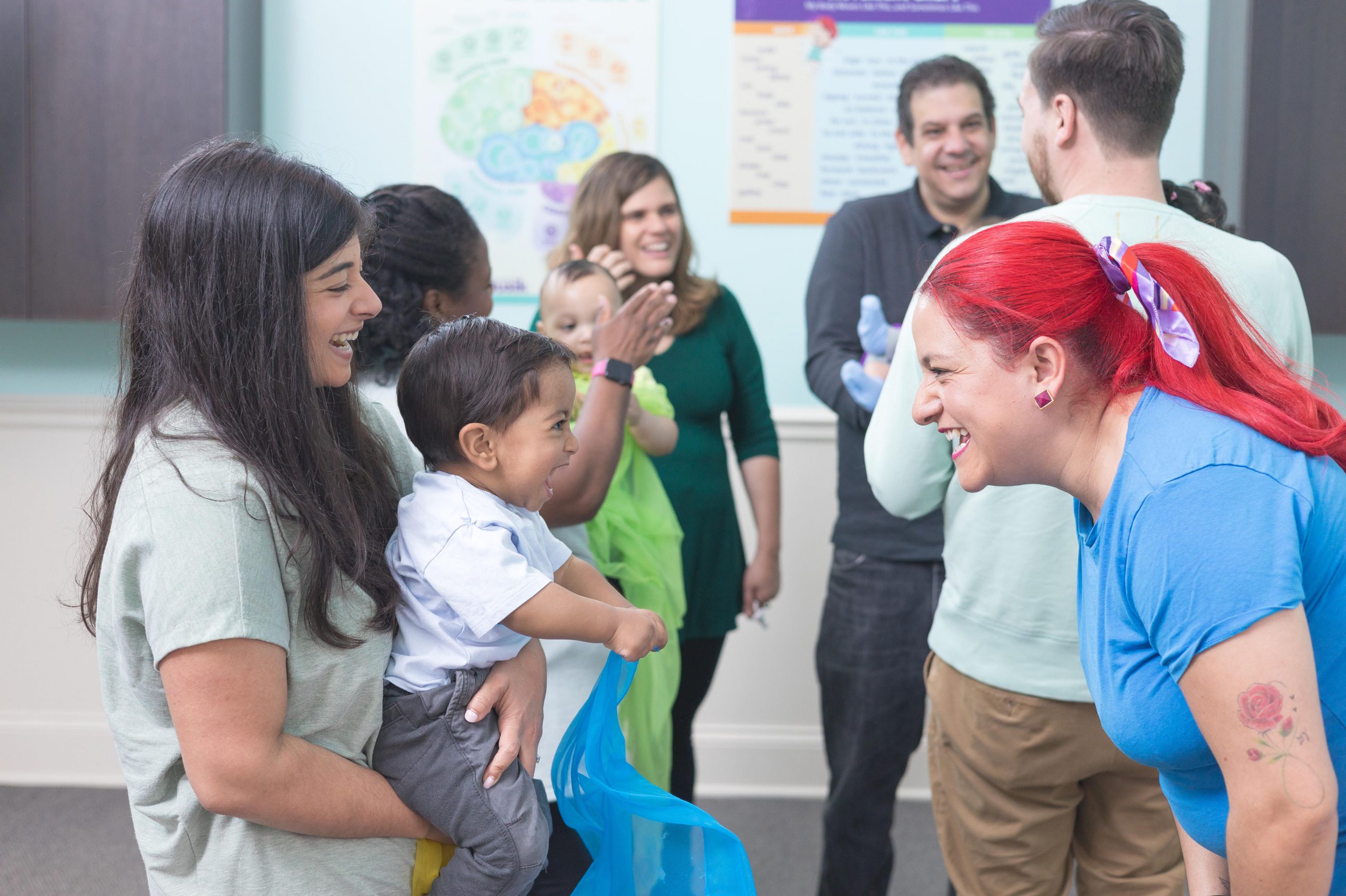
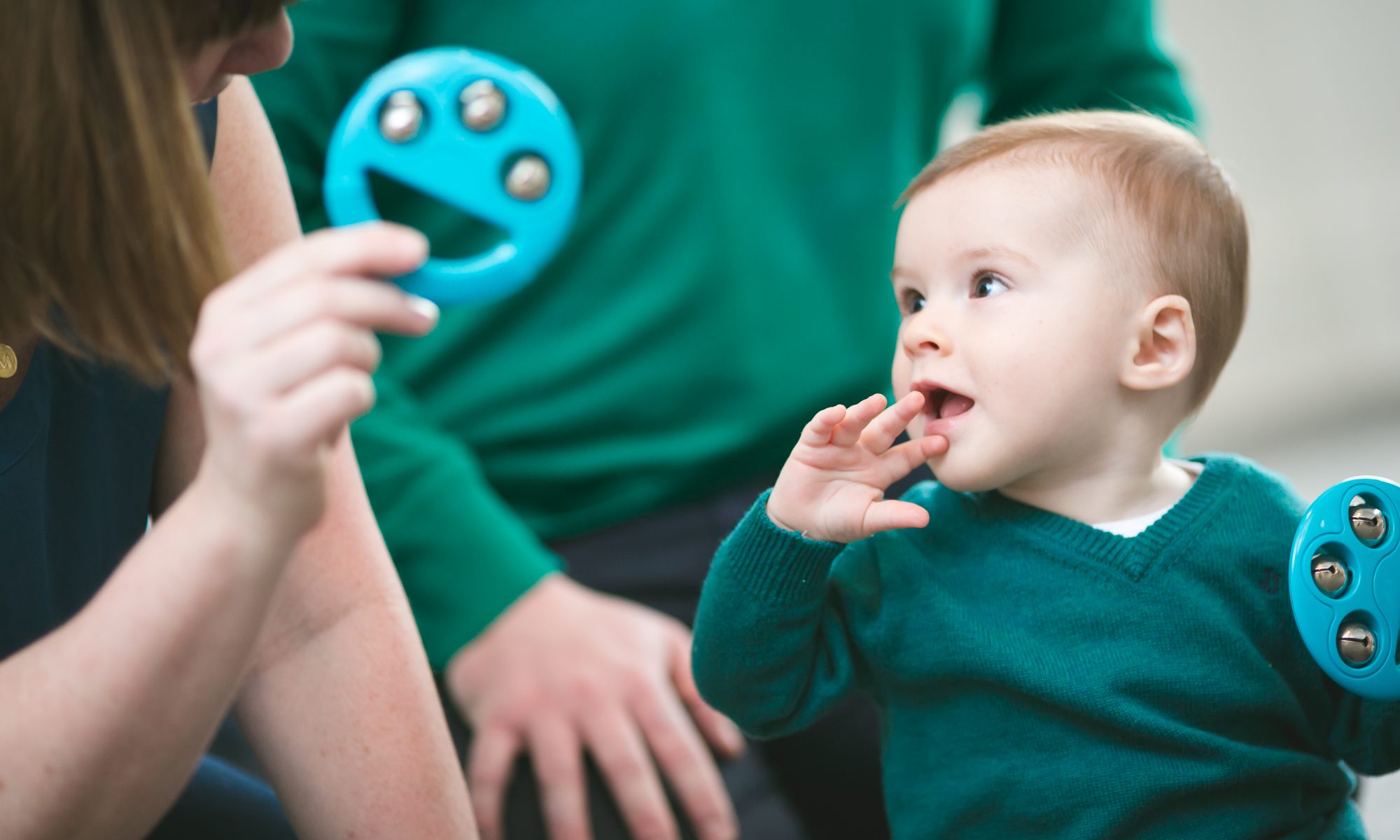
It’s the cutest thing to watch even a very young baby’s first responses to music and being in a Kindermusik class.  As Kindermusik educators, we have the incredible privilege of observing these young children very closely so that we can most effectively adapt and personalize the activities we teach in our Kindermusik classes.  What we have come to know about how and why Kindermusik resonates with children so strongly might surprise you.  It really is about more than just the instruments… though they do take great delight in the bells, drums, and egg shakers!

children
Photographed by Thomas | © 2016 TK Photography | www.tkphotographychicago.com

Children Love the Predictable Routines in Kindermusik

Kindermusik classes are purposely designed to have a predictably comfortable flow of activities in every lesson, although there are always happy surprises and new challenges along with the repeated activities.  The routines help children feel secure, because they know what to expect, and the new things not only help keep their brains firing and making new learning connections, but also add to the excitement and joy that fills every class.

Children
Photographed by Thomas | © 2016 TK Photography | www.tkphotographychicago.com

Children Thrive on the Musical Bonding with Their Grown-ups

Ask any empty nester, and they’ll tell you wistfully that those early years go by oh-too-quickly.  So while the children absolutely adore the together time and common experience of Kindermusik with their favorite grown-up, Kindermusik gives the adults in class a chance to linger in the precious moments of early childhood just a little bit longer.  The shared memories of class time become an integral part of the happy memories of childhood.

Children Blossom as They Gain Confidence in a Group Class Setting

The beautiful thing about a Kindermusik class is the mix – the mix of personalities, learning styles, and ages in any given level.  Quieter children learn from the more outgoing children.  Visual learners become more willing to explore alongside their physically interactive peers.  Older children unconsciously take on the role as leader when the younger children move up to their same level.

Children Benefit from the Social Elements of Kindermusik class.

Even if children cannot put it into words, making friends and gaining life skills through the social interactions in every Kindermusik class are a big part of why they look forward to each weekly class.  It’s truly a beautiful thing to see many children start in Kindermusik as babies and then go on to graduate from Kindermusik together.

Every child who participates in Kindermusik classes on a consistent basis will unquestionably be a more musical, well-rounded, confident child.  But it’s really what happens in their hearts and minds as a result of being in Kindermusik that creates such a compelling, lasting, memorable, and delightful experience for them…and for their grown-ups.


Shared by Theresa Case who has loved bringing children and families together for over 20 years now in her award-winning Kindermusik program at Piano Central Studios in beautiful upstate South Carolina.

Educator Spotlight: Emilie Gaschke

Educator spotlight

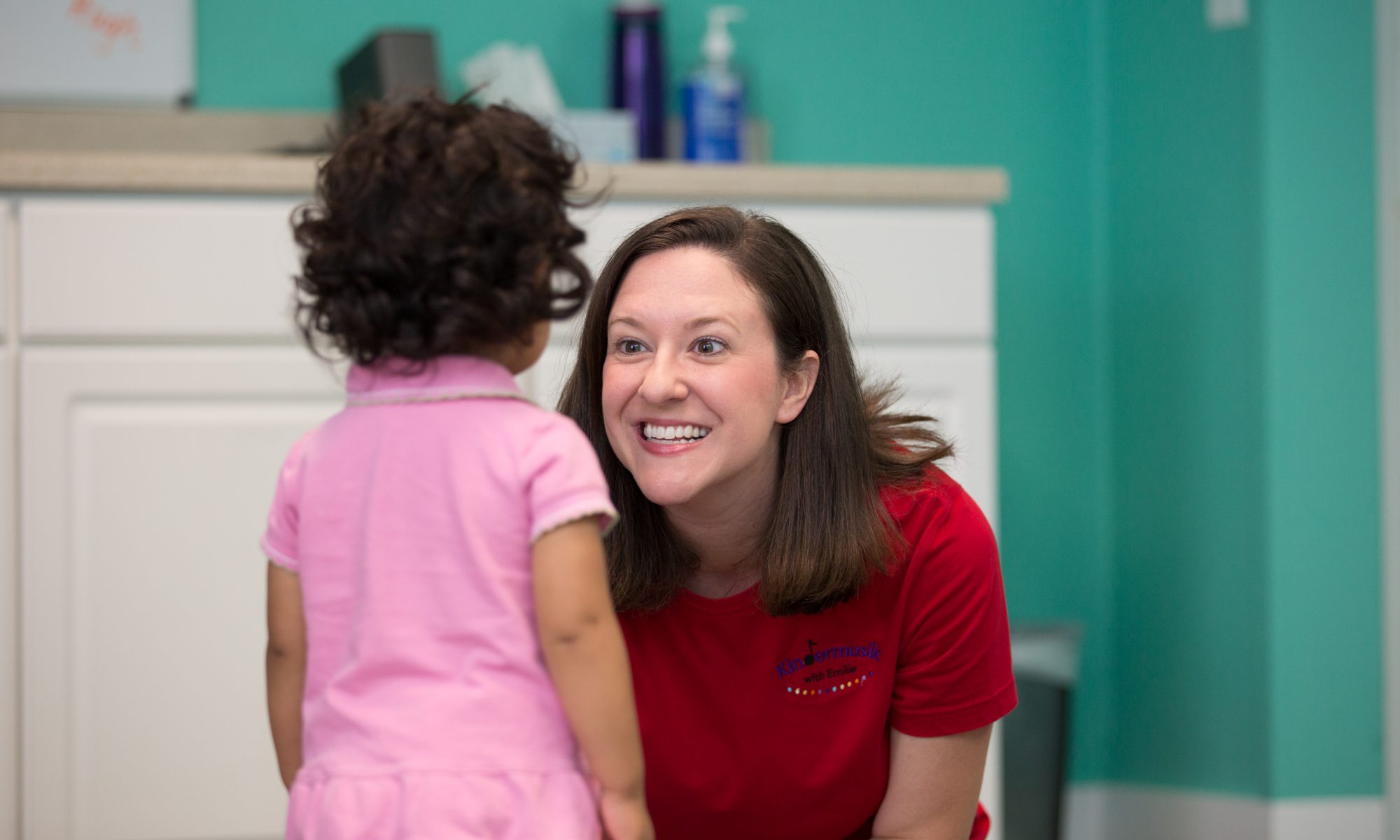
You can’t be around Emilie for long without sensing her deep love for children and her absolute belief in the power of Kindermusik, something that led her to begin her Kindermusik business and became a licensed Kindermusik educator in 2010.  Lovingly known as “Miss Emmy,” Emilie’s families describe her as patient, kind, fun, and energetic.  Her enthusiasm for teaching music is absolutely infectious, as evidenced by how Emilie’s Kindermusik program has grown and thrived since she first opened Kindermusik with Emilie.  Emilie not only inspires a love of music in the children and families in her program, but she also supports and inspires her Kindermusik colleagues as a member of the SOUND Board, an advisory committee and professional organization for Kindermusik educators.


TC: What makes your studio, Kindermusik with Emilie, so special?
EG: Our studio is bright, cheery, full of laughter and joy, with teachers who genuinely enjoy what they do and love the families in their classes. Love and joy comes through in everything we do at our studio and our families see it and see that our studio is a special place.

TC: Every Kindermusik educator seems to have at least one favorite Kindermusik song to sing. What’s your favorite?
EG: I would have to say “Love Somebody.” I like to sing it slowly when I’m introducing this song to the families in my class so they can really take time to connect with their little one and it’s usually how I sing it to my own little ones. But it’s also fun to put on the fast, recorded version and dance along as well.

TC: And how about your favorite Kindermusik dance to lead?
EG: This is a hard one as I have many favorites! But my top ones would be “Mama Paquita” and “Shoo Fly.“

TC: What’s your favorite part of teaching Kindermusik?
EG: Seeing the growth and transformation in children from week to week. Oftentimes a child will come in very shy, hesitant, and unsure and within just a couple of weeks (sometimes sooner even!) they are running into the classroom eager and excited to be there. Also, seeing the joy on parent’s faces as they see the change and growth in their child. There’s nothing better.

TC: If you had to name just one secret to success in the Kindermusik classroom, what would it be?
EG: I know it sounds cliché’ but for me, success in the classroom comes from me being in the moment. I try not to think too much about what’s coming next in the lesson plan and just completely enjoying what’s happening in that moment and noticing the “little things” that are going on. Being in the moment allows me to truly focus on my families and being well prepared allows me to be in the moment and not stress about what’s coming next.

TC: What’s one of the most touching things that’s ever happened to you as a Kindermusik teacher?
EG: I could share many individual stories here as well, but what has been the most touching that I’ve been able to witness is watching the kindness of our families. Each year in February we collect hundreds of new pairs of socks for a women and children’s shelter in our city and in the spring we do a food drive and collect non-perishable food items for a homeless shelter. I’ve also had families donate money to help pay for Kindermusik classes for families who otherwise couldn’t afford it. Our families are some of the most kind and generous people I’ve ever met.

TC: You’ve mentioned having a special Kindermusik family that really impacted you as a teacher. Can you share a little more about them?
EG: I have many Kindermusik families who are special to me and have become like family, but one family that will always have a special place in my heart is a family who was one of my first families ever enrolled in my program 7 years ago. They enrolled in a Village class when the little boy was 15 months old and last May he was in my first ever Young Child graduating class. He’s the first child to go all the way through my program and graduate and he and his family are some of my biggest fans. And now his younger brother is enrolled in my YC class this fall!

TC: What do you feel has made your studio business a success?
EG: I would say being willing to try different things to find what works best for our studio and thinking big. If you name it, we’ve probably done it and if it worked we’re still doing it but if it didn’t we’ve moved on quickly. Nowhere does it say that you have to keep doing the same old, same old. If it works, fantastic! If it doesn’t, it’s time to move on and find what does.

Educator SpotlightTC: What are some of the goals you have for your studio business?
EG: My goals for my business would be to continue to grow to reach more and more families in our community with the specialness that is Kindermusik. I also want our studio to become a place that our community sees as the “go-to” place for early childhood learning. We’re getting there!

TC: What’s something new and exciting that’s happening with your business?
EG: After renting classroom space for the past 7 years, an amazing opportunity presented itself and on July 24th we purchased a beautiful, 5,000 square foot building for our Kindermusik Studio! We now have 2 Kindermusik classrooms, a coat and shoe room, a waiting room, an office, a playroom, smaller rooms for private voice and instrument lessons, a full basement for storage as well as a kitchen! Our Grand Opening at our new studio was September 11th and we are LOVING our new space! I am so grateful for God’s provision in giving us this amazing building. This will allow us to offer so much more for our Kindermusik families and community, from private music lessons to Kindermusik birthday parties to much more in the future. The possibilities are endless!

TC: If you could share one tip with a new Kindermusik educator, what would it be?
EG: Know your value and don’t apologize for it. When I was first starting out I would practically apologize for what I was charging for classes. I was nervous people couldn’t/wouldn’t pay what I needed and I was nervous to talk about tuition costs. That changed one day when a parent overheard me talking with another parent who was trying out the class. She sent me an email later that day listing child-related activities in our area and what they were charging. She pointed out that we were right on track for and told me to be confident in talking to parents about costs because our classes were worth it. That was life-changing for me.

TC:  I think I already know the answer to this one, but what are some of your hobbies?
EG:  I used to have lots of hobbies but to be honest, the last year especially has been focused on my family and my business. After 12 years of marriage, God blessed my husband and I with our daughter who we adopted in January of this year. She just turned 1 in August and she is the sweetest little blessing you will ever meet. Then on August 1st, we welcomed into our home a little baby boy who we are fostering. Life with a 1-year-old and 2-month old is both exhausting and rewarding all at the same time, and while running a business and being a Mama to two little ones definitely has its challenges, I wouldn’t trade my life for anything.


Shared by Theresa Case who has loved bringing children and families together for over 20 years now in her award-winning Kindermusik program at Piano Central Studios in beautiful upstate South Carolina.


Interested in learning more about Kindermusik University, starting a new Kindermusik business, or adding Kindermusik to your existing business? Just fill out the quick form below. We look forward to seeing you in our next training class!


Book Review: Giraffes Can’t Dance

Book Review

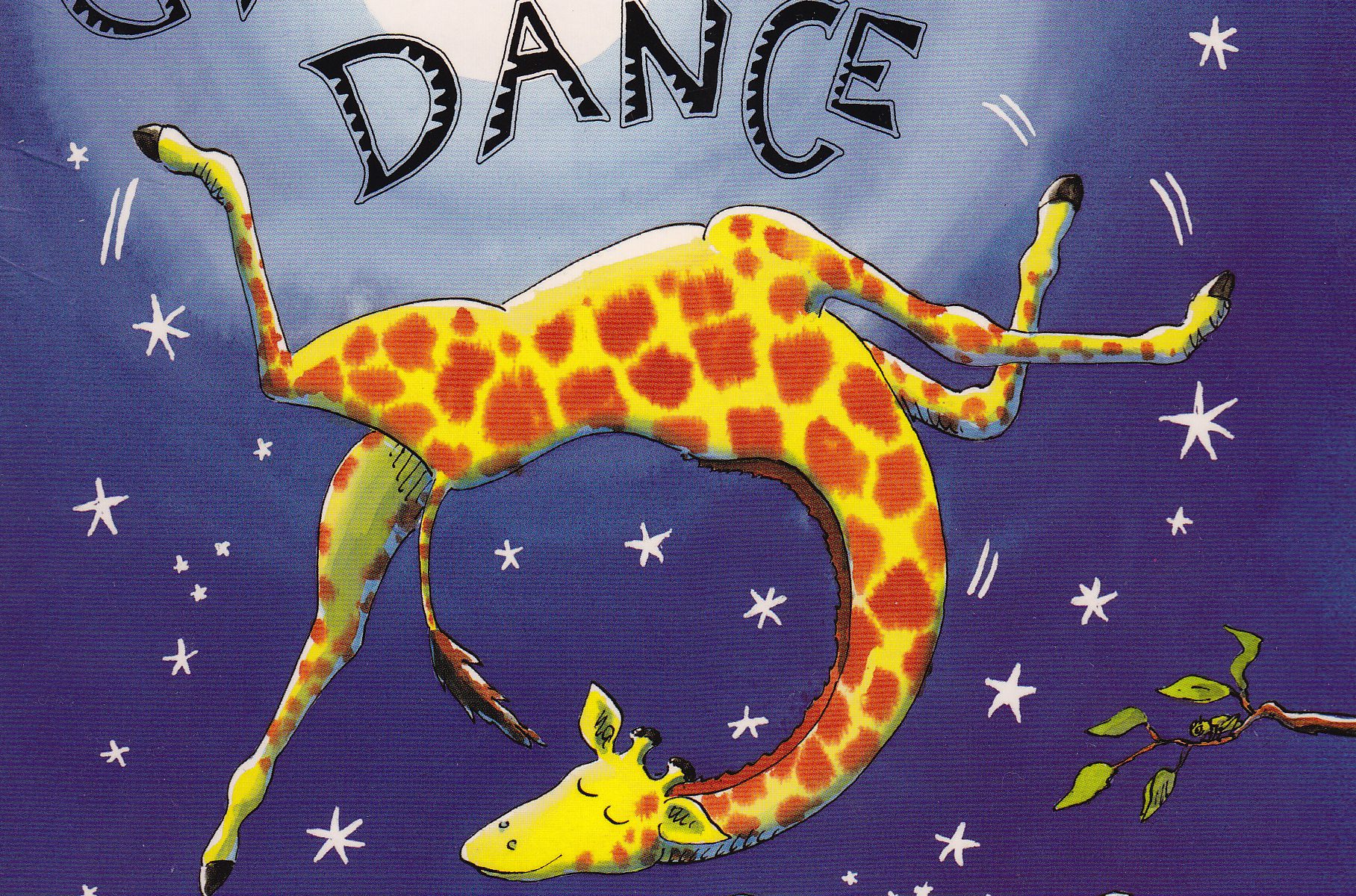
In this touching and triumphant rhyme of a story, we meet Gerald, a giraffe who sadly believes what the other animals have always told him – that giraffes can’t dance.  His legs are too long, his neck is too skinny, and his knees are too crooked.

“Hey, look at clumsy Gerald,”
the animals all sneered.
“Giraffes can’t dance, you silly fool!
Oh, Gerald, you’re so weird.”

He leaves the Jungle Dance in utter defeat until his path crosses with an insightful little violin-playing cricket who offers a different perspective… and a solution.

“Excuse me!” coughed a cricket
who’d seen Gerald earlier on.
“But sometimes when you’re different
you just need a different song.”

The compassionate cricket begins playing his violin and suddenly, Gerald realizes… he is DANCING!  Soon the other animals gather round and witness the incredible transformation.  Animals who before scoffed and taunted are now applauding Gerald as the “best dancer that we’ve ever, ever seen!”  As Gerald finishes his dance with a flourish, he says, “We can all dance… when we find music that we love.”

In other words, we are all unique and have something special we can do – which sometimes is something that others don’t expect or think we can do.  But all we need is a little confidence and encouragement.

book reviewWith vibrant illustrations by Guy Parker-Rees and an engagingly lilting rhyme written by author Giles Andreae, Giraffes Can’t Dance engages the reader from the very first page and then tugs at the heartstrings because of the teasing and bullying that Gerald endures.  It’s available in hardcover, paperback, and audiobook formats. This is a lovely story not only to teach children the power of words, but also other important life lessons like helping others, kindness, resilience, acceptance, empathy, and compassion.


This review was contributed by Theresa Case whose award-winning Kindermusik program has been making a difference in the lives of upstate South Carolina children and families for nearly 25 years now.

The Justa Syndrome

Justa Syndrome

[vc_row][vc_column][vc_column_text]Pep talk time. In the past two days, I have had two separate interactions with people in my life that reminded me of something many of us will face at some point or another. I call it the “Justa Syndrome.” Our kids will probably face it, too. And if we don’t know how to deal with it, it’s going to be hard to help them work through it.

“So…what is it, Dr. Boyle?” I hear you asking through the fiber-optics and wireless signals of the internet.

I’ll tell you…[/vc_column_text][/vc_column][/vc_row][vc_row][vc_column][vc_column_text]

I’m Just a Music Teacher

Interaction #1 is what reminded me of the Justa Syndrome. It sneaks up on you in quiet moments, often when you are doing busy work. Or perhaps you’re riding an elevator, surrounded by other humans, but remaining in relative silence. It’s that sudden (or maybe even constant) thought that what you do (or even who you are) is somehow not enough. This happens often in our field – when asked, a music teacher might say “I’m just a music teacher,” especially if they might not be performing as part of their career.

A friend and colleague emailed me about one of our alums who is out doing her thing. She had just gotten a new post as an organist and had let several of us know. My friend is one of the biggest cheerleaders our students have. He reminded me that he gets “annoyed at those who would say, ‘I’m JUST an elementary/junior high/private music teacher.'”

JUST? He answers that question with, “What do you mean, you’re JUST…Do you realize the impact you have on those students? You may be giving them the only lasting relationship that they have with music!”

He’s right, of course. But it goes beyond our field. Everyone can take pride in the work they do. We all contribute to the whole.

And if you are reading this blog, I assume you probably have a child, maybe more than one. Maybe you are a grandparent or an aunt. Maybe you are a caregiver. When the Justa Syndrome sneaks up on you, remember this friends…you are EVERYTHING to that child. When you love a child unconditionally, when you tuck them in at night with a kiss, when you wake them up in the morning with a smile, when you hug them when they are hurting and laugh with them when they are silly, you are their sun and moon. They trust you in all things. You are never “just” an anything. You are their light in the dark.[/vc_column_text][/vc_column][/vc_row][vc_row][vc_column][vc_column_text]

Just a Kid

Guess who is even more susceptible to the Justa Syndrome? KIDS! How often have you heard, “I can’t do that. I’m just a kid.” Now…what doesn’t help this is that there certainly are things that kids can’t and shouldn’t do. I don’t want my five-year-old nephew flying my plane…but we could PRETEND to fly or make some paper airplanes! I don’t want my neighbor’s three-year-old daughter operating a jack hammer…but we could get some blocks and build something, then knock it down with glee! We can be portals of possibility for our kids. We can show them the world and all its wonder. We can remind them that they are wondrously made, with a built-in compass that points to the possible. We just have to guide them to age-appropriate possibilities.[/vc_column_text][/vc_column][/vc_row][vc_row][vc_column][blockquote cite=”Dr. Boyle”]”We can be portals of possibility for our kids.”[/blockquote][/vc_column][/vc_row][vc_row][vc_column][vc_column_text]

The Enemy of “Justa” is “Trust”

When I work with private voice students and I notice that they are carrying unnecessary tension in the body or the voice, I have them move. I tell them, “The enemy of tension is movement!” As they move about the studio, the tension dissipates and the voice becomes free and easy.

When a child looks inward and says “I’m just a kid. I can’t do that”, to be that portal of possibility, to point the way to something they can do, there must be a beautiful sense of trust between you and that child. That flows from the unconditional love we all have for the kids in our lives. If the child knows you love them, they will trust you. And when you say, “well, it might be hard to do that now, but I bet we could try this!”…they will be more likely to believe you and believe in their own possibilities.[/vc_column_text][/vc_column][/vc_row][vc_row][vc_column][vc_column_text]

Just Not Ready

Interaction #2 was with one of my private voice students here at my university. She’s a senior and one of the hardest working people I know. She’s organized, respected by her peers and the faculty, and is a joy to teach. This past lesson, I started the way I always do – I asked how she was doing. She started with “It’s okay. I mean, everything is happening so quickly…” and she broke down in tears. This happens more than you’d think, and I keep a stock of tissues for this reason. The relationship between private voice teacher and student is a special one. Our students tend to be more open with us.

I asked her to sit down and handed her the box of tissues. She expressed that she “just didn’t feel ready” for what was coming – the real world.

Normal. I wake up somedays and have that feeling. We are human.

This is a variation of the Justa Syndrome – that feeling of inadequacy.

I needed to remind her of a few things.

“Do you remember coming here as a freshman from high school?

“Yes,” she said.

“And did it feel similar to this, heading into the unknown?”

“Yes!”

Normal.

“Now,” I said, “when you came here, you knew nothing about your chosen field. You were facing several years of new information. It’s completely normal to feel this way right now, but I want to give you some perspective. You are leaving here with four years of accumulated knowledge that you have successfully applied in class, on tests and quizzes, in-field experiences, and now, as an upper-class student who all the other students look up to. Your professors are proud of the work you have done. Your family is proud of you, too. I’ve seen the look in their eyes. We are all in your corner rooting for you. And while it feels overwhelming…I know you are ready. You are more than good enough. You’re you.”

She smiled. “I hadn’t thought about it like that.”

No matter who we are, no matter how old we are or what we do, we will have Justa Syndrome moments. Each of us has opportunities to positively impact others, through our work, through our daily lives, through our relationships. If you made someone smile today, if you held a door open for someone or picked up a piece of trash on the sidewalk, or if you made the life of a child brighter and fuller with love, then you are not “justa” anything. You are you.

And that’s everything.[/vc_column_text][/vc_column][/vc_row]

Building Community Through Music

Building community

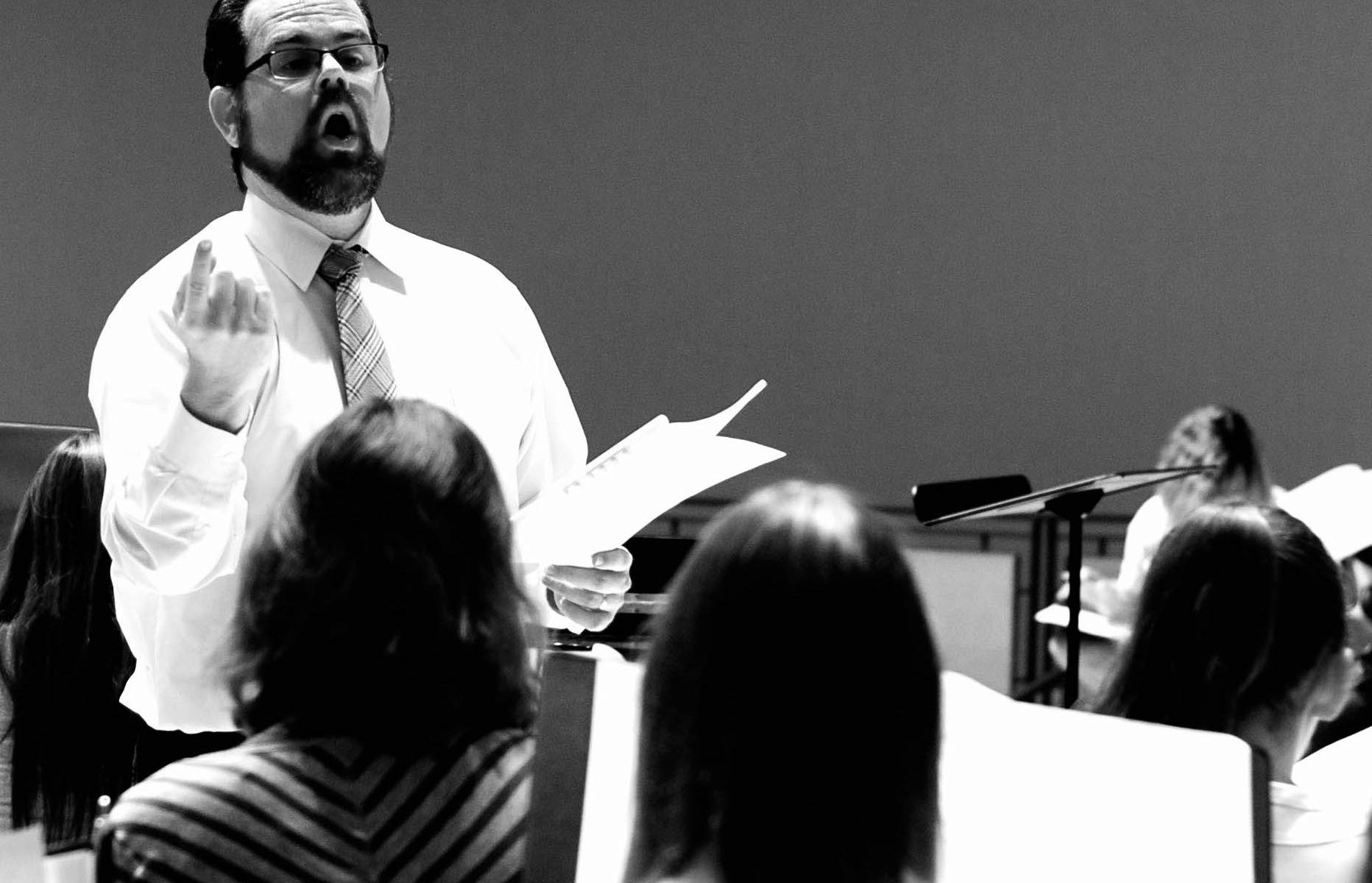
I travel quite a lot as a conductor. I guest conduct choral festivals in various locations as a part of my musical life. Last month, I found myself working with the New Jersey Treble All-State Choir, an ensemble made up of high school sopranos and altos. These types of festivals are always exciting for me. There’s something special about conducting a group that will only exist for a very short period of time. After the performance is over, that ensemble will never exist again. For this choir, people come from high schools all over New Jersey to make music with strangers. One of the things I always focus on is building a community in the ensemble, even for the brief time they are together – because an ensemble that has a sense of community about it will always make more meaningful music. This is directly related to the emotional and social benefits found in a Kindermusik class

Connections

To be bold, building that sense of community is actually more important to me than the music; particularly at first. The ensemble won’t trust me just because I was selected by a committee and have fancy letters after my name. I work hard to prove to them that I am there for them as people first, musicians second. I do my best to connect to each person – all 150 or them – in some meaningful way, even if it’s only for a second. This often takes the form of standing at the door and greeting each person with a handshake and asking their name. I might walk through the rows of singers and do the same.

As we move from piece to piece, I often ask the musicians to turn to their neighbor behind or in front of them (this will prevent students from the same school as the default interaction as they often sit next to each other) and share something about themselves that makes them proud or that makes them smile. This breaks down walls and starts to build simple, but powerful connections between the singers.

Purpose

I admit, I talk a lot in rehearsal. I certainly talk less now than I did when I was younger, but I do still talk quite a bit. We talk about the text of the music and what it means for us and our audience. We talk about composer’s intent. We talk about what our job as musicians is…what our purpose is. Put plainly, I tell the students that it’s our job to change lives for the better. It’s our job to make people feel something. To give the audience a shared experience. That is difficult to do without a unified sense of the music we make. I ask questions. I encourage mistakes…bold mistakes…mistakes to be celebrated. I tell them that the person who makes no mistakes makes nothing. I do my level-headed best to create an environment of possibility in which we can learn from a mistake and not be embarrassed by it.

When the rehearsal starts, the very first thing we do is sing. That’s our practical task at hand. Our purpose is to enrich each other’s lives with the shared experience of music, thereby enriching the lives of our audience. “The person who makes no mistakes makes nothing.”

Community
Choral singers holding hands…building on that sense of family and community.

Music’s Magic

I talk about this a great deal on this blog. There certainly is a ton of science that tells us, as best it can, why music affects us the way it does. We talk about that, too; it’s important to know that information. But, as silly as it might be, I fully embrace Albus Dumbledore’s take on music, so beautifully stated in Harry Potter and the Sorcerer’s Stone:

“Ah, music,” he said, wiping his eyes. “A magic beyond all we do here!”

It is magic. A roomful of singers who have never made music together smile at the wonder of it all. They feel the connection, almost instantly. Kindred spirits from different communities, ethnic backgrounds, faith experiences, and socio-economic groups coming together to sing, one of the purest forms of musical expression. Each singer finds their place rather quickly as we understand our common goal…to change lives.

We work hard for three and a half hours. I sweat like crazy (I’m quite active in rehearsal). We practice extravagant gratitude. I ask them to thank each other and thank our collaborative pianist. I ask them to thank their choral directors at their high school. I ask them to thank their parents and guardians. I ask them to feel proud of their work.

End Game

When we are done after this initial meeting, this first rehearsal, a new family has been created. A new community full of connections and shared purpose and magic has been born. Hopefully, they are looking forward to the next rehearsal, this opportunity to be together as that community to change lives, even each other’s lives.

One of the most important aspects of the Kindermusik experience is making music with other kiddos. The social/emotional benefits of this activity can’t be overstated. As kids see others engaged in an activity that brings themselves joy, the spark of connection lights a fire within. Emotional sensitivity for others is increased. The very idea of cooperative society blossoms in a Kindermusik class.

Our educators approach what they do in the same way I approach all my rehearsals…with love. It’s an honor to change a life with music. And every day we wake up knowing that’s what we get to do, we friends, that is a good day.

Halloween Book Review: Bats in the Band

Halloween Book Review

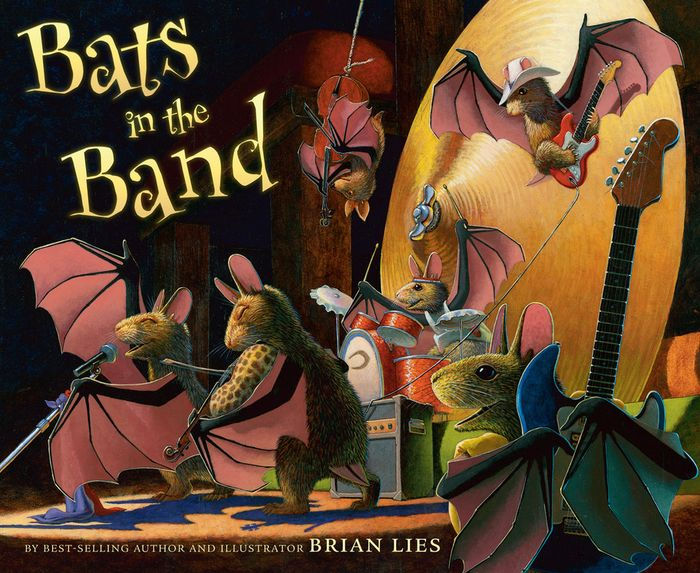
[vc_row][vc_column][vc_column_text]Bats in the Band, written and illustrated by Brian Lies, is published by Houghton Mifflin Harcourt and is available in digital (free for kindleunlimited members), hardcover, and audio formats.


[/vc_column_text][/vc_column][/vc_row][vc_row][vc_column][vc_column_text]

Bats and Music – What’s not to Love?

This. Book. Is. Everything. Educational? Check. Fun to read? Check. Beautiful illustrations? Check. A fun story? Check. But it’s so much more. As Mr. Lies says, “Come on – look alive!”

This isn’t just a rhyming children’s book about bats. It’s a book about musical bats! Musical bats of all types…choir bats, a bat string quartet, country singing bats…blues, rock and roll, you name it. There’s even a bat paying bagpipes and a “one-bat” band.[/vc_column_text][vc_column_text]I[/vc_column_text][vc_column_text]

Here's our one-bat band. Lies does make him look pretty tired while playing all those instruments!
Here’s our one-bat band. Lies does make him look pretty tired while playing all those instruments!

[/vc_column_text][/vc_column][/vc_row][vc_row][vc_column][vc_column_text]

Coming Together to Make Music

The Bats come from all over to make music in an old barn-like theatre. Vacated by humans, the bats take over late at night. I think my most favorite moment is when the bats are getting their instruments ready for the evening’s festivities.

Not every bat comes prepared, so Lies lovingly illustrates bats making due with various items – a spoon string bass, a comb harp, hairpin drumsticks, and even a straw for who knows what? Only the bat knows. This teaches kids that resourcefulness is a valuable skill to possess, and not just for bats! We in the Kindermusik world know you can make music with ANYTHING![/vc_column_text][vc_column_text]

Halloween Book Review
Music with spoons and straws, right along guitars and violins!

[/vc_column_text][/vc_column][/vc_row][vc_row][vc_column][vc_column_text]

Fun to Read, Fun to Listen, Fun to Look!

Lies provides a lyrical, rhyming text accompanied by fun illustrations that make the bats just a little less scary, even if it is Halloween. These flying creatures are often misunderstood, and Lies does much to normalize them! Bats in the Band is part of a series of Bat Books, including Bats at the Ballgame, Bats in the Library, and Bats at the Beach. As you might have guessed, we at Kindermusik are partial to the music-making bats![/vc_column_text][/vc_column][/vc_row]

Minneapolis Memories: Kindermusik Educators Take Over The City of Lakes

Close to 200 Kindermusik Educators from across the globe gathered together at the mind-blowing Mall of America in Minneapolis, Minnesota July 27-29 for three, fun-filled days of learning, connection, friendship, and, of course, shopping!

Wednesday evening Maestros were treated to a memorable reception at The Hard Rock Café joined by President and CEO, Scott Kinsey.

State Representative Drew Christensen - former Kindermusik kid!
State Representative Drew Christensen – former Kindermusik kid!

Thursday morning special guest, former Kindermusik kid, and the youngest candidate to ever be elected to Minnesota’s House of Representatives, Drew Christensen, opened the conference sharing how his Kindermusik experience attributed to his successful political career.

We were then introduced to Occupational Therapist, Paige Hays, who skillfully led us through The Brain Architecture Game, developed through a partnership of the Center on the Developing Child and the University of Southern California’s School of Cinematic Arts. Look for an interview with Paige later this month!

Educators
Paige Hays

A conference highlight was meeting Stephanie Johnson, educator, therapist, and author of Baby Bare: A Bottom Up Approach to Growing Strong Brains and Bodies. Her informative presentation explored the body’s role in early learning. Educators took away valuable insights to share with families.

Other conference highlights include: hearing from special guest and marketing guru, Kari Switala on the importance of storytelling in marketing, class demonstrations led by Robyn Pearce and Helen Peterson, and watching Kindermusik legend, Carol Penney, and Maestro Louise MacDonald’s powerful presentation on Intergenerational Learning.

Conference is about connection!

Outside the conference, Minneapolis offered a relaxing retreat to Minnehaha Falls with breathtaking waterfalls.

We can’t wait until next year’s conference in the Big Easy – New Orleans! Hope to see many of you once again – and perhaps some new faces as well!

Book Review – Fidget Wisely

Fidget Wisely

[vc_row][vc_column][vc_column_text]Fidget Wisely: 10 Ways to Teach Mindfulness Skills to Kids Who Can’t Sit Still by Kirsten May Keach MA, MFT is available at your favorite local bookstore or online in both digital and paperback editions.


[/vc_column_text][/vc_column][/vc_row][vc_row][vc_column][vc_column_text]

A Wonderful Resource…

Does your child fidget? Perhaps he has a hard time sitting in one place. Let’s face it…we’ve all been there to one degree or another. Kirsten May Keach, a licensed family therapist has written the perfect book to help us help our kids develop mindfulness skills into their day to day lives. In the book’s introduction, Keach tells us the genesis of Fidget Wisely:

I had the privilege of working as a therapist in an elementary school. I very quickly had a full caseload of kids. Children were coming to my office frustrated and anxious… The conversations with teachers and administrators went something like this: “He/she is a smart kid with lots of potential but…he just doesn’t listen” or “She won’t sit still”… The conversations with parents began in a similar way… I call this the “He/she is a great kid, but…story.”

The story began to permeate my days. I was my job to identify and dissolve the “but” standing in the way of these kids and their success. What I found was that for the most part, these kids had poor emotional regulation skills. This means that they had difficulty managing their feelings and emotions.

I began to teach kids emotional regulation skills through mindfulness and yoga activities. I integrated the skills I learned living in a Thai Buddhist Monastery into my work as a therapist. I made all these skills kid-friendly.

The kids loved learning mindfulness skills. To my surprise, they caught on like wildfire.

– Kirsten May Keach, Fidget Wisely

[/vc_column_text][/vc_column][/vc_row][vc_row][vc_column][vc_column_text]

Unsure What Mindfulness Is? Keach Has you Covered

Before diving into the meat of the book, Keach provides the reader with a very clear definition of what mindfulness is. How can we help our kids attain this skill and state of being if we don’t know what it is? Put simply, mindfulness is “the awareness that emerges through paying attention on purpose, in the present moment, and non-judgmentally to the unfolding experience.”

She elaborates in plain terms, of course. You’ll have to buy the book to learn more![/vc_column_text][/vc_column][/vc_row][vc_row][vc_column][vc_column_text]

Simple Flow, Easily Digested

Keach has organized her book into very easily followed instructions so that even the mindfulness newbie can take valuable information. She provides several craft activities, with detailed instructions, followed by information on how that craft can be used to help a child center themselves and find that elusive mindfulness. The first craft is a glitter jar, Keach’s version of a snow globe. Here, we create an object with the sole purpose to be touched, shaken, fidgeted with – but with the end game of providing a point of focus for the child.

Each section is formatted in a way that makes executing the craft or activity simple. For crafts, she provides a supply list and clear steps. There is also always a set of rules, that are both practical and humorous.[/vc_column_text][vc_column_text]

Book review
Keach’s instructions for a rice box. Remember, don’t eat the rice!

[/vc_column_text][/vc_column][/vc_row][vc_row][vc_column][vc_column_text]

Physical Activities

Keach provides many wonderful activities throughout the book, from breathing exercises to basic yoga poses for kids. Tips for teachers, information on set-up, and specific instructions are provided. This compact, affordable book provides several poses that are useful for children.[/vc_column_text][/vc_column][/vc_row][vc_row][vc_column][vc_column_text]

Book Review
Kirsten May Keach, MA MFT

[/vc_column_text][/vc_column][/vc_row][vc_row][vc_column][vc_column_text]

Fast Read, Helpful Content

We’re all busy people. This resource – a pragmatic and activity driven approach to helping kids develop mindfulness skills is quickly read and packs a great deal in a small package. Take a look, you won’t be disappointed. Oh! And if you are a kindleunlimited™ member, it’s free![/vc_column_text][/vc_column][/vc_row]